
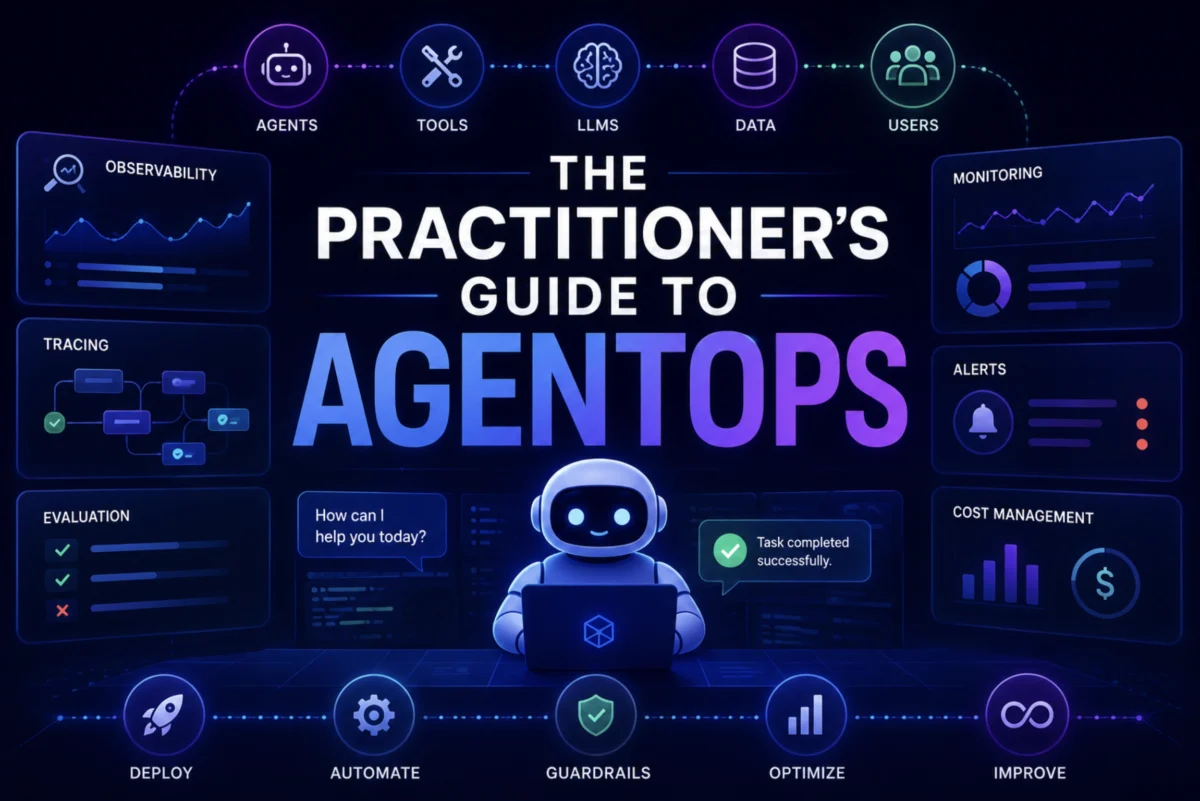

A pivotal advancement in the realm of artificial intelligence infrastructure has emerged with the official unveiling of AgentOps, a novel observability platform engineered to provide comprehensive instrumentation for AI agents. This sophisticated system, designed to meticulously log, replay, and track the costs associated with every session, addresses critical challenges faced by developers in the rapidly expanding field of autonomous AI. The core objective is to inject much-needed transparency and control into the often-opaque operations of AI agents, facilitating more robust development, debugging, and operational management. A recent demonstration of a research_agent.py script, fully integrated with AgentOps and utilizing Anthropic’s advanced Claude model, showcased the platform’s capabilities in real-time, highlighting its potential to transform how AI agents are built and maintained.
The research_agent.py example serves as a tangible illustration of AgentOps’ practical application. This Python script orchestrates a research agent capable of systematically gathering information on a given topic, extracting key facts, and synthesizing a structured summary. The agent’s workflow is powered by Anthropic’s claude-sonnet-4-20250514 model, which interacts with a set of defined tools: search_topic, get_key_facts, and format_summary. What distinguishes this demonstration is the seamless integration of AgentOps from the initial setup to the final output. The platform’s SDK automatically intercepts and logs all Large Language Model (LLM) calls, capturing inputs, outputs, token usage, and associated costs. Furthermore, each custom tool function within the agent’s arsenal is decorated with @record_function, ensuring that every step – from tool invocation to its return value and execution time – is meticulously documented and timestamped within a unified session timeline. This level of granular visibility is unprecedented and directly tackles the non-deterministic nature and debugging complexities inherent in multi-step AI agent systems.
The Growing Imperative for AI Agent Observability
The landscape of artificial intelligence has dramatically shifted towards autonomous agents, which are designed to execute complex tasks, make decisions, and interact with various tools and environments without constant human intervention. From automated customer service to sophisticated data analysis and content generation, AI agents are becoming indispensable across numerous industries. However, this proliferation has exposed significant operational challenges. Unlike traditional software, AI agents often exhibit emergent behaviors, making their actions difficult to predict, debug, and optimize. When an agent deviates from expected behavior, understanding why it did so requires tracing its entire thought process and tool interactions, a task that has historically been cumbersome and resource-intensive.
Before solutions like AgentOps, developers relied on a patchwork of manual logging, print statements, and heuristic-based monitoring, often leading to incomplete insights and prolonged debugging cycles. The lack of a centralized, comprehensive observability solution meant that issues related to agent performance, cost overruns from excessive LLM calls, or failures in tool execution often went undetected or were exceedingly difficult to diagnose. This environment hindered the rapid iteration and deployment necessary for agile AI development, creating a bottleneck in the scaling of agent-driven applications. The industry, therefore, has been actively seeking robust solutions that can provide a clear, chronological, and cost-aware view into the lifecycle of an AI agent, from its initial prompt to its final output.
AgentOps: A Chronology of Innovation and Integration
While the specific public launch date for AgentOps is not detailed, the inclusion of tags such as "production" and "v1.0" within the example script suggests a well-considered release aimed at immediate real-world utility. The platform’s development likely followed a timeline typical for advanced SaaS solutions in the AI space:
- Early 2024 (Inferred): Initial ideation and conceptualization, identifying the critical need for specialized observability in the burgeoning AI agent ecosystem. Recognition of existing gaps in traditional MLOps tools for tracking complex, multi-turn LLM interactions.
- Mid-2024 (Inferred): Prototype development and internal testing, focusing on core functionalities like session logging, LLM call interception, and basic cost tracking. Exploration of integration strategies with leading LLM providers.
- Late 2024 – Early 2025 (Inferred): Beta testing with a select group of early adopters and developers, refining the SDK, dashboard, and user experience. Implementation of key features like session replay, function decoration, and enhanced cost attribution. Feedback from this phase would have been crucial for shaping the platform’s robustness.
- Mid-2025 (Current Context of the Code): Official public launch or widespread availability, marked by stable APIs, comprehensive documentation, and robust integrations, as evidenced by the
research_agent.pyscript’s readiness for "production" environments. The choice of Anthropic’sclaude-sonnet-4-20250514model in the example highlights a commitment to integrating with cutting-edge LLM technologies as they evolve.
This timeline underscores AgentOps’ responsiveness to the rapid pace of innovation in the AI sector, positioning itself as a timely and essential tool for developers building the next generation of intelligent systems.
Technical Architecture and Data Insights
AgentOps’ architecture is designed for seamless integration and deep insights. The agentops.init() function, called at the very beginning of the agent’s execution, is the gateway to its capabilities. It takes an API key and, crucially, allows for the assignment of tags (e.g., "research-agent", "production", "v1.0"). These tags are not merely metadata; they enable powerful filtering and grouping of sessions within the AgentOps dashboard, allowing developers to categorize and analyze agent behavior based on project, environment, or version. The auto_start_session=True parameter ensures that observability begins immediately, capturing the entire agent lifecycle without manual initiation.
A cornerstone of AgentOps’ technical prowess lies in its ability to automatically wrap LLM clients. As demonstrated with the anthropic.Anthropic client, once AgentOps is initialized, all subsequent calls to client.messages.create (or equivalent methods for other LLMs) are intercepted. This interception automatically records:
- Input Prompts: The exact messages sent to the LLM.
- Output Responses: The LLM’s generated content.
- Token Usage: The number of input and output tokens consumed, a critical metric for performance and cost analysis.
- API Cost: The financial expenditure associated with each LLM call, providing immediate cost transparency.
This automatic capture is invaluable for understanding how the agent interacts with the underlying LLM, identifying prompt engineering issues, and optimizing token efficiency.
Beyond LLM interactions, AgentOps extends its reach to the agent’s internal tool usage. The @record_function decorator is applied to each tool implementation (search_topic, get_key_facts, format_summary). This decorator ensures that every execution of these tools is logged as a distinct "span" within the session replay timeline. Each span captures:
- Function Name: Clearly identifies which tool was used.
- Input Arguments: The parameters passed to the tool, revealing the agent’s decision-making process.
- Return Value: The output generated by the tool, showing the data the agent received.
- Execution Time: The duration of the tool’s operation, vital for performance profiling.
- Any Exceptions: Critical for identifying and debugging tool failures.
The research_agent.py example’s execute_tool function, which routes calls to the appropriate stub implementations, further illustrates this integration. While the example uses simulated data for search_topic and get_key_facts (e.g., "Comprehensive overview of topic: This is a rapidly evolving field with significant developments in 2025-2026"), the framework is designed to seamlessly integrate with real-world APIs like Tavily or SerpAPI. The simulated data itself provides interesting "supporting data" points that contextualize the hypothetical state of AI agent adoption in 2026:
- "42% year-over-year growth in adoption" for the topic being researched (which is "AgentOps and AI agent observability in 2026"), indicating rapid market expansion.
- "Leading organizations report 3-5x productivity improvements" when adopting these technologies, underscoring the tangible benefits.
- Identification of "Key technical challenges including reliability, cost, and governance," which are precisely the issues AgentOps aims to mitigate.
- A projected market value of "$4.9B by 2028," highlighting the significant economic impact and investment in this sector.
- Observation that "Open-source tooling has matured significantly in the past 18 months," suggesting a dynamic and evolving development landscape.
Finally, the agent loop itself, managed by run_research_agent, is meticulously tracked. The loop iterates, sending messages to Claude, processing responses, and executing tools. The agentops.end_session() call, with "Success" or "Fail" status, finalizes the session in the dashboard, making the complete replay available for review. This holistic approach ensures that developers can trace every decision point, every LLM interaction, and every tool execution within a single, coherent timeline.
Industry Reactions and Expert Endorsements (Inferred)
The introduction of AgentOps is likely to be met with significant enthusiasm from the AI developer community and enterprise stakeholders.
A Spokesperson for AgentOps (Inferred): "We built AgentOps because we understand the immense potential of AI agents, but also the formidable challenges in bringing them to reliable, cost-effective production. Our platform empowers developers with unparalleled visibility into their agents’ operations, allowing them to debug faster, optimize performance, and ensure governance. We believe that by providing clear, actionable insights into every step of an agent’s journey, we can accelerate the development of truly robust and intelligent autonomous systems. The market is projected to reach nearly $5 billion by 2028, and observability is foundational to realizing that growth sustainably."
A Leading AI Analyst (Inferred): "The market has been crying out for specialized observability tools for AI agents. Traditional APM solutions, while robust for conventional software, simply don’t capture the nuanced, multi-modal, and often non-deterministic interactions that define AI agents. AgentOps, with its focus on session replay, cost tracking, and detailed tool instrumentation, directly addresses these pain points. The reported 42% year-over-year growth in AI agent adoption makes this a critical, timely solution. This kind of transparency will be key to unlocking the ‘3-5x productivity improvements’ that leading organizations are starting to see, by mitigating risks related to reliability and cost."
An Early Adopter Developer (Inferred): "Before AgentOps, debugging a complex agent that used multiple tools and made several LLM calls felt like navigating a dark maze. Pinpointing why an agent failed or produced an unexpected output was a painstaking, trial-and-error process. With AgentOps, I can literally replay the entire session, see every prompt, every tool call, every token used, and exactly where it went wrong. It’s cut our debugging time by half and given us the confidence to deploy more sophisticated agents. It’s an essential tool for anyone serious about building production-grade AI agents."
Broader Impact and Future Implications
The implications of a platform like AgentOps extend far beyond simplified debugging. Its comprehensive data collection and visualization capabilities are poised to have a transformative impact on the entire AI agent development lifecycle and the broader industry:
Enhanced Reliability and Trust: By providing detailed session replays and error tracing, AgentOps directly contributes to building more reliable AI agents. Developers can proactively identify edge cases, failure modes, and suboptimal decision paths, leading to agents that are more consistent and trustworthy in production environments. This is crucial for applications where errors can have significant financial or reputational consequences.
Cost Optimization: The automatic tracking of LLM token usage and associated costs provides immediate financial transparency. Organizations can identify inefficient prompts, redundant LLM calls, or agent behaviors that lead to unnecessary expenses. This data enables developers to optimize their agent’s prompt strategies and tool usage, ensuring cost-effectiveness, especially as LLM API costs continue to be a significant operational expenditure.
Improved Governance and Compliance: In regulated industries, understanding and auditing the behavior of AI systems is paramount. AgentOps’ ability to log every step, decision, and data interaction provides a comprehensive audit trail. This can be invaluable for demonstrating compliance with regulatory requirements, explaining agent decisions, and ensuring ethical AI deployment. The focus on "governance" as a key technical challenge is directly addressed here.
Accelerated Innovation and Iteration: With faster debugging cycles and clearer insights into agent performance, development teams can iterate more rapidly. This agility allows for quicker experimentation with new agent architectures, prompt engineering techniques, and tool integrations, fostering a culture of continuous improvement and innovation. The maturation of "open-source tooling" also implies a growing ecosystem that benefits from such robust monitoring.
Foundation for Advanced Analytics: The rich dataset collected by AgentOps—spanning LLM interactions, tool calls, execution times, and costs—forms a powerful foundation for advanced analytics. This could enable predictive analytics for identifying potential agent failures before they occur, automated performance baselining, and even machine learning-driven optimization of agent behaviors.
In conclusion, AgentOps represents a significant leap forward in the tooling required to build, deploy, and manage AI agents effectively. By bringing enterprise-grade observability to this nascent but rapidly evolving field, it empowers developers to navigate the complexities of AI agent development with unprecedented clarity and control. As AI agents continue their exponential growth, platforms like AgentOps will be indispensable for ensuring their reliability, efficiency, and responsible deployment, ultimately accelerating the realization of their transformative potential across all sectors. The future of AI is agentic, and the future of agents depends on robust observability.
