

The Federal Communications Commission (FCC) is officially moving forward with a plan to auction a significant portion of the upper C-band spectrum, a move designed to further solidify the United States’ leadership in the global telecommunications landscape. In a proposal announced this Tuesday, the commission revealed it will vote in July on whether to approve the auctioning of 160 megahertz (MHz) of spectrum located between 3.98 GHz and 4.14 GHz. This initiative represents the second major phase of C-band clearing, following the historic 2020 proceedings that repurposed a lower portion of the band for 5G services. The draft order for this new auction is scheduled for release on July 1, with a formal vote by the commission set for July 22.
This latest move is part of a broader strategy to create a contiguous "super-band" of mid-band spectrum, which is considered the "Goldilocks" frequency for wireless communications due to its ability to balance wide coverage with high-speed data capacity. FCC Chairman Brendan Carr emphasized the strategic importance of this auction during a media briefing, noting that when combined with the 280 MHz cleared in the first round, the U.S. will have a 440 MHz block of mid-band spectrum dedicated to advanced wireless services. Carr stated that this development positions the nation to lead in the deployment of next-generation connectivity, including the evolution toward 6G and other advanced wireless innovations.
The Legislative Mandate and Strategic Context
The FCC’s decision to pursue this auction is not merely a regulatory preference but a response to a direct mandate from the United States Congress. Under the 2025 tax bill, lawmakers directed the FCC to auction at least 100 MHz of the upper C-band by July 2027. This legislative push reflects a growing bipartisan consensus on the need to liberate more spectrum for commercial use to keep pace with international competitors and the surging domestic demand for mobile data.
While Congress set a floor of 100 MHz, the FCC explored several options over the past year, considering blocks ranging from 150 MHz to 180 MHz. Ultimately, the commission settled on the 160 MHz figure as the optimal balance between maximizing commercial availability and managing the technical complexities of relocating existing satellite services. The transition requires a highly coordinated effort to ensure that current users—primarily satellite operators providing essential broadcast and cable television feeds—can continue their operations without interruption in different frequency blocks.
The Technical Challenge of Band Clearing
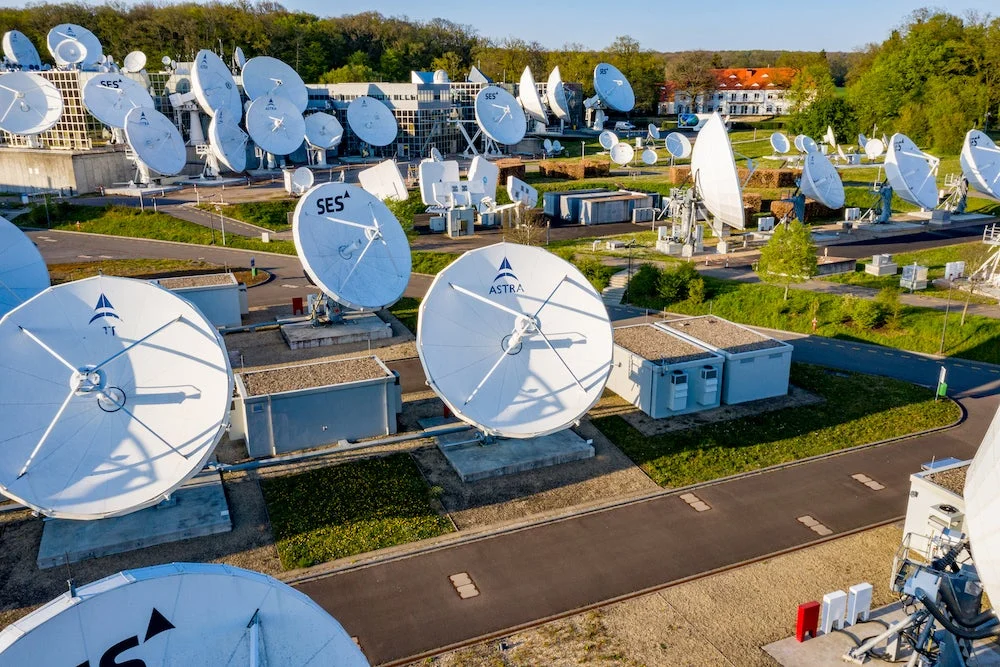
Clearing the upper C-band is a massive technical undertaking that mirrors the complexity of the first C-band transition. Satellite operators such as SES and Eutelsat currently utilize these frequencies to distribute content to thousands of broadcast and cable headends across the country. To vacate the 3.98-4.14 GHz range, these operators must launch new satellites equipped with specialized filters and reconfigure their ground infrastructure.
SES, one of the primary stakeholders in the C-band, has provided the FCC with detailed estimates regarding the scope of this transition. The operator expects the clearing process to cost approximately $3.6 billion, which includes a $150 million contingency fund. According to SES filings, the company will need to procure and launch five new hybrid Ku-band satellites, along with two additional in-orbit backups, to maintain service continuity for its customers. SES has already entered the negotiation phase for these satellite contracts and the subsequent launch services required to meet the FCC’s aggressive timeline.
The transition also extends to the ground. SES noted that the clearing will necessitate approximately $777 million in new integrated receiver decoders (IRDs) for earth stations throughout the United States. These upgrades are essential to mitigate "rain fade"—the interference caused by atmospheric moisture—which is more prevalent in the Ku-band frequencies that will be used to supplement the lost C-band capacity.
Eutelsat has also voiced its projections, informing the FCC in June that clearing its services from more than 130 MHz of the upper C-band would likely cost the company around $750 million. These figures underscore the capital-intensive nature of spectrum reallocation and the necessity of the incentive structures the FCC intends to implement.
Financial Incentives and Relocation Payments
To ensure a swift transition, the FCC plans to utilize a system of "accelerated relocation payments," a mechanism that proved successful in the first C-band auction. In that previous round, winning bidders—primarily major wireless carriers like Verizon and AT&T—paid a total of $9.7 billion in incentive payments to satellite operators who met early clearing deadlines. These payments were provided in addition to the reimbursement of actual relocation costs.
A senior FCC official indicated that while the total dollar amount of incentives for this upcoming auction will be lower than the $9.7 billion seen in the first round, the payments will be "roughly commensurate" with the smaller amount of spectrum being cleared. The 2020 auction cleared 280 MHz, whereas the current proposal targets 160 MHz. The exact financial breakdown, including specific rebate amounts and cost-coverage structures, will remain confidential until the official vote on July 22.
The success of the first auction provides a blueprint for this process. Auction 107, which concluded in early 2021, generated over $81 billion in total bids, making it the highest-grossing spectrum auction in FCC history. The high demand for mid-band spectrum suggests that even with a smaller block of 160 MHz, the upcoming auction will draw significant interest from the telecommunications industry, potentially generating billions in revenue for the U.S. Treasury while funding the necessary satellite infrastructure upgrades.
Addressing Aviation Safety and Technical Interference
One of the most sensitive aspects of the C-band transition involves the aviation industry. The proximity of 5G signals to the frequencies used by aircraft radio altimeters—devices that measure a plane’s height above the ground—has been a point of contention and rigorous study over the last several years. The 2022 rollout of 5G in the lower C-band faced temporary delays and localized restrictions near airports to ensure flight safety.
In preparation for this new auction, the FCC has worked closely with the Federal Aviation Administration (FAA) to preemptively address potential interference issues. The FAA announced that it will issue a formal rule later this summer requiring aircraft operators to upgrade or replace radio altimeters on tens of thousands of airplanes and helicopters. These upgrades are designed to ensure that altimeters can filter out signals from the upcoming 5G wireless services operating in the upper C-band.
This proactive regulatory approach aims to avoid the public friction and operational disruptions that occurred during the initial 5G deployment. By mandating hardware upgrades well in advance of the auction’s final implementation, the government hopes to provide the aviation sector with a clear timeline and technical standard for compliance.
Timeline of Key Events
The roadmap for the upper C-band auction is structured to meet the 2027 deadline set by Congress:
- Late 2023 – Early 2024: FCC begins formal exploration of upper C-band auction options following the passage of the 2025 tax bill.
- June 2024: Satellite operators SES and Eutelsat submit detailed cost estimates and technical requirements for band clearing.
- July 1, 2024: The FCC is scheduled to release the draft order outlining the auction rules and clearing requirements.
- July 22, 2024: The commission will vote on the proposal. If approved, this will trigger the formal start of the auction preparation phase.
- Late 2024: FAA expected to finalize rules regarding mandatory radio altimeter upgrades for the aviation industry.
- 2025 – 2026: Satellite operators begin the manufacturing and launch phase for replacement satellites; ground station retrofitting commences.
- July 2027: Statutory deadline for the FCC to complete the auction of at least 100 MHz of the upper C-band.
Broader Economic and Global Implications
The auctioning of the upper C-band is more than a technical reshuffling of frequencies; it is a critical component of the U.S. national economic and security strategy. Mid-band spectrum is the foundation upon which the next decade of digital innovation will be built. From autonomous vehicle networks and smart city infrastructure to advanced industrial automation and enhanced mobile broadband, the availability of 440 MHz of contiguous spectrum will provide the "bandwidth pipe" necessary for these technologies to scale.
Market analysts suggest that the addition of 160 MHz will be particularly beneficial for carriers looking to densify their networks in urban areas where data demand is highest. Furthermore, by standardizing the use of the upper C-band for terrestrial wireless, the U.S. aligns itself with international spectrum trends, facilitating global roaming and the standardization of hardware, which lowers costs for consumers.
The auction also serves as a catalyst for the satellite industry. While the clearing process is arduous, the incentive payments and the requirement to launch new satellites allow operators like SES to modernize their fleets. The shift toward hybrid Ku-band and high-throughput satellite (HTS) technologies ensures that satellite remains a viable and high-performance option for data distribution in areas where terrestrial fiber or 5G is not yet available.
As the July 22 vote approaches, the telecommunications industry, aviation stakeholders, and satellite operators remain focused on the FCC’s specific clearing timelines and financial structures. The outcome will likely define the trajectory of wireless connectivity in the United States for the next decade, marking a final transition of the C-band from a legacy satellite-dominated frequency to the primary engine of the modern mobile economy.
