

Amazon Web Services (AWS) today announced a significant expansion of its AWS DevOps Agent capabilities, introducing advanced release management features now available in preview. These new functionalities, encompassing release readiness review and autonomous release testing, are designed to streamline the software delivery pipeline, particularly in an era of burgeoning AI-generated code. The AWS DevOps Agent, already established as an always-available teammate for post-deployment operations, now extends its intelligent assistance from the initial code creation phase all the way to production, aiming to empower development teams to achieve unprecedented speed and reliability in their deployments across AWS, multicloud, and on-premises environments.
The Evolving Landscape of Software Development and the AI Imperative
The technology industry is currently experiencing a transformative shift driven by artificial intelligence, and software development is at its forefront. The proliferation of AI coding tools and generative AI models has dramatically accelerated the pace of code generation. Developers are increasingly leveraging tools that can write code snippets, complete functions, and even generate entire modules, leading to a substantial increase in the volume of pull requests (PRs) flowing through continuous integration/continuous delivery (CI/CD) pipelines. Industry reports, such as those from GitHub and various developer surveys, indicate that AI assistance can boost developer productivity by upwards of 30-50% for certain tasks. However, this surge in code output has inadvertently created a new bottleneck: the human capacity for thorough code review and testing.
Traditionally, manual code reviews, peer evaluations, and static test suites have been the linchpin of quality assurance. Yet, as the volume of changes escalates, these human-centric processes struggle to keep pace. Engineering teams find themselves under immense pressure, often leading to hurried reviews, overlooked vulnerabilities, and test environments that diverge significantly from production realities. The value promised by AI-driven coding, which aims to accelerate innovation and time-to-market, can thus become trapped in lengthy review queues, delaying critical features from reaching end-users. Moreover, as AI models become more sophisticated, they are increasingly capable of identifying complex functional and security issues that human reviewers, especially under time constraints, might miss. This scenario underscores a growing imperative: the need for speedy and safe software delivery to be a foundational requirement, rather than a trade-off against quality or security. AWS’s latest offering directly addresses this critical industry challenge.
AWS DevOps Agent: An Autonomous Partner in the DevOps Journey

At its core, the AWS DevOps Agent is conceived as an intelligent, perpetually active entity that deeply understands a customer’s entire software ecosystem. This includes intricate knowledge of services, their interdependencies, and their operational behavior in live production environments. Prior to today’s announcement, the Agent has been generally available for post-deployment operations, demonstrating its prowess in autonomously investigating incidents, performing root cause analysis, proposing mitigation strategies, and delivering targeted recommendations to prevent future recurrences. This existing foundation of operational intelligence provides a robust platform for its new pre-deployment capabilities. By leveraging this comprehensive understanding, the Agent bridges the gap between development and operations, embodying the true spirit of DevOps by making software changes and operations smoother and increasingly autonomous.
The new release management features extend the Agent’s intelligence earlier into the software lifecycle, enabling a proactive approach to quality and safety. This strategic expansion means the AWS DevOps Agent now provides continuous support throughout the entire software development lifecycle (SDLC), from the moment code is conceived to its ongoing operation in production.
Introducing Intelligent Release Readiness and Autonomous Testing
The new release management capabilities are divided into two primary, interconnected features: Release Readiness Review and Autonomous Release Testing.
1. Release Readiness Review: Proactive Quality Gates
The Release Readiness Review feature serves as an intelligent, automated gatekeeper, evaluating every proposed code change against a comprehensive set of criteria before it progresses further in the pipeline. This proactive assessment is crucial for identifying potential issues early, significantly reducing the cost and effort of remediation.
- Standards-Based Validation: A key differentiator is the Agent’s ability to verify changes against "natural language standards" provided by the user. This means engineering teams can define their internal best practices, compliance requirements, and architectural guidelines in plain English, and the Agent will interpret and apply them. Examples include strict infrastructure and data standards on encryption protocols, network access rules, logging and observability requirements (which might warn without blocking), or sensitive data classification best practices that identify applications or resources demanding heightened security measures. In the absence of specific user-defined standards, the Agent intelligently applies general industry best practices and AWS Well-Architected Framework guidelines.
- Comprehensive Dependency Analysis: Modern software often relies on complex webs of microservices and shared libraries. The Agent excels at checking cross-repository dependency risks that could inadvertently affect other services, a common source of production outages. This deep understanding of the system’s architecture allows it to flag potential breaking changes or compatibility issues that might otherwise go unnoticed.
- Security and Compliance Adherence: Access control changes are rigorously checked against AWS Well-Architected Framework best practices, ensuring that security principles like least privilege are maintained. Furthermore, the Agent ensures compliance with any defined organizational standards, contributing to a stronger security posture and regulatory adherence.
- Initial Functional Verification: As part of the review process, the Agent also executes the software in an AWS-managed isolated environment. This allows for lightweight user journey tests to verify that the software successfully builds, runs, and passes basic functional checks. This early-stage testing provides rapid feedback, catching fundamental issues before they consume valuable CI/CD resources.
- Integrated Feedback Mechanism: Findings from the Release Readiness Review are presented in an accessible manner, appearing directly in the AWS DevOps Agent console. Crucially, they are also integrated into existing developer workflows, appearing as comments on pull requests in popular version control systems like GitHub and GitLab. For an even earlier intervention, developers can invoke reviews directly from their Integrated Development Environments (IDEs) through plugins like Kiro power or Claude Code, enabling them to identify and resolve dependency risks, standards violations, and access control issues before the code is even committed to version control. This shifts problem-solving to the earliest, least expensive stage of the SDLC.
2. Autonomous Release Testing: Intelligent, Context-Aware Validation
Building on the initial readiness review, the Autonomous Release Testing feature takes validation a step further by generating and executing change-specific test plans for web and API-based applications. This process occurs in customer-provisioned, production-like environments before the code change is merged, ensuring a high degree of confidence in the impending deployment.
- Dynamic Test Generation: Unlike static test suites that run the same set of tests regardless of the change, the Agent intelligently reasons about the nature of the specific code modification. It then constructs a tailored test plan designed to thoroughly cover the impacted areas. This dynamic approach means tests are highly relevant and efficient, focusing on functional correctness, behavioral regressions (ensuring existing functionality isn’t broken), and integration scenarios that a manually maintained test plan might fail to anticipate due to its static nature.
- Realistic Testing Environments: The execution of these tests in "customer-provisioned, production-like environments" is paramount. It ensures that the testing conditions closely mirror the actual production environment, mitigating the risk of environment drift and uncovering issues that might only manifest under realistic load, network configurations, or data sets.
- Structured Artifacts for Review and Audit: Every autonomous test run produces a rich set of structured artifacts. These include detailed metrics, comprehensive logs, traces (for distributed systems), and an execution summary. This consistent record provides reviewers with transparent and verifiable evidence of what was tested, how it performed, and the overall results, greatly aiding in debugging, auditing, and compliance efforts.
A Step-by-Step Walkthrough: Integrating AWS DevOps Agent into Your Workflow
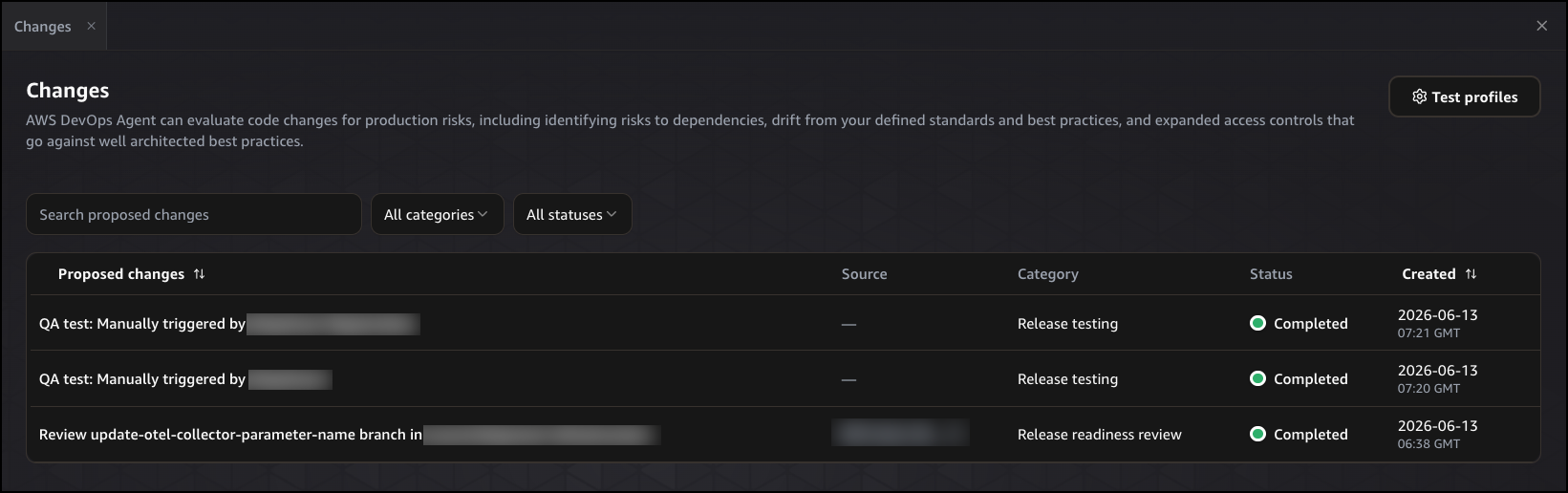
Getting started with these new capabilities involves a straightforward process designed to integrate seamlessly into existing development workflows.
- Initial Setup: The first step requires connecting at least one GitHub or GitLab repository to your Agent Space. Once connected, the AWS DevOps Agent begins indexing your code and constructs a comprehensive "knowledge graph." This graph is a foundational element, providing the Agent with a deep understanding of your code, its structure, cross-repository dependencies, and cloud resources.
- Accessing the Web App: Users navigate to the AWS DevOps Agent console, select their Agent Space, and choose the "Web app" tab, then "Operator access" to launch the interface.
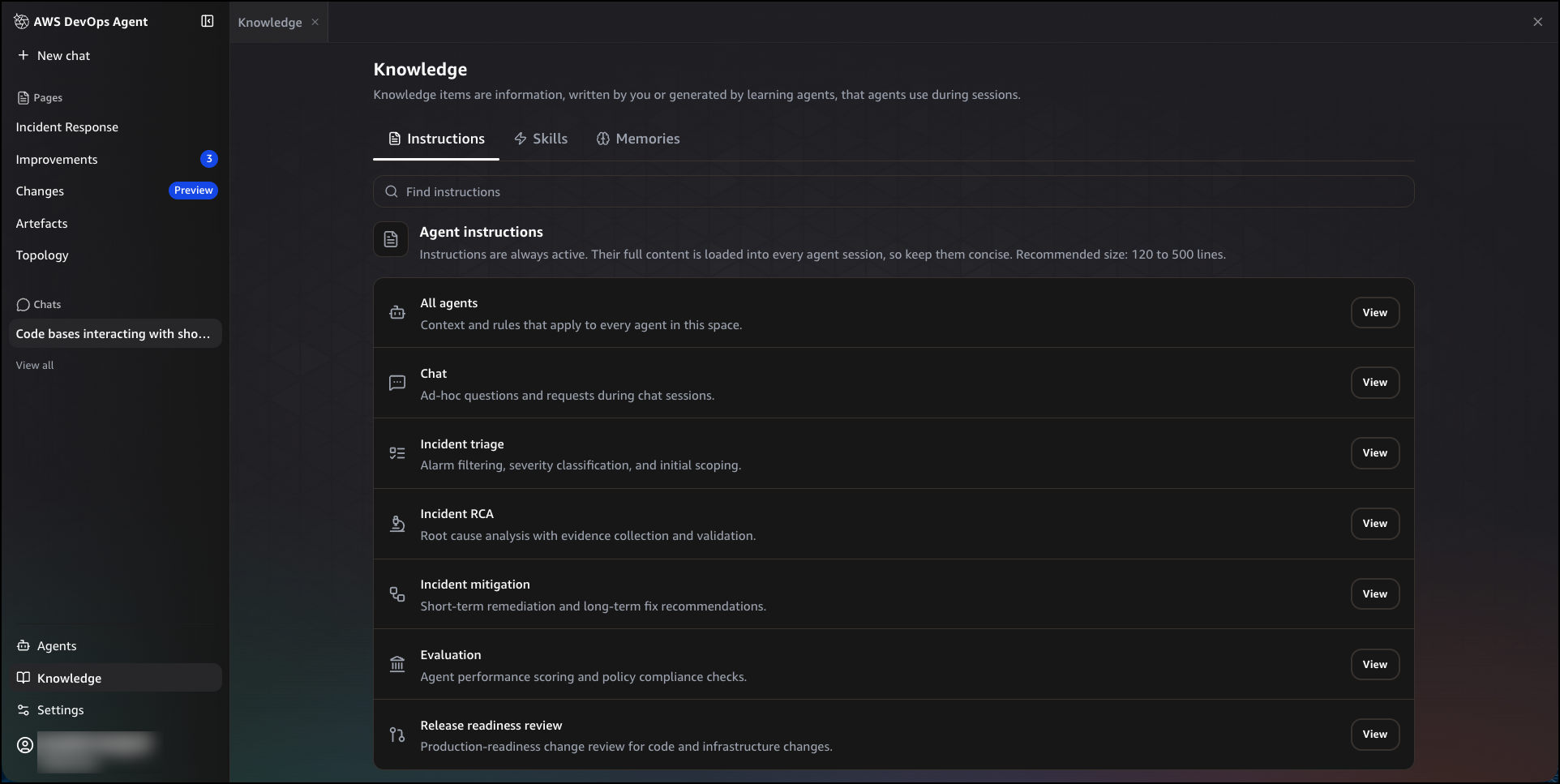
- Configuring Standards: To tailor reviews to specific organizational requirements, users can navigate to "Knowledge" and then the "Instructions" tab. Here, they can define instruction sets, scoped to specific agents or tasks. For example, selecting "Release readiness review" allows users to input internal standards in plain English. This could include policies on encryption, network access, logging, or sensitive data handling. Instructions can also be applied across all agents in the space for broader governance.
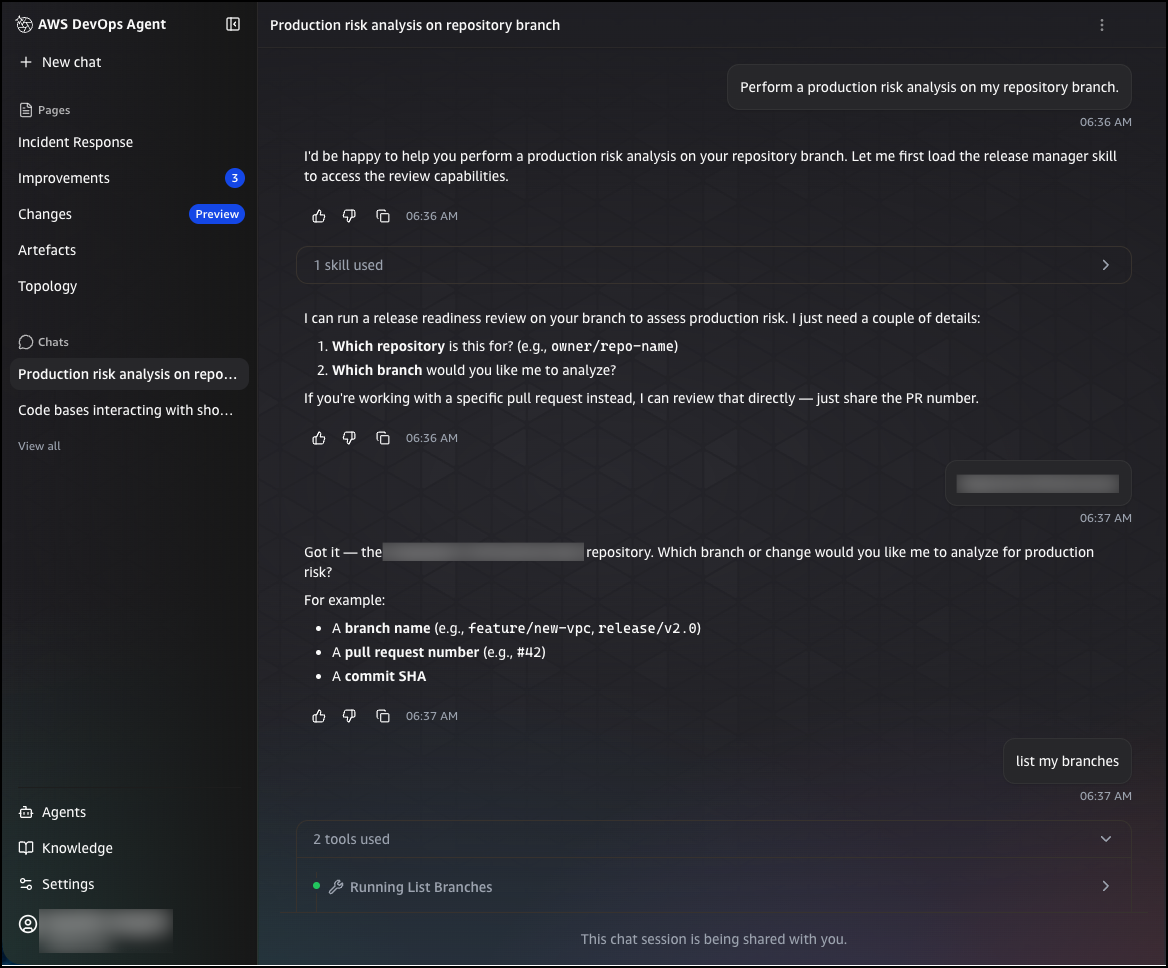
- Triggering a Release Readiness Review: Reviews can be triggered automatically upon submitting a pull request to a connected repository. Alternatively, users can initiate an on-demand review via the chat interface within the web app. A simple query like "Perform a production risk analysis on my repository branch" prompts the Agent to request the specific repository, branch name, pull request number, or commit SHA for analysis. The Agent then queues the review, examining infrastructure impacts, configuration changes, and potential issues.
- Interacting with Findings: After the review, users can engage with the Agent through follow-up questions in the chat. For instance, asking "which downstream consumers a change affects" will yield a structured breakdown of in-repository and cross-repository consumers, specific affected files and line numbers, and recommended resolution steps.
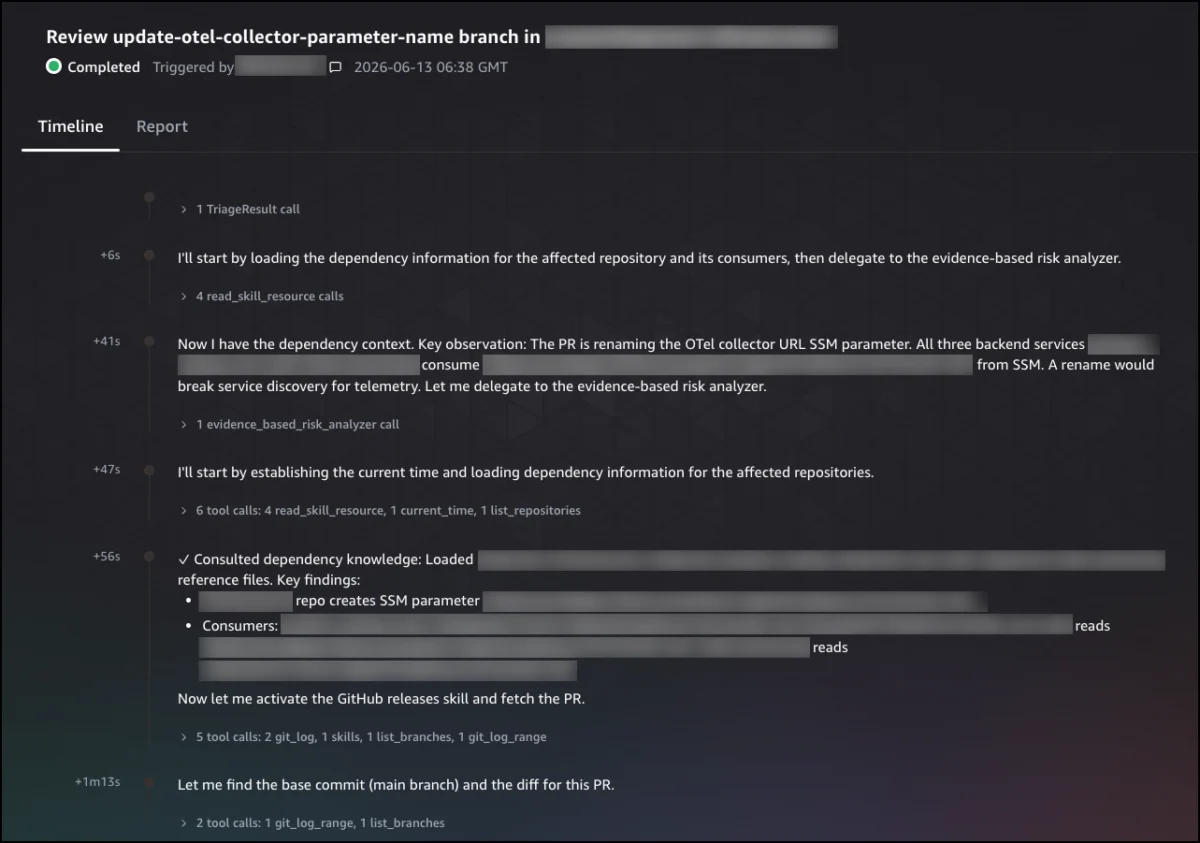
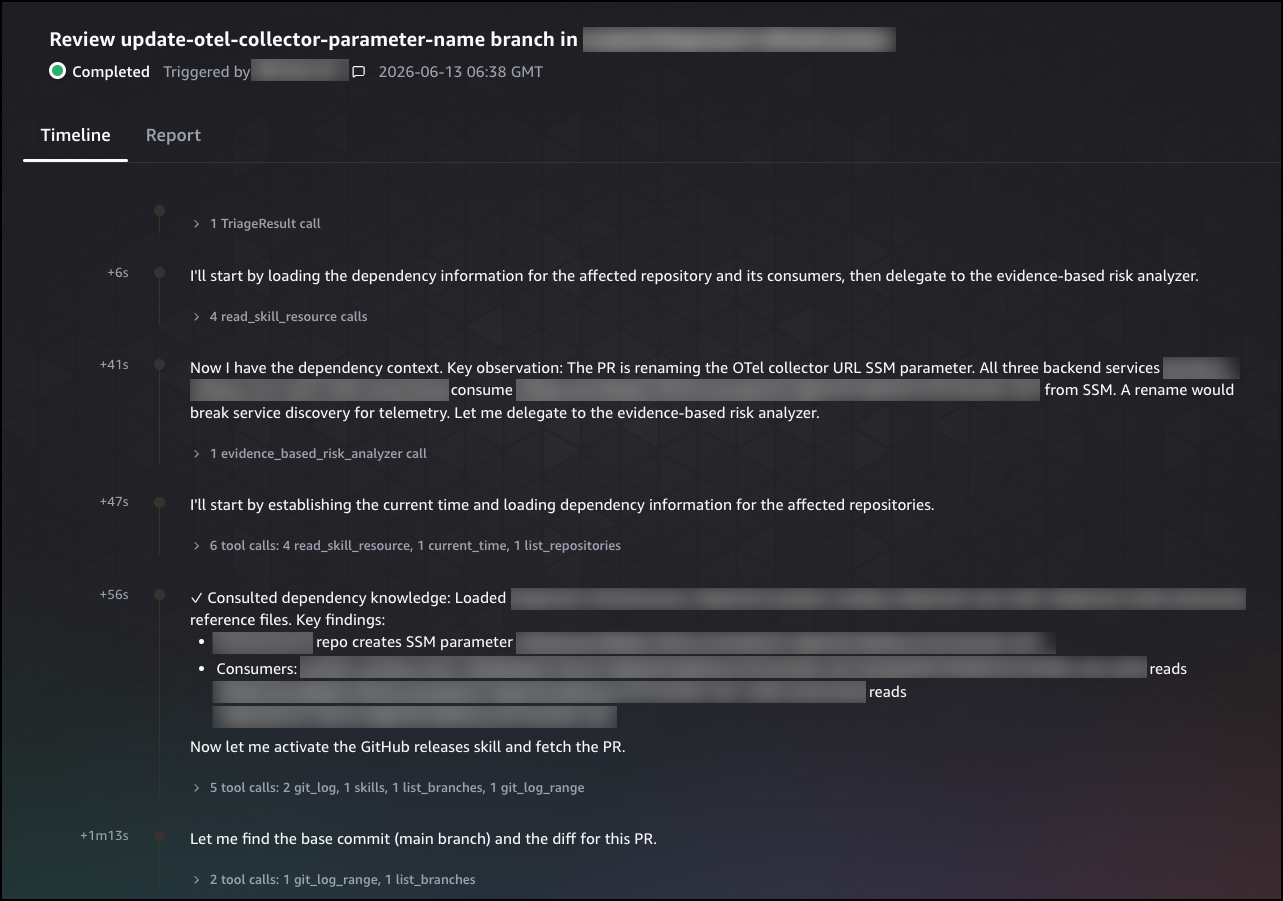
- Reviewing Changes and Reports: All proposed changes and their review statuses are visible in the "Changes" table within the left navigation pane. Users can filter, search, and select any entry to view the full execution details. The "Timeline" tab offers a granular view of the Agent’s reasoning process, detailing the tools it invoked, the dependencies it consulted, and its observations at each step, all timestamped for transparency. The "Report" tab provides the final recommendation—"BLOCK," "Proceed with Caution," or "Safe to Release"—alongside a summary of critical issues, analysis explaining the recommendation, prioritized issues by severity, actionable recommendations for developers, and a detailed list of modified files with change types and descriptions.
- Initiating Autonomous Release Testing: Similar to reviews, autonomous release testing can be invoked via the chat interface. A query such as "Run a release test on my application deployed at [application URL]" prompts the Agent to generate and execute a change-specific test plan in the customer-provisioned environment. Results, including execution steps and a structured summary, are then available in the "Changes" section.
Implications and Broader Impact
The introduction of these AI-powered release management capabilities by AWS DevOps Agent represents a significant leap forward in the quest for more efficient, secure, and reliable software delivery.
- Accelerated Innovation and Time-to-Market: By automating tedious and time-consuming review and testing processes, organizations can significantly reduce their cycle times. This means new features, bug fixes, and innovations can reach end-users faster, providing a competitive edge in rapidly evolving markets.
- Enhanced Software Quality and Reliability: The Agent’s ability to perform deep dependency analysis, enforce best practices, and conduct intelligent, tailored testing means that potential defects and regressions are caught earlier and more consistently. This leads to higher-quality software, fewer production incidents, and improved user experiences.
- Improved Security and Compliance Posture: Automated checks against security best practices (like AWS Well-Architected Framework) and user-defined compliance standards provide continuous guardrails. This proactive approach helps prevent security vulnerabilities from making it into production, reducing risks associated with data breaches and non-compliance.
- Empowering Developers and Shifting Focus: Developers are freed from the drudgery of manual code reviews and the pressure of keeping up with ever-increasing PR volumes. They can now dedicate more time to complex problem-solving, architectural design, innovation, and mastering the art of prompt engineering for AI coding assistants. This shift in focus can lead to higher job satisfaction and more impactful contributions.
- Democratization of Best Practices: The ability to codify and enforce organizational standards in natural language democratizes best practices across teams. It ensures consistency and adherence to high-quality benchmarks, regardless of individual reviewer experience.
- The Future of DevOps: This move by AWS signals a clear trajectory towards increasingly autonomous and AI-driven software delivery pipelines. As AI capabilities mature, the role of human intervention will likely evolve from manual execution to oversight, strategic planning, and continuous improvement of the automated systems. This prepares organizations for a future where software development is fundamentally augmented by intelligent agents.
Availability and Getting Started
The release readiness review and autonomous release testing features for AWS DevOps Agent are currently available in preview. During this preview period, these features are offered at no additional cost in the US East (N. Virginia) Region. For detailed pricing information on other AWS DevOps Agent features, interested parties are encouraged to visit the official AWS DevOps Agent pricing page. Comprehensive configuration details and a user guide are also available to assist teams in integrating these powerful new capabilities into their existing workflows. This strategic enhancement solidifies AWS’s commitment to providing cutting-edge tools that simplify complexity and drive innovation in the cloud era.
