
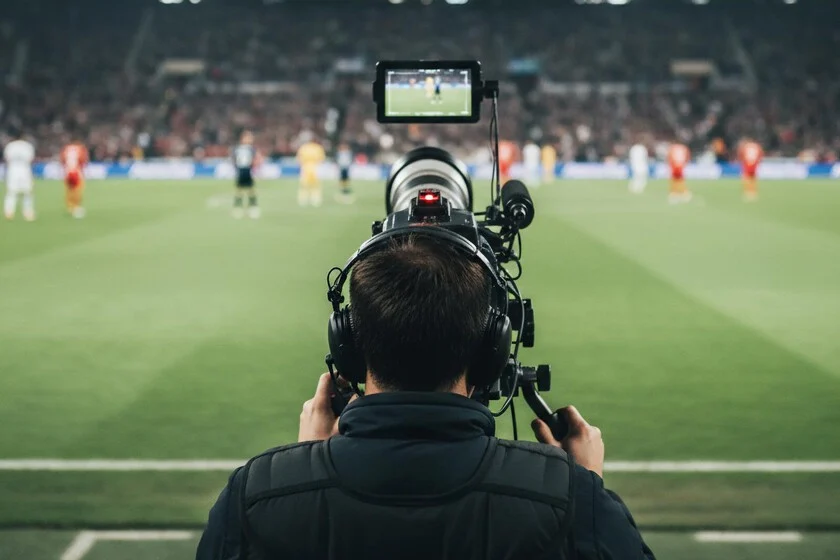

The scene is undoubtedly familiar: you’re engrossed in a football match via a streaming application, only for a triumphant roar to erupt from your neighbor’s window moments before the ball has even crossed midfield on your screen. This isn’t a premonition, nor is it a conspiracy; the explanation lies squarely with latency, the critical measure of time it takes for an audiovisual signal to traverse from its point of origin – in this instance, a bustling football stadium – to its final destination: your television or device screen. This temporal disparity is a fundamental aspect of modern broadcasting, impacting everything from the casual viewer’s experience to the intricate operations of global media companies.
The Illusion of Real-Time: A Historical Perspective
The very notion of "live" broadcasting is, in a strictly technical sense, an illusion. While the term implies instantaneous transmission, every step in the capture, processing, and delivery chain introduces a minute, yet perceptible, delay. This has always been the case, even in the nascent days of radio and television. Early radio broadcasts, transmitted via analog waves, were remarkably swift, often reaching listeners within milliseconds of the actual event. However, as television emerged and demanded the transmission of complex visual information, the inherent processing requirements began to add seconds to this delay.
The evolution from analog to digital broadcasting marked a significant paradigm shift. Digital signals, while offering superior quality, resilience, and efficiency in spectrum usage, necessitate encoding and decoding processes. These computational steps, though incredibly fast, contribute to the overall latency. The advent of the internet and, subsequently, streaming services, further complicated this landscape, introducing entirely new layers of processing and distribution that have pushed latency figures higher, creating the very scenario where your neighbor’s cheer precedes your own. Understanding these historical and technological layers is crucial to grasping why a truly "live" broadcast, outside of direct sensory perception at the event itself, remains an elusive ideal.
Deconstructing Latency: The Broadcast Chain Explained
To comprehend the varying degrees of delay across different transmission methods, one must dissect the journey of a broadcast signal. Each stage in this journey, from the camera lens to your display, contributes to the cumulative latency.
Radio: The Swiftest Messenger
Radio, particularly traditional analog FM, remains the fastest medium for event transmission. Its core advantage lies in its simplicity: it primarily transports audio. Analog FM signals are modulated directly onto carrier waves, requiring minimal processing before transmission. The speed of light dictates the primary delay, which is negligible over terrestrial distances. This makes analog radio almost instantaneous, often with delays measured in mere tens or hundreds of milliseconds.
Digital radio, such as DAB (Digital Audio Broadcasting) or DAB+, introduces a slight increase in latency. To achieve better sound quality, more efficient spectrum use, and additional data services, digital radio signals undergo compression and encoding. These processes, while beneficial, add a small, often unnoticeable, delay compared to analog FM. The encoding/decoding cycle, however, is far less complex than that for video, maintaining radio’s lead in terms of immediacy.
Digital Terrestrial Television (DTT/TDT): Balancing Quality and Speed
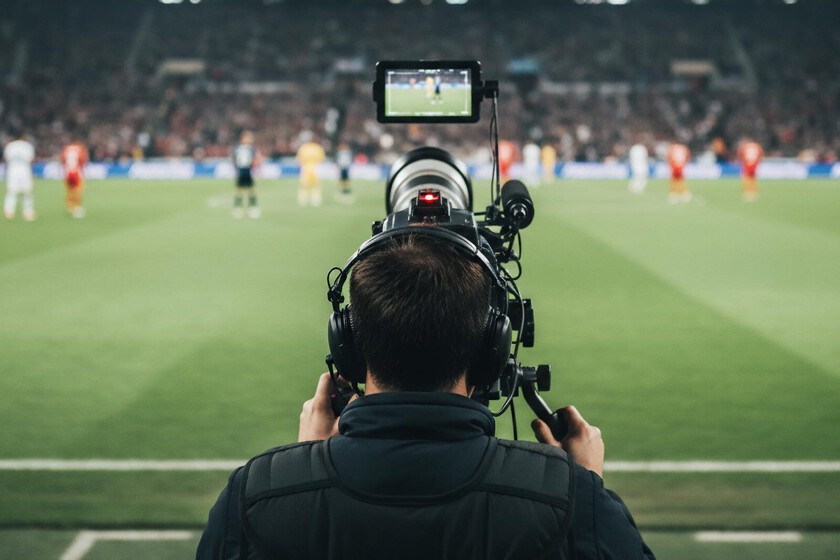
Digital Terrestrial Television (DTT), known as TDT in Spain, represents a more complex broadcast chain than radio. When a football match is broadcast via DTT, the video signal undergoes several critical stages that introduce latency:
-
Capture and Encoding: Cameras at the stadium capture high-definition video. This raw video is then fed into encoders, which compress the massive data stream into a manageable format. Common video codecs used in DTT include MPEG-2 and H.264/AVC (Advanced Video Coding). These codecs work by analyzing multiple frames of video to identify redundant information and discard it, significantly reducing bandwidth requirements. This "Group of Pictures" (GOP) structure, where a frame’s data often depends on preceding and succeeding frames, inherently introduces a delay as the encoder needs to "look ahead" and "look back" to achieve optimal compression. This encoding delay can range from hundreds of milliseconds to a few seconds.
-
Multiplexing and Modulation: Once encoded, multiple video and audio streams (for different channels) are combined into a single data stream via a multiplexer. This stream is then modulated onto radio frequency carriers suitable for terrestrial transmission.
-
Transmission and Distribution: The modulated signal is sent from a central broadcast facility to a network of terrestrial antennas and repeaters. The physical travel time, while significant over vast distances, is typically less impactful than the processing delays.
-
Reception and Decoding: At the viewer’s home, a DTT receiver (built into modern TVs or external set-top boxes) captures the signal, demodulates it, and then decodes the compressed video and audio back into a format the TV can display. The TV itself also adds a small processing delay (often referred to as "display lag") as it scales and renders the image.
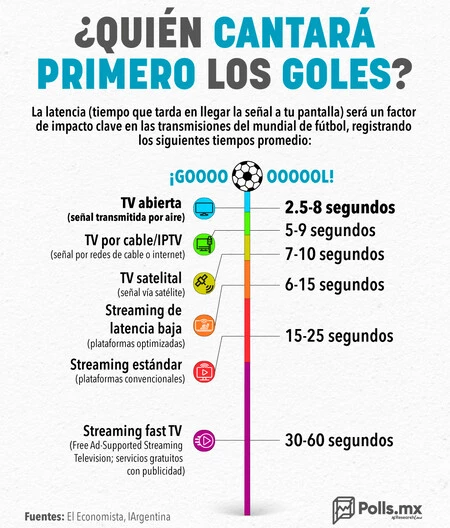
The cumulative effect of these steps means DTT broadcasts typically exhibit a latency of 5 to 10 seconds, depending on the specific equipment, encoding parameters, and network configuration. While faster than many streaming options, it’s still far from truly instantaneous.
The Streaming Conundrum: Latency Multiplied by Complexity
Streaming, or Over-The-Top (OTT) content delivery, introduces the highest levels of latency among common broadcast methods. Its complexity stems from the need to deliver content over the public internet to a vast array of devices, each with varying network conditions and display capabilities.
-
Enhanced Encoding and Transcoding: Beyond initial encoding, streaming services often transcode the video into multiple versions (different resolutions, bitrates, and even codecs) to support adaptive bitrate streaming (ABS). This allows the viewer’s device to switch seamlessly between video qualities based on their internet connection’s stability. Each transcoding step adds further processing delay.
-
Content Delivery Networks (CDNs): To efficiently distribute content globally, streaming providers rely on CDNs. These distributed networks of servers store copies of the content closer to end-users, reducing geographical latency. However, the process of ingesting, storing, and serving content through a CDN still adds to the overall delay.
-
Adaptive Bitrate Streaming Protocols (HLS/DASH): The backbone of most modern streaming is protocols like HTTP Live Streaming (HLS) by Apple and Dynamic Adaptive Streaming over HTTP (DASH) by MPEG. These protocols don’t transmit a continuous, uninterrupted stream. Instead, they segment the video into small chunks, typically 2 to 10 seconds long. The viewer’s device then downloads these segments sequentially.
-
Buffering: The Necessary Evil: To ensure smooth playback and prevent interruptions (buffering wheels or pixelation) due to fluctuating internet speeds, the player on your device downloads and stores several segments ahead of what is currently being played. This "buffer" acts as a cushion, allowing playback to continue even if there are momentary drops in network throughput. While crucial for a stable viewing experience, this buffering directly contributes to latency. A larger buffer means a more stable stream but also a longer delay.
-
Network and Device Variability: The internet itself is a complex, shared network. Congestion, Wi-Fi interference, the performance of your home router, and the processing power of your specific device all introduce additional, variable delays.
The combination of these factors means that streaming services typically exhibit latency figures ranging from 20 to 60 seconds, and sometimes even more, placing them significantly behind DTT and radio in terms of real-time delivery. The exact delay can even vary between viewers using the same app due to differences in network conditions and device-specific buffer management.
The Impact of Latency: From Annoyance to Business Criticality
The implications of broadcast latency extend far beyond the minor annoyance of hearing a goal before seeing it. They touch upon viewer engagement, the integrity of sports betting, and the competitive strategies of media companies.
Viewer Experience and Social Synchronicity: The "neighbor’s goal" phenomenon highlights a fundamental disruption to the shared, synchronous experience that live sports traditionally offer. It can diminish the excitement, spoil crucial moments, and even create a sense of being disconnected from the live event. In an age where social media thrives on real-time reactions, latency can make it challenging for viewers to participate in online discussions without encountering spoilers or feeling out of sync.
Sports Betting and Market Integrity: For the rapidly growing sports betting industry, latency is not just an inconvenience; it’s a critical factor affecting market integrity and fair play. Even a few seconds of delay can provide an unfair advantage to those with faster feeds, allowing them to place or alter bets with information not yet available to others. This has led to significant investment in low-latency data feeds and stringent regulations within the betting sector.
Broadcaster Strategies and Competitive Landscape: Media companies face a constant dilemma: prioritize stability and high quality, which often means higher latency, or strive for minimal delay, potentially at the cost of stream reliability. Traditional broadcasters using DTT leverage their inherent latency advantage for truly time-sensitive events. Streaming services, on the other hand, must continually innovate to reduce latency while maintaining a robust, high-quality viewer experience. This competition drives significant research and development into new streaming technologies and infrastructure.

Industry Efforts Towards a More Synchronous Future
Recognizing the multifaceted challenges posed by latency, the broadcast and technology industries are actively developing and deploying solutions aimed at narrowing the gap between the live event and the viewer’s screen.
Low-Latency Streaming Protocols: A major area of focus is the evolution of streaming protocols. Low-Latency HLS (LL-HLS) and Low-Latency DASH (LL-DASH) are designed to reduce segment sizes from several seconds to just hundreds of milliseconds. This means the player’s buffer can be much smaller, significantly cutting down the delay. While these advancements bring streaming closer to DTT, they often come with trade-offs in terms of complexity and the potential for increased buffering if network conditions are unstable.
Advanced Transport Protocols: Protocols like Secure Reliable Transport (SRT) and Reliable Internet Stream Transport (RIST) are gaining traction for professional contribution and distribution. These protocols are engineered to deliver high-quality video reliably and with minimal latency over unpredictable internet connections, making them ideal for the links between the stadium and the streaming provider’s infrastructure.
WebRTC for Ultra-Low Latency: WebRTC (Web Real-Time Communication), primarily known for video conferencing, offers near real-time, ultra-low latency capabilities (often under 500ms). While challenging to scale for massive broadcast audiences due to its peer-to-peer nature and lack of built-in adaptive bitrate features, it holds promise for niche applications or as a component in hybrid solutions for specific interactive elements.
Edge Computing and 5G Integration: Deploying computing resources closer to the network edge, often in conjunction with 5G networks, is another strategy. By processing and caching content at local data centers or mobile network nodes, the physical distance the data needs to travel is reduced, thus cutting down latency. 5G’s inherent low-latency characteristics (designed for mission-critical applications) are expected to play a transformative role in future live streaming, enabling more efficient and responsive content delivery.
Optimization in the Encoding Chain: Continuous improvements in video compression algorithms and hardware encoders are also contributing to lower latency. Newer codecs like H.265 (HEVC) and the emerging AV1 offer better compression efficiency, potentially allowing for smaller segment sizes and less processing delay without compromising quality.
The Everlasting Quest for "Live"
Ultimately, the pursuit of zero latency in broadcasting, outside of being physically present at the event, remains an engineering challenge rooted in the laws of physics and the practicalities of data processing. Every step required to capture, encode, transmit, and decode a signal inherently adds time. The speed of light, while incredibly fast, is not infinite, and the computational steps, no matter how optimized, require finite durations.
However, the relentless innovation in broadcast technology continues to shrink these delays. The gap between the live event and the viewer’s screen is steadily closing, driven by consumer demand for immediacy, the commercial pressures of sports betting, and the overarching desire for a more immersive and interactive viewing experience. While your neighbor might occasionally still get a head start on celebrating a goal, the industry’s dedication to overcoming latency ensures that the thrill of live sports will continue to be delivered with ever-increasing synchronicity and technological sophistication. The future promises a viewing experience where the roar from the stadium and the cheer from your living room align more closely than ever before, even if absolute simultaneity remains a distant dream.
