
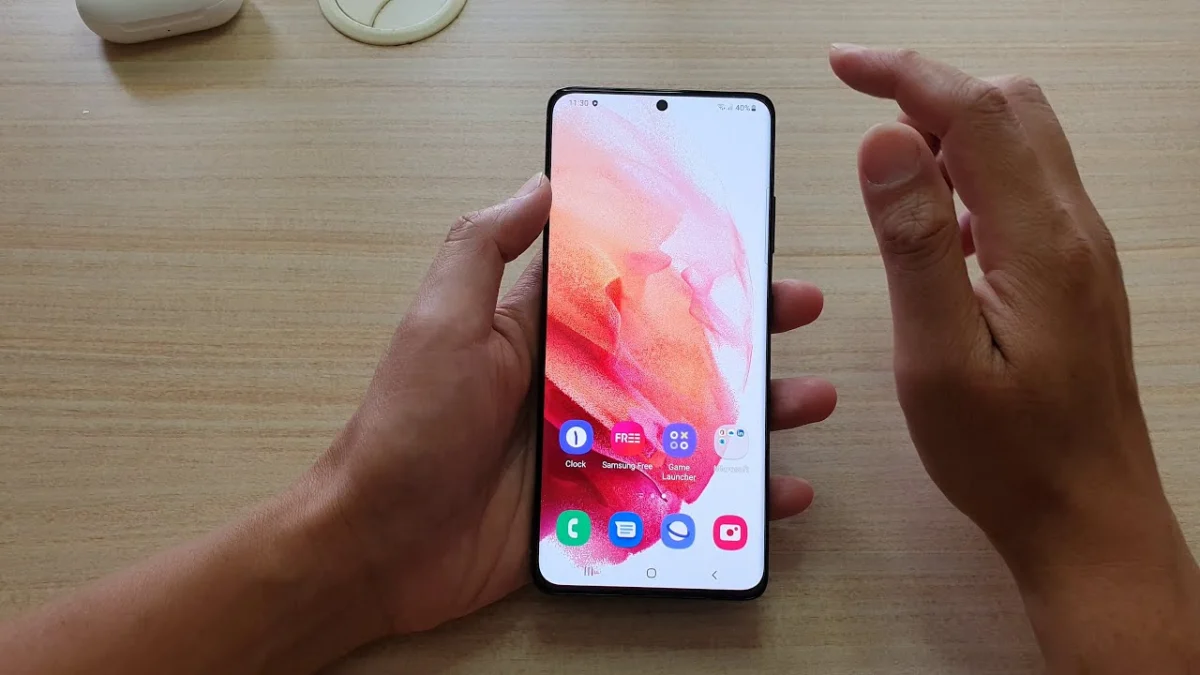

The landscape of mobile telecommunications is undergoing a fundamental shift as physical hardware gives way to software-defined solutions, a transition most visible in the rise of the embedded SIM, or eSIM. For users of Samsung Galaxy devices, this technology represents a significant departure from the decades-old reliance on plastic SIM cards, offering a streamlined approach to network connectivity that aligns with the broader industry trend toward miniaturization and digital-first consumer experiences. An eSIM, or embedded Universal Integrated Circuit Card (eUICC), is a programmable chip soldered directly onto the device’s motherboard during the manufacturing process. Unlike the traditional subscriber identity module (SIM) that requires a physical slot and manual handling, the eSIM is a permanent fixture that can be reconfigured remotely to support multiple carrier profiles.
The integration of eSIM technology into Samsung’s ecosystem began not with smartphones, but with wearables. In 2016, Samsung launched the Gear S2 Classic 3G, the first device in the world to feature a GSMA-compliant eSIM. This milestone set the stage for the technology to migrate to the flagship smartphone lineup, beginning in earnest with the Galaxy S20 series in 2020. Since then, Samsung has progressively expanded eSIM support across its premium and mid-range portfolios, including the Galaxy S, Note, Z Fold, and Z Flip series, as well as select models in the Galaxy A series. This transition is not merely a matter of convenience; it is a strategic move that reflects the changing demands of global travelers, multi-line professionals, and environmental advocates.
The Technical Architecture of Samsung eSIMs
To understand how eSIMs function on Samsung devices, one must look at the interplay between the hardware chip and the software interface, typically Samsung’s One UI. The eUICC chip is designed to store multiple "profiles," which are essentially digital versions of the data found on a physical SIM card—such as the International Mobile Subscriber Identity (IMSI) and the authentication key. While a device may store up to five or more profiles depending on the specific model and storage capacity, only one or two can typically be active at any given time, depending on whether the device supports Dual SIM Dual Standby (DSDS) technology.
The activation process on a Samsung device is designed to bypass the need for a retail visit. When a user signs up for a plan, the carrier provides a digital credential, usually in the form of a QR code or an activation code. This code points the device to a Subscription Manager Data Preparation (SM-DP+) server. The device then securely downloads the encrypted profile over a Wi-Fi or cellular connection. On Samsung devices, this is managed through the "SIM Card Manager" or "SIM Manager" menu within the connections settings. This digital provisioning eliminates the logistical hurdles of shipping physical cards and the mechanical risks associated with the fragile SIM tray and pin mechanism.
A Chronology of Samsung’s eSIM Adoption
The timeline of Samsung’s eSIM adoption highlights a cautious but steady rollout that initially varied by geographic region.
- 2016: The Gear S2 Classic 3G debuts as the first commercial implementation of GSMA-standard eSIM technology.
- 2018-2019: eSIM becomes a staple in the Galaxy Watch series, allowing users to leave their phones at home while maintaining LTE connectivity.
- 2020: The Galaxy S20, S20+, and S20 Ultra are released with eSIM capabilities in most international markets. However, North American variants saw delayed activation of these features via software updates.
- 2021-2022: The Galaxy S21 and S22 series further solidify eSIM as a standard flagship feature. Samsung also begins integrating the feature into the Galaxy Z Fold and Z Flip series, where internal space is at a premium.
- 2023-2024: With the Galaxy S23 and S24 series, Samsung has refined the "Quick Transfer" feature, allowing users to move eSIM profiles between Galaxy devices more seamlessly, mirroring a similar convenience found in the iOS ecosystem.
Supporting Data and Market Trends
The shift toward eSIM is supported by robust market data. According to a 2023 report by Juniper Research, the number of eSIM-capable devices is expected to grow from roughly 1.2 billion in 2021 to over 3.4 billion by 2025. This 180% increase is driven largely by major manufacturers like Samsung and Apple moving away from physical-only configurations. Furthermore, Counterpoint Research indicates that Samsung currently holds a significant share of the eSIM-capable smartphone market, second only to Apple, with its dominance particularly strong in the Android sector across Europe and Asia.
Carrier support has also reached a critical mass. As of early 2024, over 200 mobile network operators (MNOs) and mobile virtual network operators (MVNOs) worldwide support eSIM for Samsung devices. This includes major global players such as AT&T, T-Mobile, and Verizon in the United States; Vodafone, Orange, and Deutsche Telekom in Europe; and SK Telecom and KT in South Korea. The rise of "travel eSIM" providers like Airalo and Holafly has further popularized the technology, offering data-only plans for international tourists that can be activated in seconds upon landing in a new country.
Official Responses and Strategic Implications
Samsung’s commitment to eSIM technology is also tied to its "Galaxy for the Planet" sustainability initiative. By reducing the need for physical SIM cards, which are made of plastic and metal and often come attached to larger plastic credit-card-sized holders, Samsung is contributing to a reduction in electronic waste. In a statement regarding its environmental goals, Samsung emphasized that "minimizing the environmental footprint of our products involves rethinking every component, including how we connect to networks."
Industry analysts point out that the removal of the physical SIM slot is the eventual endgame. "The SIM tray is one of the last remaining holes in a smartphone’s chassis," notes technology analyst Mark Lowenstein. "Eliminating it allows for better water resistance, larger batteries, and more structural integrity. Samsung is clearly moving in a direction where the ‘SIM-less’ phone becomes the standard for the next decade."
Security and Privacy Advantages
From a security perspective, the eSIM offers several advantages over its physical predecessor. Because the eSIM is embedded in the device, it cannot be easily removed by a thief. In the event of a stolen phone, the owner can maintain a connection to the device to track its location via Samsung’s "Find My Mobile" service. A physical SIM card can be popped out in seconds, immediately severing the device’s connection to the network and making it harder to recover.
Furthermore, the remote provisioning process is protected by advanced encryption standards. The GSMA (Global System for Mobile Communications Association) ensures that the credentials stored on the eUICC are as secure as those on a traditional chip, with the added benefit that they cannot be physically "cloned" as easily as older generations of SIM cards.
Current Limitations and Consumer Challenges
Despite the clear trajectory toward a digital-only future, several hurdles remain for Samsung users. One of the primary issues is carrier locking. Even if a Samsung device has an eSIM, it may be software-locked to a specific carrier if purchased under a contract. This prevents the user from adding a second eSIM profile from a competitor until the device is fully paid off and unlocked.
Additionally, the process of transferring an eSIM from one device to another is not yet as universal as moving a physical piece of plastic. While Samsung’s "eSIM Transfer" tool works well between two Galaxy devices running modern versions of One UI, moving a profile from a Galaxy phone to a different brand or vice versa often requires contacting the carrier to issue a new QR code. There is also the issue of "activation fees." Some carriers have faced criticism for charging users to activate an eSIM, a fee that was traditionally associated with the cost of a physical card, leading to accusations of "rent-seeking" on a purely digital service.
Broader Impact and the Future of Connectivity
The implications of eSIM technology extend far beyond the smartphone. For Samsung, the eSIM is a bridge to a more integrated Internet of Things (IoT) ecosystem. As tablets, laptops, and even home appliances begin to feature embedded connectivity, the ability to manage all these subscriptions from a single Samsung account or device becomes a powerful value proposition.
Looking ahead, the industry is already discussing the "iSIM" (Integrated SIM), which moves the SIM functionality from a separate dedicated chip directly into the device’s main processor (SoC). Samsung, in partnership with Qualcomm and Vodafone, has already demonstrated this technology. The iSIM would take up even less space than the current eSIM, potentially paving the way for even smaller wearables and more efficient internal designs in future Galaxy flagships.
In conclusion, the integration of eSIM technology on Samsung devices represents a pivotal moment in mobile history. It offers a more flexible, secure, and environmentally friendly way to stay connected. While the transition period involves some growing pains regarding carrier policies and cross-platform transfers, the benefits of digital-first connectivity are becoming impossible to ignore. As Samsung continues to refine its software and expand support across its product lines, the physical SIM card is rapidly becoming a relic of a bygone analog era.
