
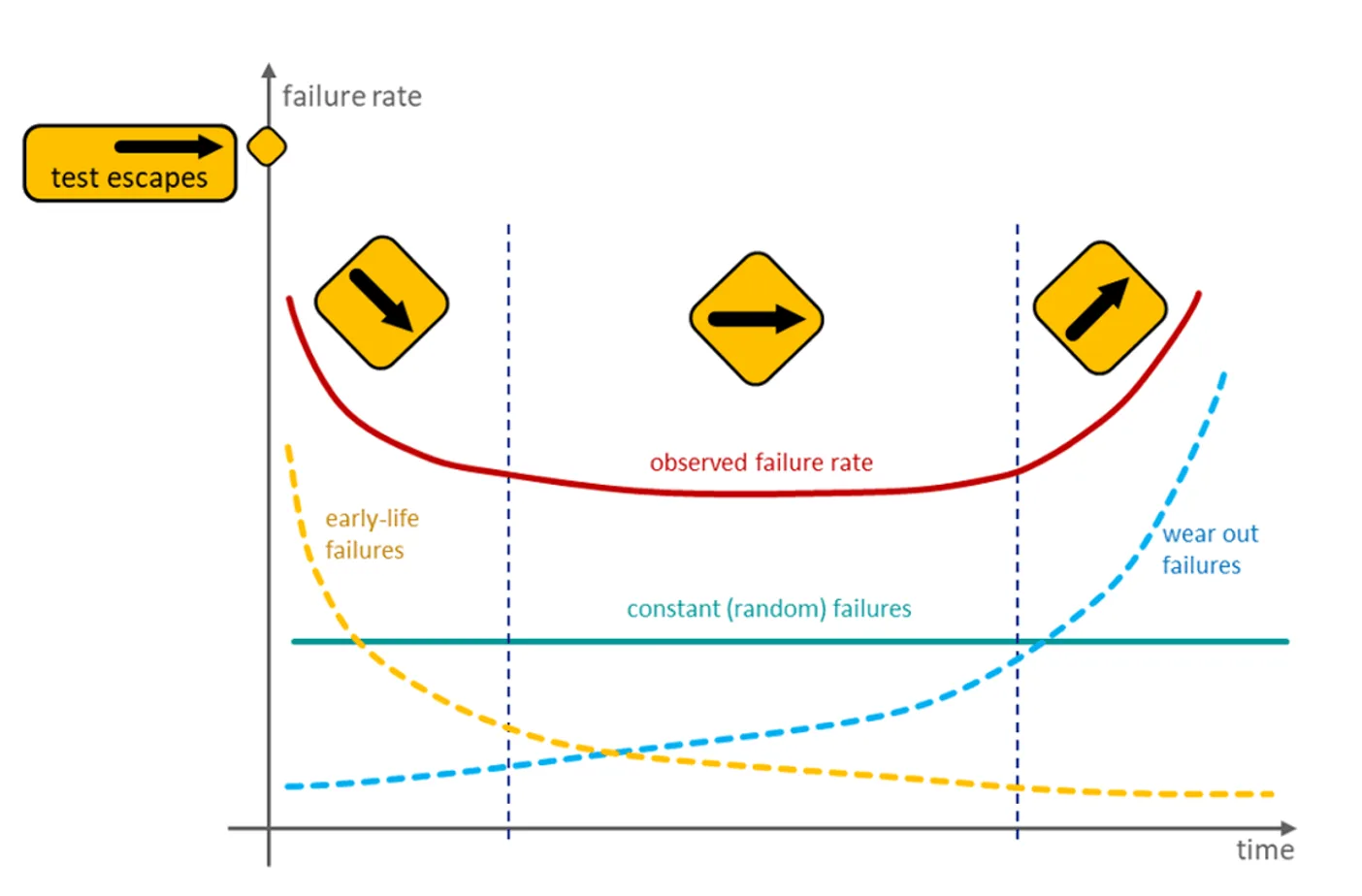

The semiconductor industry is currently grappling with an elusive and costly adversary known as silent data errors (SDEs), or silent data corruption (SDC) failures. These defects, which occur when a processor generates an incorrect output without triggering a system-level alert or crash, represent a significant threat to the integrity of modern data centers. As AI training runs, large-scale database operations, and critical cloud services scale, the impact of these "stealth" failures is moving from a manageable nuisance to a multi-billion-dollar operational crisis.
The technical challenge lies in the nature of SDEs: they leave no digital footprint. Unlike a hard crash that can be logged and debugged, an SDE allows a faulty calculation—such as a simple arithmetic error—to propagate through complex software stacks. By the time the error is detected, the underlying cause is often obscured, making root-cause analysis an arduous, weeks-long endeavor that demands the cooperation of experts from design, test, failure analysis, and software engineering.
A Brief Chronology of the SDE Surge
The industry’s awareness of SDEs as a systemic, rather than isolated, problem gained critical momentum in 2021. As cloud hyperscalers like Google and Meta began pushing leading-node processors to higher utilization rates, they identified that SDEs were afflicting approximately one in a thousand servers.
Prior to this, reliability metrics were typically measured in "defective parts per million" (DPPM). Historically, commercial electronics aimed for 100 to 300 DPPM over the first year of field operation. However, the move to advanced process nodes, such as gate-all-around (GAA) and nanosheet transistor architectures, has introduced a level of complexity where traditional testing methods—which were sufficient for single-chip SoCs—are proving inadequate. Engineers are now being forced to pivot toward automotive-grade reliability standards, seeking sub-1 DPPM quality for massive server fleets, a feat that is exponentially harder to achieve at scale.
Understanding the Anatomy of a Silent Failure
Silent data corruption is primarily the result of subtle manufacturing defects that escape standard "time-zero" testing. While 80% of these errors are attributed to test escapes during the manufacturing phase, the remaining 20% are tied to intermittency and silicon aging.
These errors manifest as a result of various physical and environmental triggers:

- Intrinsic Reliability Mechanisms: Phenomena such as negative bias temperature instability (NBTI), hot carrier injection (HCI), and time-dependent dielectric breakdown (TDDB) degrade the silicon over time.
- Process Marginalities: Advanced process nodes have smaller, more resistive interconnects and slimmer timing margins, making them susceptible to environmental fluctuations in temperature and voltage.
- Multi-Input Switching: Traditional testing relies on single-input switching (SIS) models, which do not accurately replicate the high-frequency, complex workload transitions seen in modern "agentic" AI applications. This leaves a gap where small delay defects only reveal themselves during active, high-stress functional operation.
The Data-Driven Reality of Modern Infrastructure
The mathematics of SDEs in large-scale environments is sobering. In a fleet of 10 million devices, a failure rate of 10 Failures-in-Time (FIT)—meaning one failure per billion hours—would result in an SDE event every four days. For hyperscalers managing massive, interconnected compute clusters, such a frequency is operationally unsustainable.
Research conducted by Intel across five generations of Xeon processors underscores the difficulty of the task. Engineers found that over 1,000 functional tests and 5,000 synthetic stress tests were required to screen for SDEs effectively. Critically, the study revealed that approximately 70% of identified defects were caught by only a single test, and a bespoke test suite designed for one generation of hardware provided little to no value for the subsequent generation. This lack of continuity forces companies to constantly rebuild their screening strategies, adding immense R&D overhead.
Strategic Responses from Hyperscalers
Recognizing that pre-shipment screening is no longer sufficient, major industry players are shifting toward a "mission-mode" testing philosophy. This involves continuous, in-situ monitoring of hardware health throughout the component’s lifecycle.
Meta has implemented a layered defense strategy including "Fleetscanner," which periodically pulls servers from production to run targeted computational benchmarks; "Ripple," which executes short-burst test patterns during standard production; and "Hardware Sentinel," an architecture-agnostic approach that monitors system exceptions to identify core-level anomalies.
Google has adopted a similarly robust multi-layered strategy. By utilizing application-level telemetry through tools like Spanner, Google can detect corruption in real-time, remove faulty machines from the fleet, and feed that data back into its screening processes to improve the identification of problematic cores in future deployments. These companies are effectively treating the data center not as a static environment, but as a living system that requires constant health assessment.
The Role of Silicon Lifecycle Management
As traditional testing reaches its physical limits, the industry is increasingly turning to Silicon Lifecycle Management (SLM). Companies like proteanTecs and Synopsys are advocating for deep, on-chip monitoring of timing margins, voltage, and temperature. By collecting this telemetry data, operators can identify "outliers"—chips that, while currently passing all tests, show early signs of degradation or margin erosion.

This paradigm shift requires moving from identifying "bad" parts to predicting which "good" parts are trending toward failure. Machine learning models are now being trained to analyze parametric measurements to flag devices that deviate from the expected profile. However, this level of granularity requires deep integration between the design phase and the field operation phase, a collaboration that is currently hindered by the siloed nature of the semiconductor supply chain.
Implications and the Path Toward Industry-Wide Collaboration
The economic implications of SDEs are vast. A single undetected error can lead to corrupted databases, invalidated AI model training, and a catastrophic loss of user trust. The challenge is that SDE debugging is a "multi-language" problem: system engineers report issues in firmware and register reads, while structural test engineers work with scan chains and logic cones. Bridging this gap requires an unprecedented level of data sharing.
Industry leaders such as John Carulli of Advantest have emphasized that the current legal and business frameworks governing cross-company data sharing are the primary bottlenecks. Without a concerted effort to share failure data across the ecosystem—including universities and EDA vendors—the industry risks hitting a "quality wall" where the complexity of the hardware outpaces the capability to guarantee its correctness.
Conclusion
The rise of silent data errors marks a fundamental transition in the semiconductor industry. For decades, the objective of testing was to verify structural integrity at the point of shipment. Today, that definition has expanded to include the continuous verification of computational correctness under realistic, volatile workloads.
As the industry moves forward, the "all hands on deck" approach will likely coalesce around three pillars: universal implementation of in-system testing, the integration of AI-driven silicon health monitoring, and a cultural shift toward data transparency. SDEs are not merely a technical glitch to be "fixed" with a better test pattern; they are a persistent feature of the nanometer era that demands a new, proactive approach to digital infrastructure reliability. The companies that successfully master this lifecycle-wide quality management will set the standard for the next generation of high-performance computing.
