
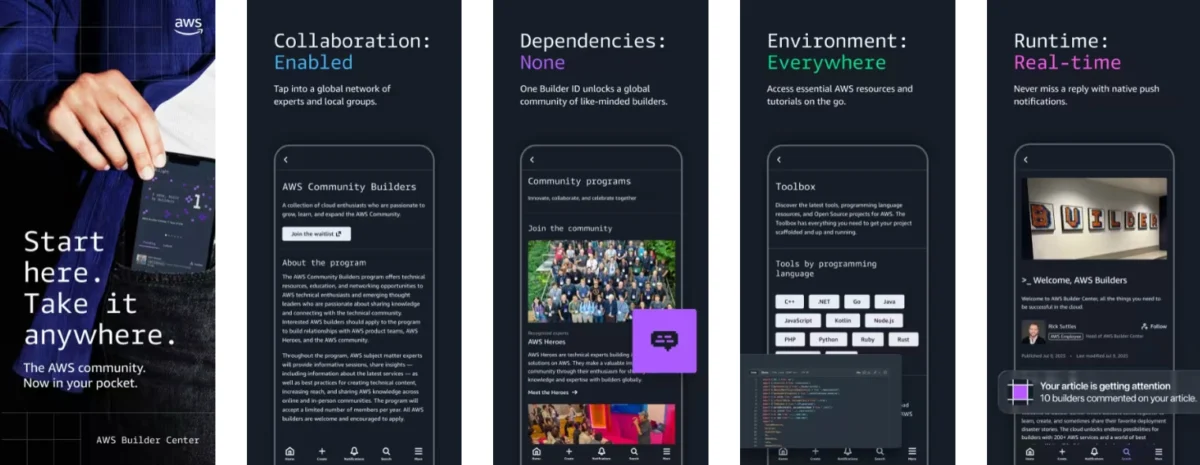

Amazon Web Services (AWS) has announced the official worldwide release of the AWS Builder Center mobile application for iOS and Android devices, marking a significant expansion of its developer ecosystem beyond traditional desktop and web-based environments. Designed to streamline how developers, engineers, and cloud architects consume technical content and manage learning pathways, the new application integrates seamlessly with the existing AWS Builder ID system. This launch coincides with the introduction of interactive community polls and the launch of the Zero to Shipped hackathon, a global coding competition featuring a $28,000 prize pool designed to test AI-assisted and agentic development workflows on the cloud.
The rollout of the mobile application addresses a long-standing demand within the global cloud engineering community for a centralized, portable platform to access technical literature, educational courses, and event calendars. Previously, developers seeking to catch up on trending architectural patterns, community blog posts, or hands-on tutorials were restricted to desktop browsers or mobile web interfaces that often lacked native optimization. By transitioning the AWS Builder Center into a dedicated mobile application available on the Apple App Store and Google Play Store, AWS aims to capture micro-learning moments, allowing professionals to utilize downtime—such as daily commutes or periods between professional engagements—for continuous technical upskilling.
Main Facts of the Release
The AWS Builder Center mobile application consolidates multiple developer resources into a single, cohesive interface. Central to its functionality is the integration of the AWS Builder ID, which maintains persistent session states across devices. This authentication framework allows users to seamlessly transition from desktop workstations to mobile devices without losing their reading progress, saved bookmarks, or notification preferences.
Key features of the newly launched application include:
- Content Discovery: Real-time access to trending articles, technical deep-dives, and architectural best practices authored by AWS engineers, AWS Heroes, Community Builders, and User Group Leaders.
- Educational Integration: Direct access to over 600 AWS Skill Builder courses, enabling users to pursue continuous learning and cloud certification preparation directly from their mobile devices.
- Hands-On Sandboxes: Management capabilities for interactive workshops that incorporate free sandbox environments, allowing developers to test infrastructure-as-code and cloud configurations on the go.
- Event Management: Up-to-date schedules and RSVP tracking for global Builder Loft events, meetups, and developer conferences.
- Push Notification Infrastructure: Customizable alerts for subscribed technical topics, community discussions, and updates from specific authors or user groups.
- Product Feedback Integration: Full support for the Wishlist feature, enabling developers to submit direct feature requests and product feedback to internal AWS product teams.
- Interactive Community Polls: A newly introduced feature permitting users to post multi-option questions directly to the Home feed, complete with live results, anonymous voting, and comment-based discussions.
Background Context and Technological Evolution
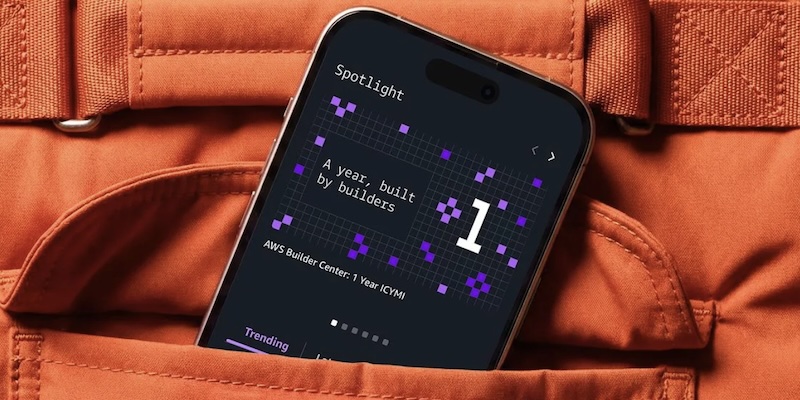
The deployment of the AWS Builder Center app reflects a broader industry shift toward mobile-first developer tooling and decentralized knowledge sharing. Over the past decade, AWS has systematically expanded its community engagement initiatives, evolving from static documentation sites and isolated forums to dynamic, peer-driven platforms such as the AWS Community Builders program and AWS Heroes network.
As cloud computing architectures have grown increasingly complex—spanning serverless computing, containerization, artificial intelligence, and edge processing—the velocity of technical information has accelerated proportionally. Developers face the constant challenge of staying abreast of rapidly changing service releases, security patches, and architectural frameworks. By mobilizing the Builder Center, AWS is attempting to lower the friction associated with professional development, turning mobile devices into active portals for cloud engineering education.
Furthermore, the integration of sandbox environment management highlights the maturation of cloud-based education. Historically, executing hands-on coding workshops required a stable desktop setup with pre-configured terminal tools and Integrated Development Environments (IDEs). The ability to initiate, monitor, and manage cloud sandbox environments through a mobile interface signals a future where architectural prototyping and tutorial execution are no longer bound to physical workstations.
Chronology of Recent Platform Developments
The release of the mobile application and associated features follows a structured roadmap of community-focused enhancements deployed throughout the third quarter:
- Early September 2026: AWS initiates preliminary beta testing of the unified Builder Center identity framework, preparing the infrastructure for cross-platform synchronization via AWS Builder ID.
- Mid-September 2026: Official worldwide publication of the AWS Builder Center application on the Apple App Store for iOS devices and the Google Play Store for Android platforms.
- September 18, 2026: Launch of the Zero to Shipped hackathon, opening registration and project submission pipelines for global developers utilizing coding agents.
- Concurrent Rollout: Introduction of community polls on the Home feed, giving creators and users an interactive mechanism to survey developer sentiment and technical preferences.
- October 2, 2026: Scheduled closing date for the Zero to Shipped hackathon submissions, after which judging panels will evaluate projects for the $28,000 prize distribution.
Supporting Data and Hackathon Parameters
The launch of the Zero to Shipped hackathon serves as a practical stress test for the platform’s community engagement model while highlighting current trends in software engineering. Scheduled to run from September 18 to October 2, the competition challenges participants to connect modern coding agents directly to AWS infrastructure, construct functional cloud-native applications, and deploy them live in production environments.

The economic incentives structured around the hackathon underscore the growing emphasis on AI-assisted development and automated software delivery:
- Total Prize Pool: $28,000 distributed among top-performing projects.
- Winner Allocation: Five distinct winning projects will each receive $5,000 in AWS service credits, defraying the operational costs of running cloud workloads.
- Additional Recognition: Winners will receive curated AWS Builder swag bundles.
- Technical Scope: Projects must demonstrate the integration of coding agents with AWS services, emphasizing rapid prototyping, deployment efficiency, and production readiness.
Official Responses and Industry Implications
While formal corporate reactions from external enterprise leadership remain measured, internal AWS product management teams have emphasized that the mobile app and interactive features are direct responses to community feedback gathered across global user groups. The implementation of anonymous community polls and structured wishlist feedback loops demonstrates an institutional commitment to closing the feedback loop between platform engineers and everyday cloud builders.
Industry analysts reviewing the release point to several broader implications for the cloud computing market:
- Decentralization of Technical Knowledge: As developer ecosystems expand, platform stickiness increasingly depends on community engagement rather than raw infrastructure capabilities. Providing native mobile access lowers barriers to entry for emerging developers while keeping established architects tethered to the AWS ecosystem.
- The Rise of Agentic Development Workflows: The focus of the Zero to Shipped hackathon on coding agents reflects a profound structural shift in software engineering. By encouraging developers to integrate AI coding assistants directly with cloud backends, AWS is actively validating the transition from manual coding to orchestration-driven development.
- Micro-Learning as a Standard: The integration of Skill Builder courses into a mobile feed format validates the consumerization of enterprise technology education. Continuous professional development is increasingly treated as an asynchronous, bite-sized activity rather than a scheduled classroom event.
Broader Impact and Future Outlook
The introduction of the AWS Builder Center mobile app, alongside interactive community features and competitive coding challenges, illustrates how major cloud providers are reimagining developer relations. By bridging the gap between passive content consumption—such as reading technical articles—and active cloud management, such as provisioning sandbox environments and deploying hackathon applications, AWS is creating a comprehensive, end-to-end mobile workspace for modern software creators.
As the tech industry transitions deeper into an era defined by artificial intelligence, automated coding agents, and distributed cloud architectures, platforms that successfully mobilize developer communities and streamline knowledge transfer will likely hold a distinct competitive advantage. For the millions of developers utilizing AWS infrastructure worldwide, the availability of a pocket-sized portal for learning, building, and collaborating represents a meaningful evolution in how cloud engineering is practiced, learned, and shared.
