


Virtualization technology has fundamentally transformed how modern enterprises, software developers, and IT professionals architect their infrastructure. By decoupling operating systems and applications from underlying physical hardware, virtualization software allows Linux users to create isolated virtual environments, universally known as virtual machines (VMs). Each VM operates independently with its own allocated hardware resources, memory, storage, and operating systems. Within the Linux ecosystem, the spectrum of available virtualization tools is vast—ranging from lightweight, user-friendly desktop platforms to robust, feature-dense hypervisors engineered specifically for hyper-scale enterprise cloud deployments. This comprehensive overview examines the top six virtual machine software solutions for Linux, analyzing their performance, architectural nuances, pricing structures, and overall utility.
Understanding Linux Virtualization: Evolution and Architectural Foundations

The history of Linux virtualization traces back decades, evolving in tandem with processor architectures and kernel developments. Initially, virtualization required complex translation layers that introduced heavy performance penalties. However, the introduction of hardware-assisted virtualization extensions by major CPU manufacturers—such as Intel VT-x and AMD-V—drastically shifted the landscape.
Chronologically, the turning point for native Linux virtualization occurred in 2007 with the official integration of the Kernel-based Virtual Machine (KVM) directly into the mainline Linux kernel. This milestone converted Linux into a type-1 (bare-metal) hypervisor, allowing it to leverage kernel-level security, scheduling, and memory management directly for virtualized workloads. Concurrently, independent projects like QEMU and the Xen Project matured, establishing the foundational bedrock for modern cloud computing. Today, hyperscalers and enterprises alike rely on these open-source frameworks to run millions of virtualized instances globally.
Evaluating the Top Six Virtual Machine Software Solutions for Linux

To help IT strategists navigate the myriad of options available, industry analysts have evaluated the leading virtual machine platforms based on performance, resource efficiency, scalability, security, and integration capabilities.
Red Hat OpenShift Virtualization: Best Overall Hybrid Cloud Solution
Red Hat OpenShift Virtualization merges traditional virtual machine workloads with modern containerized applications inside a unified cloud-native environment. Built upon the proven foundation of KVM, this platform is specifically tailored for enterprises seeking to modernize their legacy architectures without completely abandoning existing VM-based workflows.
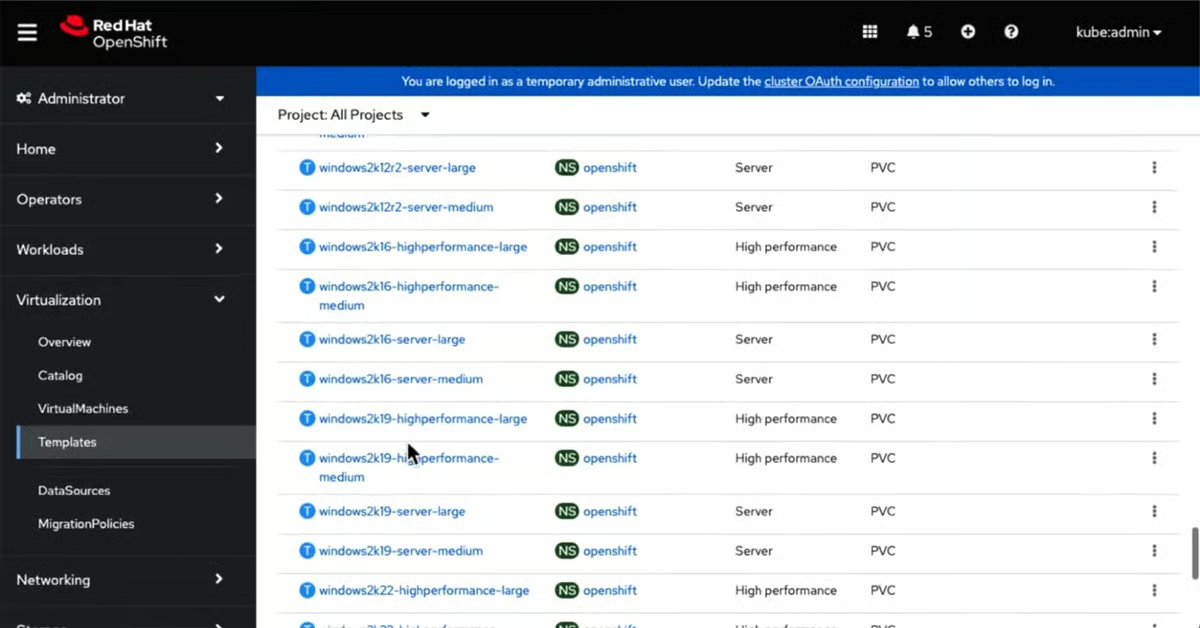
Rather than functioning as a standalone hypervisor, OpenShift Virtualization is integrated directly into Red Hat’s wider container orchestration platform, OpenShift. This strategic alignment addresses the modern enterprise demand for hybrid cloud strategies, where containers and VMs must coexist and communicate seamlessly.
From a pricing perspective, Red Hat OpenShift Virtualization is a commercial product tied to broader server edition subscriptions, making it the sole paid option on this list. While it demands a sophisticated understanding of both container orchestration (Kubernetes) and traditional VM administration, its centralized management plane, automated scaling, and robust support ecosystem make it the premier choice for large-scale enterprise modernization.
oVirt: Best for Large-Scale Data Center Management

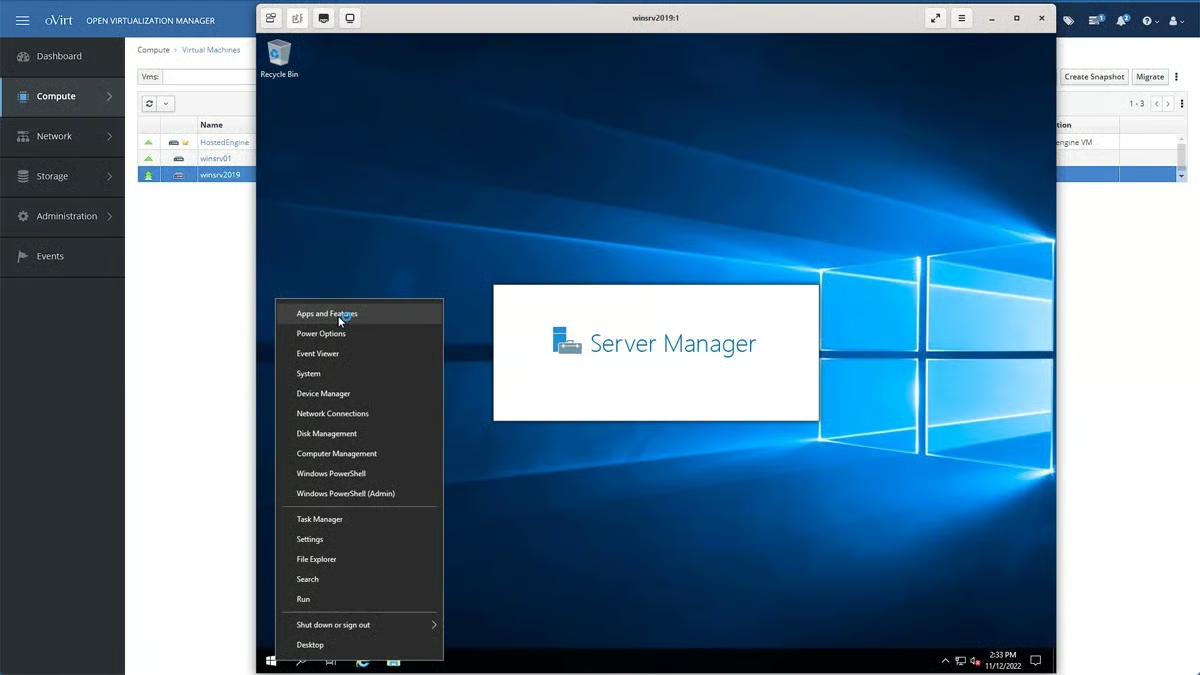
oVirt is an open-source enterprise virtualization management platform engineered specifically to handle large-scale virtualized data centers. Originating upstream from Red Hat Enterprise Virtualization (RHEV), oVirt has evolved into a fully independent, community-driven project that provides comprehensive management capabilities across heterogeneous hardware environments.
The platform excels in environments requiring centralized administration of thousands of virtual machines, storage pools, and network clusters. Because it is open-source, oVirt offers a cost-effective alternative to proprietary enterprise hypervisors like VMware vSphere. However, administrators should note that deploying and maintaining oVirt requires dedicated IT expertise, as its complex architecture demands rigorous configuration and ongoing maintenance to achieve optimal stability in mission-critical data centers.
Linux-KVM: Best for Native Linux Integration and Performance
Linux-KVM (Kernel-based Virtual Machine) remains the gold standard for Linux enthusiasts and systems architects seeking maximum performance and deep kernel integration. Because KVM is embedded directly into the Linux kernel, every Linux host running KVM essentially functions as a high-performance bare-metal hypervisor.
KVM benefits immediately from every performance optimization, security patch, and hardware compatibility update introduced to the Linux kernel. It utilizes modern CPU virtualization features to deliver near-native execution speeds with exceptionally low latency. While its command-line management tools and configuration requirements necessitate a strong foundational knowledge of Linux system administration, KVM’s unmatched efficiency, stability, and zero licensing cost make it an indispensable tool for Linux-centric IT infrastructures.
QEMU: Best for Cross-Platform Hardware Emulation

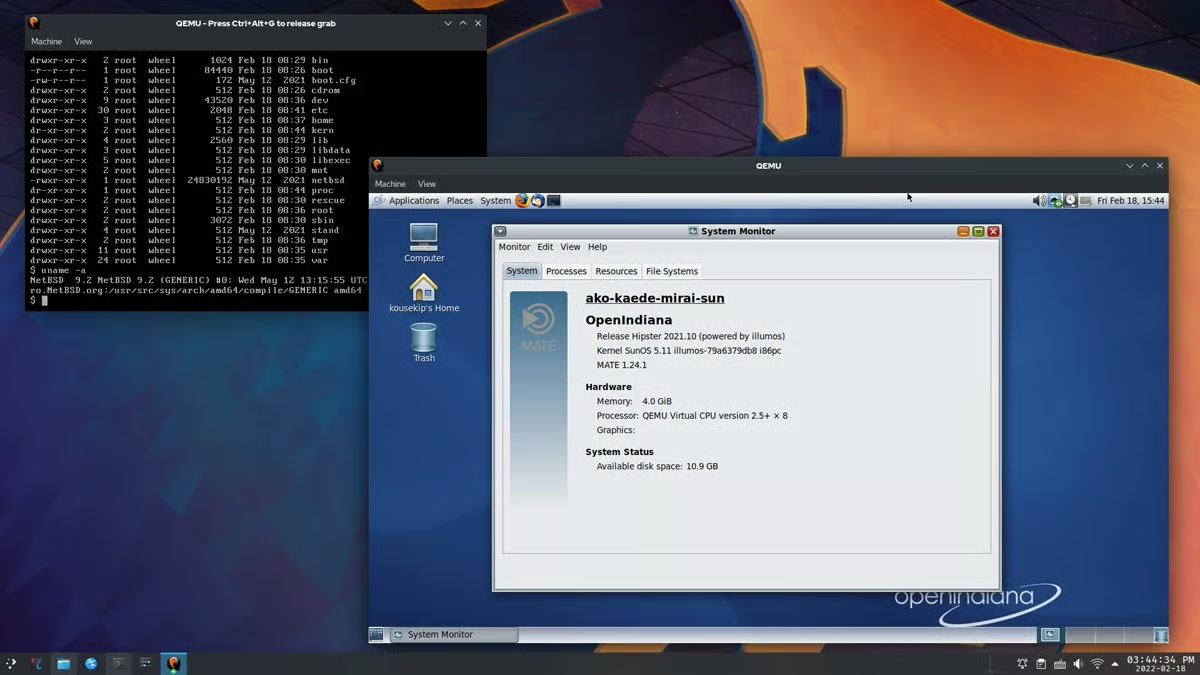
QEMU (Quick Emulator) occupies a unique niche in the virtualization ecosystem as both an emulator and a virtualizer. Unlike hypervisors restricted to matching the host’s CPU architecture, QEMU is renowned for its ability to simulate entirely different hardware architectures—allowing developers, for instance, to run ARM-based code on an x86_64 host machine.
When paired with KVM, QEMU provides hardware-accelerated virtualization while retaining its signature flexibility to emulate diverse CPUs, storage controllers, and peripheral devices. This capability is invaluable for cross-platform software development, firmware testing, and legacy application deployment. While advanced configuration scenarios can be notoriously complex, QEMU’s open-source availability and unmatched emulation depth make it a critical asset for specialized engineering teams.
Xen Project: Best for High-Security, Multi-Tenant Cloud Environments
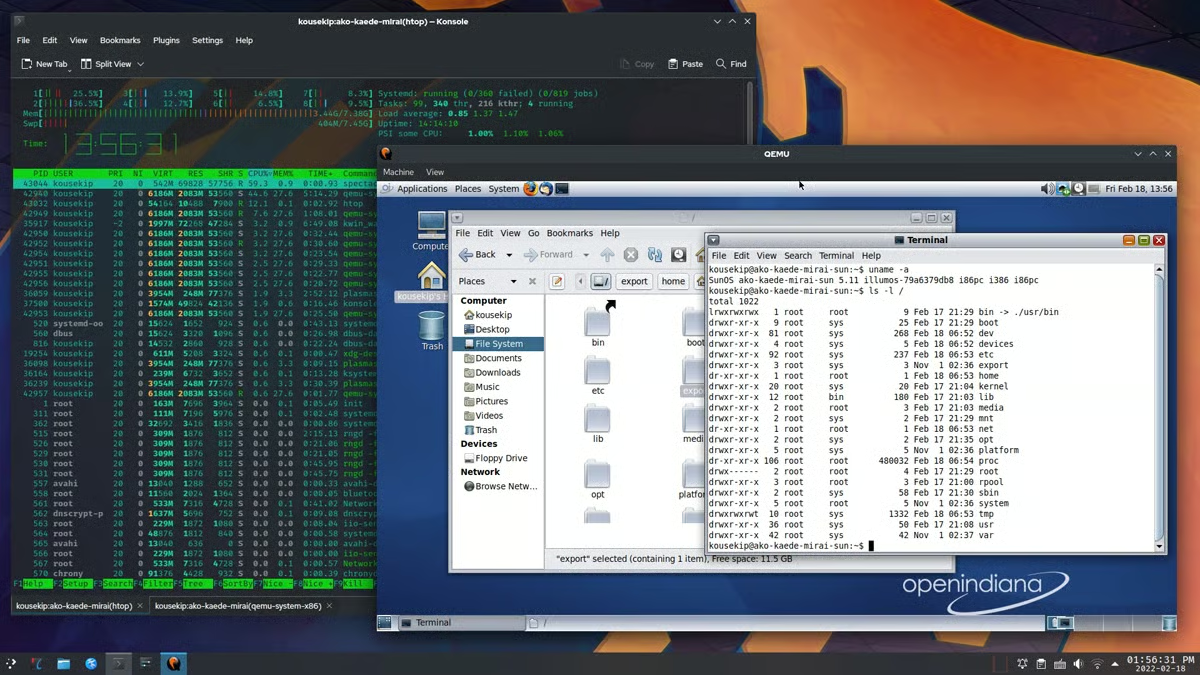
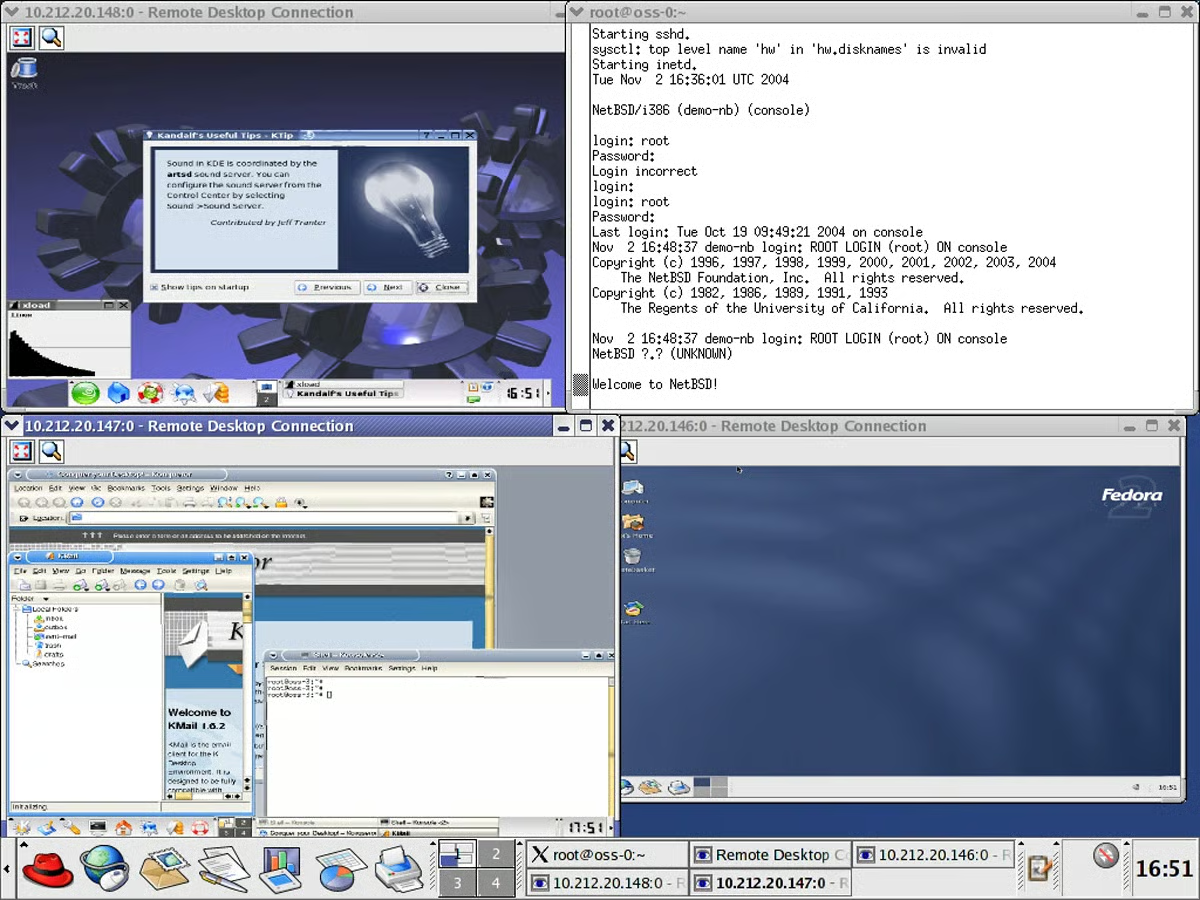
The Xen Project hypervisor is a globally recognized, open-source type-1 hypervisor celebrated for its enterprise-grade security, scalability, and robust isolation mechanisms. Originating from research at the University of Cambridge, Xen laid the groundwork for modern public cloud computing, serving as the foundational hypervisor for numerous large-scale cloud service providers.
Xen distinguishes itself through advanced paravirtualization and hardware-assisted virtualization capabilities, enabling multiple guest operating systems to run concurrently with minimal performance overhead. Its strict memory and process isolation make it the premier choice for multi-tenant environments where security and containment are absolute priorities. Although setting up and managing Xen requires advanced systems engineering experience, its unparalleled security profile justifies its adoption in demanding enterprise and cloud infrastructures.
VirtualBox: Best for Desktop Virtualization and Cross-Platform Accessibility

Developed by Oracle, VirtualBox is an open-source virtualization platform designed primarily for desktop users and developers seeking quick, straightforward cross-platform virtualization. VirtualBox supports a wide array of host operating systems—including Windows, macOS, Linux, and Solaris—while accommodating an extensive list of guest operating systems.
While VirtualBox lacks the high-performance resource management and advanced clustering features required for massive data center deployments, its intuitive graphical user interface and simple installation process make it exceptionally accessible for beginners. It is widely utilized for software testing, running legacy desktop software, and educational purposes at zero financial cost.
Key Architectural Features of Linux Virtualization Software
Selecting the correct virtualization platform requires evaluating several critical architectural domains:
Performance and Resource Management
Efficient hypervisors ensure optimal CPU, memory, and disk I/O allocation without introducing excessive overhead. Advanced features like dynamic resource scheduling, memory overcommitment, and load balancing prevent resource contention across virtual instances.
Security and Isolation
Virtualization fundamentally relies on strict isolation to prevent compromised virtual machines from affecting the host system or neighboring VMs. Enterprise-grade platforms implement robust access controls, encrypted storage volumes, and isolated virtual networks to safeguard sensitive data.
Networking Capabilities
Flexibility in networking configuration is vital. Most Linux hypervisors support bridged networking, Network Address Translation (NAT), and host-only networking, alongside advanced features like Virtual LAN (VLAN) tagging and software-defined networking (SDN) integrations.
Reliability and High Availability
Enterprise environments demand automated failover mechanisms, rapid snapshotting, and robust backup tools to guarantee business continuity and minimize unexpected downtime during hardware failures.
Methodology for Evaluating Linux Virtualization Software
Industry evaluations of Linux virtualization solutions employ a rigorous, multi-faceted scoring matrix designed to reflect real-world enterprise requirements:
- Core Feature Evaluation (50%): Comprising performance and resource management (20%), compatibility and system requirements (15%), usability and management (15%), security and isolation (15%), networking capabilities (10%), scalability and flexibility (10%), reliability and uptime (10%), and infrastructure integration (5%).
- Cost Considerations (25%): Assessing licensing transparency, acquisition expenses, and the availability of open-source documentation and community resources.
- Support Evaluation (25%): Analyzing the availability of vendor-backed technical support, active developer communities, comprehensive documentation channels, and knowledge bases.
Frequently Asked Questions
What is Linux virtualization software?
Linux virtualization software, or a hypervisor, is a software layer that creates and manages virtual machines on a single physical host, partitioning hardware resources so multiple isolated operating systems can run concurrently.
Are open-source hypervisors reliable for enterprise production?
Yes. Solutions like Linux-KVM, Xen, and oVirt power some of the largest cloud data centers and enterprise environments globally, offering high stability, regular security updates, and robust community-backed development.
How do I choose between KVM and containerization?
Virtual machines virtualize entire operating systems and hardware stacks, making them ideal for running mixed operating systems and legacy applications. Containers share the host kernel, offering lighter resource footprints specifically for microservices architectures. Many modern enterprises utilize both concurrently.
