
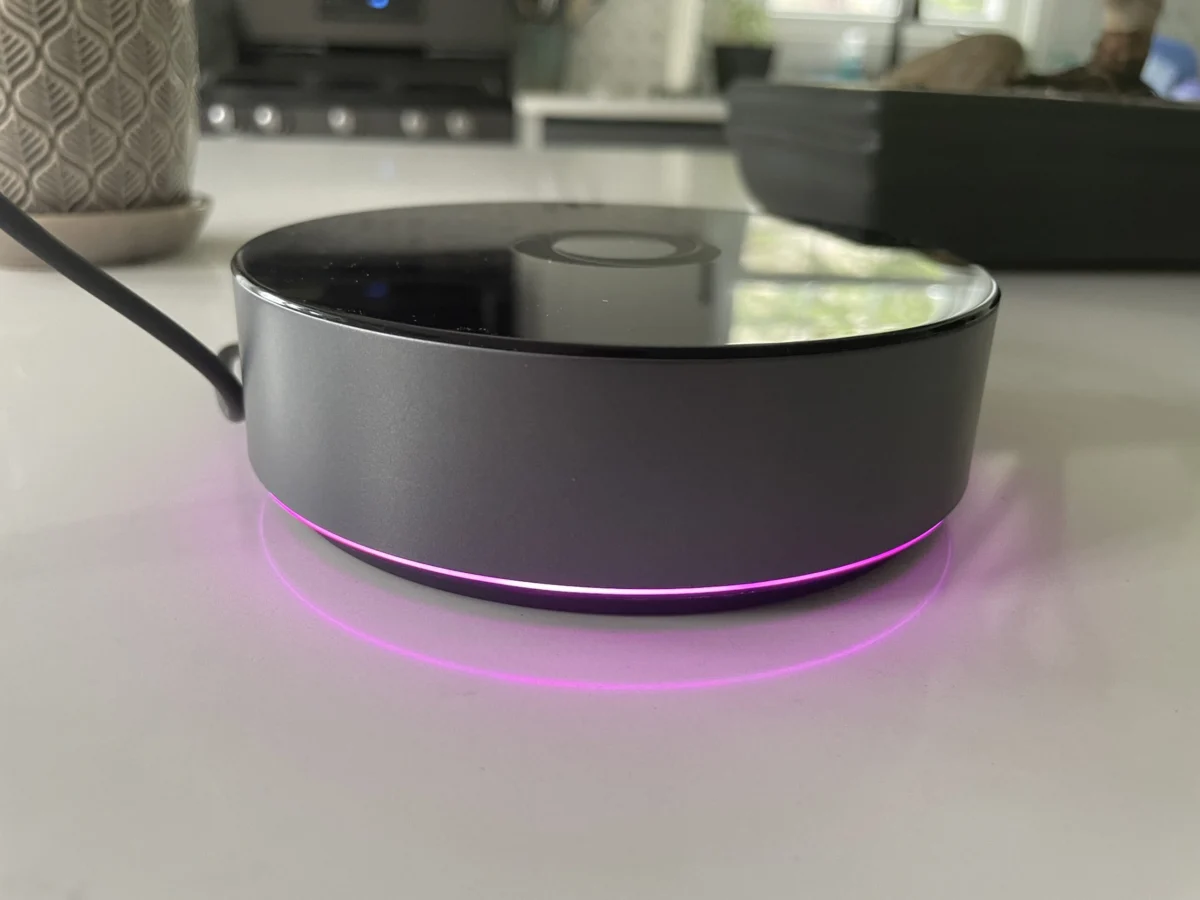

Following the North American market introduction of the $69 Homey Bridge earlier this year, Athom has officially brought its flagship smart home automation hub, the $399 Homey Pro, to the United States. Designed to compete directly with established local control platforms like Home Assistant and Hubitat, the Homey Pro aims to bridge the gap between user-friendly consumer interfaces and advanced, privacy-focused local execution. While the lower-cost Bridge model relies heavily on cloud infrastructure and enforces a five-connected-device limit before requiring a monthly subscription, the premium Homey Pro removes these restrictions, offering localized processing, expanded hardware memory, storage upgrades, and a comprehensive suite of wireless radios tailored to the North American market. However, despite its impressive hardware specifications and sleek user experience, prospective buyers face a critical hurdle regarding hardware compatibility that warrants careful pre-purchase verification.
Evolution and Hardware Architecture
The launch of the Homey Pro in the U.S. marks a significant evolution from Athom’s original 2019 model. The revised iteration boasts a substantial performance upgrade, featuring a central processing unit that delivers 3.5 times the processing power of its predecessor. Furthermore, the device is equipped with 8 GB of internal storage and 2 GB of RAM—generous allocations designed to support heavy local processing rather than offloading routine operations to distant cloud servers.
From a privacy and reliability standpoint, the emphasis on local control represents a major selling point for smart home enthusiasts. Unlike cloud-dependent hubs that fail entirely during broadband outages or internet service provider maintenance, the Homey Pro ensures that core automation routines and device communications continue to function locally within the home network.
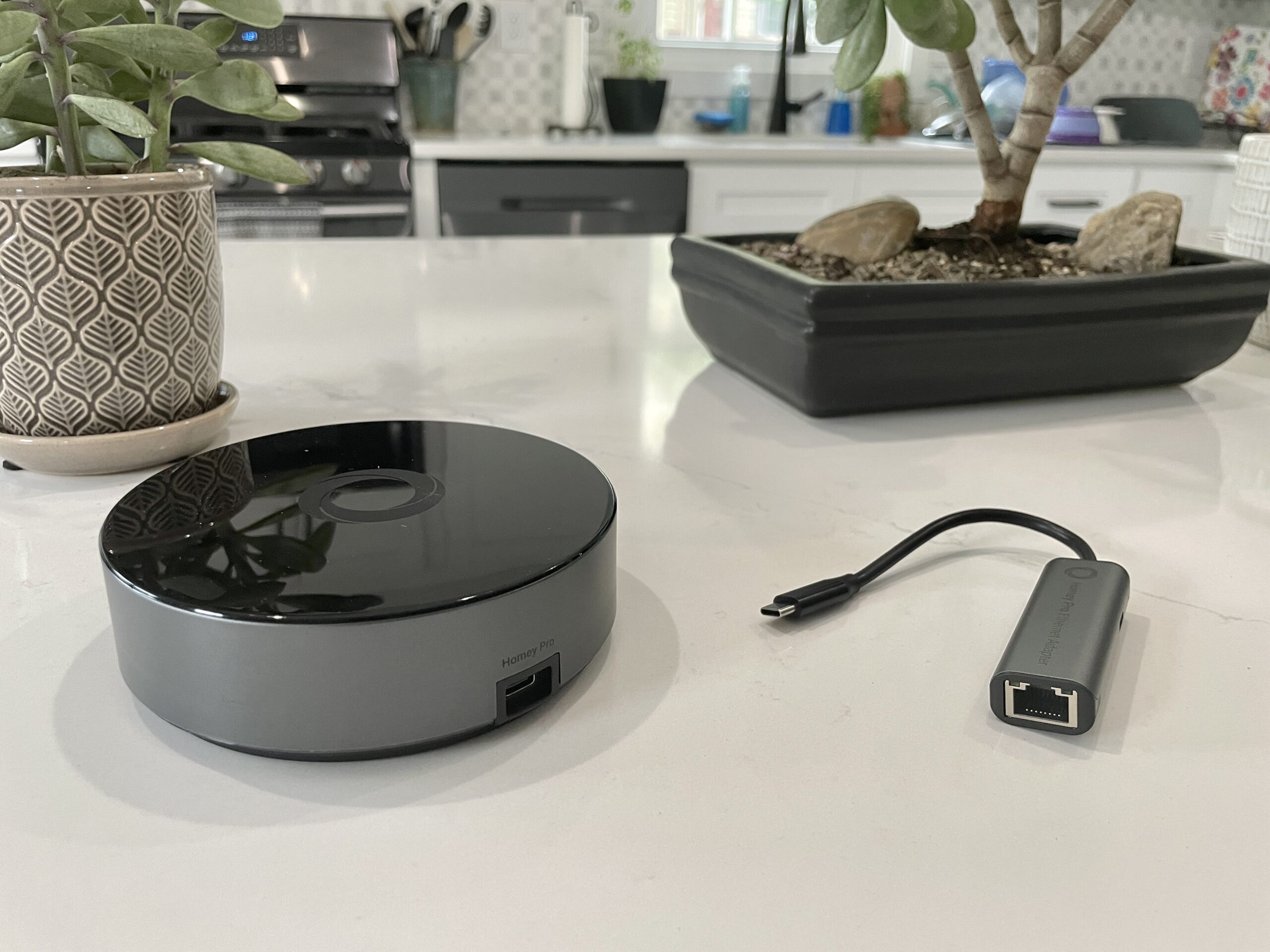
The U.S. variant of the Homey Pro is exceptionally well-equipped in terms of wireless connectivity. It features built-in Wi-Fi supporting both 2.4 GHz and 5 GHz bands, Bluetooth, infrared (IR) blasters, Zigbee, Z-Wave, and an 833 MHz radio intended for legacy devices. Additionally, the hub includes a dedicated Thread radio, positioning the device to support the emerging Matter connectivity standard, including Matter-over-Thread integrations anticipated through upcoming firmware updates. For users seeking absolute network stability, an optional ethernet adapter is available for an additional $29, supplementing the standard wireless setup.
Streamlined Setup and User Experience
Initial configuration of the Homey Pro is designed to be frictionless for both novice and experienced smart home operators. Utilizing the included USB-C power supply and the mobile application available for iOS and Android, users are guided through a series of foundational configuration prompts. Notably, the application streamlines spatial organization by inquiring about the architectural layout of the residence—specifically asking users to define the number of floors and assign specific rooms to designated levels during the onboarding sequence. This architectural profiling bypasses the tedious room-by-room categorization required by many competing platforms.

Once the hub is securely joined to the local wireless network, users can begin incorporating their ecosystem of smart devices. The companion mobile application offers a modern, highly polished aesthetic that surpasses many competing ecosystems, presenting both granular controls and overarching structural analytics in a unified dashboard.
Among the standout features is the Homey energy management system, which provides real-time and historical power consumption analytics. Because many connected smart devices do not natively broadcast exact electrical draws, the Homey ecosystem allows users to manually input baseline wattages for individual appliances and fixtures. The system dynamically scales these estimates based on device states—such as reducing calculated power consumption when smart lights are dimmed. For users with advanced environmental monitoring needs, accessing the web-based management interface unlocks historical charts tracking local ambient temperatures, barometric pressures, and relative humidity. (Company representatives have subsequently clarified that where connected hardware natively reports live electricity usage, the hub automatically prioritizes and displays those telemetry metrics.)
The Device Support Dilemma
Despite Athom’s marketing claims that the Homey ecosystem supports more than 50,000 distinct products via its extensive library of community- and manufacturer-built integrations, real-world deployment reveals notable friction points. In practical testing environments featuring a diverse cross-section of mainstream smart home hardware, compatibility proved to be a mixed proposition.

While standard integrations for major ecosystems—such as Lutron Caseta smart switches, Philips Hue lighting arrays, and Sonos multi-room audio hardware—paired effortlessly with near-instantaneous command response times, numerous high-profile brands and specific product lines encountered roadblocks. Hardware casualties during testing included Schlage smart locks, Ecobee smart thermostats, Nanoleaf bulbs and light strips, Govee smart kitchen appliances, Wyze security cameras, Eve Home accessories, and a variety of third-party smart plugs.
An analysis of these integration failures frequently points to the evolving landscape of smart home communication protocols. For instance, while certain smart plugs failed to initialize due to their reliance on the Matter-over-Thread standard—which requires full native implementation within the hub’s firmware stack—other failures stemmed from version specificity within established brands. For example, while the Ecobee 3 Lite and standalone room sensors are natively supported, newer iterations such as the Ecobee Thermostat Premium and current-generation sensors lacked functional integration profiles at the time of review. Similarly, attempt-based authentications for Wi-Fi-connected locks like the Schlage Encode frequently yielded connection failures or authentication errors rather than seamless device discovery.
Advanced Automation via Homey Flows
For power users, the true strength of the Homey ecosystem lies within its automation engine, designated as "Flows." Moving away from the rigid "If This, Then That" paradigms popularized by basic consumer platforms, Homey Flows utilize a flexible "When… And… Then" structural logic that closely mirrors the robust automation capabilities found in open-source platforms like Home Assistant.

Flows allow for highly granular conditional branching, enabling creators to incorporate "Else" statements and nest individual routines so that one Flow can dynamically trigger subsequent automations. While basic Flows are easily constructed within the mobile application, advanced power users can leverage the web-based interface to build complex, logic-driven automations. Furthermore, for developers and software hobbyists, the Homey Pro web interface provides access to API keys and JavaScript/Node.js environment documentation, allowing technically proficient users to write custom integrations directly to the local server architecture.
Market Implications and Purchasing Considerations
Priced at $399, the Homey Pro occupies a premium tier in the consumer smart home market. By comparison, competitors such as Hubitat offer local control at a lower price point, while platforms like Home Assistant provide virtually limitless device compatibility for the cost of entry-level hardware like a Raspberry Pi or dedicated mini-PC.
The primary barrier to widespread consumer adoption for the Homey Pro is not its hardware capability, processing speed, or software design—all of which score exceptionally high marks in professional evaluations. Instead, the determining factor for potential buyers rests entirely on hardware inventory alignment. Because integration availability is contingent upon specific manufacturer API support and ongoing software development cycles, consumers currently invested in heterogeneous smart home ecosystems run the risk of encountering compatibility gaps.

Industry analysts recommend that prospective buyers exercise diligence prior to financial commitment. Rather than relying solely on overarching compatibility claims, consumers are advised to download the free Homey mobile application and utilize its internal integration search directory to cross-reference every individual smart device currently deployed—or planned for deployment—within their household.
For households whose device inventories align with the platform’s current integration library, the Homey Pro offers an exceptionally fast, private, and beautifully designed local automation hub. For users heavily reliant on cutting-edge Matter-over-Thread peripherals or niche hardware brands lacking official integration modules, patience—or an alternative open-source platform—may remain the prudent choice until Athom expands its protocol support and manufacturer partnerships in subsequent software updates.
