

As the enterprise adoption of Retrieval-Augmented Generation (RAG) accelerates, the industry has gravitated toward complex, managed ecosystems. These frameworks, while powerful, often necessitate significant capital expenditure through paid vector database subscriptions and external API calls. However, for proof-of-concept projects, edge-computing applications, or sensitive data environments where privacy is paramount, a "bare-metal" approach utilizing standard machine learning libraries like scikit-learn remains both viable and technically elegant.
The Evolution of Lightweight AI Architectures
The core mechanism of a RAG system is fundamentally a geometric problem: identifying the semantic proximity between a user’s query and a pre-existing corpus of information. By transforming text into high-dimensional vector embeddings, systems can perform similarity searches—typically using cosine distance—to retrieve relevant context before passing that data to a Large Language Model (LLM) for natural language synthesis.
Historically, the development of these pipelines required sophisticated orchestration tools such as LangChain or LlamaIndex, paired with dedicated vector databases like Pinecone or Milvus. While these tools provide essential scalability for enterprise-grade applications, they introduce "black box" layers that can obscure the fundamental mechanics of the pipeline. By utilizing scikit-learn’s NearestNeighbors algorithm, engineers can construct an in-memory retrieval system that is both transparent and highly performant for small-to-medium-sized datasets.
A Chronology of the Implementation Process
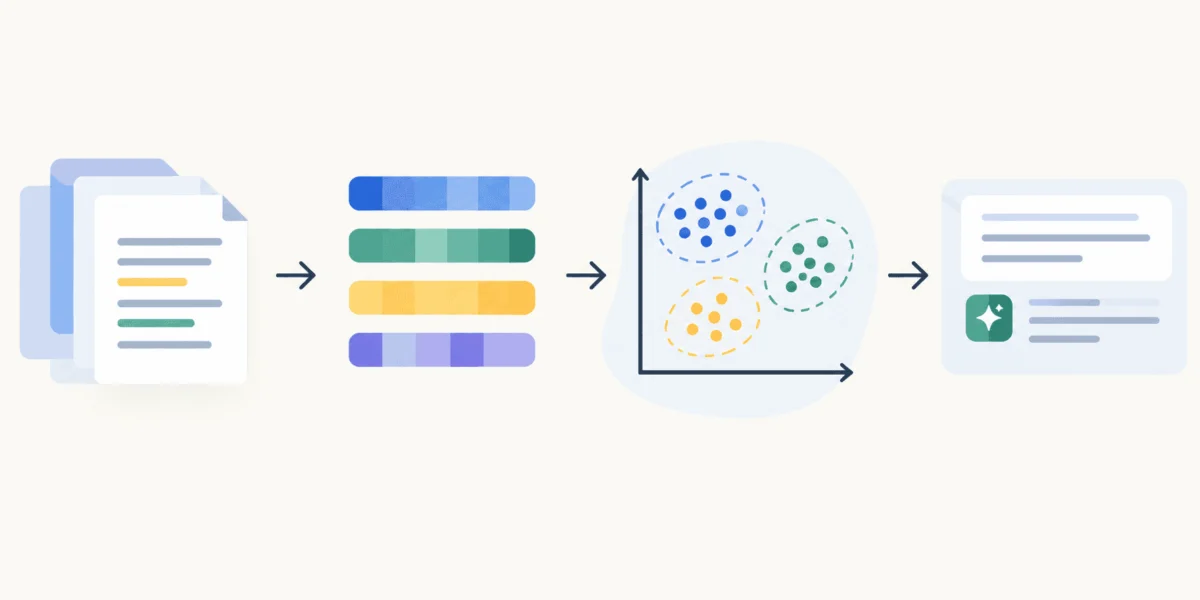
Building a functional RAG pipeline without heavy dependencies follows a logical, step-by-step progression. The workflow can be categorized into four distinct phases:
- Data Ingestion and Preprocessing: Raw text data must be normalized and segmented. Even for small datasets, implementing a chunking strategy is vital. Chunking involves breaking long-form text into smaller, overlapping segments, which ensures that the embedding model can generate precise representations of specific topics rather than conflating disparate ideas.
- Vectorization: Utilizing pre-trained models from the
sentence-transformerslibrary, developers convert text chunks into numerical vectors. Models such asall-MiniLM-L6-v2have become the industry standard for this task due to their low computational footprint and high semantic accuracy. - Indexing: The vector representations are indexed using a Nearest Neighbors algorithm. In this architecture, scikit-learn functions as the "brain" of the retrieval engine, calculating the cosine distance between the query embedding and the library of document embeddings.
- Generation: The retrieved context is formatted into a prompt and fed to a lightweight, open-source LLM, such as the Qwen 2.5-0.5B-Instruct model. This model serves as the generative engine, synthesizing the retrieved information into a coherent, human-readable response.
Technical Data and Performance Metrics
The choice of hardware and model size is critical to the efficiency of this pipeline. In recent benchmarks conducted on free-tier cloud environments—specifically the T4 GPU provided by Google Colab—this lightweight architecture demonstrated latency profiles significantly lower than API-based alternatives.
For instance, the all-MiniLM-L6-v2 model produces 384-dimensional embeddings, which are compact enough to be stored in standard RAM. When processing a dataset of 1,000 documents, the memory footprint remains well under 2GB, allowing for near-instantaneous retrieval times. By avoiding the round-trip latency associated with external APIs (which often take 500ms to 2s per request), local RAG pipelines can achieve sub-100ms retrieval speeds, making them ideal for latency-sensitive applications.
Industry Perspectives and Expert Consensus
Engineering teams at major AI research labs have noted that the industry is experiencing a "return to basics" regarding RAG. "The complexity of the stack often obscures the fact that RAG is essentially just a search-then-generate workflow," says a lead systems architect in the open-source community. "By using scikit-learn, we strip away the abstraction layers, allowing engineers to debug the actual retrieval quality rather than the framework’s overhead."
Furthermore, data privacy advocates highlight the advantages of this localized approach. In sectors such as healthcare, legal, or financial services, sending proprietary data to third-party API providers often violates data governance policies. An in-memory, scikit-learn-based pipeline ensures that data never leaves the local environment, satisfying strict compliance requirements while maintaining full system transparency.
Implications for Future AI Development
The implications of democratizing RAG pipelines are profound. By lowering the barrier to entry, smaller development teams can prototype sophisticated AI agents without securing venture capital for expensive infrastructure. This "DIY" movement in AI is expected to foster a new generation of niche applications—from personal digital librarians to local, offline document query tools—that are more robust and cost-effective than their cloud-dependent counterparts.
However, developers must recognize the limitations of this approach. While scikit-learn is efficient for small-to-medium datasets, it lacks the advanced indexing features of specialized vector databases, such as HNSW (Hierarchical Navigable Small World) graphs or inverted file indexes (IVF). As the corpus grows into the millions of documents, the linear search time of NearestNeighbors may eventually create a performance bottleneck, necessitating a transition to specialized solutions.
The Role of Open-Source LLMs in the Ecosystem
The maturation of models like Qwen and Mistral has provided the necessary "generation" component for these pipelines. These models are now optimized to follow system instructions with high fidelity. In the context of RAG, this is particularly important for "grounding"—the ability of the model to rely strictly on the provided context rather than its pre-trained "hallucinations." By carefully crafting system prompts, developers can ensure that the model remains tethered to the retrieved data, effectively mitigating the risk of incorrect information.
Conclusion
The shift toward lightweight, transparent RAG architectures represents a mature phase in the development of artificial intelligence. By leveraging the versatility of scikit-learn and the efficiency of open-source embedding models, developers can create powerful, self-contained systems that prioritize speed, privacy, and cost-efficiency. While these tools may not replace the need for massive-scale vector databases in the future, they provide an essential, high-utility framework for the next wave of AI-driven innovation. As the ecosystem continues to evolve, the ability to build and maintain these transparent pipelines will likely remain a core competency for any engineer operating in the machine learning space.
