

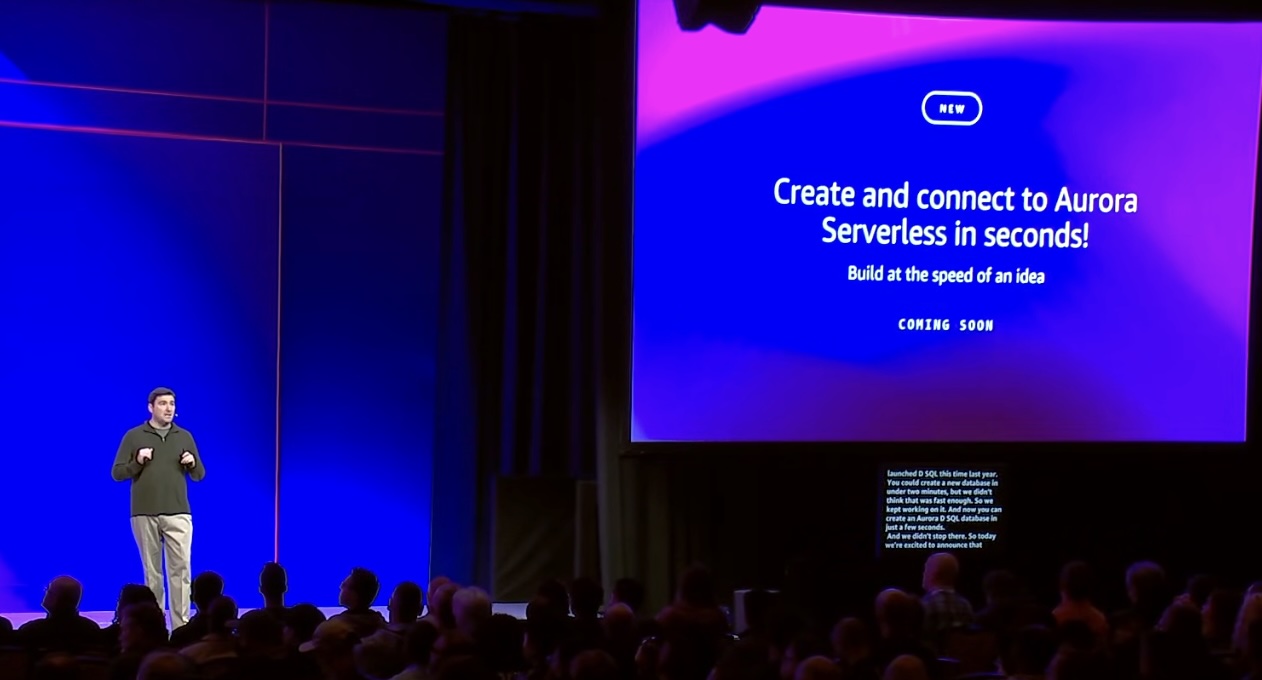
AWS has officially announced the general availability of a new express configuration for Amazon Aurora PostgreSQL, a groundbreaking development designed to dramatically accelerate the process of setting up production-ready serverless databases. This streamlined experience, first previewed at re:Invent 2025 by Colin Lazier, Vice President of Databases at AWS, responds directly to a surging customer demand for rapid progress from concept to fully functional application. The new configuration empowers developers and organizations to deploy an Aurora PostgreSQL serverless database in mere seconds, fundamentally reshaping the landscape of database provisioning and enabling unparalleled agility.
Setting the Stage: The Vision of "Building at the Speed of an Idea"
The journey towards this express configuration began with a clear strategic imperative articulated by AWS: empowering customers to "build at the speed of an idea." At re:Invent 2025, AWS Vice President of Databases, Colin Lazier, delivered a keynote that underscored the critical importance of minimizing friction in the development lifecycle. He highlighted how services like Amazon DynamoDB and Amazon Aurora DSQL already allowed customers to create production-ready tables and databases in seconds, setting a new benchmark for operational efficiency. During his address, Lazier offered a compelling preview of an Amazon Aurora serverless database being provisioned with similar velocity. This demonstration resonated deeply with the developer community, immediately sparking widespread requests for quick access to such a transformative capability. The vision was clear: eliminate the traditionally time-consuming setup phases that often bottleneck innovation, allowing developers to focus their energy on coding and problem-solving rather than infrastructure configuration. This philosophy underpins the latest release, aiming to make advanced database technology accessible and deployable with unprecedented ease.

Unveiling Aurora PostgreSQL Express Configuration: Instant Deployment and Simplified Management
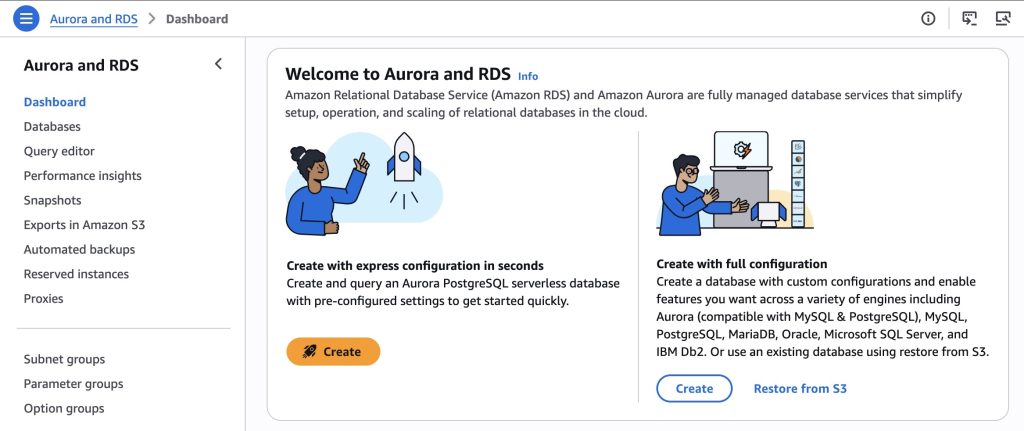
The general availability of the express configuration for Amazon Aurora PostgreSQL marks a significant milestone in achieving this vision. This new offering provides a dramatically streamlined database creation experience, leveraging intelligent preconfigured defaults to ensure developers can get started in a matter of seconds. The core promise is simplicity: with just two clicks, users can have a fully operational Aurora PostgreSQL serverless database ready for use.
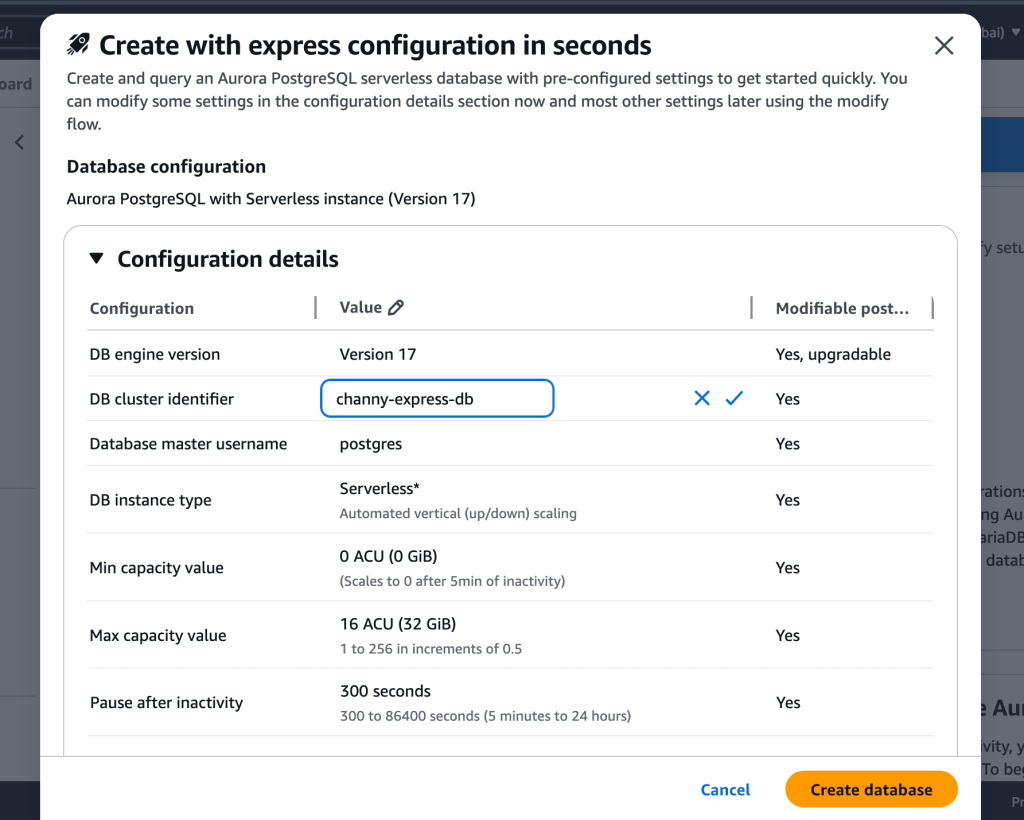
While speed is paramount, the express configuration does not sacrifice flexibility. Users retain the ability to modify crucial settings both during and after the initial database creation. For instance, the capacity range for the serverless instance can be adjusted at the time of creation, allowing for immediate scaling to anticipated workloads. Post-creation, developers can further customize their environment by adding read replicas to enhance availability and read throughput, or by modifying parameter groups to fine-tune database performance and behavior. This hybrid approach ensures that while the initial setup is instantaneous, the database remains fully adaptable to evolving application requirements.
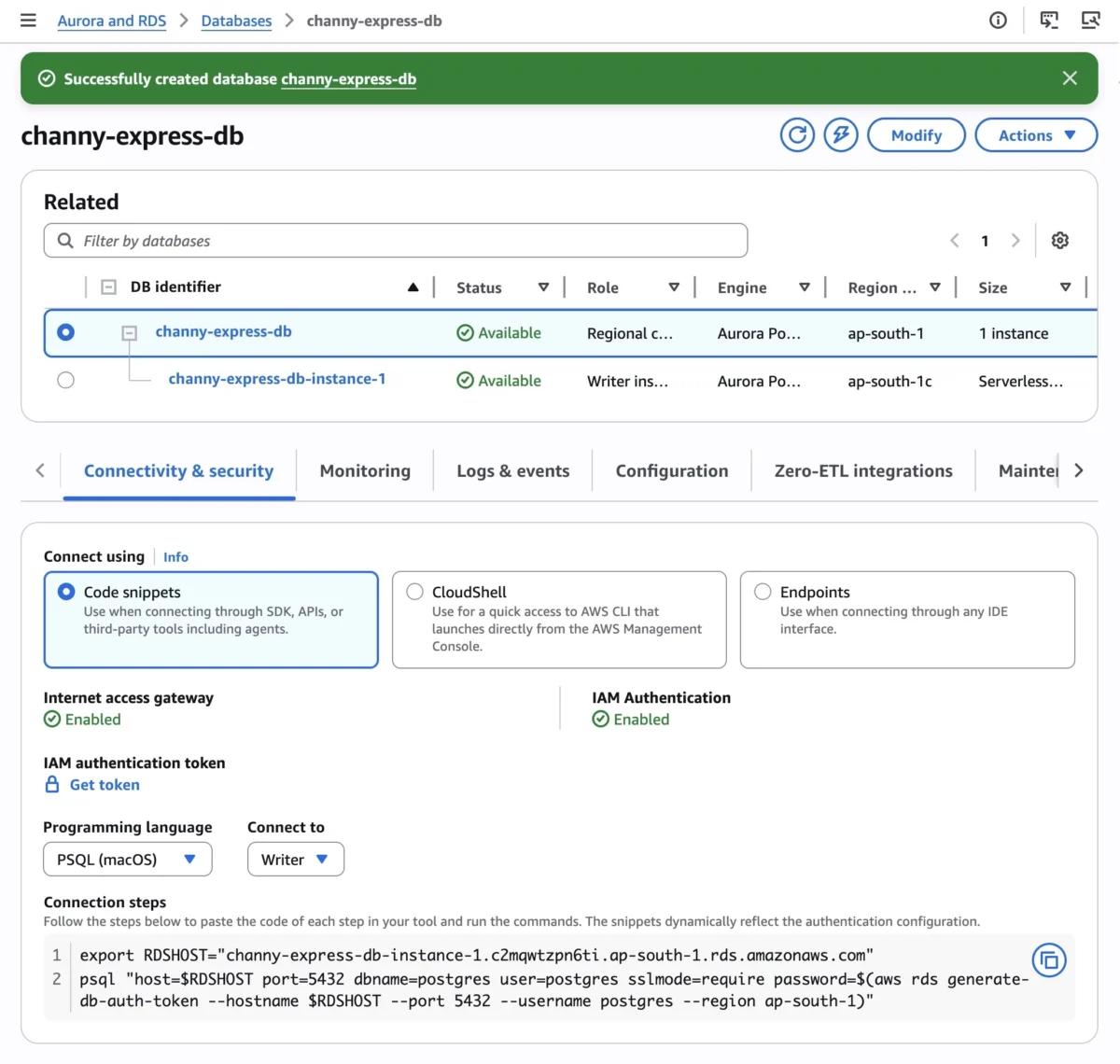
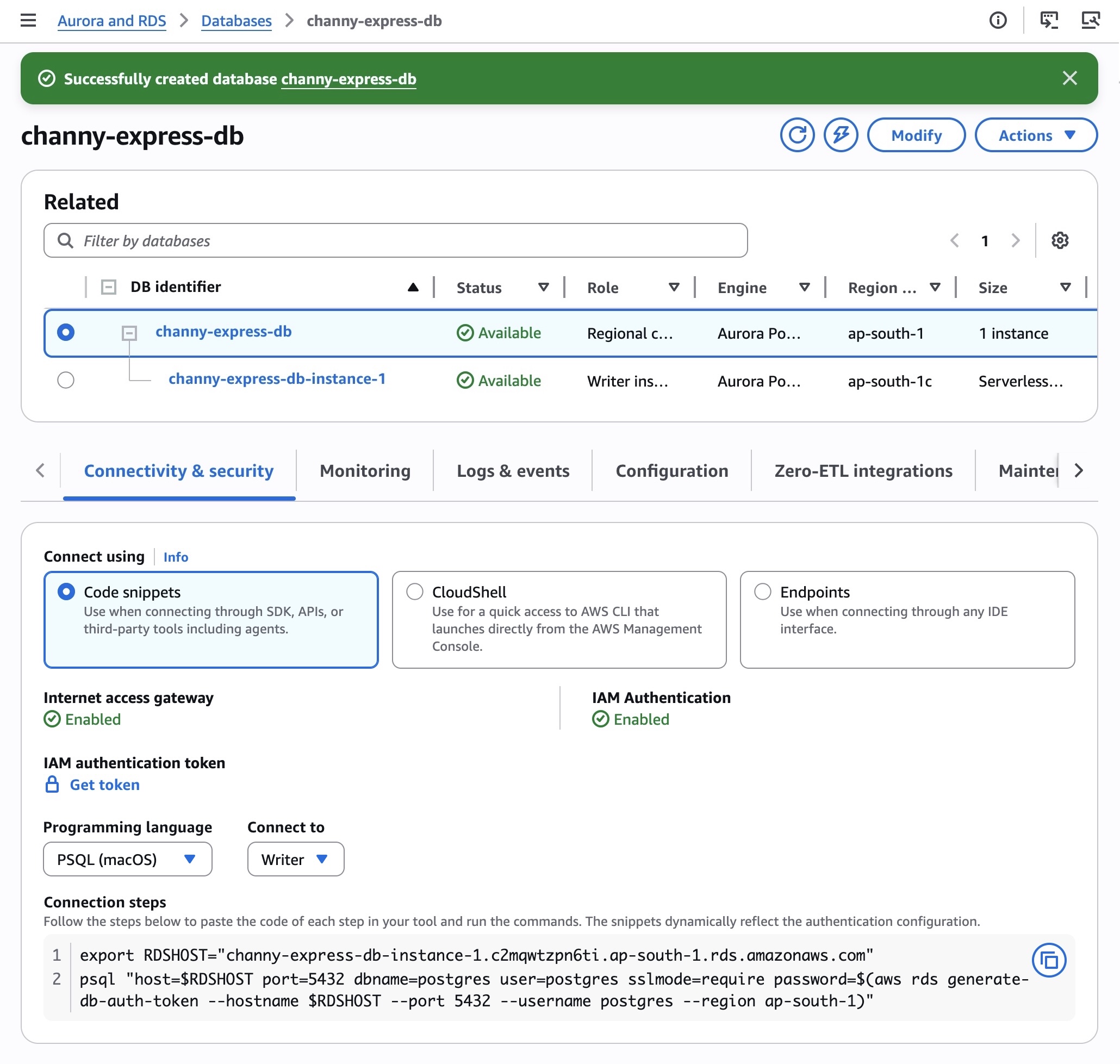
A notable feature of clusters created with express configuration is their default deployment without an Amazon Virtual Private Cloud (Amazon VPC) network. Instead, they include an internet access gateway, facilitating secure connections from a wide array of development tools without the need for complex VPN setups or AWS Direct Connect. This design choice drastically simplifies the connectivity process, particularly for developers and small teams who prioritize rapid iteration and ease of access. Furthermore, the express configuration automatically sets up AWS Identity and Access Management (IAM) authentication for the administrator user by default. This enables passwordless database authentication from the outset, enhancing security by eliminating the need to manage static passwords and integrating seamlessly with existing AWS identity management practices.

Key Features and Enhanced Connectivity for Global Access
Beyond the initial rapid deployment, the Aurora PostgreSQL express configuration comes equipped with a suite of features designed to support robust, highly available, and globally accessible applications. Once created, the database provides access to all standard features available for Aurora PostgreSQL serverless, including the deployment of additional read replicas for high availability and automated failover capabilities, ensuring business continuity and data resilience.
A critical innovation introduced with this launch is a new internet access gateway routing layer for Aurora. This feature, enabled by default for new serverless instances created via express configuration, allows applications to connect securely from virtually anywhere in the world over the internet. By utilizing the standard PostgreSQL wire protocol, developers can leverage a wide range of popular developer tools to interact with their databases. This gateway is not just a simple connection point; it is distributed across multiple AWS Availability Zones, offering the same high level of availability and fault tolerance as the underlying Aurora cluster itself. This global connectivity, combined with inherent high availability, positions Aurora PostgreSQL express configuration as an ideal choice for globally distributed applications and development teams.
Streamlined Onboarding and Developer Experience
Creating and connecting to an Aurora database in seconds necessitates a fundamental rethinking of the developer onboarding experience. AWS has proactively launched several complementary capabilities that work in concert with the express configuration to help users get started and run their applications seamlessly.
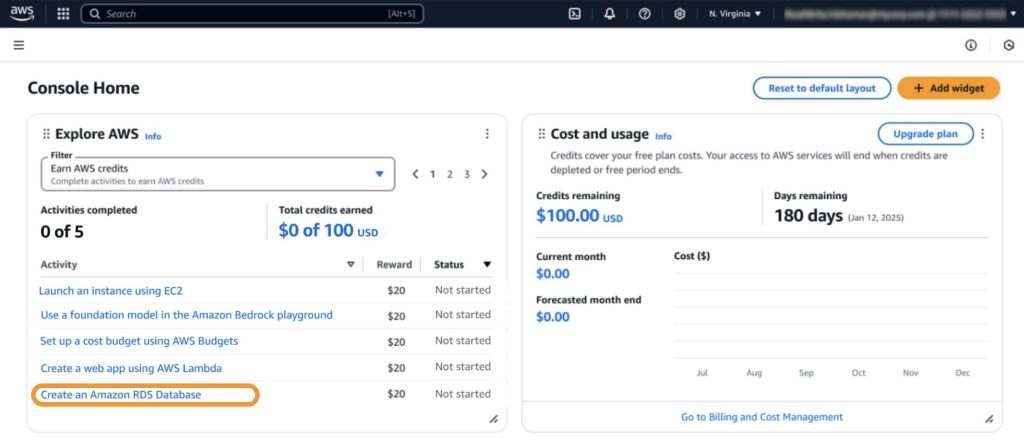
AWS Free Tier Integration: A significant enhancement announced at re:Invent 2025 was an update to the AWS Free Tier program. This program now offers new customers up to $200 in AWS credits, with $100 upon sign-up and an additional $100 earned through the usage of key services such as Amazon Relational Database Service (Amazon RDS), AWS Lambda, and Amazon Bedrock. Crucially, Amazon Aurora is now available across a broad set of eligible Free Tier database services. This integration drastically lowers the barrier to entry, allowing aspiring developers, startups, and students to gain hands-on experience with Aurora at no upfront cost, fostering experimentation and learning without financial commitment.
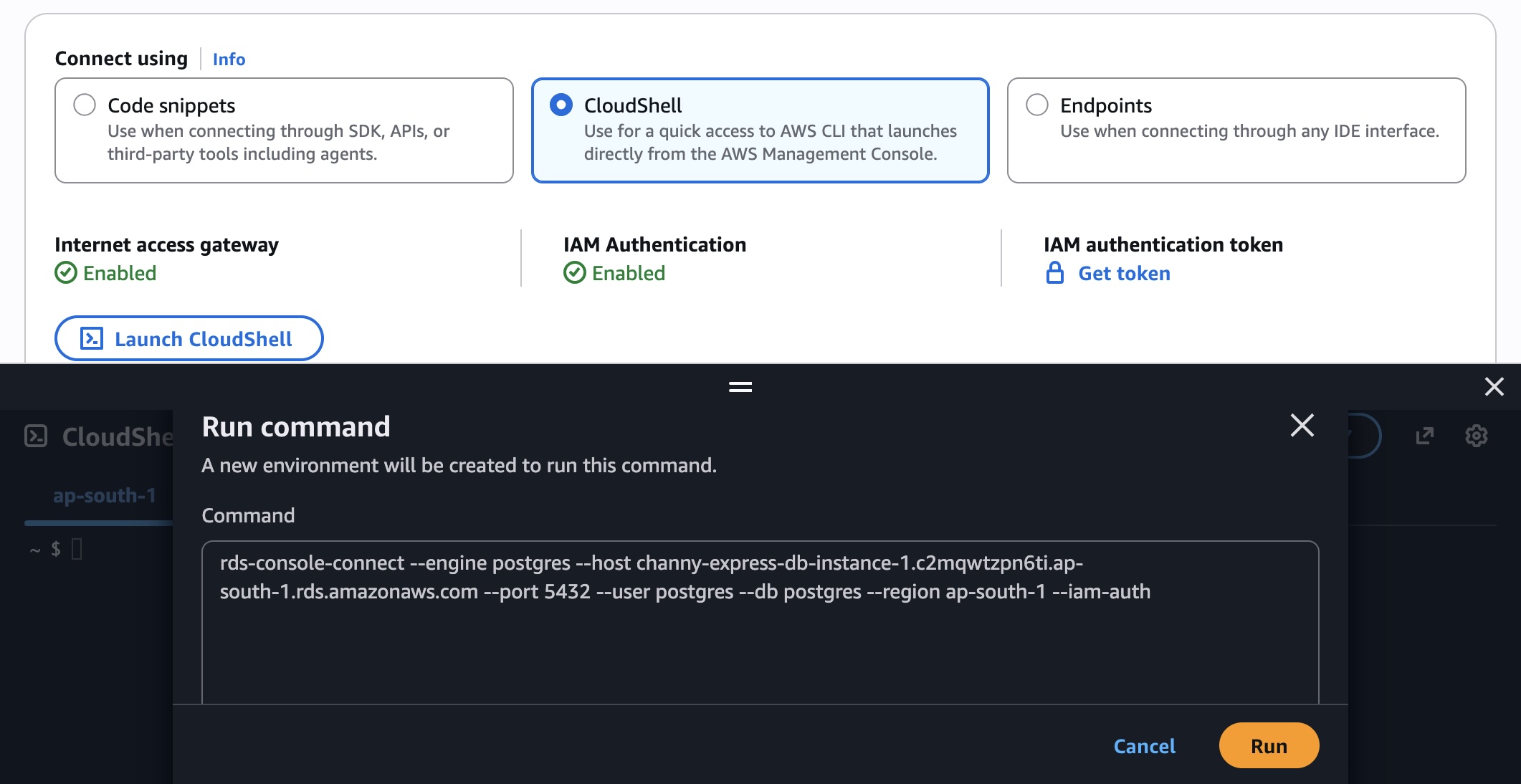
Direct Querying and Programmatic Access: To further simplify the initial interaction, once an Aurora database is created, users can directly query it within AWS CloudShell. This console-integrated, browser-based shell provides immediate command-line access to AWS resources, pre-populated with relevant connection information for the specific cluster. This eliminates the need for local client installations or complex configuration, enabling developers to execute SQL commands and test their database immediately.
For programmatic access and automation, the express configuration is fully supported via the AWS Command Line Interface (AWS CLI) and AWS SDKs. Developers can utilize the --with-express-configuration parameter in a single API call to create both a cluster and an instance within it, making it ready for queries in seconds. For example, a simple CLI command such as aws rds create-db-cluster --db-cluster-identifier my-express-db --engine aurora-postgresql --with-express-configuration initiates this rapid deployment.
Connecting to the database is also made straightforward. The AWS console’s "Connectivity & security" tab dynamically generates code snippets for various programming languages, including Python, Node.js, Java (JDBC), Go, PHP, and TypeScript. These snippets leverage AWS IAM authentication tokens, providing secure, passwordless access. A typical Python connection snippet would involve using boto3 to generate a database authentication token, which is then used as the password in a psycopg2 connection, ensuring secure and temporary credentials.
Third-Party Tool Compatibility: Recognizing that many developers rely on established tools like pgAdmin, the express configuration also provides a mechanism for secure access. While these tools might traditionally require username and password credentials, users can generate an AWS IAM authentication token directly from the console, which is valid for 15 minutes. This token can then be used in the password field of tools like pgAdmin, providing a secure and transient credential for database administration.
Accelerating Application Development with Ecosystem Integrations
AWS is not merely simplifying database provisioning; it is actively integrating Aurora into the broader developer ecosystem to truly unlock the ability to build at the speed of an idea. This involves partnerships with leading development platforms and leveraging advanced AI tools.
Vercel Partnership: Developers increasingly gravitate towards platforms like Vercel, which enable the creation of production-ready applications using natural language. AWS has announced significant integrations with the Vercel Marketplace, allowing users to create and connect to an AWS database directly from Vercel in seconds. This collaboration extends to v0 by Vercel, an AI-powered tool designed to transform ideas into full-stack web applications within minutes. v0 by Vercel now includes support for Aurora PostgreSQL, Aurora DSQL, and DynamoDB databases, providing a seamless experience from concept to deployment. Existing databases created through the express configuration can also be easily connected with Vercel, offering maximum flexibility for developers. This strategic alignment ensures that the underlying database infrastructure can keep pace with the rapid front-end development enabled by platforms like Vercel.
AI-Assisted Development with Kiro: Further pushing the boundaries of developer productivity, AWS introduced Aurora PostgreSQL integration with Kiro powers. Kiro is an AI agent-assisted development platform that empowers developers to build Aurora PostgreSQL-backed applications faster. By utilizing Kiro powers for Aurora PostgreSQL within the Kiro IDE or via one-click installation from the Kiro powers webpage, developers can leverage AI to streamline common database tasks, generate code, and optimize queries. This integration signifies AWS’s commitment to embedding its database services within the intelligent development environments that are rapidly becoming standard, reducing manual effort and accelerating the coding process.
These integrations underscore a broader strategy by AWS to bring its robust database services seamlessly into developers’ preferred experiences, whether through widely adopted frameworks, AI assistant coding tools, or integrated development environments. The goal is to eliminate traditional bottlenecks and empower developers to focus entirely on innovation, leveraging advanced database capabilities with minimal operational overhead.
Strategic Implications and Market Impact
The general availability of Aurora PostgreSQL express configuration carries significant strategic implications for the cloud database market and the broader developer community.
Democratization of Advanced Database Technology: By simplifying the setup process to just a few clicks, AWS is democratizing access to Amazon Aurora, a high-performance, scalable, and highly available database service. This lowers the barrier to entry for startups, small and medium-sized businesses, and individual developers who might have previously found the complexity or perceived cost of enterprise-grade databases daunting.
Increased Developer Agility and Innovation: The core benefit is developer velocity. Eliminating lengthy provisioning times means developers can spin up databases for new features, prototypes, or testing environments almost instantly. This fosters a culture of rapid experimentation and iteration, accelerating the time-to-market for new applications and services. It allows developers to fail fast, learn, and adapt more efficiently.
Reinforcement of Serverless Strategy: This launch further solidifies AWS’s commitment to serverless architectures. Aurora Serverless, with its automatic scaling and pay-per-second billing, is a cornerstone of cost-efficient and agile cloud development. The express configuration makes this powerful serverless offering even more accessible, driving greater adoption of serverless patterns for database workloads.
Security by Design and Simplified Compliance: The default implementation of IAM authentication enhances the security posture by encouraging best practices for identity and access management from the outset. By eliminating static passwords and integrating with AWS’s robust IAM framework, organizations can improve their security posture and simplify compliance efforts. The secure internet access gateway, distributed across Availability Zones, further ensures that while access is simplified, it remains highly resilient and secure.
Cost-Efficiency for Startups and Proof-of-Concepts: The combination of the AWS Free Tier, pay-per-second billing based on Aurora Capacity Units (ACUs), and the express configuration’s rapid deployment makes Aurora PostgreSQL incredibly cost-effective for proof-of-concept projects, development environments, and applications with fluctuating workloads. This enables startups to optimize their cloud spend while still leveraging enterprise-grade database performance and reliability.
Availability and Pricing Model
The express configuration for Amazon Aurora PostgreSQL is available today across all AWS commercial Regions. Customers interested in exploring regional availability and future roadmap details can consult the AWS Capabilities by Region page.
The pricing model for Aurora Serverless remains consistent: customers pay only for the capacity consumed, measured in Aurora Capacity Units (ACUs) and billed per second. This model ensures optimal cost efficiency, as the database automatically scales capacity up or down—or even to zero—based on the application’s real-time needs. This eliminates the need for over-provisioning and allows costs to align directly with usage, making it an attractive option for variable workloads.
Developers and organizations are encouraged to try out the new express configuration via the Aurora and RDS console. AWS also actively solicits feedback through AWS re:Post for Aurora PostgreSQL or via standard AWS Support channels, ensuring continuous improvement and responsiveness to customer needs. This release represents a significant step forward in making advanced, scalable database technology more accessible, efficient, and integrated into the modern development workflow.
