
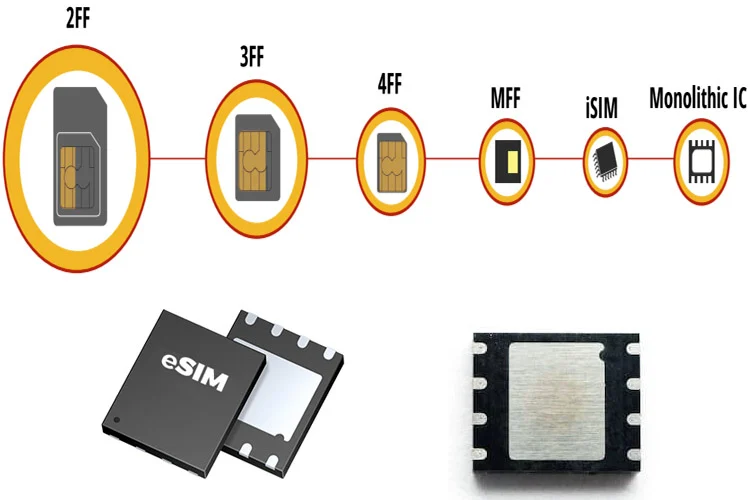

The telecommunications landscape is currently undergoing its most significant hardware transformation since the introduction of the first mobile phones, driven by the rapid adoption of embedded Subscriber Identity Module (eSIM) technology. As the industry moves away from the physical plastic cards that have defined mobile identity for over three decades, the eSIM—a digital, programmable chip integrated directly into a device’s motherboard—is redefining how consumers and enterprises manage connectivity. This shift represents more than just a change in form factor; it is a fundamental reimagining of mobile network access, offering unprecedented flexibility, enhanced security, and a streamlined path toward the global expansion of the Internet of Things (IoT).
Understanding the Technical Architecture of eSIM Technology
An eSIM, technically known as an eUICC (Embedded Universal Integrated Circuit Card), is a specialized chip soldered directly onto a device’s circuit board during the manufacturing process. Unlike the traditional SIM card, which is a removable piece of plastic containing a microchip, the eSIM is a permanent component of the hardware. Despite being non-removable, it is fully rewritable. This allows users to download "profiles" from mobile network operators over-the-air (OTA) without needing to visit a retail store or wait for a physical card to arrive in the mail.
The technology operates through a standardized architecture overseen by the GSMA (Global System for Mobile Communications Association). This system involves a process known as Remote SIM Provisioning (RSP), which allows a device to securely connect to a carrier’s server—specifically the Subscription Manager Data Preparation (SM-DP+) server—to download the encrypted credentials required to authenticate the device on a specific cellular network. Because the chip can store multiple profiles simultaneously, users can switch between different carriers or data plans through a simple software interface in their device settings.
A Chronological History of SIM Evolution
The transition to eSIM is the culmination of thirty years of miniaturization in the telecommunications sector. To understand the current state of the industry, it is essential to trace the timeline of SIM development:
- 1991: The Full-Size SIM (1FF): The first SIM card was roughly the size of a credit card, introduced by the German company Giesecke+Devrient. It was used in the earliest GSM mobile phones.
- 1996: The Mini-SIM (2FF): As mobile phones became smaller, the SIM card shrank. The Mini-SIM became the industry standard for over a decade.
- 2003: The Micro-SIM (3FF): Introduced to save even more internal space, the Micro-SIM gained mainstream prominence with the launch of the iPhone 4 in 2010.
- 2012: The Nano-SIM (4FF): This iteration removed almost all the plastic surrounding the chip, leaving only the essential contact points.
- 2016: The Arrival of eSIM: The GSMA released the first set of eSIM specifications. The Samsung Gear S2 Classic 3G was the first major consumer device to feature an eSIM.
- 2018: Mass Market Adoption: Apple integrated eSIM technology alongside a physical SIM slot in the iPhone XS and XR, introducing the "Dual SIM" era to the global public.
- 2022-Present: The eSIM-Only Era: Apple signaled a major industry shift by removing the physical SIM tray entirely from all iPhone 14 models sold in the United States, forcing a rapid acceleration of eSIM support among North American carriers.
Market Data and Industry Adoption Trends
Recent data from industry analysts suggests that the eSIM market is on a trajectory of exponential growth. According to a report by Juniper Research, the number of devices using eSIM technology is expected to increase from roughly 1.2 billion in 2023 to over 3.4 billion by 2025. This growth is being driven primarily by three factors: the consumer electronics sector, the automotive industry, and the expansion of 5G infrastructure.
In the consumer sector, nearly every flagship smartphone released by Apple, Samsung, Google, and Huawei now includes eSIM capabilities. However, the impact is even more profound in the IoT space. In industrial settings, eSIMs allow for the deployment of thousands of sensors and devices that can be managed remotely, regardless of their geographic location. Furthermore, the automotive industry has become a lead adopter; modern "connected cars" use eSIMs to provide navigation, emergency services (e-Call), and in-car entertainment, allowing manufacturers to manage global fleets through a single hardware SKU.
Strategic Responses from Carriers and Manufacturers
The shift toward eSIM has elicited varied responses from major industry players. Initially, many mobile network operators (MNOs) were hesitant to embrace eSIM technology, fearing that the ease of switching carriers would lead to higher "churn" rates—the frequency with which customers leave one provider for another. However, the competitive landscape has forced a change in strategy.
Major US carriers, including AT&T, T-Mobile, and Verizon, have invested heavily in digital activation platforms to ensure a seamless "onboarding" experience for eSIM users. In a statement regarding the transition, industry analysts noted that while eSIMs reduce the friction of switching, they also significantly lower the "Cost per Acquisition" for carriers, as they no longer need to manufacture, warehouse, or ship physical plastic cards.
Device manufacturers, led by Apple and Samsung, have championed the technology because it frees up valuable internal space within the device. By removing the physical SIM tray and its associated internal hardware, engineers can include larger batteries, improved thermal management systems, or additional sensors, while also enhancing the device’s water and dust resistance.
Comparative Analysis: eSIM vs. Physical SIM
When determining which technology is superior, it is necessary to weigh the practical implications for the end-user:
Advantages of eSIM:
- Convenience: Users can purchase a data plan online and activate it instantly, which is particularly beneficial for international travelers who want to avoid high roaming fees.
- Space Efficiency: The absence of a SIM slot allows for slimmer device designs or larger internal components.
- Enhanced Security: A physical SIM card can be removed if a phone is stolen, allowing the thief to potentially bypass two-factor authentication. An eSIM cannot be removed, making the device easier to track and harder to compromise.
- Multiple Profiles: Most eSIM-enabled phones allow for at least two active lines (e.g., work and personal) and the storage of five to ten additional profiles for quick switching.
Advantages of Physical SIM:
- Device Portability: If a phone’s screen breaks or the battery dies, a physical SIM can be quickly swapped into a backup device. Transferring an eSIM typically requires the original device to be functional or involves a call to the carrier.
- Privacy: Some users prefer physical SIMs because they can be removed to ensure the device is completely disconnected from the cellular network.
Technical Activation Protocols for Modern Devices
The activation process for an eSIM has been standardized to minimize user error, though the steps differ slightly between operating systems.
For Apple iOS Devices:
Most users activate their eSIM during the initial setup of a new iPhone using "eSIM Quick Transfer," which moves the cellular plan from a previous iPhone via Bluetooth. Alternatively, carriers provide a QR code. To activate manually, users navigate to Settings > Cellular > Add eSIM. Once the QR code is scanned, the device contacts the carrier’s server, downloads the profile, and registers on the network, usually within sixty seconds.
For Android Devices:
The process on Android varies by manufacturer but generally follows a similar logic. On a Google Pixel or Samsung Galaxy device, users navigate to Settings > Network & Internet (or Connections) > SIM Manager > Add eSIM. Users then scan the carrier-provided QR code. Android also supports "Discovery" mode, where the device automatically detects an available eSIM profile assigned to the device’s EID (Electronic Identity Document) and prompts the user to install it.
Broader Implications: Environmental Impact and Global Roaming
Beyond personal convenience, the transition to eSIM has significant environmental implications. Each year, the telecommunications industry produces billions of plastic SIM cards, many of which are coated in plastic and include a credit-card-sized holder that is immediately discarded. By moving to a digital standard, the industry can significantly reduce plastic waste and the carbon footprint associated with the logistics of shipping physical cards globally.
Furthermore, the eSIM is revolutionizing the "travel tech" industry. A new generation of digital-first providers, such as Airalo and Holafly, has emerged, offering localized data plans in hundreds of countries via app-based eSIM downloads. This has disrupted the traditional roaming models of major carriers, forcing them to offer more competitive international data packages.
Conclusion and Future Outlook
The transition from physical SIM cards to eSIM technology is an inevitable phase in the evolution of digital communication. While the traditional SIM card will likely persist for several years in emerging markets and budget-tier devices, the momentum toward embedded technology is irreversible.
As we look toward the future, the integration of "iSIM" (Integrated SIM)—where the SIM functionality is moved directly into the device’s main processor—is already on the horizon. For now, the eSIM remains the gold standard, providing a bridge between the physical past and a fully digital future. For consumers, the result is a more flexible, secure, and globally connected experience, marking the end of the "plastic era" of mobile telephony and the beginning of a more efficient age of invisible, instant connectivity.
