
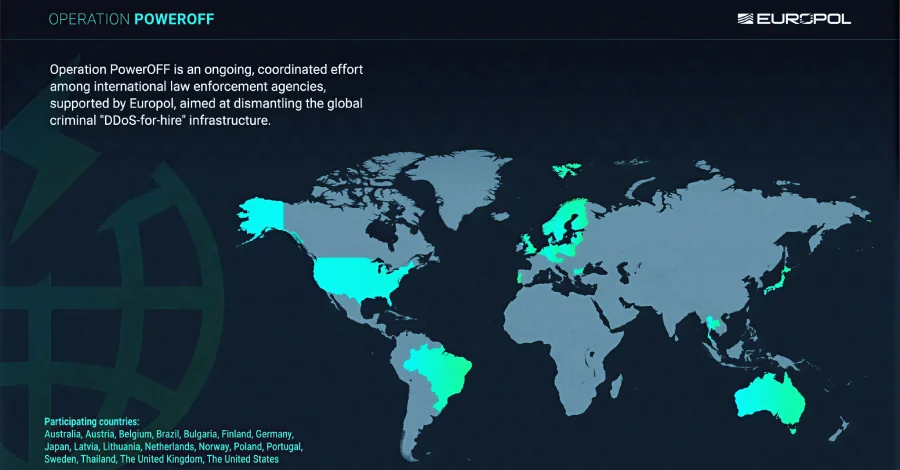

A sweeping international law enforcement initiative, code-named Operation PowerOFF, has successfully dismantled significant portions of the global commercial distributed denial-of-service (DDoS) ecosystem, resulting in the takedown of 53 illicit domains and the arrest of four key individuals. This meticulously coordinated action has impacted over 75,000 cybercriminals who relied on these "booter" or "stresser" services to launch malicious attacks. The ongoing operation represents a formidable demonstration of cross-border collaboration in the relentless fight against cybercrime, aiming to disrupt the infrastructure that fuels readily accessible, large-scale cyberattacks.
The immediate impact of Operation PowerOFF has been substantial. Authorities have effectively disrupted access to numerous DDoS-for-hire services, critically impaired the technical infrastructure supporting these operations, and successfully gained access to extensive databases containing over 3 million criminal user accounts. In a proactive measure designed to deter future illegal activity, law enforcement agencies are dispatching warning emails and letters directly to identified criminal users. Concurrently, 25 search warrants have been executed across various jurisdictions, signaling the depth and breadth of the intelligence gathered during the investigative phase.
The multinational scope of this operation underscores the global nature of cybercrime and the necessity for a unified response. A remarkable coalition of 21 countries participated in the action, pooling resources and expertise to achieve this significant outcome. These nations include Australia, Austria, Belgium, Brazil, Bulgaria, Denmark, Estonia, Finland, Germany, Japan, Latvia, Lithuania, Luxembourg, the Netherlands, Poland, Portugal, Sweden, Thailand, the United Kingdom, and the United States. Such extensive international cooperation highlights an evolving strategy among law enforcement bodies to collectively target and dismantle cybercriminal networks that operate without regard for geographical borders.

Understanding the DDoS-for-Hire Phenomenon
Distributed Denial-of-Service (DDoS) attacks are a pervasive and increasingly sophisticated form of cyber warfare designed to overwhelm a target server, service, or network with a flood of internet traffic. The objective is to exhaust the target’s resources, rendering it unavailable to legitimate users. In essence, it’s akin to jamming all lanes of a major highway with excessive, illegitimate traffic, preventing authorized vehicles from reaching their destination.
The advent of "DDoS-for-hire" or "booter/stresser" services has dramatically lowered the barrier to entry for individuals wishing to launch such attacks. As Europol articulated in a statement regarding Operation PowerOFF, these services enable users, regardless of their technical proficiency, to orchestrate powerful DDoS attacks against targeted websites, servers, or networks. This "as-a-service" model of cybercrime has transformed complex attack methodologies into readily consumable, often inexpensive, subscription-based offerings available on the dark web and even on surface web forums. Europol described DDoS-for-hire as one of the most prolific and easily accessible trends in cybercrime, allowing even individuals with minimal technical knowledge to execute malicious attacks at scale and inflict significant damage to businesses, government services, and critical infrastructure.
The infrastructure supporting these illicit services typically comprises a network of compromised servers, often leveraging botnets of interconnected devices (including IoT devices), databases storing user information and attack parameters, and various other technical components that facilitate the execution of DDoS attacks. By seizing these infrastructures, authorities directly hinder criminal operations, severing the means by which these attacks are launched and preventing further harm to potential victims. The economic toll of DDoS attacks is staggering, with businesses losing millions annually due to service disruptions, data breaches, and reputational damage. According to various industry reports, the average cost of a successful DDoS attack can range from tens of thousands to hundreds of thousands of dollars per hour, depending on the scale and duration, underscoring the severe financial implications for targeted entities.
Motivations and Deceptive Practices
The motivations behind DDoS attacks are as varied as they are widespread. They can range from simple curiosity or the desire for digital mischief by amateur hackers to complex schemes driven by significant financial gain through extortion. Hacktivism, fueled by ideological or political reasons, also frequently employs DDoS attacks to disrupt government services or corporate websites. Furthermore, some attacks are launched by competitors seeking to disrupt rival businesses, especially in highly competitive e-commerce sectors, causing direct financial losses and undermining customer trust.

A particularly insidious aspect of the DDoS-for-hire ecosystem is the deceptive practice employed by some operators. To evade law enforcement scrutiny and mask their true illicit motives, these services are often advertised and presented as legitimate "stress-testing tools." While stress testing is a valid practice used by cybersecurity professionals to evaluate the resilience of their own networks, these criminal services are designed and marketed for offensive use, enabling users to target any website, server, or network, regardless of ownership or permission. This thin veil of legitimacy is routinely pierced by investigations like Operation PowerOFF, which focus on the actual use and intent behind the services offered.
A History of Disruption: The Ongoing Fight Against Cybercrime
Operation PowerOFF is not an isolated incident but rather the latest, and one of the most comprehensive, steps in a sustained global effort to dismantle criminal DDoS-for-hire infrastructures. This concerted campaign reflects a growing understanding among international law enforcement agencies that tackling cybercrime requires continuous, adaptive, and cooperative strategies.
A chronological review of recent actions highlights this commitment:
- August 2025: The U.S. government successfully took down RapperBot, a significant DDoS botnet. This botnet had been responsible for large-scale disruptive attacks targeting victims in over 80 countries since at least 2021, showcasing the enduring threat posed by compromised Internet of Things (IoT) devices. RapperBot’s takedown specifically targeted the underlying command-and-control infrastructure, rendering thousands of compromised devices inert and preventing their use in future attacks.
- May 2025: Europol, a key player in the current operation, previously announced the shutdown of six other major DDoS-for-hire services. These earlier operations demonstrated the proof-of-concept for coordinated international action and laid the groundwork for the more extensive Operation PowerOFF. These previous successes provided valuable intelligence and refined the methodologies used in the current, larger-scale disruption.
- Ongoing Efforts: Beyond these high-profile takedowns, numerous smaller-scale arrests and infrastructure seizures have been occurring regularly. These continuous actions, though often not publicized with the same fanfare, collectively contribute to a persistent pressure on the cybercriminal ecosystem, making it riskier and more difficult for operators to sustain their illicit businesses.
These efforts underscore a crucial shift in law enforcement strategy: moving beyond reactive investigations of individual attacks to proactive disruption of the "as-a-service" platforms that enable widespread cybercrime. This approach aims to cut off the supply of malicious tools and services, thereby diminishing the overall volume and impact of cyberattacks globally.

U.S. Authorities Target DDoS IoT Botnet Services
In a parallel and complementary announcement, the U.S. Department of Justice (DoJ) detailed its own court-authorized actions taken to disrupt some of the world’s leading DDoS Internet of Things (IoT) botnet services. This initiative forms part of the DoJ’s unwavering commitment to holding DDoS botnet administrators accountable and seizing websites that allow paying users to launch potent DDoS attacks. The focus on IoT botnets is particularly significant, as millions of insecure smart devices – from cameras and routers to home appliances – can be easily compromised and conscripted into these massive attack networks, generating immense volumes of junk traffic.
The DoJ confirmed that U.S. authorities seized services associated with eight prominent DDoS-for-hire domains. Among these were "Vac Stresser" and "Mythical Stress," both of which notoriously boasted about their capacity to launch thousands of DDoS attacks daily, attracting a large clientele of aspiring cybercriminals. The seizure of these domains effectively removes key hubs for criminal activity, cutting off access for thousands of potential attackers.
To further deter future illicit activity and educate the public, the DoJ has launched an innovative advertising campaign. This campaign specifically targets potential cybercriminals searching for DDoS services within the U.S. and internationally, aiming to redirect their intentions and inform them about the severe legal consequences of engaging in DDoS attacks. Simultaneously, it serves to alert the broader public about the illegality and damaging nature of such cyber offenses.
Visitors attempting to access the seized domains are now greeted by an unmistakable seizure banner. This message serves as a stark warning, unequivocally stating: "DDoS attacks are illegal. For years law enforcement agencies around the world have seized booter databases, arrested administrators, and collected information relating to the operation of these services, including information on the customers of these services. Anyone operating or utilizing DDoS services is subject to investigation, prosecution, and other law enforcement action." This direct communication strategy aims to instill fear of prosecution among current and prospective users of these illicit services, reinforcing the message that anonymity in cybercrime is increasingly a myth.

Broader Implications and Future Outlook
Operation PowerOFF and related initiatives carry profound implications for the global cybersecurity landscape.
- Disruption of the Cybercrime Economy: By targeting the infrastructure and administrators of DDoS-for-hire services, law enforcement directly impacts the profitability and sustainability of this segment of the cybercrime economy. While new services may emerge, the repeated takedowns increase operational risks and costs for criminals, potentially making these services less attractive or more difficult to access.
- Deterrence: The arrests, domain seizures, and direct warnings to users aim to create a powerful deterrent effect. The public display of coordinated international action sends a clear message that cybercriminals, regardless of their location, are not beyond the reach of the law. This could lead to a reduction in the number of individuals willing to engage in or purchase DDoS services.
- Enhanced Intelligence: The seizure of databases containing millions of user accounts provides invaluable intelligence to law enforcement. This data can be analyzed to identify other cybercriminals, map out their networks, understand attack patterns, and potentially lead to further arrests and disruptions in the future.
- International Cooperation as a Blueprint: The extensive participation of 21 countries in Operation PowerOFF establishes a robust blueprint for future international cybercrime investigations. The ability to coordinate across diverse legal systems and national boundaries is critical in combating crimes that inherently transcend borders. This collaborative model will likely be replicated and refined for other types of cyber threats, such as ransomware and phishing operations.
- Victim Empowerment and Resilience: While no single operation can eliminate all cyber threats, Operation PowerOFF offers a measure of relief to potential victims. By reducing the availability of DDoS-for-hire services, it decreases the likelihood of businesses and organizations falling prey to these disruptive attacks. It also implicitly encourages organizations to continue investing in their own cybersecurity defenses and resilience strategies, knowing that law enforcement is actively working to suppress the threat landscape.
- Evolving Threat Landscape: Despite these successes, the fight against DDoS attacks is continuous. Cybercriminals are constantly adapting, developing new attack vectors, exploiting emerging technologies, and seeking new ways to evade detection. The proliferation of insecure IoT devices continues to be a major concern, providing a vast pool for botnet recruitment. Therefore, ongoing vigilance, proactive intelligence sharing, and continuous innovation in defensive and offensive cybersecurity strategies will remain paramount.
In conclusion, Operation PowerOFF stands as a testament to the growing strength and sophistication of international law enforcement in combating cybercrime. By targeting the readily available tools that empower a vast network of cybercriminals, authorities have delivered a significant blow to the DDoS-for-hire ecosystem. This operation not only disrupts current malicious activities but also aims to reshape the digital threat landscape, making it a more hazardous environment for those who seek to exploit the internet for illicit gain. The message is clear: the global community is increasingly united and equipped to pursue and prosecute cybercriminals, wherever they may hide.
