
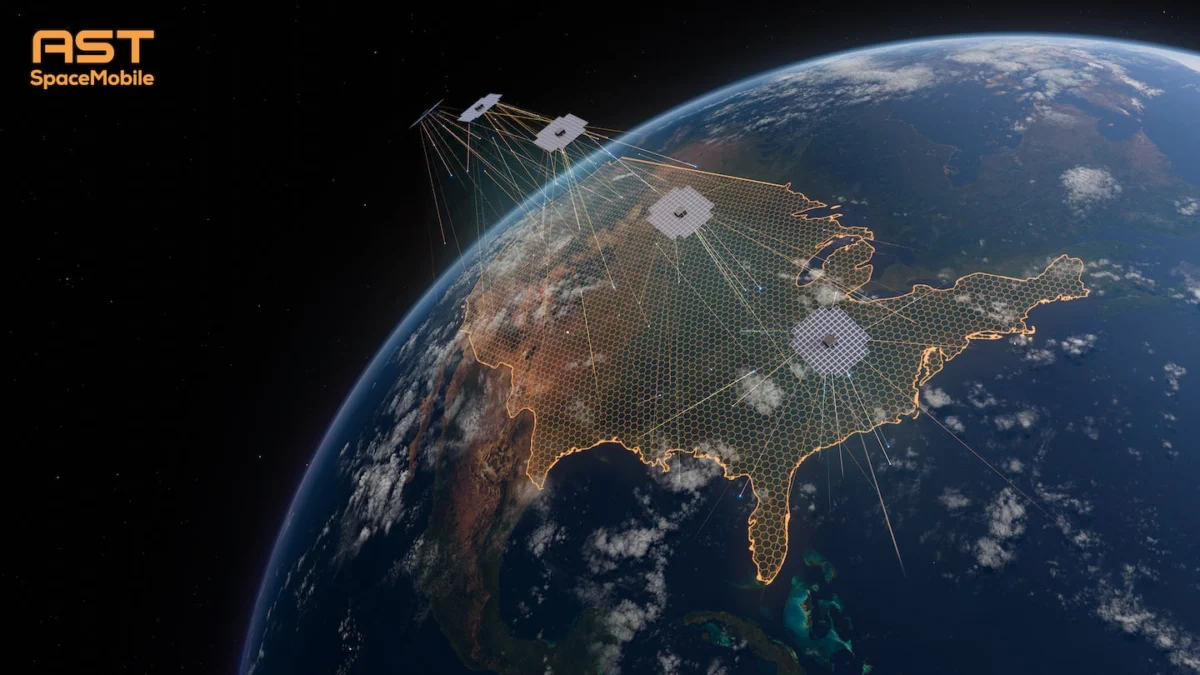

The Federal Communications Commission (FCC) has officially granted AST SpaceMobile the commercial authorization required to provide direct-to-device (D2D) satellite services across the United States, marking a transformative milestone for the telecommunications industry and the future of global connectivity. This landmark order, released on April 21, permits the Texas-based company to deploy a massive constellation of 248 satellites designed to eliminate cellular "dead zones" by communicating directly with unmodified, everyday smartphones. By utilizing the existing spectrum of its terrestrial mobile network operator (MNO) partners, AST SpaceMobile is poised to deliver seamless broadband coverage from space, effectively bridging the gap between traditional cellular networks and remote regions where ground-based infrastructure is non-existent or impractical.
The Regulatory Framework: Supplemental Coverage from Space
The FCC’s approval falls under the newly established regulatory framework known as Supplemental Coverage from Space (SCS). This framework was formally adopted by the Commission in March 2024 to address the growing demand for ubiquitous connectivity. SCS allows satellite operators to collaborate with terrestrial service providers to use the latter’s licensed flexible-use spectrum. This enables satellites to act as "cell towers in space," providing a safety net of coverage for consumers when they travel outside the range of terrestrial towers.
Under the terms of the order, AST SpaceMobile is authorized to utilize low-band spectrum in the 700 MHz and 800 MHz ranges. These frequencies are particularly valuable for satellite-to-cell services because their longer wavelengths allow signals to penetrate buildings and foliage more effectively than high-frequency bands. The authorization is the result of a coordinated effort between AST SpaceMobile and its primary U.S. partners: AT&T, Verizon, and FirstNet.
The inclusion of FirstNet—the nationwide high-speed broadband network dedicated to public safety—is particularly significant. By integrating satellite-to-cell capabilities, FirstNet aims to provide first responders with reliable communication channels in disaster-stricken areas or rugged wilderness locations where traditional towers may be damaged or absent.
Technical Ambitions and the BlueBird Constellation
AST SpaceMobile’s mission centers on the deployment of its "BlueBird" satellites. Unlike traditional communications satellites that require specialized ground terminals or "pizza box" antennas, the BlueBird series features massive phased-array antennas—some of the largest ever deployed in low Earth orbit (LEO). These antennas are designed to capture the faint signals emitted by standard smartphones and transmit high-speed data back to Earth, a feat of engineering that requires precise timing and sophisticated software to overcome the Doppler effect and signal latency inherent in space communications.
The FCC has imposed a rigorous deployment schedule to ensure the company follows through on its operational promises. AST SpaceMobile is required to launch at least half of its authorized constellation—124 satellites—by August 2, 2030. The full constellation of 248 satellites must be in orbit and operational by August 2, 2033. This "use-it-or-lose-it" clause is a standard regulatory tool used by the FCC to prevent spectrum squatting and to ensure that the public interest is served through the timely delivery of promised services.
The company’s internal roadmap is even more aggressive. AST SpaceMobile has stated its intention to have 45 satellites in orbit by the end of 2026. To achieve this, the company plans to maintain a launch cadence of approximately one mission every one to two months. This rapid scaling is necessary to provide the continuous, high-throughput broadband coverage required for applications beyond simple emergency texting, such as video streaming and web browsing.
Navigating Recent Launch Anomalies and Setbacks
The path to commercial authorization has not been without significant hurdles. Just days prior to the FCC’s announcement, AST SpaceMobile experienced a major setback during a launch attempt with Blue Origin’s New Glenn rocket. The mission, which was carrying the second of the company’s next-generation BlueBird satellites, suffered a launch anomaly.
According to reports, the New Glenn rocket failed to deliver the satellite to its intended altitude, leaving it in an orbit too low to be sustainable. As a result, the satellite is expected to re-enter the Earth’s atmosphere and be destroyed. Despite the loss, AST SpaceMobile leadership remained resilient, noting that the company expects to recover the majority of the satellite’s value through an insurance claim.
"While the loss of a satellite is always a challenge, our manufacturing and launch pipeline is designed for resilience," a company spokesperson noted. The first upgraded BlueBird satellite was successfully launched in December and continues to undergo orbital testing. The company maintains that the New Glenn anomaly will not fundamentally alter its long-term deployment goals, though it underscores the inherent risks of the commercial space industry.
The Competitive Landscape: The Race for the Skies
AST SpaceMobile is not alone in the quest to dominate the D2D market. The FCC’s approval comes on the heels of a similar authorization granted to SpaceX for its Starlink Direct-to-Cell service in partnership with T-Mobile. The competition between AST SpaceMobile and SpaceX represents a clash of two different business philosophies.
SpaceX leverages its own launch capabilities (the Falcon 9 and eventually Starship) and a massive existing constellation to provide services. However, AST SpaceMobile argues that its technology is superior for broadband applications because its larger antennas allow for higher data speeds on standard cellular frequencies. While SpaceX and T-Mobile initially focused on SMS and emergency messaging, AST SpaceMobile has positioned itself as a provider of full cellular broadband.
The entry of Verizon into the AST SpaceMobile ecosystem earlier this year was a major strategic win for the company. Previously, AT&T was AST’s primary U.S. champion. By securing agreements with both AT&T and Verizon—the two largest wireless carriers in the United States—AST SpaceMobile has effectively locked in a massive potential user base. These partnerships provide the company with the financial backing and the regulatory "lease" on the spectrum required to operate legally.
A History of Regulatory Milestones
The journey to this week’s commercial authorization has been years in the making. AST SpaceMobile’s regulatory timeline reflects the evolving nature of satellite-to-cell policy:
- Experimental License (2022): The FCC granted AST SpaceMobile an experimental license to test its BlueWalker 3 satellite. This testing proved that a satellite could successfully connect to an unmodified smartphone to facilitate a voice call and data session.
- Non-Terrestrial Band Approval: The company received initial nods to use specific satellite bands for backhaul and ground-station communication.
- Special Temporal Authority (STA): In early 2025, the FCC granted AST SpaceMobile STA to conduct advanced testing in the U.S. using Verizon and AT&T spectrum, paving the way for the full commercial order.
- Commercial Authorization (April 2024): The current order grants the final permission needed to transition from a testing phase to a revenue-generating commercial service.
Statements from Leadership and Market Reactions
Abel Avellan, the founder, chairman, and CEO of AST SpaceMobile, characterized the FCC approval as a defining moment for the company. "Today marks an important step as we continue scaling our network and moving closer to commercial service," Avellan said. "We are accelerating deployment of our constellation, advancing integration with leading mobile network operators, and preparing to deliver seamless, space-based cellular broadband directly to everyday smartphones, bringing us closer to connecting people everywhere."
Market analysts have noted that the FCC’s decision provides much-needed regulatory certainty for AST SpaceMobile’s investors. The satellite telecommunications sector is notoriously capital-intensive, and the "green light" from the U.S. government is often a prerequisite for securing the additional debt or equity financing needed to build out a full constellation.
Industry observers also point out that this approval sets a precedent for how the FCC will handle similar applications from international satellite firms. By establishing a clear set of rules for SCS, the FCC is positioning the United States as a global leader in the regulation of space-based telecommunications.
Broader Implications for the Digital Divide
The social and economic implications of AST SpaceMobile’s service are profound. In the United States, millions of people living in rural or mountainous areas still lack reliable 4G or 5G access. The "digital divide" hampers economic growth, limits educational opportunities, and poses risks to public safety.
By providing a "roaming" service that kicks in automatically when a user leaves terrestrial coverage, AST SpaceMobile and its partners aim to make the concept of a "no-service area" obsolete. For the agricultural sector, this could mean real-time monitoring of remote sensors. For the transportation industry, it means continuous tracking of assets across the vast American interior. For the average consumer, it means the ability to call for help or send a message from a remote hiking trail or a rural highway.
Conclusion and Future Outlook
As AST SpaceMobile moves forward, the focus will shift from regulatory hurdles to execution. The company must now prove it can maintain a high launch success rate and that its satellites can handle the massive traffic loads of two of the world’s largest mobile carriers.
The loss of the satellite during the Blue Origin launch serves as a stark reminder of the "space is hard" mantra, but the FCC’s commercial authorization provides the legal and strategic foundation necessary to overcome such setbacks. With the backing of AT&T, Verizon, and now the federal government, AST SpaceMobile is no longer just a high-tech startup with a bold idea—it is a central player in the next frontier of global telecommunications.
The coming months will be critical as the company integrates its systems with MNO core networks and prepares for the first consumer-facing trials. If successful, the 248-satellite constellation authorized this week will not just be a network of machines in orbit; it will be a bridge connecting the most isolated parts of the country to the global digital economy.
