
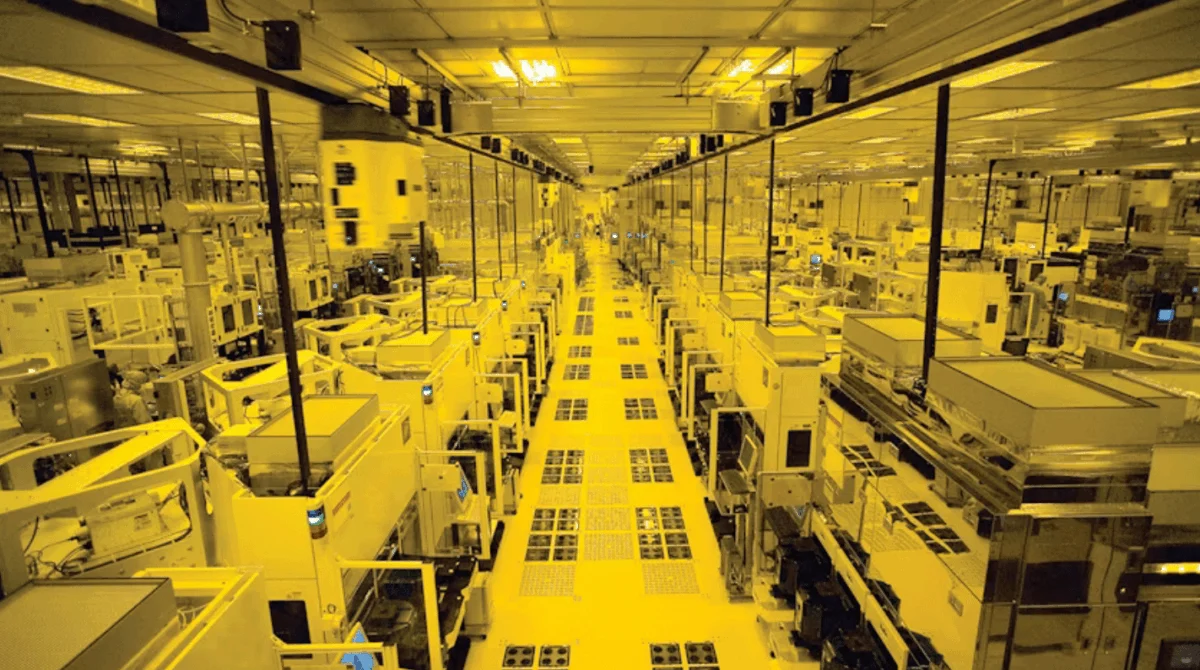

The global semiconductor landscape is undergoing a profound structural transformation, marked by the aggressive pursuit of sub-2-nanometer process nodes, a generational shift in executive leadership at the world’s most valuable technology company, and a fundamental pivot in artificial intelligence architecture from generative to agentic systems. During the recent TSMC North America Technology Symposium, the world’s leading foundry provided a definitive timeline for the "Angstrom Era," signaling that the physical limits of silicon are being pushed further through a combination of advanced lithography, new materials, and 3D system-on-wafer (SoW) integration. This technological roadmap is unfolding against a backdrop of corporate restructuring, as Apple prepares for a post-Tim Cook era and the industry grapples with the immense power and compute demands of autonomous AI agents.
TSMC and the Angstrom Era: A Roadmap to 2029
At its annual North America Technology Symposium, Taiwan Semiconductor Manufacturing Company (TSMC) clarified its long-term manufacturing trajectory, aiming to maintain its dominance in the leading-edge foundry market. The company officially announced that its A14 (1.4nm-class) node is scheduled for high-volume manufacturing in 2028. This will be followed in 2029 by the A13 node, which is described as an optical shrink of the A14 process.
The transition to the "A" or Angstrom series represents more than just a nomenclature shift. As traditional "nanometer" labels have become increasingly detached from physical gate lengths, the industry is moving toward a holistic definition of performance based on power, performance, area, and cost (PPAC). TSMC’s A14 and A13 nodes will likely utilize the third or fourth generation of Nanosheet (Gate-All-Around) transistors, moving beyond the FinFET architecture that sustained the industry for over a decade.
To support these ultra-advanced nodes, TSMC is deepening its integration with Electronic Design Automation (EDA) partners. Collaborations with Siemens, Synopsys, and Cadence are being expanded to develop certified design flows that can handle the complexities of multi-die integration and backside power delivery. A significant highlight of the symposium was the emphasis on System-on-Wafer (SoW) technology. This approach allows for the integration of massive logic and memory arrays on a single wafer-scale package, catering specifically to the needs of hyperscale data centers and AI training clusters.

Apple’s Executive Transition: The Ternus Era Begins
In a move that signals the beginning of a new chapter for the world’s premier consumer electronics firm, Apple announced a major leadership shuffle. Tim Cook, who has served as CEO since 2011 and oversaw the company’s rise to a multi-trillion-dollar valuation, will transition to the role of Executive Chairman effective September 1. John Ternus, currently the Senior Vice President of Hardware Engineering, has been named the incoming CEO.
Ternus is widely regarded as a "hardware-first" leader, having played a pivotal role in the transition of the Mac lineup to Apple Silicon and the development of the iPhone and iPad Pro. His elevation suggests that Apple will continue to double down on its vertical integration strategy, designing its own chips to differentiate its hardware. Complementing this move, Johny Srouji, the architect of Apple’s silicon success, has been named Chief Hardware Officer. Srouji’s expanded role indicates that chip design and hardware engineering are becoming even more inextricably linked as Apple explores new frontiers in augmented reality, automotive technology, and edge AI.
The transition comes at a critical time as Apple seeks to integrate "Apple Intelligence" across its ecosystem. The market’s reaction has been one of cautious optimism, noting that the long lead time for the transition (effective in September) is designed to ensure stability and continuity in Apple’s complex global supply chain.
The Shift to Agentic AI and Next-Generation Infrastructure
A recurring theme across recent industry announcements is the transition from generative AI—where models respond to human prompts—to "agentic AI." In agentic systems, AI "agents" operate autonomously to perform multi-step tasks, search for data, and execute workflows without constant human intervention. This shift has massive implications for data center architecture.
Arm’s recent analysis highlights that agentic AI requires a significant increase in CPU and NPU (Neural Processing Unit) resources. Unlike generative models that may run in bursts, agentic AI operates 24/7, performing background reasoning and data synthesis. This necessitates a new class of "always-on" high-performance silicon.

In response to these demands, Google has released its eighth-generation Tensor Processing Units (TPUs). These custom-designed chips are specifically optimized for the training and inference of large-scale agentic models. Similarly, Bolt Graphics has taped out its "Zeus" GPU, which the company claims can reduce the total cost of compute by up to 17 times for high-performance computing (HPC) and rendering applications.
The demand for AI compute is also driving innovation in testing and telemetry. Advantest introduced the Pin Scale 5000B digital test card, designed for the V93000 EXA Scale platform. This hardware is built to test the latest generation of AI and HPC devices, offering data rates up to 5 Gbps and expanded vector memory to handle the massive IP core counts found in modern AI accelerators.
Memory Standards and Power Management Evolution
As logic speeds increase, memory and power delivery have become the primary bottlenecks in system performance. The industry is currently preparing for the rollout of LPDDR6, which promises higher bandwidth and lower power consumption for mobile and edge devices. In the server segment, Rambus has introduced its SOCAMM2 (Small Outline Compression Attached Memory Module) chipset. This architecture is designed to provide the high-density memory required by modern servers while maintaining a small physical footprint and improving thermal efficiency.
On the power management front, Movellus has launched a "bench-to-in-field" telemetry platform. This technology allows for on-die voltage sensing at nanosecond resolution. By capturing voltage drops and power spikes at near-transistor granularity, design teams can re-characterize silicon performance in real-time as it encounters new AI workloads in the field. This capability is essential for maximizing the lifespan and efficiency of chips in hyperscale environments where power costs are a dominant operational expense.
Geopolitics and the Global Semiconductor Supply Chain
The semiconductor industry remains a focal point of global industrial policy. The European Semiconductor Industry Association (ESIA) recently elected Erik Rein, an executive from Bosch, as its new president. Rein succeeds Michael Budde and takes over at a time when the European Union is aggressively implementing its Chips Act to double its global market share in semiconductor production.

In Asia, India is making significant strides in the "Back-End" of the semiconductor value chain. New plans for 3D packaging fabs in India signal the country’s intent to move beyond simple assembly and testing into advanced heterogeneous integration. This move is supported by global trends where companies are seeking to diversify their manufacturing footprints away from traditional hubs.
In the United States, the MATCH Act continues to progress through the legislative process. This bill aims to bolster the domestic semiconductor workforce and provide incentives for research and development, particularly in the areas of EUV (Extreme Ultraviolet) resist technology and advanced materials. The industry is currently facing a "resist crunch," where the specialized chemicals required for EUV lithography are in short supply, potentially threatening the ramp-up of 3nm and 2nm production lines.
Security in the Post-Quantum Era
As hardware becomes more powerful, the security protocols protecting it must also evolve. Researchers at MIT have developed a new ASIC (Application-Specific Integrated Circuit) for wireless biomedical devices that implements post-quantum cryptography (PQC). As quantum computers advance, traditional encryption methods like RSA are expected to become vulnerable.
The MIT chip is designed with built-in defenses against physical side-channel attacks, such as power analysis. Crucially, the researchers claim this chip is 20 to 60 times more energy-efficient than existing PQC software implementations. This breakthrough is vital for the medical industry, where implantable devices must remain secure against future quantum threats without sacrificing battery life.
Future Outlook: Connectivity and Quantum Scaling
Looking toward the end of the decade, the convergence of low-power wireless and edge AI will define the next generation of IoT. imec has highlighted that technologies like Bluetooth and Ultra-Wideband (UWB) are currently underutilized for edge AI. By integrating AI processing directly into wireless controllers, devices can perform complex environmental sensing and data filtering before transmitting information, further reducing power consumption.

In the realm of quantum computing, IonQ has released a full-stack, "buildable blueprint" for scalable, fault-tolerant quantum systems. This roadmap focuses on the "Walking Cat" architecture, which utilizes trapped-ion technology to minimize error rates. Simultaneously, Lawrence Livermore National Lab has received $4.1 million in funding to lead the Quantum Computing for Computational Chemistry (QC3) program, focusing on using quantum algorithms to accelerate the development of next-generation magnets and materials for energy applications.
The semiconductor industry is no longer just about smaller transistors; it is about the intelligent integration of logic, memory, power, and security across a globalized and politically sensitive ecosystem. As TSMC moves toward the Angstrom era and Apple transitions its leadership, the groundwork is being laid for a decade defined by autonomous agents and quantum-ready infrastructure.
