
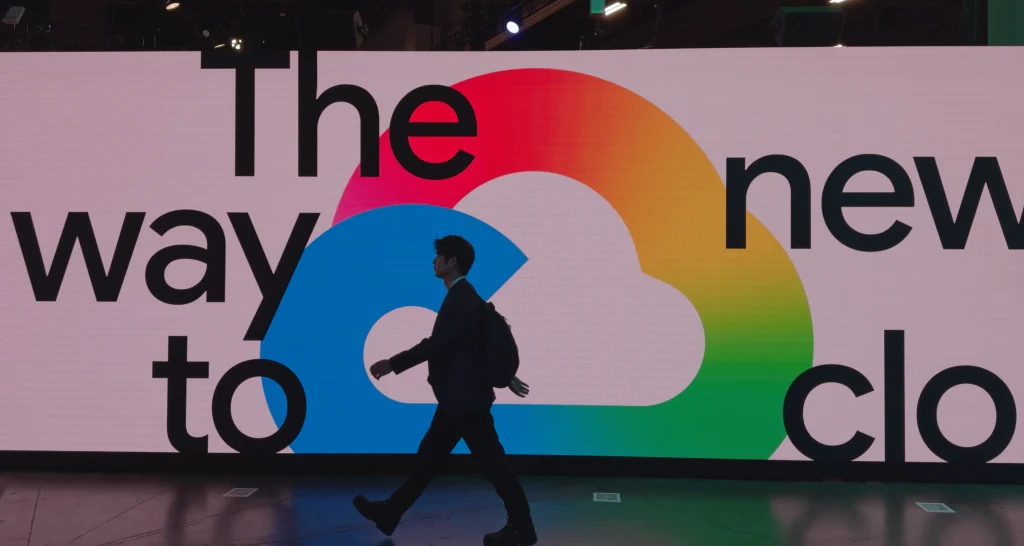

Richard Seroter, Google Cloud’s Senior Director and Chief Evangelist, has issued a candid assessment of the current developer sentiment, stating, "Developer loyalty is at zero right now." Speaking at the recent Google Cloud Next conference, an event that underscored the accelerating pace of innovation in cloud computing and artificial intelligence, Seroter acknowledged the challenging position Google Cloud finds itself in, particularly given its expansive suite of developer tools. However, he expressed unwavering confidence in Google’s ability to reclaim and solidify developer allegiance, emphasizing a strategic focus on AI development and platform excellence.
The Google Cloud Next conference, held last week, served as a crucial backdrop for Seroter’s remarks. The event, a significant annual gathering for cloud professionals, developers, and business leaders, typically showcases the latest advancements and strategic directions from Google’s cloud division. This year, the dominant theme was undoubtedly artificial intelligence, with announcements spanning new AI models, developer tools, and infrastructure designed to accelerate AI adoption across industries. In this high-stakes environment, Seroter’s frankness about developer loyalty signals a recognition of the intense competition and the need for a clear, compelling value proposition.
"Our job is that we should make it easy," Seroter asserted, articulating Google Cloud’s core mission in the AI development space. "If you want to build with AI or if you build AI apps, we should be excellent at both and be the best at both. We are not ceding anything. We will be the best at AI dev tools. We’re gonna get there – always. I mean, that’s everybody’s goal. We’re gonna keep pushing there." This declaration signals Google Cloud’s intent to not only participate but to lead in the burgeoning AI development ecosystem. The company’s ambition is to provide a seamless and superior experience for developers, whether they are building AI-powered applications from the ground up or integrating AI capabilities into existing workflows.
Beyond developer tools, Google Cloud’s pragmatic approach extends to its core platform offering. Even if developers opt for third-party tools or models, Seroter argued, Google Cloud aims to be the optimal environment for their deployment. This strategy is rooted in delivering tangible performance benefits. "If you look at the latency, the best performing way to use Anthropic is on Vertex over Azure, AWS, and Anthropic itself," he explained. "And so even if you’re using Claude Code, you should be using Vertex – otherwise you’re just getting worse performance." This highlights a key differentiator: optimizing the execution of AI models, regardless of their origin, on Google Cloud’s infrastructure. Vertex AI, Google’s unified machine learning platform, is positioned as the central hub for this optimized experience, promising superior speed and efficiency.
The strategic vision for Google Cloud’s developer experience was further illuminated by Seroter’s recounting of a directive from Google Cloud CEO Thomas Kurian. "Thomas Kurian told me a while back, when we started building our agent skills, we should have the best dev experience for anyone who’s deploying to Google Cloud," Seroter shared. "I don’t care what tool you use. Cursor? Unbelievable." This sentiment underscores a commitment to enhancing the developer journey, regardless of the specific tools developers choose for their coding or model development. The focus is on ensuring that once code or models are ready for deployment, Google Cloud offers an unparalleled environment.
"When you pull in our skills, or you pull in our MCPs or instructions, that should be better than what Amazon offers you," Seroter continued, referencing the competitive landscape. "And so you get the best advice, you get the most accurate advice. You get the right architecture that’s correct the first time. So if you choose a different upstream toolchain, this should be your default. It’s always gonna be better." This suggests a proactive approach to guiding developers towards optimal configurations and best practices within the Google Cloud ecosystem, aiming to reduce friction and improve outcomes. The implication is that even if developers don’t exclusively use Google’s development tools, their experience on Google Cloud should be demonstrably superior.
Google Cloud: A Unified Platform, Not a Fragmented Portfolio
A significant aspect of Seroter’s commentary revolved around Google Cloud’s fundamental organizational philosophy. He drew a clear distinction between a "portfolio company" with numerous disparate products and a "platform company" with a singular, cohesive offering. This perspective appears to be a subtle critique of competitors who may present a vast array of services that can feel disconnected or overwhelming to developers.
"I don’t think Google sells 300 services. I think we sell one platform," Seroter stated emphatically. "Not everyone agrees with me, but I don’t think we are a portfolio company with 300 products. We’re a platform company with one platform. […] I don’t want a holding company in a cloud – and I think you still have those experiences in some clouds." This vision of a unified platform aims to simplify the developer experience, offering a more integrated and intuitive way to access and leverage Google Cloud’s capabilities. The underlying message is that while Google Cloud offers a wide range of functionalities, they are all designed to work in concert as part of a single, coherent system.
While acknowledging the breadth of Google Cloud’s offerings, Seroter also introduced the concept of strategic focus. He suggested that not every service needs to be at the absolute cutting edge, but in critical areas, excellence is paramount. "We’re going to pour ourselves into certain types of services that have to be excellent," he explained. "So yeah, we can do more because we’re a bigger team, but I think we all are selectively ruthless where we need to be more focused. And that’s probably been the biggest change company-wise in the last three years – is that we’ve just decided to be laser focused in a few areas, especially around AI development and excellence that I love – and that comes from the top." This strategic ruthlessness, driven by top-down leadership, indicates a deliberate prioritization of resources and efforts towards areas deemed most critical for future growth and market leadership, particularly AI.
Addressing Criticisms: Pace, Stability, and Innovation
The conversation also touched upon recent criticisms leveled against Google, notably from former Google engineer Steve Yegge. Yegge has argued that Google’s pace of innovation, particularly in its internal adoption of AI tools, has been too slow. He cited instances where Google engineers were reportedly not permitted to use advanced tools like Claude Code due to competitive concerns, even as internal teams like DeepMind were utilizing them.
Seroter directly addressed these criticisms, framing Google’s approach as a necessary balance between rapid innovation and the imperative of maintaining stability for its global user base. "They’re usually working with incomplete information. I know all the parties involved," he commented on the critiques. "Steve’s work? I reviewed his Vibe Coding [book] as a tech reviewer. [Co-author] Gene Kim sent me a copy. But you’re working with incomplete information. Google is a big company." Seroter’s response suggests that external observers may not fully grasp the complexities of operating a massive, mission-critical infrastructure like Google’s.
He further elaborated on the operational differences within Google, explaining that while various divisions like Android and Google Cloud may have distinct operational models, the overarching commitment to quality remains constant. "Talk to his buddy, the engineering manager here, who says this isn’t working, but it’s different than here and here. So, formally, are we doing it all the same way? Of course not. Android operates differently from Cloud and DeepMind, but at the same time, the push is to ensure we never sacrifice quality."
This commitment to quality is what Seroter believes distinguishes Google Cloud’s approach to innovation. "So as much as it would be cool to vibe code the next extension to [Google] Maps, I can’t break Maps," he stated. "We don’t have the luxury of shipping a chatbot. We have the luxury of running the most important platform and infrastructure on the planet. So we’re gonna do it fast, but we’re gonna do it safely. I don’t think everyone has that obligation, and so there’s a certain freedom to be a little more YOLO in some companies than ours. Doesn’t mean we’re still not going to be aggressive and fast – but I can’t break the internet." This highlights the immense responsibility Google carries as a provider of critical global infrastructure, which necessitates a more measured and safety-conscious approach to deploying new technologies compared to companies with less impactful services.
Despite these constraints, Seroter asserted that Google Cloud is indeed moving at a significant pace. He pointed to recent advancements such as new TPU hardware, the development of its agent platform, and continuous model updates as evidence of this momentum. "It is an amazing portfolio. How much faster do I need to go? I don’t know, but our customers can not keep up with any of this stuff. No one does," he remarked. This perspective suggests that the bottleneck for AI adoption may not solely be Google’s development speed, but also the capacity of its customers to integrate and leverage these rapidly evolving technologies.
"Is speed the entire thing? Or is that still a way to ship quality products to customers? I think sometimes we lose sight of that, industry-wise, and it’s purely about the speed. Speed to what, like speed, without direction is worthless," Seroter concluded, emphasizing that innovation must be purposeful and deliver tangible value rather than simply chasing the fastest possible release cycles. This thoughtful approach to innovation, balancing speed with stability and strategic focus, forms the bedrock of Google Cloud’s long-term vision in the competitive cloud landscape. The company’s commitment to being the best in AI development, coupled with its platform-centric strategy and a pragmatic approach to innovation, positions it to navigate the current challenges and vie for greater developer loyalty in the years to come.
