
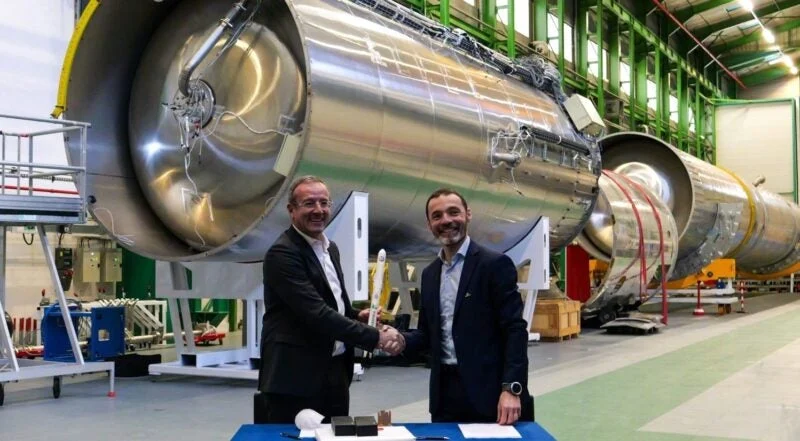

The European space sector is currently navigating a period of profound transition, characterized by the search for autonomous access to orbit and the rise of agile, commercial-first launch providers. At the center of this evolution is MaiaSpace, a French launch vehicle developer and subsidiary of ArianeGroup, which is moving to disrupt traditional aerospace timelines. By securing a landmark multi-launch contract with Eutelsat OneWeb earlier this year, MaiaSpace has signaled its intent to become a cornerstone of European space logistics. This agreement serves as a major commercial validation for a company that was founded only in April 2022, providing it with a robust backlog before its flagship rocket has even reached the pad. In a recent dialogue regarding the company’s trajectory, MaiaSpace CEO Yohann Leroy outlined an ambitious roadmap that emphasizes speed, iterative engineering, and a departure from the conservative development cycles that have historically defined European aerospace.
Strategic Commercial Validation Through Eutelsat OneWeb
The contract with Eutelsat OneWeb represents more than just a financial transaction; it is a strategic endorsement of MaiaSpace’s technical roadmap. Eutelsat, a global satellite operator with high standards for reliability and scheduling, conducted a deep dive into MaiaSpace’s internal milestones before committing to the partnership. According to Leroy, the visibility provided by this deal is rare for a startup in the pre-flight stage. The agreement stipulates that OneWeb missions will constitute more than 50% of MaiaSpace’s manifest during its first three years of operational service.
For MaiaSpace, the goal is to avoid the "single-customer trap," where a company becomes overly dependent on one entity for its survival. To mitigate this, the company is actively pursuing additional commercial contracts, with plans to finalize several more deals within the current calendar year. This diversification is essential for building a sustainable business model that can weather the fluctuations of the global satellite market. The Eutelsat deal serves as the "anchor" that proves the company’s credibility to other prospective clients, demonstrating that an experienced operator trusts MaiaSpace to deliver on its performance and scheduling promises.
Technical Architecture and the Prometheus Advantage
MaiaSpace’s ability to move at an accelerated pace is largely attributed to its decision not to "reinvent the wheel." While many startups spend years and hundreds of millions of dollars developing proprietary propulsion systems from scratch, MaiaSpace opted to leverage the Prometheus engine. Developed under the auspices of the European Space Agency (ESA) and led by ArianeGroup, Prometheus is a reusable, ultra-low-cost engine powered by liquid oxygen (LOx) and methane.
The use of methane is a significant technological shift for European rocketry, which has traditionally relied on liquid hydrogen for its heavy-lift vehicles. Methane offers several advantages for reusability, including easier handling at ambient temperatures and a reduction in "sooting" within the engine components, which simplifies the refurbishment process between flights. By integrating a propulsion system that has already undergone years of research and development, MaiaSpace estimates it can cut the typical ten-year development cycle for a new rocket in half.
The Maia launcher itself is designed to be a versatile workhorse for the small-to-medium satellite market. While the initial versions will focus on expendable configurations to ensure a rapid entry into service, the long-term vision includes a reusable first stage. This transition will be managed through an iterative flight program. The company plans to conduct seven or eight flights to demonstrate core technologies before attempting a first-stage recovery on the eighth or ninth mission, likely in the 2028–2029 timeframe.
A Chronology of MaiaSpace Development and Milestones
To understand the scale of MaiaSpace’s ambition, it is necessary to look at the timeline the company has set for itself. Most traditional aerospace projects operate on decadal cycles; MaiaSpace is attempting to compress this into a five-year window.
- April 2022: MaiaSpace is officially founded as a subsidiary of ArianeGroup to address the "NewSpace" market.
- 2023–2024: Intensive design phases and integration of the Prometheus engine technology. Commercial outreach results in the first two launch contracts, including the Eutelsat OneWeb deal.
- Late 2024 – Early 2025: Initial hardware testing and subsystem validation. Leroy has expressed a hope that the company could be ready for a preliminary launch as early as the end of 2024, though he acknowledges the high risks associated with such an aggressive target.
- 2025–2026: Continued testing and suborbital or non-orbital demonstration flights.
- April 2027: The firm’s "hard deadline" for achieving its first orbital launch, marking five years since the company’s inception.
- 2028–2029: Implementation of reusability technology and the first attempts at recovering the first stage of the Maia launcher.
- 2030: Target for achieving full operational profitability.
The Iterative Philosophy: Speed Over Perfection
A core tenet of the MaiaSpace strategy is the acceptance of incremental progress. Leroy has been transparent about the fact that the first iteration of the Maia launcher may not meet every final performance metric. This "agile" approach—often associated with Silicon Valley firms like SpaceX but less common in European institutional aerospace—allows the company to "descope" certain non-essential elements to ensure the rocket reaches the launch pad on time.
"We do not pretend that we are smarter than our colleagues from ArianeGroup," Leroy noted, acknowledging the heritage of his parent company. However, he emphasized that MaiaSpace is intentionally "cutting corners" and taking calculated risks that a large-scale national project like Ariane 6 cannot afford to take. By prioritizing the 2027 launch date over a "perfect" initial product, MaiaSpace aims to gather real-world flight data early, which will then inform the refinements for subsequent versions of the vehicle. This philosophy is intended to divide the development costs by a factor of three compared to traditional methods.
Market Context: The European Launch Crisis
The emergence of MaiaSpace comes at a critical juncture for European space policy. For the past several years, Europe has faced what analysts call a "launch gap." The retirement of the Ariane 5, combined with significant delays in the debut of the Ariane 6 and the grounding of the Vega-C following a flight failure, left the European Space Agency and commercial operators with few domestic options. This forced many European entities to turn to American providers like SpaceX for their mission needs.
Furthermore, the geopolitical landscape changed dramatically following the Russian invasion of Ukraine, which led to the immediate cessation of Soyuz launches from the Guiana Space Centre in Kourou. This loss of a medium-lift capability created a vacuum in the market that MaiaSpace is designed to fill.
The collapse of other European startups, such as the U.K.-based Orbex entering administration earlier this year, highlights the difficulty of the "NewSpace" environment. Many firms have struggled to secure the necessary private capital to reach the finish line. MaiaSpace’s status as an ArianeGroup subsidiary provides it with a level of financial and technical backing that many independent startups lack, yet it must still prove that it can operate with the lean efficiency required to compete with global leaders.
Economic Sustainability and Sovereignty
The long-term success of MaiaSpace hinges on its ability to transition from a venture-funded startup to a profitable commercial enterprise. Leroy anticipates that the first two to three years of operations will result in losses as the company navigates the learning curve and scales its manufacturing. To attract early adopters and build a flight heritage, the company is prepared to offer significant price discounts for its initial missions.
A recurring theme in the discussion of European space is "European Preference"—the idea that European institutional missions should be mandated to launch on European rockets. Leroy argues that while independent access to space is a matter of sovereignty, it cannot be sustained without economic competitiveness. In the United States, the institutional market (NASA and the Department of Defense) is estimated to be seven to ten times larger than its European equivalent. Because the European institutional market is smaller, providers like MaiaSpace cannot survive on government contracts alone; they must be aggressive and successful in the global commercial market.
"You cannot afford to be autonomous in space if you are not one way or another competitive," Leroy stated. This reality is driving MaiaSpace to focus on a price point that is "reasonable" for institutional players while remaining attractive to private satellite constellations.
Implications for the Future of European Aerospace
If MaiaSpace succeeds in its goal of launching within five years of its creation, it will set a new benchmark for the European aerospace industry. It would prove that the continent can combine its deep engineering heritage with modern, agile management practices. The success of the Maia launcher would also validate the Prometheus engine project, providing a clear path forward for future reusable systems in Europe.
However, the risks remain substantial. Technical failures during the testing phase, further shifts in the global economy, or the continued dominance of established low-cost providers could challenge MaiaSpace’s path to profitability by 2030. Nevertheless, the vote of confidence from Eutelsat OneWeb and the strategic use of existing technology suggest that MaiaSpace is currently the best-positioned European contender to bridge the gap between traditional heavy-lift capabilities and the fast-moving commercial satellite market. As the 2027 deadline approaches, the global space community will be watching closely to see if this French-led initiative can truly "buck the trend" and restore Europe’s competitive edge in the final frontier.
