

Amazon Web Services (AWS) has announced the general availability of AWS Interconnect, a comprehensive managed private connectivity service designed to dramatically simplify and secure network connections across multicloud environments and between AWS and on-premises infrastructure. This new offering arrives as enterprises increasingly navigate complex digital landscapes, requiring robust, high-performance, and secure networking solutions to bridge their diverse cloud and hybrid deployments. AWS Interconnect is introduced with two primary capabilities: "multicloud" for direct VPC-to-VPC connections between different cloud providers, and "last mile" for streamlined private connectivity from branch offices, data centers, and remote locations to AWS via existing network providers.
The digital transformation era has seen a significant shift in enterprise IT strategies, with a growing number of organizations adopting multicloud architectures. This trend is driven by a variety of factors, including the desire to leverage specialized services unique to specific cloud providers, adherence to stringent data residency and compliance requirements, and the need to support distinct development teams or business units that have standardized on different cloud platforms. While multicloud offers substantial advantages in terms of flexibility, resilience, and innovation, it has historically presented formidable networking challenges. Connecting these disparate environments reliably and securely has often involved a labyrinth of complex tasks: managing numerous Virtual Private Network (VPN) tunnels, negotiating with colocation facilities for physical cross-connects, and configuring intricate third-party network fabrics. These efforts typically consume significant time and resources from networking teams, diverting their focus from strategic initiatives to undifferentiated heavy lifting. The result has often been increased operational overhead, potential security vulnerabilities, and inconsistent network performance, hindering the full realization of multicloud benefits.
AWS Interconnect emerges as a strategic response to these prevailing challenges, offering a fully managed connectivity service that streamlines the establishment of private, high-speed network connections. It provides dedicated bandwidth to and from AWS across both hybrid and multicloud environments, abstracting away the underlying infrastructure complexities. Through an intuitive interface in the AWS Console, users can configure resilient, end-to-end connectivity with just a few clicks. This simplified process involves selecting the desired location, partner, or cloud provider, specifying the preferred AWS Region, and defining bandwidth requirements, thereby eliminating the friction associated with discovering compatible partners and the intricacies of manual network configurations. The service is built on a principle of a turnkey experience, significantly reducing the burden on enterprise IT teams.

Deep Dive: AWS Interconnect – Multicloud
The "multicloud" capability of AWS Interconnect provides a private, managed Layer 3 connection between an AWS environment and other participating cloud providers. At launch, this includes Google Cloud, with support for Microsoft Azure and Oracle Cloud Infrastructure (OCI) slated for later in 2026. A pivotal feature of this service is that all traffic flows entirely over the private global backbone networks of AWS and its partner cloud, bypassing the public internet altogether. This fundamental design choice delivers several critical advantages: predictable latency, consistent throughput, and inherent isolation from the congestion and security risks typically associated with public internet routes. Enterprises no longer need to manage complex physical infrastructure or dedicated networking equipment themselves to achieve secure, high-performance inter-cloud communication.
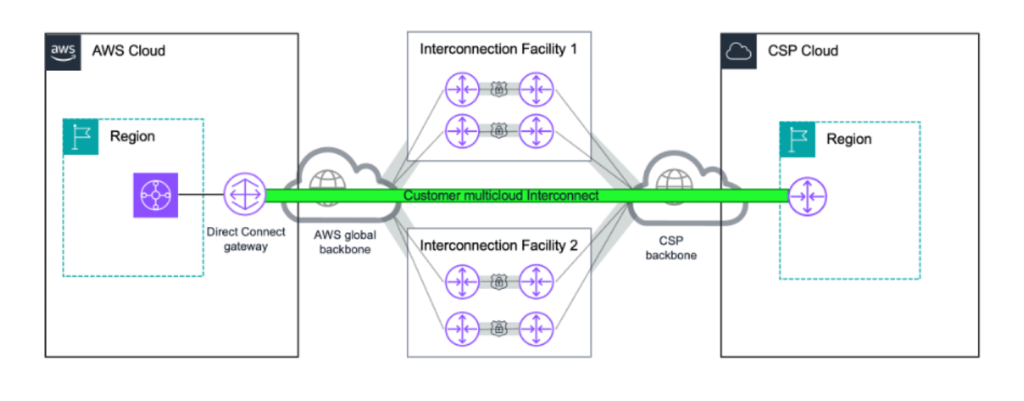
Security is a paramount consideration for multicloud deployments, and AWS Interconnect – multicloud addresses this by building it in by default. Every connection utilizes IEEE 802.1AE MACsec encryption on the physical links that connect AWS routers to the partner cloud provider’s routers at the interconnection facilities. This critical layer of encryption protects data in transit at the physical layer, ensuring confidentiality and integrity between the network devices. Importantly, customers do not need to configure these MACsec settings separately, simplifying deployment. It is worth noting that each cloud provider independently manages encryption within its own backbone, and customers are advised to review the specific encryption documentation for their deployments to ensure compliance with their particular requirements. Beyond encryption, resiliency is also a core design principle. Each connection is engineered to span multiple logical links distributed across at least two physical facilities. This architectural redundancy ensures that a single device failure or even a localized building outage will not interrupt connectivity, maintaining business continuity.
For operational visibility and capacity planning, AWS Interconnect – multicloud seamlessly integrates with Amazon CloudWatch. This integration provides a Network Synthetic Monitor included with each connection, offering crucial metrics such as round-trip latency and packet loss. Furthermore, bandwidth utilization metrics are made available, empowering network administrators with the data needed for informed capacity planning and performance optimization.
In a move to foster broader industry collaboration and accelerate multicloud interoperability, AWS has publicly released the underlying technical specification for Interconnect on GitHub under the Apache 2.0 license. This open approach allows any cloud service provider the opportunity to collaborate with AWS Interconnect – multicloud. To qualify as an AWS Interconnect partner, cloud providers must meticulously implement the technical specification and meet stringent AWS operational requirements, encompassing robust resiliency standards, comprehensive support commitments, and adherence to defined service level agreements. This ensures a consistent and high-quality experience for customers across all participating cloud ecosystems.
Simplified Provisioning: A User’s Journey
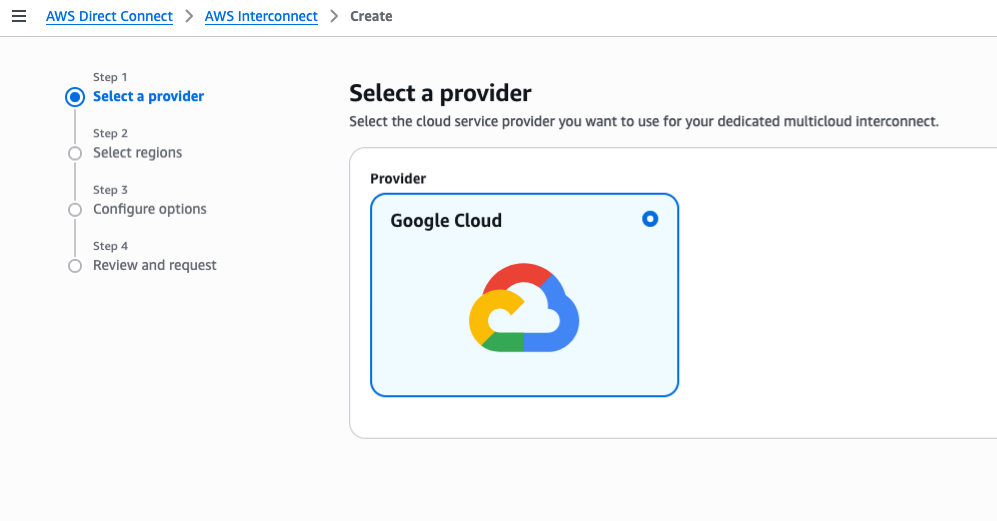
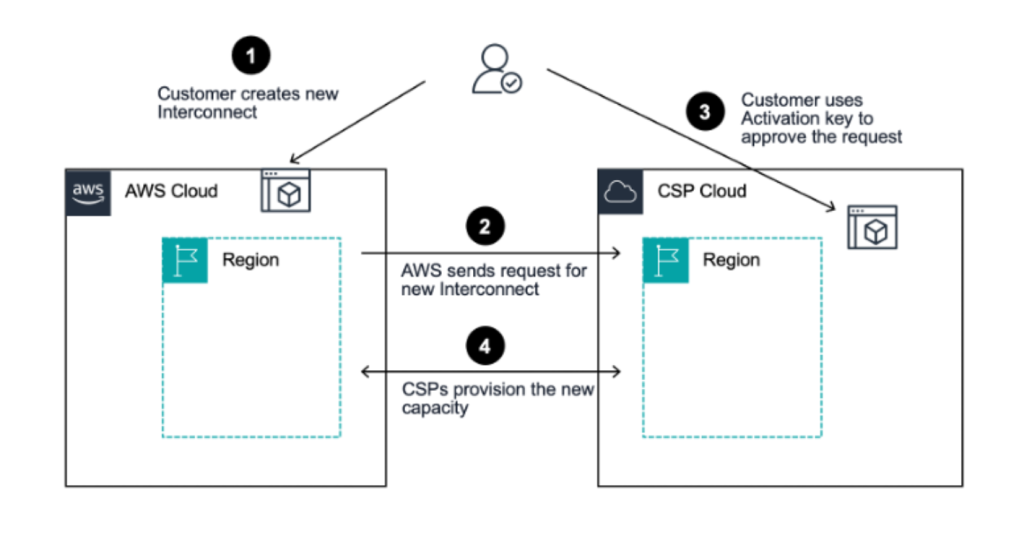
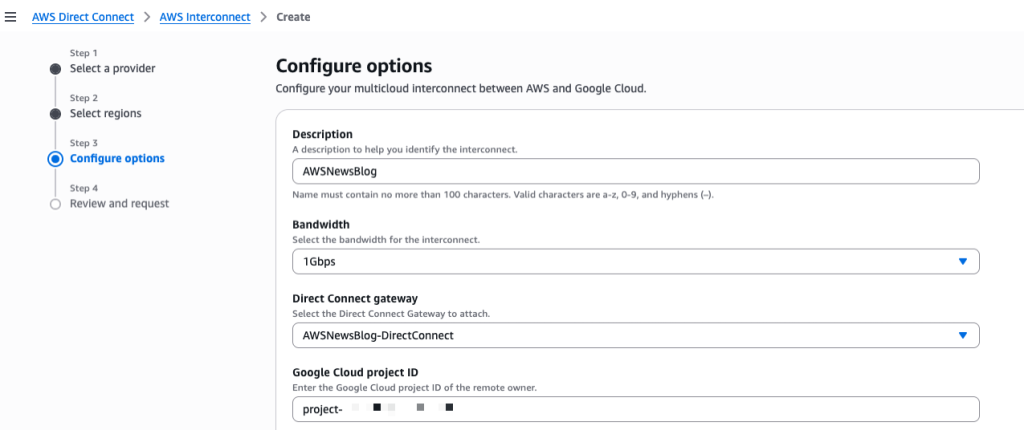
The provisioning process for an AWS Interconnect – multicloud connection is designed for speed and simplicity, often taking mere minutes. From the AWS Direct Connect console, users navigate to the AWS Interconnect section. The process begins by selecting the desired cloud provider, for instance, Google Cloud, followed by specifying the source AWS Region and the destination Google Cloud Region. Users then define the required bandwidth and provide the Google Cloud project ID. Upon submission, AWS generates an activation key, which is subsequently used on the Google Cloud side to finalize the connection. A significant operational advantage is the automatic propagation of routes in both directions, enabling workloads to commence data exchange shortly after activation.
For a practical demonstration, consider connecting a single AWS Virtual Private Cloud (VPC) to a Google Cloud VPC using a Direct Connect Gateway. This represents the simplest path: a single connection and attachment, allowing workloads on both sides to communicate efficiently within minutes.
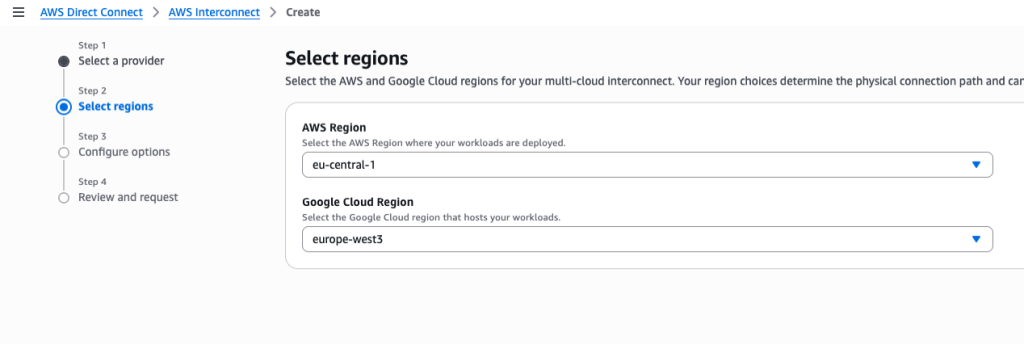
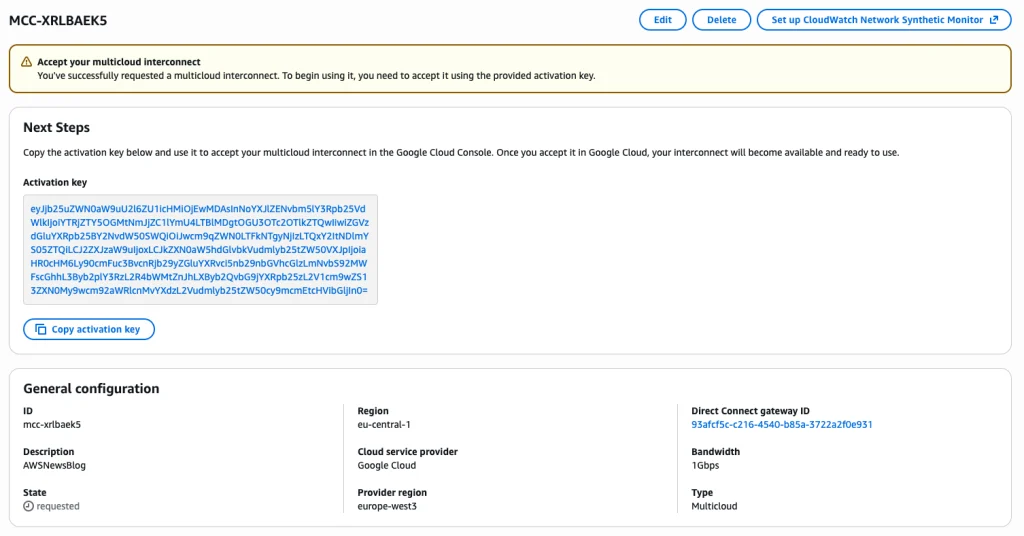
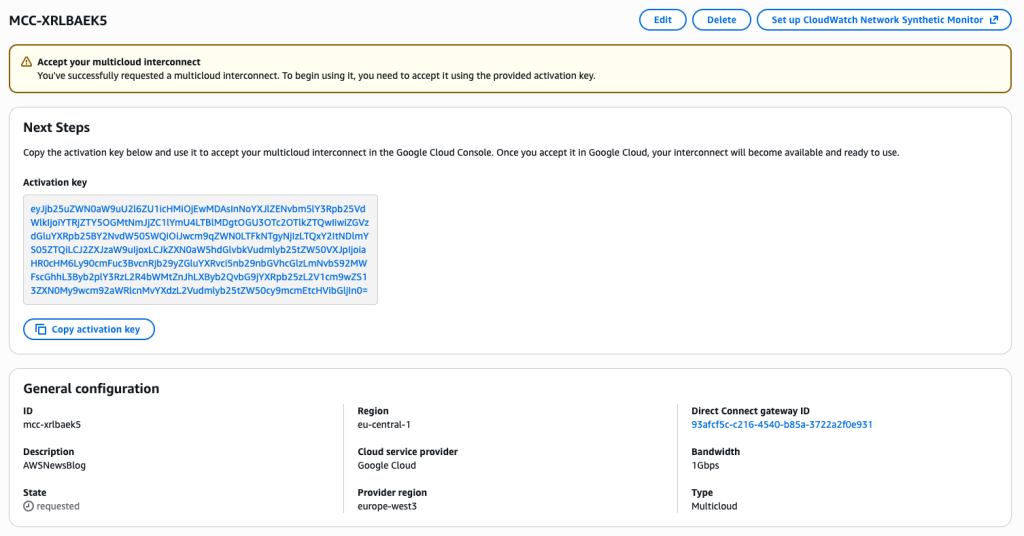
The initial step involves requesting an interconnect within the AWS Management Console. After navigating to AWS Direct Connect and AWS Interconnect, the user initiates creation. The first choice is the target cloud provider, such as Google Cloud. Next, the user selects the specific AWS Region (e.g., eu-central-1) and the corresponding Google Cloud Region (e.g., europe-west3). In the third step, a description is entered, bandwidth is chosen, the Direct Connect gateway to attach is specified, and the Google Cloud project ID is provided. Following a review and confirmation, the console presents an activation key, essential for validating the request on the Google Cloud platform.
The subsequent phase involves creating the necessary transport and VPC Peering resources within the Google Cloud Platform (GCP) account. While web-based console support for this step might evolve, current methods often involve the GCP command-line interface (CLI). After noting the CIDR range in the GCP VPC subnet, a command like gcloud network-connectivity transports create is executed with the activation key, region, network, and advertised routes. This command typically completes within a couple of minutes. Once the transport is established, a peering connection is created between the GCP VPC and the newly established transport network using a command such as gcloud compute networks peerings create, ensuring custom routes are imported and exported. Upon completion, the peering status can be verified in the GCP console, and the AWS Interconnect console should display an "available" status. The AWS Direct Connect console will also show the attachment to the new interconnect under "Direct Connect gateways."
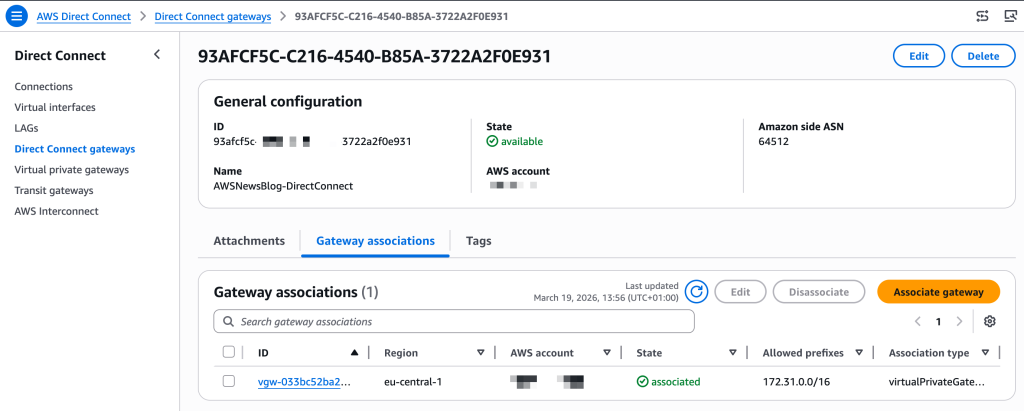
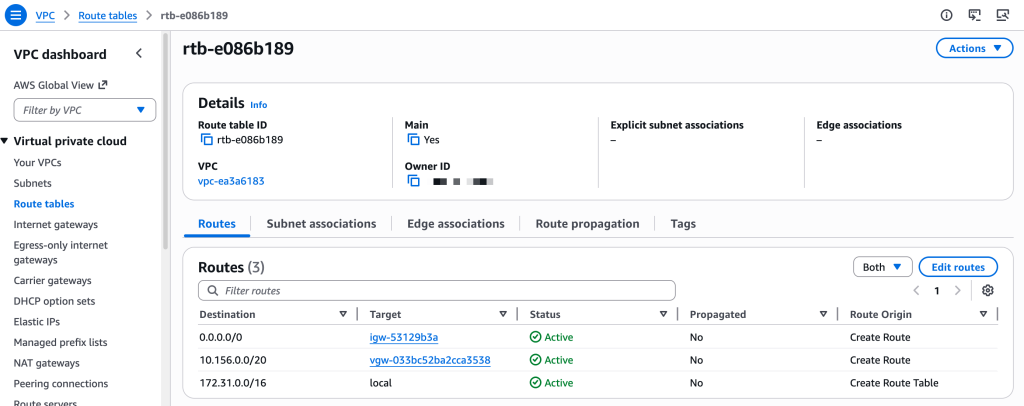
The final configuration on the AWS side involves associating the new gateway. Under "Gateway associations," the user selects "Associate gateway" to attach a Virtual Private Gateway (VGW) that was pre-created in the same AWS Region as the interconnect. Crucially, while routing on the GCP side may be largely automated, AWS requires a final step: adding a route entry in the VPC Route tables to direct all traffic destined for the GCP IP address range through the Virtual Gateway.
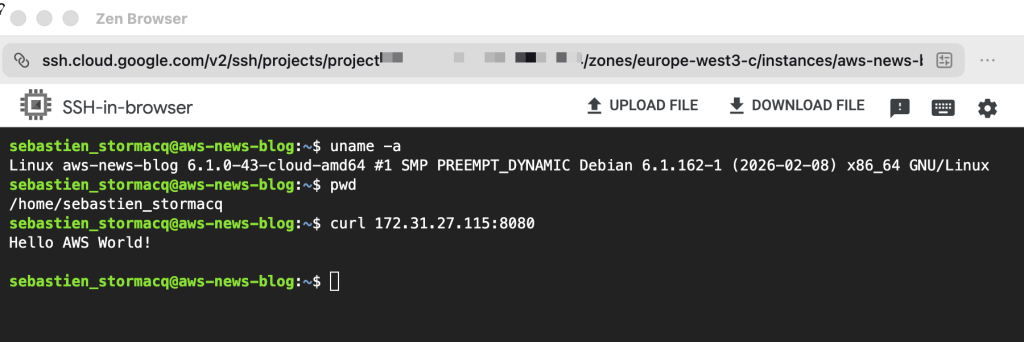
With the network setup complete, a simple test can be performed by launching compute instances on both AWS and GCP. For example, ensuring an AWS instance’s Security Group accepts ingress traffic on TCP:8080, a minimal web server can be started. From a GCP instance, an SSH session allows a curl command to the AWS web server’s private IP address, confirming successful private network communication. This demonstrates a fully managed private network route between two distinct cloud environments, with the complexities handled by the respective Cloud Service Providers.
Configuration Considerations and Advanced Architectures
While AWS Interconnect simplifies connectivity, several configuration options and best practices should be considered for optimal deployment. For instance, careful planning of IP address ranges is crucial to avoid overlaps between AWS VPCs and partner cloud VPCs. Bandwidth selection should align with application performance requirements and anticipated traffic volumes.

For growing deployments involving multiple VPCs within a single region, AWS Transit Gateway offers a centralized routing hub. This allows all VPCs to connect through a single Interconnect attachment, facilitating traffic segmentation, consistent routing policies, and integration with services like AWS Network Firewall for advanced traffic inspection at the cloud boundary. For organizations operating at a global scale, with workloads distributed across numerous AWS Regions and multiple Google Cloud environments, AWS Cloud WAN extends this model across the world. Cloud WAN enables any region in the network to reach any Interconnect attachment globally, providing centralized policy management and segment-based routing that applies consistently across all operational footprints. These reference architectures, detailed in related AWS blog posts, provide blueprints for building resilient and scalable multicloud connectivity solutions.
AWS Interconnect – Last Mile: Bridging Hybrid Gaps

Parallel to its multicloud capabilities, AWS Interconnect also introduces "last mile," designed to simplify hybrid cloud connectivity. Built upon the same architectural principles and design ethos as its multicloud counterpart, AWS Interconnect – last mile enables organizations to connect their on-premises or remote locations directly to AWS via a participating network provider’s last-mile infrastructure. This entire process is managed directly from the AWS Management Console, democratizing access to high-speed, private connections for hybrid environments.
The onboarding experience for AWS Interconnect – last mile mirrors that of the multicloud service: users select a network provider, authenticate, and specify their connection endpoints and bandwidth requirements. AWS then generates an activation key, which is provided to the network provider to complete the configuration. A key differentiator of the last-mile service is its automated provisioning of robust, best-practice-aligned connectivity. It automatically sets up four redundant connections distributed across two physical locations, configures Border Gateway Protocol (BGP) routing, and activates MACsec encryption and Jumbo Frames by default. This comprehensive, automated approach results in a highly resilient private connection to AWS, eliminating the need for customers to manually configure complex networking components.
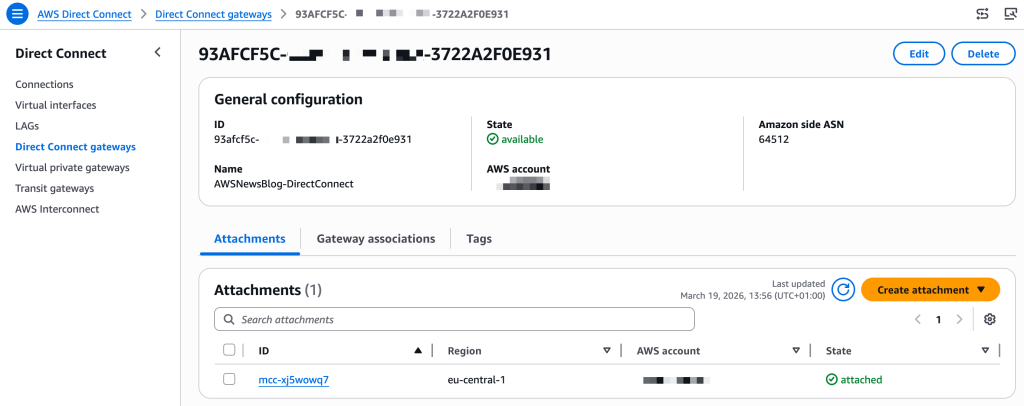
AWS Interconnect – last mile supports a wide range of bandwidths, from 1 Gbps up to 100 Gbps, with the flexibility to adjust bandwidth directly from the console without requiring reprovisioning. The service includes a robust 99.99% availability SLA up to the Direct Connect port, providing enterprise-grade reliability. Similar to the multicloud offering, it bundles CloudWatch Network Synthetic Monitor for continuous connection health monitoring. Connectivity to AWS is achieved by attaching to a Direct Connect Gateway, which can then connect to a Virtual Private Gateway, Transit Gateway, or an AWS Cloud WAN deployment, ensuring seamless integration with existing AWS networking strategies.
Industry leaders have quickly recognized the value proposition of AWS Interconnect – last mile. Scott Yow, SVP Product at Lumen Technologies, commented, "By combining AWS Interconnect – last mile with Lumen fiber network and Cloud Interconnect, we simplify the last-mile complexity that often slows cloud adoption and enable a faster, and more resilient path to AWS for customers." This statement underscores the shared vision of simplifying complex network challenges and fostering greater cloud adoption through managed services. Lumen is the initial partner for the last-mile service, with additional key partners, including AT&T and Megaport, already in progress, and further regional expansions planned.
Pricing, Availability, and Strategic Market Implications
The pricing model for both AWS Interconnect – multicloud and AWS Interconnect – last mile is based on a flat hourly rate for the requested capacity, billed prorata. Customers select the bandwidth tier that best fits their workload requirements. For multicloud connections, pricing varies by region pair, reflecting the geographical distances and underlying network infrastructure costs. For example, a connection between US East (N. Virginia) and Google Cloud N. Virginia will have a different cost profile than a connection to a more geographically distant region. When utilizing AWS Cloud WAN, the global any-to-any routing model means traffic might traverse multiple regions, which can influence the total cost of a deployment. Comprehensive pricing details are available on the respective AWS Interconnect pricing pages, advising customers to review the full rate card by region pair and capacity tier before sizing their connections.
AWS Interconnect – multicloud is generally available today in five strategic region pairs: US East (N. Virginia) to Google Cloud N. Virginia, US West (N. California) to Google Cloud Los Angeles, US West (Oregon) to Google Cloud Oregon, Europe (London) to Google Cloud London, and Europe (Frankfurt) to Google Cloud Frankfurt. The planned support for Microsoft Azure and Oracle Cloud Infrastructure (OCI) in 2026 signifies AWS’s commitment to expanding its multicloud interoperability. AWS Interconnect – last mile is launching initially in US East (N. Virginia) with Lumen as the inaugural partner, with a roadmap for additional partners and regions.
This launch represents a significant strategic move by AWS, solidifying its position as a key enabler in the multicloud and hybrid cloud ecosystem. By offering a fully managed service that simplifies and secures inter-cloud and hybrid connectivity, AWS addresses a critical pain point for enterprises. This initiative is likely to accelerate multicloud adoption by lowering the technical barrier to entry and reducing operational costs. For customers, it means enhanced network performance, improved security posture, and greater agility in deploying and managing distributed applications. For the broader cloud industry, it sets a new standard for managed connectivity, potentially fostering greater collaboration and interoperability between cloud providers.
Enterprises seeking to leverage AWS Interconnect can begin by visiting the AWS Direct Connect console and selecting AWS Interconnect from the navigation menu. This new offering promises to transform how organizations architect and manage their complex, interconnected digital infrastructures, providing a simpler, more secure, and highly performant foundation for innovation.
