

The Canadian government has officially terminated its contract with Spire Global for the development of the WildFireSat constellation, a specialized space-based system designed to monitor and manage the country’s increasingly volatile wildfire seasons. Despite the cancellation of this specific multi-million dollar agreement, the Canadian Space Agency (CSA) has stated that it remains fully committed to the mission’s objectives and still intends to have a operational capability in orbit by 2029. The move marks a significant shift in the procurement strategy for one of Canada’s most critical environmental infrastructure projects, occurring at a time when the nation faces unprecedented ecological and economic threats from forest fires.
The termination was first brought to public light through an April 27 filing with the U.S. Securities and Exchange Commission (SEC) by Spire Global, a prominent provider of space-based data and analytics. According to the filing, the Government of Canada exercised its right to terminate the contract "for convenience," a standard legal clause in government procurement that allows for the cancellation of an agreement without the need to prove a breach of contract by the vendor. The contract, which was awarded in May 2023, carried a total potential value of $72 million Canadian dollars ($52 million USD) if all developmental and operational milestones had been reached.
The Genesis and Objectives of WildFireSat
WildFireSat was conceived as a first-of-its-kind national satellite mission specifically tailored to support wildfire management. While many Earth observation satellites provide data on vegetation and terrain, WildFireSat was designed with highly specialized sensors to monitor active fires in near real-time. The project is a collaborative effort involving the Canadian Space Agency (CSA), Natural Resources Canada (NRCan), and Environment and Climate Change Canada (ECCC).
The primary goal of the mission is to provide Canadian fire managers with "overpass" data during the late afternoon—the period known as the "peak burn" window. This is the time of day when fire activity is typically at its highest and most dangerous, yet it is often the time when existing polar-orbiting satellites are not positioned to provide high-resolution thermal imagery. By filling this data gap, WildFireSat aimed to provide critical intelligence on fire intensity, rate of spread, and perimeter growth, allowing for more efficient deployment of firefighting resources and more accurate evacuation orders.
Beyond tactical fire suppression, the constellation was tasked with monitoring smoke movement, air quality impacts, and carbon emissions. As Canada holds approximately 9% of the world’s forests, the carbon released during massive wildfire events has significant implications for national and global climate targets.
Chronology of the Spire Global Partnership
The partnership between the CSA and Spire Global began in earnest in the spring of 2023. At the time, the selection of Spire was seen as a strategic move to leverage the "Space-as-a-Service" model. Spire was tasked with the initial design and development phases of the constellation, utilizing its proven low-Earth orbit (LEO) satellite platforms. To meet the specific thermal sensing requirements of the mission, Spire partnered with OroraTech, a German startup specializing in thermal infrared (TIR) data for wildfire detection.
However, signs of friction or strategic realignment appeared toward the end of 2025. During an investor call in March 2026 regarding fourth-quarter 2025 results, Spire Global CEO Theresa Condor informed stakeholders that work on the WildFireSat program had been paused. Condor noted that the pause was the result of ongoing discussions with the Canadian government regarding the timing of the project and evolving technical requirements.
The subsequent SEC filing in April 2026 confirmed that these discussions did not lead to a resumption of the previous contract structure. Spire has since removed the WildFireSat program from its 2026 revenue guidance, though the company noted it retains the right to submit a settlement proposal to recoup costs incurred during the initial development phases.
Environmental Context: The Urgency of Monitoring
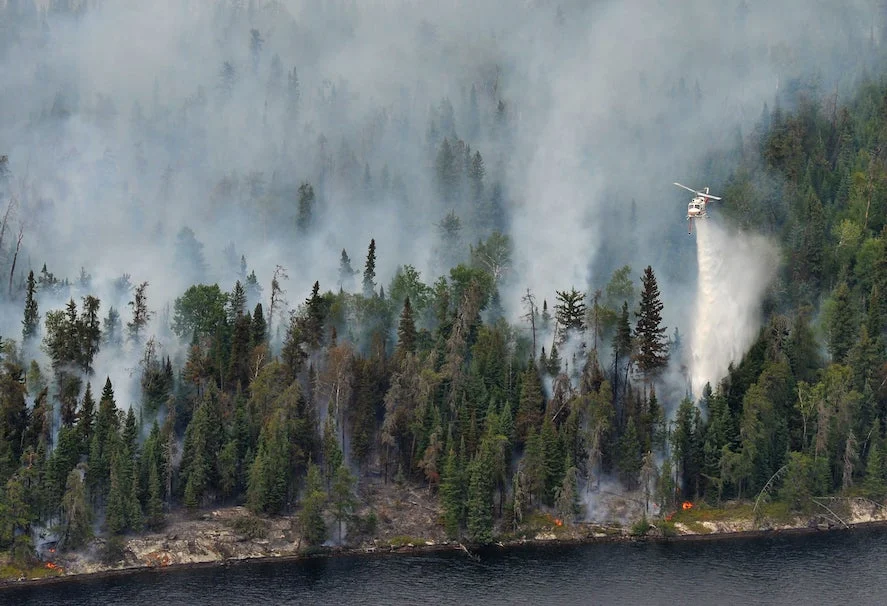
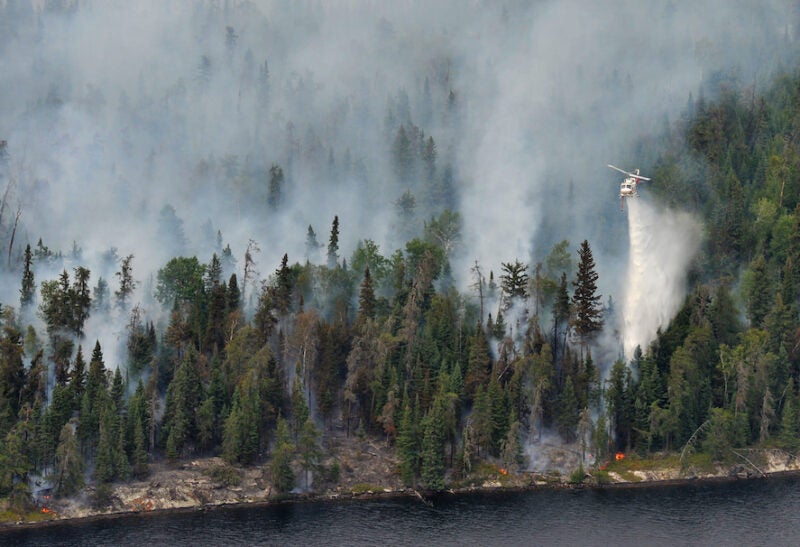
The cancellation of the contract comes against a backdrop of increasing urgency regarding wildfire management in North America. The 2023 wildfire season in Canada was the most destructive on record, with more than 18.5 million hectares burned—an area roughly the size of North Dakota. The fires forced the evacuation of over 230,000 people and sent plumes of hazardous smoke across the continent, affecting air quality as far south as the mid-Atlantic United States.
Data from Natural Resources Canada suggests that the fire season is now starting earlier and lasting longer due to climate change, with "extreme" fire weather days becoming more frequent. The economic impact is equally staggering; the 2023 season incurred billions of dollars in suppression costs, property damage, and lost economic productivity in the forestry and tourism sectors.
Given this context, the CSA has been quick to reassure the public and stakeholders that the WildFireSat mission is not being abandoned. Frédérick Fink, a spokesperson for the Canadian Space Agency, emphasized that the government remains committed to the 2029 launch window. "The government of Canada will soon be engaging with industry and begin working closely with stakeholders on how best to advance the continued development of this important mission," Fink stated.
Technical and Procurement Analysis
Industry analysts suggest that the "termination for convenience" may signal a desire by the Canadian government to exert more direct control over the mission’s hardware or to shift toward a more "sovereign" manufacturing approach. While Spire Global’s cubesat-based model offers rapid deployment and cost-effectiveness, the rigorous demands of the WildFireSat mission—particularly the need for high-precision thermal calibration and long-term orbital stability—may have prompted a re-evaluation of the platform requirements.
The partnership between Spire and OroraTech remains a significant factor in the global wildfire monitoring market, regardless of the Canadian contract. In March 2025, Spire successfully launched eight wildfire-detection satellites for OroraTech’s own commercial constellation. This suggests that the technology itself is viable, but the specific integration into the Canadian government’s operational workflow may have required a different contractual or technical framework.
There is also the possibility that the Canadian government is looking to consolidate the WildFireSat project with other burgeoning space initiatives. Canada has recently increased its investment in the "Utility of Space" for national security and environmental monitoring, and the restructuring of WildFireSat could be part of a broader effort to streamline how the government procures space-based data.
Financial and Industry Implications
For Spire Global, the loss of a $72 million CAD contract is a notable setback, but one that the company appears to have anticipated by adjusting its financial guidance. The company’s diversified portfolio—which includes maritime tracking, aviation data, and weather forecasting—provides a buffer against the loss of individual government contracts.
For the broader space industry, the WildFireSat pivot serves as a reminder of the complexities inherent in government-commercial partnerships. While the "New Space" industry prides itself on speed and agility, government missions involving public safety and national environmental policy often require a level of oversight and specific customization that can clash with standardized commercial satellite buses.
The Path Forward to 2029
The Canadian Space Agency, along with its partners at Natural Resources Canada and Environment and Climate Change Canada, now faces the task of re-tendering or restructuring the project without delaying the 2029 deadline. The next steps will likely involve a new Request for Proposals (RFP) or a series of industry engagement days to determine if a different prime contractor can meet the revised requirements within the allocated budget.
Stakeholders in the firefighting community remain hopeful that the delay in procurement will not result in a delay in orbit. Current fire management relies heavily on aerial reconnaissance and ground-based sensors, both of which are limited by visibility and geographic reach. A dedicated satellite constellation would provide a "high-ground" advantage that is currently missing from the Canadian firefighting toolkit.
As the Canadian government prepares to re-engage with the aerospace sector, the focus will be on finding a balance between cutting-edge thermal sensing technology and a reliable, long-term operational framework. The 2029 goal remains a critical milestone; with each passing year of record-breaking fire activity, the need for the "eye in the sky" promised by WildFireSat becomes more a matter of national security than a scientific luxury.
The cancellation of the Spire contract is a significant chapter in the mission’s history, but it is unlikely to be the final one. With the 2029 deadline still on the horizon, the Canadian space sector will be watching closely to see how the government reshapes its vision for monitoring the nation’s forests from the frontier of space.
