

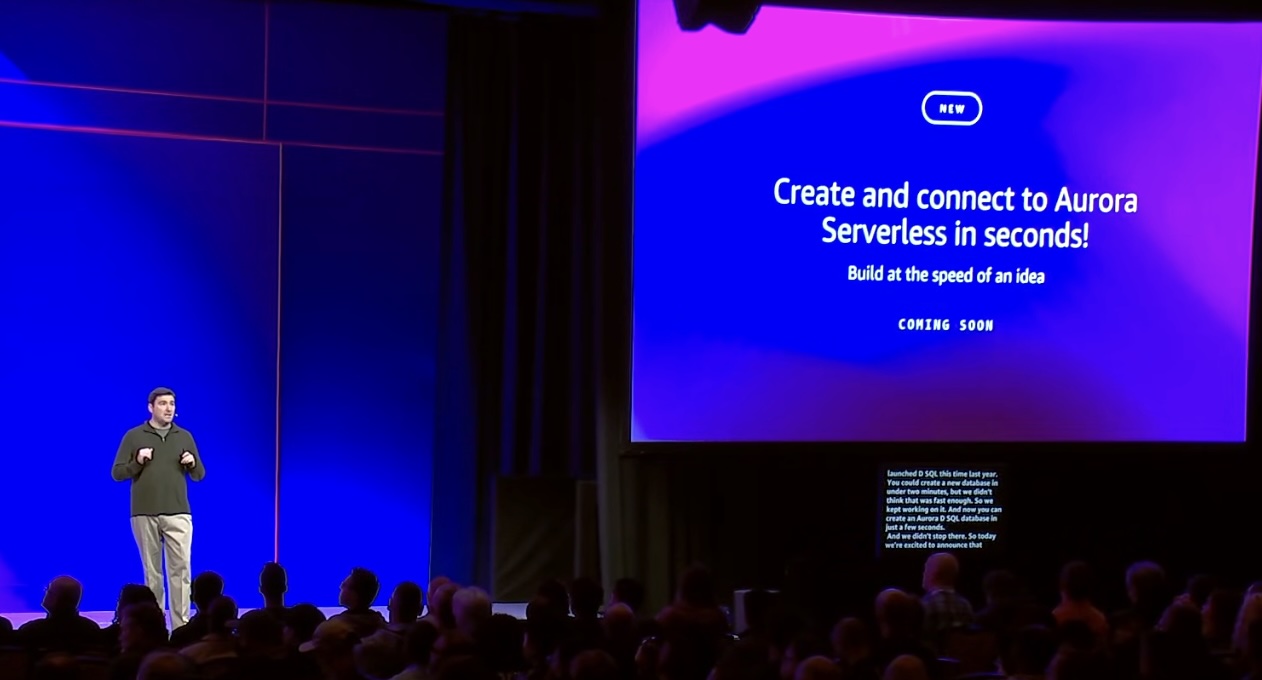
AWS has announced the general availability of a new express configuration for Amazon Aurora PostgreSQL, a streamlined database creation experience designed to enable developers to launch production-ready serverless databases in mere seconds. This significant update underscores AWS’s ongoing commitment to accelerating the pace of innovation, a core tenet articulated by Colin Lazier, vice president of databases at AWS, at re:Invent 2025. Lazier’s vision of "building at the speed of an idea" emphasizes enabling rapid progress from initial concept to a fully operational application, a philosophy now deeply embedded in Aurora’s latest offering.
The journey towards this express configuration began with a preview at re:Invent 2025, where Lazier demonstrated the potential for creating Amazon Aurora serverless databases with the same remarkable speed already available for Amazon DynamoDB tables and Amazon Aurora DSQL databases. Following this preview, AWS observed substantial customer demand for quick access and enhanced speed to this capability, signaling a clear market need for simplified, accelerated database provisioning. Today’s general availability announcement directly addresses this demand, offering a transformative leap in developer productivity and agility.

Strategic Imperative: Building at the Speed of an Idea
The concept of "building at the speed of an idea" is more than a slogan; it represents a fundamental shift in how cloud providers empower developers. In today’s fast-paced digital economy, time-to-market is a critical differentiator. The traditional complexities associated with provisioning, configuring, and connecting to enterprise-grade databases can often become a bottleneck, slowing down innovation cycles. AWS’s strategy, as championed by Lazier, aims to dismantle these barriers, allowing developers to focus on application logic and business value rather than infrastructure management. This express configuration for Aurora PostgreSQL is a tangible manifestation of that strategy, removing friction points and enabling immediate engagement with the database layer.
Prior to this release, while Aurora already offered robust capabilities, the initial setup process, particularly for new users or those requiring rapid prototyping, could still involve several steps, including VPC configuration. The express configuration fundamentally re-engineers this initial experience, streamlining it to a point where a fully functional database cluster is available almost instantaneously. This not only benefits seasoned AWS users but significantly lowers the entry barrier for new developers and startups looking to leverage Aurora’s power without an extensive learning curve in network architecture.

Unpacking the Express Configuration: Features and Benefits
The new express configuration for Amazon Aurora PostgreSQL is meticulously designed for speed and simplicity. With just two clicks within the AWS console, users can provision a serverless Aurora PostgreSQL database ready for immediate use. This dramatically reduces the cognitive load and operational overhead traditionally associated with database setup.
Key features and their implications include:
- Two-Click Deployment: The most prominent feature is the ultra-fast deployment, achievable with minimal interaction. This speed is critical for rapid prototyping, proof-of-concept development, hackathons, and educational purposes, where getting a database up and running quickly is paramount.
- Preconfigured Defaults: The express configuration comes with intelligent preconfigured defaults. While users retain the flexibility to modify certain settings during and after creation (e.g., adjusting the serverless instance’s capacity range or adding read replicas post-creation), these defaults ensure a sensible and secure baseline, accelerating the "getting started" phase.
- No Amazon Virtual Private Cloud (VPC) Requirement: A significant departure from standard Aurora deployments, express configuration clusters are created without requiring an Amazon VPC network. This eliminates one of the most common initial hurdles for new AWS users or those who prefer to defer complex networking decisions.
- Integrated Internet Access Gateway: To compensate for the absence of a VPC, the express configuration includes an internet access gateway. This gateway facilitates secure connections from popular development tools from virtually anywhere, removing the need for VPNs or AWS Direct Connect for initial setup and development. This feature is distributed across multiple Availability Zones, ensuring high availability for connections, mirroring the resilience of the Aurora cluster itself.
- Default AWS Identity and Access Management (IAM) Authentication: Security is baked in from the start. Express configuration automatically sets up IAM authentication for the administrator user, enabling passwordless database authentication. This not only enhances security by eliminating static passwords but also streamlines integration with other AWS services and developer tools that leverage IAM roles, reducing configuration overhead.
- Full Aurora PostgreSQL Serverless Feature Set: Despite the simplified creation process, databases launched with express configuration retain access to the full suite of Aurora PostgreSQL serverless features. This includes crucial capabilities like deploying additional read replicas for enhanced high availability, automated failover for resilience, and automatic scaling of capacity based on application demand, billed per second from zero capacity.
Enhancing the Developer Experience: A Holistic Approach
AWS’s commitment to developer velocity extends beyond just provisioning speed. The express configuration is part of a broader ecosystem of enhancements aimed at making Aurora more accessible and easier to integrate into modern development workflows.
- AWS Free Tier Integration: Amazon Aurora is now available on the AWS Free Tier, allowing new customers to gain hands-on experience without upfront costs. This is particularly impactful for students, hobbyists, and startups who can explore Aurora’s capabilities using up to $200 in AWS credits, part of an expanded Free Tier program announced at re:Invent 2025. This makes Aurora more attractive for initial experimentation and learning.
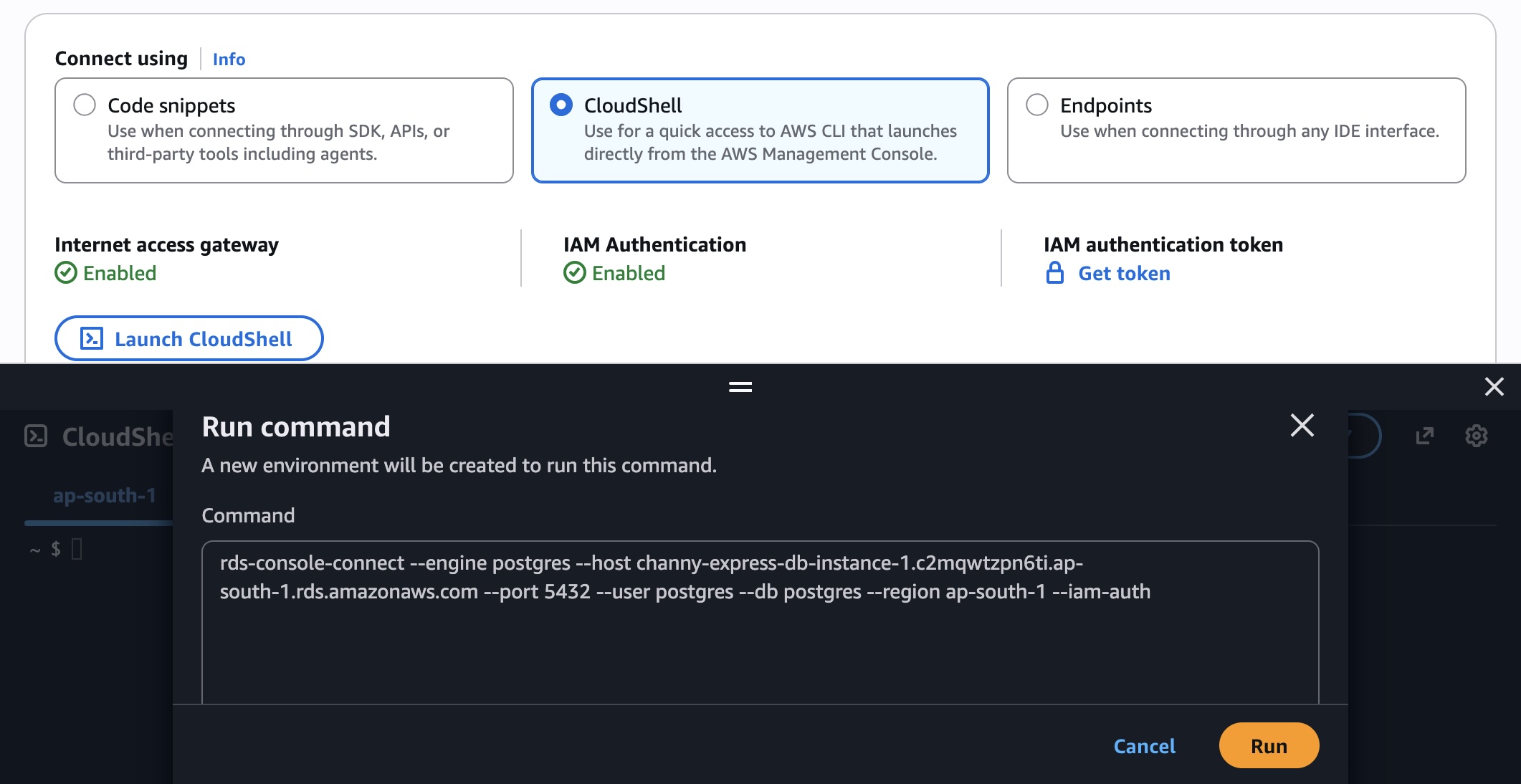
- Direct Querying with AWS CloudShell: After creation, users can directly query an Aurora database using AWS CloudShell. This in-browser shell environment provides pre-authenticated access to AWS services, making it incredibly convenient to test connections and run SQL commands immediately, without local client setup.
- Simplified Connectivity with CLI/SDKs: The new
--with-express-configurationparameter for the AWS Command Line Interface (CLI) and AWS SDKs allows developers to create both a cluster and an instance with a single API call, making programmatic provisioning as simple as console-based deployment. The console also provides dynamically generated code snippets for various programming languages (Python, Node.js, Java, etc.) to facilitate quick connection setup. - Ecosystem Integrations: AWS is actively integrating Aurora with widely adopted frameworks and AI-assisted development tools:
- Vercel Marketplace and v0 by Vercel: Integrations with Vercel Marketplace allow developers to create and connect to AWS databases directly from the Vercel platform. Furthermore, v0 by Vercel, an AI-powered tool, can transform natural language ideas into production-ready, full-stack web applications, now including Aurora PostgreSQL, Aurora DSQL, and DynamoDB databases as backends. This seamless integration allows developers to leverage AI for rapid application scaffolding directly connected to a robust Aurora backend.
- Kiro Powers for Aurora PostgreSQL: AWS introduced an Aurora PostgreSQL integration with Kiro, an AI agent-assisted development platform. Developers can use Kiro Power for Aurora PostgreSQL within the Kiro IDE or via the Kiro powers webpage for one-click installation, enabling AI agents to assist in building Aurora-backed applications faster. This signifies a growing trend towards intelligent tooling that augments developer capabilities.
Practical Application: Creating an Aurora PostgreSQL Serverless Database
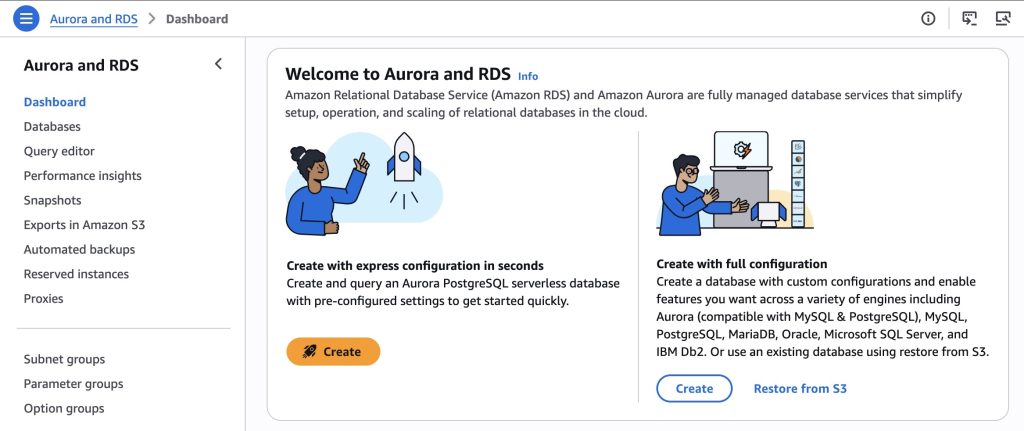
The process for creating an Aurora PostgreSQL serverless database with express configuration is designed to be intuitive.
From the AWS Console:
- Navigate to the Aurora and RDS console.
- On the Dashboard, select "Create" (distinguished by a rocket icon).
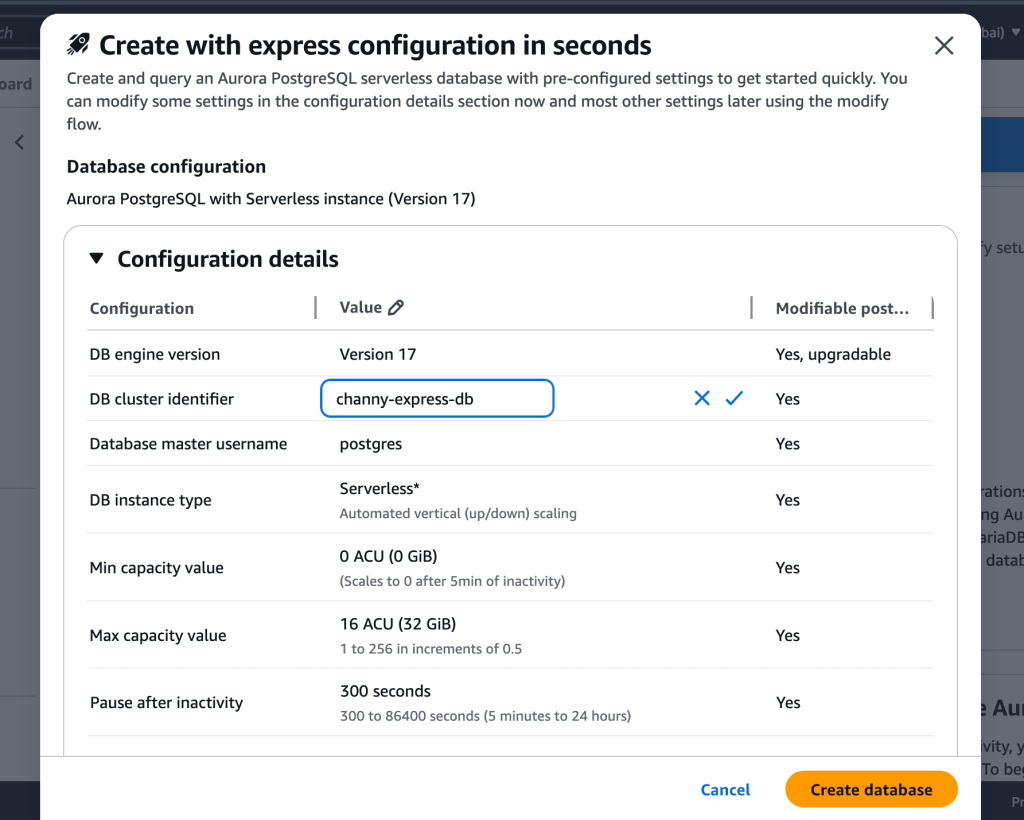
- A "Create with express configuration" dialog box will appear, presenting pre-configured settings. Users can adjust the DB cluster identifier or the capacity range if needed.
- Click "Create database."
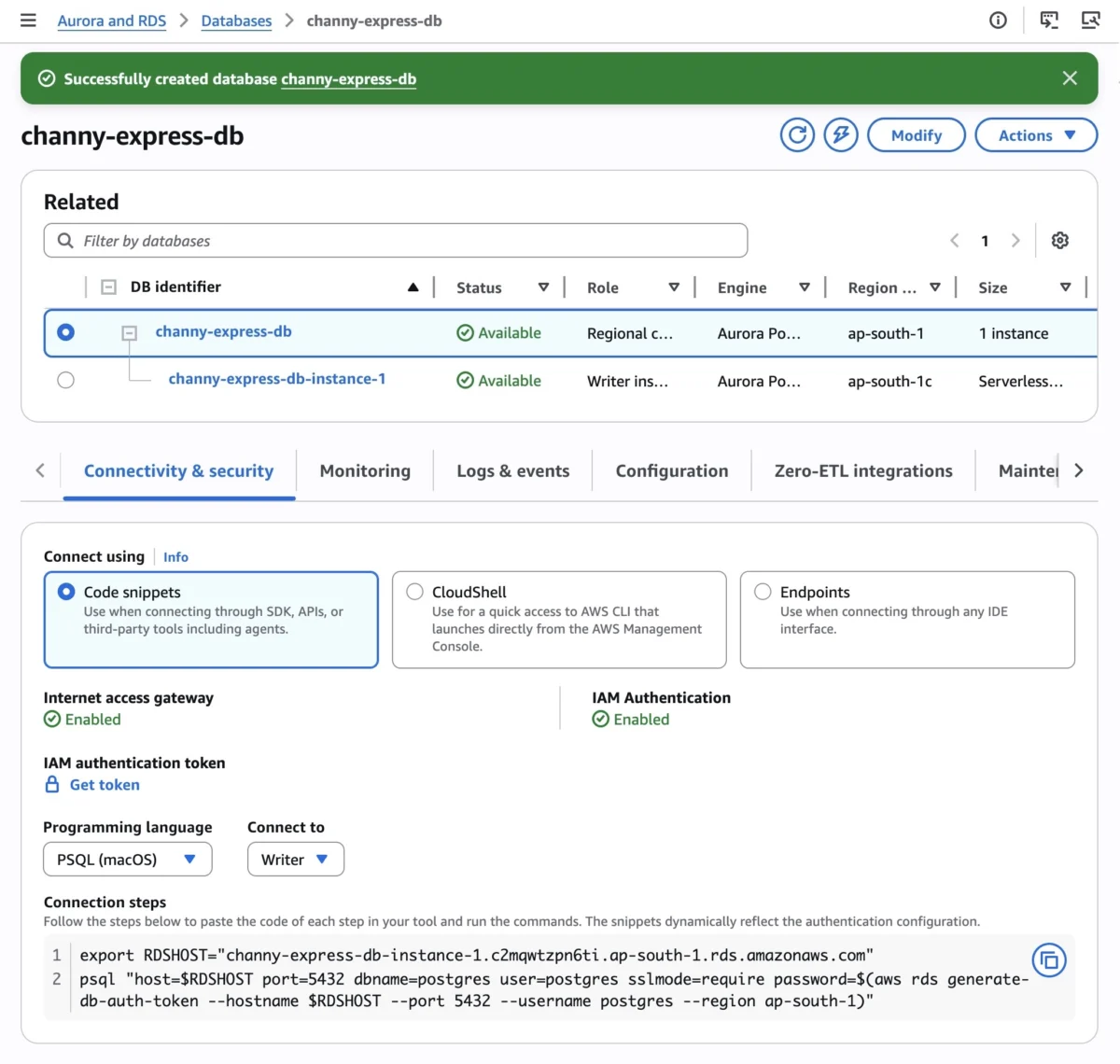
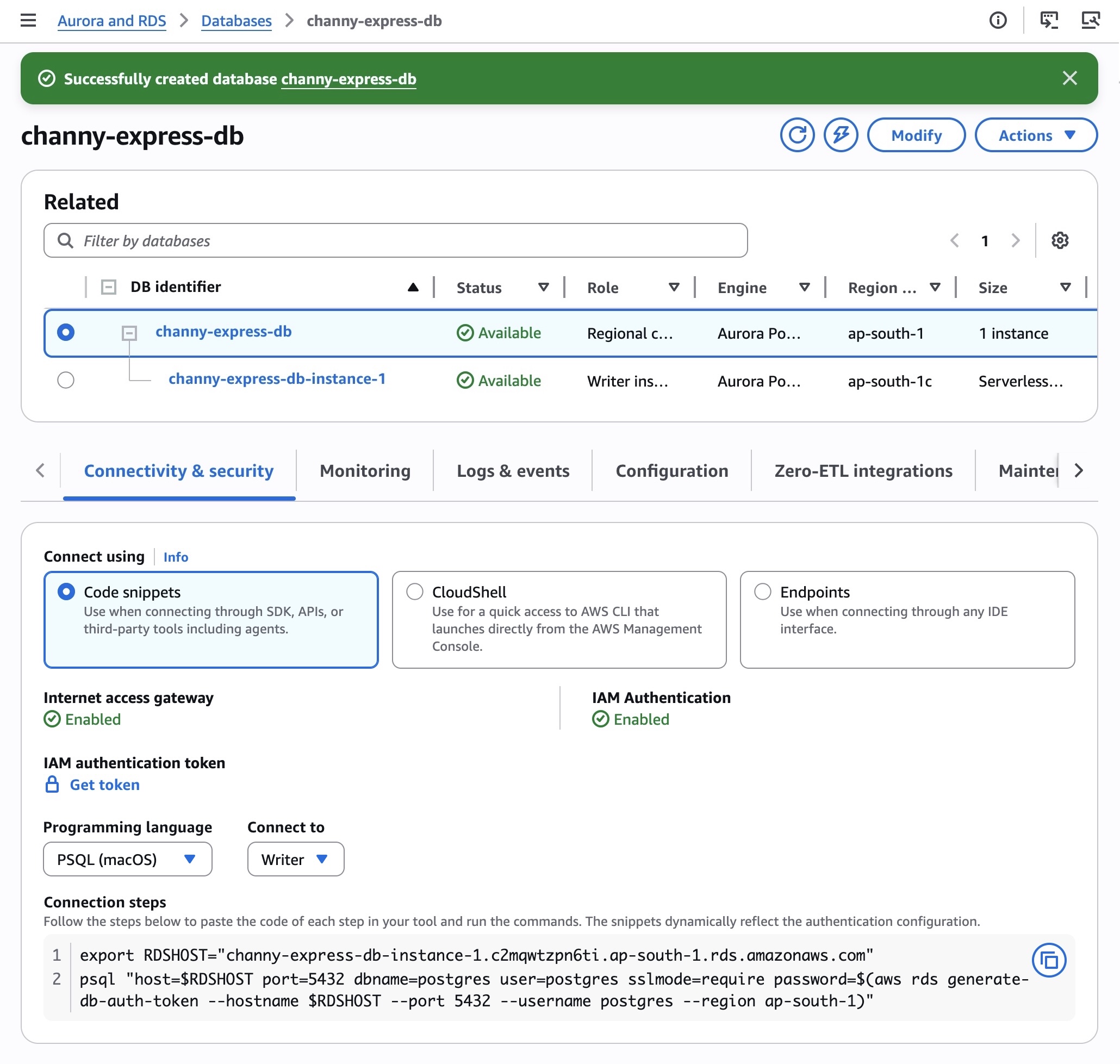
The database will typically be ready in seconds, with a success banner confirming creation and the database status quickly transitioning to "Available."
For command-line enthusiasts, the AWS CLI offers a concise command:
$ aws rds create-db-cluster --db-cluster-identifier my-express-db --engine aurora-postgresql --with-express-configuration
Once the database is available, the "Connectivity & security" tab in the console provides various connection options. Developers can access "Code snippets" for SDKs and APIs, launch "CloudShell" with pre-populated connection commands, or generate temporary IAM authentication tokens for tools like pgAdmin that require username and password credentials. These tokens are valid for 15 minutes, ensuring secure, short-lived access.
Broader Implications and Industry Impact
The general availability of Aurora PostgreSQL’s express configuration marks a significant milestone in democratizing access to high-performance, scalable cloud databases.
- Accelerated Innovation Cycles: By drastically reducing the time and complexity of database provisioning, AWS empowers developers to iterate faster, experiment more freely, and bring new products and features to market with unprecedented speed. This translates to a more dynamic and competitive ecosystem.
- Lower Barrier to Entry: The simplified setup, combined with Free Tier availability, makes Aurora accessible to a wider audience, including individual developers, startups with limited resources, and educational institutions. This can foster a new generation of cloud-native applications.
- Enhanced Security Posture: Default IAM authentication and the internet access gateway’s high availability ensure that this ease of use does not come at the expense of security. Passwordless authentication is a modern best practice, reducing the surface area for credential-based attacks.
- Strategic Positioning in the AI Era: The tight integration with AI-powered development tools like v0 by Vercel and Kiro positions Aurora at the forefront of the AI-assisted coding movement. As AI increasingly automates parts of the development process, databases that can be seamlessly integrated and provisioned rapidly will be crucial.
- Shift Towards Serverless-First Development: The express configuration is exclusively for Aurora serverless, reinforcing the industry’s shift towards serverless architectures. Serverless databases automatically scale and manage capacity, aligning perfectly with the "pay-as-you-go" and "focus on code" ethos of modern cloud development.
Availability and Pricing
The new express configuration for Amazon Aurora PostgreSQL is now generally available across all AWS commercial Regions. For detailed regional availability and future roadmap information, users can consult the AWS Capabilities by Region page.
Pricing for Aurora serverless remains consistent: users pay only for the capacity consumed, measured in Aurora Capacity Units (ACUs), billed per second from zero capacity. This cost-effective model, combined with automatic scaling and shutdown capabilities, ensures that resources are optimized for application needs, from small development environments to large production workloads.
AWS encourages users to try the new express configuration via the Aurora and RDS console and provide feedback through AWS re:Post for Aurora PostgreSQL or their usual AWS Support contacts. This iterative approach, driven by customer feedback, continues to shape the evolution of AWS’s database services, ensuring they remain at the cutting edge of cloud innovation. The express configuration is not just a feature; it’s a testament to a strategic vision of empowering developers to build at the speed of their ideas, transforming concepts into reality faster than ever before.
