
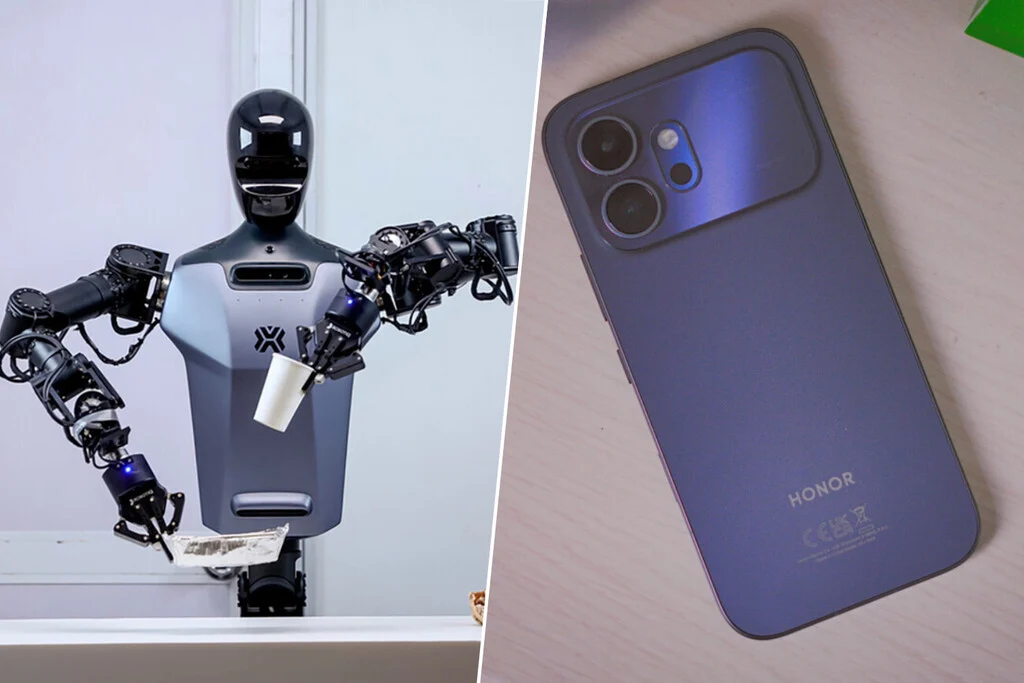

The global smartphone market is experiencing a significant paradigm shift, characterized by a prolonged period of contraction and evolving consumer demands. For several years, the worldwide distribution of smartphones has mirrored the stagnation observed in the personal computer sector, marked by successive declines in shipments. This downturn has been exacerbated recently by a complex interplay of factors, most notably the insatiable demand for high-bandwidth memory driven by artificial intelligence development. This surge in AI-related memory consumption has led to a critical shortage and subsequent price hike in RAM components, posing a severe challenge to smartphone manufacturers. The consequence is not only a bottleneck in the production of affordable mobile devices, which are becoming increasingly difficult to manufacture profitability below the $100 price point, but also a strategic imperative for the Asian industrial complex, particularly in China, to seek alternative growth avenues.
The Shifting Sands of the Smartphone Market
The smartphone industry, once a beacon of relentless innovation and exponential growth, has undeniably entered a mature phase. Initial market saturation in developed economies, coupled with extended device upgrade cycles, has significantly dampened consumer enthusiasm for new purchases. Economic uncertainties, global inflation, and geopolitical tensions have further contributed to this deceleration, transforming what was once a rapid-fire product release cycle into a more measured, cautious approach. This evolution bears striking similarities to the personal computer market, which transitioned from explosive growth to a replacement-driven economy decades ago.
The current "fire," as some industry analysts describe it, stems directly from the burgeoning field of artificial intelligence. AI models, particularly large language models (LLMs) and generative AI applications, require immense computational power and, crucially, vast quantities of high-speed, high-density RAM. This unprecedented demand has exerted immense pressure on the memory chip supply chain, diverting crucial components away from traditional consumer electronics like smartphones. The resulting scarcity has driven up prices, making it increasingly challenging for manufacturers to maintain profit margins, especially in the highly competitive budget and mid-range smartphone segments. The viability of producing ultra-affordable smartphones, a segment vital for emerging markets and accessibility, is now severely threatened by these escalating component costs.
Robotics: The New Frontier for Chinese Manufacturing
In response to these formidable challenges, the robust Chinese hardware assembly and supply industry is strategically reorienting its formidable capabilities towards the burgeoning robotics sector. Leveraging an already highly developed local industrial ecosystem, which has consistently demonstrated its prowess in manufacturing cutting-edge technology, major suppliers are now repurposing components originally designed for smartphones to power the next generation of robots, particularly humanoids. This pivot is not merely a reactive measure but a proactive strategic move designed to capitalize on a burgeoning market and maintain China’s global technological leadership.
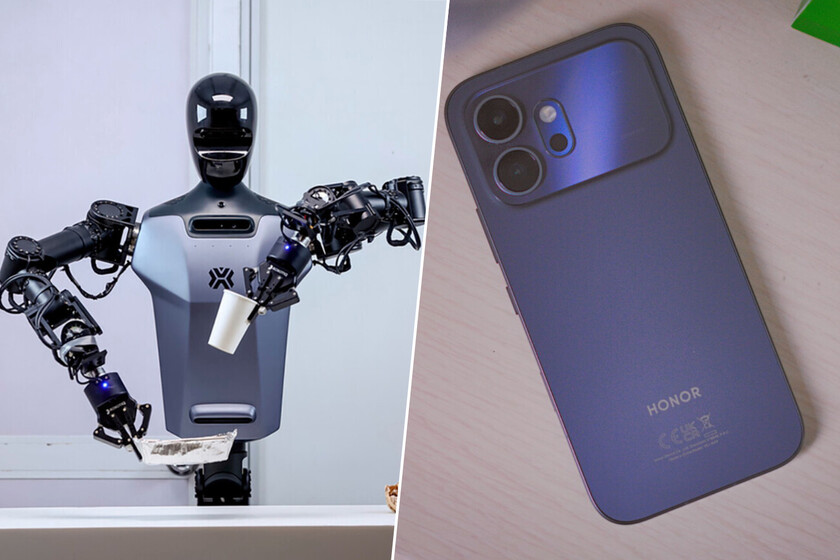
China’s industrial might, honed over decades as the world’s factory floor for consumer electronics, provides an unparalleled foundation for this transition. The country possesses a mature supply chain, advanced manufacturing facilities, and a vast pool of skilled labor, all of which are critical assets in the complex production of sophisticated robotics. Furthermore, the Chinese government has actively promoted the development of AI and robotics as key strategic industries, providing policy support, funding, and a conducive environment for innovation and mass production. This national commitment ensures that the industry has both the capacity and the incentive to drive this transformative shift.
Technological Synergy and Market Projections
The move into robotics is underpinned by a compelling technological synergy. According to forecasts by IDC, global smartphone shipments are projected to experience a record decline of 12.9% this year. This stark figure follows earlier attempts by the industry to mitigate revenue losses through a "premiumization" strategy post-pandemic, focusing on higher-priced, feature-rich devices to boost profit margins. While this approach offered some temporary relief, it proved insufficient to counteract the fundamental distribution challenges plaguing the market.
In stark contrast to the smartphone sector’s woes, the humanoid robotics market is poised for explosive growth. Counterpoint Research projects a dramatic increase in humanoid robot installations, from an estimated 16,000 units in 2025 to over 100,000 units by 2027. This rapid expansion is made possible by a significant overlap in component requirements between smartphones and humanoids. Ivan Lam, a senior analyst at Counterpoint, highlights that many sophisticated components perfected for mobile telephony are ideally suited for robotic applications.
These transferable components include a range of critical technologies:
- Micro-electromechanical systems (MEMS) sensors: Accelerometers, gyroscopes, magnetometers, and pressure sensors, ubiquitous in smartphones for motion tracking and environmental awareness, are essential for robot balance, navigation, and interaction with their surroundings.
- Haptic motors: Developed for nuanced tactile feedback in phones, these motors can be adapted for precise robotic movements, grip control, and expressive gestures.
- High-density batteries: The compact, efficient power sources designed for prolonged smartphone usage are crucial for extending the operational autonomy of robots.
- Precision camera assembly: Advanced camera modules, refined for high-resolution imaging and sophisticated computational photography in smartphones, provide robots with superior vision systems for object recognition, navigation, and human interaction.
- Advanced System-on-Chips (SoCs): The powerful, energy-efficient processors found in premium smartphones, often incorporating dedicated AI accelerators, can serve as the brains for complex humanoid robots, enabling real-time data processing and decision-making.
- Miniaturization Expertise: The decades of experience in designing and assembling increasingly powerful components into ever-smaller smartphone form factors are directly applicable to creating compact, agile robotic platforms.
This inherent compatibility allows Chinese manufacturers to leverage their existing expertise, supply chains, and production infrastructure, facilitating a relatively smooth transition into the robotics domain. The investment in R&D for smartphones is now yielding dividends in an entirely new, high-growth sector.
Pioneering the Future: Key Players and Achievements

The strategic shift is already evident in the actions of major Chinese industrial players. Lingyi iTech, a critical supplier for Apple’s sophisticated hardware, has partnered with AgiBot to form a new venture specifically dedicated to humanoid robot assembly. Their ambitious goal is to dramatically scale production capacity from the current 10,000 units per year to an astonishing 500,000 units by 2030. This expansion underscores a profound commitment to establishing a dominant position in the nascent humanoid robotics market. The involvement of a company deeply embedded in the stringent quality and high-volume demands of Apple’s supply chain suggests a rapid maturation and industrialization of humanoid robot manufacturing.
In parallel, component manufacturers like Everwin Precision are already reaping the financial rewards of this pivot. The company recently reported revenues of 100 million yuan (approximately $14 million USD) after delivering nearly 690,000 high-precision parts to various humanoid robotics clients. This demonstrates that while still an emerging sector, the robotics market is already proving to be a profitable venture for specialized component suppliers. The early financial success serves as a strong validation of the industry’s strategic redirection.
Concrete examples of this technological transference and success are already visible. In April, China hosted an official competition in its capital to test the autonomy and capabilities of humanoid robots in open, real-world environments. During this event, Honor’s D1 model delivered a surprising performance, not only challenging but in some instances surpassing human records and outperforming established robotics firms over a demanding 21-kilometer course.
An engineer from Honor, speaking to local media, attributed the D1’s exceptional performance directly to its smartphone heritage. The robot incorporated advanced cooling technologies developed for high-performance smartphones, preventing the critical motors from overheating and collapsing under sustained exertion. This ingenuity highlights how solutions refined for one industry can provide unexpected advantages in another. Honor is not alone in this endeavor; other major Chinese technology companies, such as Xiaomi, are also heavily investing in the robotics sector. Xiaomi, for instance, is already deploying its self-developed humanoid robots within its electric vehicle production facilities, demonstrating practical application and a commitment to integrating advanced automation into its manufacturing processes. This internal deployment strategy allows Xiaomi to refine its robotic technology in real-world industrial settings, paving the way for broader commercial applications.
Challenges and Strategic Implications
Despite these early victories and ambitious projections, the transition from laboratory prototypes to large-scale commercial production of humanoid robots presents significant challenges. Ivan Lam cautions that robots demand an order of magnitude higher reliability and a far stricter tolerance for error compared to consumer electronics like smartphones. A smartphone malfunction might be an inconvenience, but a robotic failure in an industrial or public setting could have severe safety and operational consequences. This necessitates rigorous testing protocols, advanced fault-tolerance mechanisms, and sophisticated quality control measures throughout the entire manufacturing process. The complexity of integrating myriad sensors, actuators, and AI systems into a cohesive, dependable platform requires unparalleled engineering precision and robust software development.
However, with a highly optimized hardware ecosystem and manufacturing facilities already undergoing significant restructuring to accommodate robot production, China is not merely finding a new lifeline for its supply chain. This strategic pivot is simultaneously cementing its technological sovereignty over autonomous hardware, a domain widely expected to dominate the next decade. This aligns perfectly with China’s broader national strategy, such as the "Made in China 2025" initiative, which aims to transform the country from the "world’s factory" into a global leader in high-tech manufacturing, particularly in advanced robotics and artificial intelligence. By leveraging its existing industrial base and adapting it to meet the demands of the robotics revolution, China is positioning itself at the forefront of a new era of technological innovation. This move also carries significant geopolitical implications, as it further strengthens China’s technological independence and reduces its reliance on foreign components and intellectual property, particularly in critical emerging technologies. As the global race for AI and robotics leadership intensifies, China’s proactive adaptation of its industrial capabilities could provide a decisive advantage in shaping the technological landscape of the future. The ability to produce autonomous hardware at scale, from components to complete systems, will be a cornerstone of national power and economic competitiveness in the coming years.
