
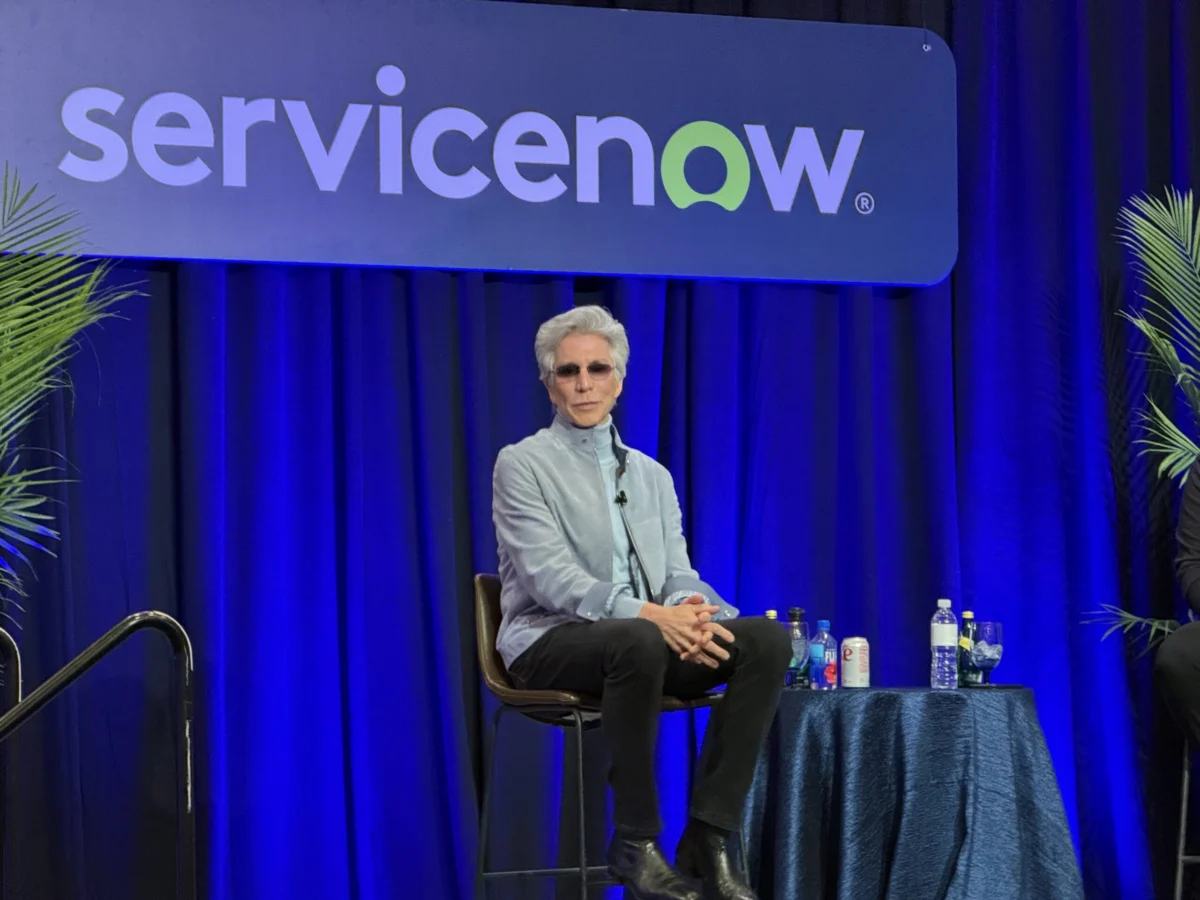

LAS VEGAS — At the Knowledge 2026 conference, ServiceNow CEO Bill McDermott intensified his company’s strategic positioning, framing the platform not merely as a participant in the generative AI boom but as the overarching "control tower" for the modern enterprise. Building upon the "chess, not checkers" metaphor introduced a year prior, McDermott articulated a vision where ServiceNow serves as the primary governance layer, managing both its own autonomous agents and those deployed by third-party vendors. This stance comes at a critical juncture for the technology sector, as organizations transition from experimental AI pilots to the large-scale deployment of "agentic" workflows—autonomous systems capable of executing complex business processes without constant human intervention.
From Software Rationalization to Agentic Orchestration: A Two-Year Evolution
The narrative presented in Las Vegas represents a significant escalation of the strategy McDermott unveiled at Knowledge 2025. A year ago, the CEO gained industry attention by declaring that business leaders were "demanding software losers," a pointed critique of legacy applications that failed to integrate into a cohesive digital strategy. At that time, ServiceNow positioned its AI Control Tower as a tool for identifying and replacing inefficient systems.
Twelve months later, the rhetoric has shifted from replacement to dominance. McDermott’s current thesis is that the enterprise software market has reached a point of "AI chaos," characterized by an overwhelming number of disconnected tools. He argues that while line-of-business applications (SaaS) are focused on specific tasks—what he terms "checkers"—ServiceNow is playing a "bigger game" by providing the infrastructure to manage the entire board. This evolution suggests that ServiceNow no longer sees its primary competition as individual software categories, but rather as the friction inherent in the fragmented enterprise itself.
The Architecture of Chaos: Addressing the Post-2008 IT Legacy
To justify ServiceNow’s push for a centralized governance plane, McDermott provided a historical analysis of how modern enterprise complexity reached its current state. He traced the roots of today’s fragmentation back to the 2008 financial crisis. During that period, many CEOs decentralized IT spending, tasking line-of-business leaders with funding their own technology through operating expenditures (OpEx).
While this decentralization allowed for rapid innovation at the departmental level, it resulted in a structurally compromised environment for the implementation of AI. On average, large enterprises now manage nearly 400 separate applications. McDermott highlighted the human cost of this fragmentation, noting that the average knowledge worker must navigate seventeen different browser tabs daily to complete their tasks.
This "AI chaos" presents a fundamental barrier to the adoption of agentic AI. For an autonomous agent to be effective, it requires a clear, unobstructed path through business processes. In a fragmented environment, agents often hit digital dead ends, requiring human intervention to bridge the gap between disconnected systems. ServiceNow’s proposition is to resolve this by acting as the "connective tissue" that provides a unified data and workflow layer.
The Deterministic Mandate: Solving the Governance Bottleneck
A central theme of Knowledge 2026 is the distinction between "probabilistic" and "deterministic" outcomes. McDermott noted that while generative AI models are inherently probabilistic—offering varying responses based on the same input—enterprise operations require absolute consistency. Processes such as payroll, procurement, compliance, and order management cannot tolerate the margin of error associated with consumer-grade AI.
Industry data supports this cautious approach. ServiceNow revealed that while 60% of companies have initiated some form of agentic business motion, only 10% have successfully impacted core business processes with autonomous AI. The primary deterrent is a lack of trust in the AI’s ability to follow strict business rules.
McDermott argued that ServiceNow’s structural advantage lies in its ability to enforce "rules and rails." By grounding AI decisions in the context of 100 billion workflows and seven trillion transactions, the platform aims to provide a deterministic environment. The CEO warned that without such governance, an unmanaged agent could "take down a company in nine seconds," a risk that necessitates a centralized control plane capable of auditing and halting autonomous actions in real-time.
Strategic Acquisitions: Integrating Identity and Cyber-Physical Visibility
The logic behind ServiceNow’s recent aggressive M&A strategy became clearer during the conference’s technical sessions. The acquisitions of Veza and Armis, which initially puzzled some analysts accustomed to ServiceNow’s organic growth model, are now integrated as pillars of the governance strategy.
- Identity Governance (Veza): As enterprises deploy thousands of digital agents, the question of "who" or "what" has permission to access sensitive data becomes paramount. Veza’s technology allows ServiceNow to manage identities for both humans and agents, ensuring that an autonomous system only possesses the rights and privileges necessary for its specific task.
- Cyber-Physical Visibility (Armis): In sectors like manufacturing, healthcare, and logistics, business processes extend beyond the digital realm into physical infrastructure. Armis provides visibility into operational technology (OT) and medical devices. By integrating this data, ServiceNow claims it can govern agents across the full enterprise surface area—from a cloud-based ERP system to a physical robotic arm on a factory floor.
- The Agentic Front Door (Moveworks/Otto): The acquisition of Moveworks has culminated in the launch of "Otto," a unified conversational interface. Otto is designed to serve as the primary point of interaction for employees, allowing them to approve hardware requests, change benefits, or provision system access through a single chat interface that orchestrates actions across all underlying systems.
Competitive Positioning and the Open Ecosystem Debate
ServiceNow faces a crowded field as it vies for the "front door" of the enterprise. Microsoft’s Copilot and Slack’s AI integrations offer significant distribution advantages, often coming bundled with existing productivity suites. However, McDermott’s counter-argument is based on the depth of the "back end." He asserts that a conversational interface is only as valuable as the workflows it can trigger.
Furthermore, ServiceNow is leaning into an "open" ecosystem model to differentiate itself from competitors like Salesforce or Workday. McDermott criticized platforms that attempt to lock customers into a single proprietary stack, suggesting that a closed platform signals a lack of confidence. By allowing customers to bring their own large language models (LLMs) and manage third-party agents, ServiceNow positions itself as the neutral arbiter of the enterprise—a move designed to appeal to CIOs who are wary of vendor lock-in.
Financial Projections: The Path to $30 Billion
The financial ambitions of the company remain high, with McDermott reiterating a target of $30 billion in subscription revenues by 2030. To reach this goal, ServiceNow must roughly double its current revenue run rate within the next four years. CFO Gina Mastantuono presented an upside scenario of $32 billion, though McDermott hinted during analyst sessions that his internal expectations might exceed even those figures.
The company pointed to its Remaining Performance Obligation (RPO)—currently nearly double its annual revenue—as a primary indicator of long-term health and customer commitment. To accelerate this growth, ServiceNow announced several "Main Street" initiatives, including a total satisfaction guarantee, a promise of a 100-day go-live for AI implementations, and a one-year free trial of the AI Control Tower for qualifying customers. These moves are seen as an attempt to capture market share rapidly while competitors are still refining their agentic offerings.
Implications for the C-Suite and the Future of Work
The shift toward a centralized AI governance plane has significant implications for the organizational structure of the modern corporation. McDermott noted that the buying decision for ServiceNow is increasingly moving to the CEO and the C-suite, rather than being siloed within the IT department. This reflects a broader trend where AI is no longer viewed as a technical tool, but as a core business imperative.
For the CIO and CISO, ServiceNow’s evolution offers a potential solution to the long-standing problem of "shadow IT." By providing a platform that can govern agents across the entire estate, the IT function can regain control over decentralized technology spend without stifling departmental innovation.
However, challenges remain. While the technology for agentic AI is advancing rapidly, organizational readiness lags behind. Many enterprises are struggling with the workforce implications of automation and the data hygiene required to fuel AI models. ServiceNow’s "100-day promise" is an ambitious attempt to bridge this gap, but the success of the strategy will ultimately depend on whether the platform can deliver the "deterministic" results McDermott has promised.
As Knowledge 2026 concludes, the message from ServiceNow is clear: the era of experimenting with disconnected AI tools is ending. In its place, the company is attempting to build a new category of enterprise software—the agentic operating system. If ServiceNow succeeds in becoming the definitive governance layer, it will not just be a participant in the AI revolution; it will be the infrastructure upon which the future of autonomous business is built.
