
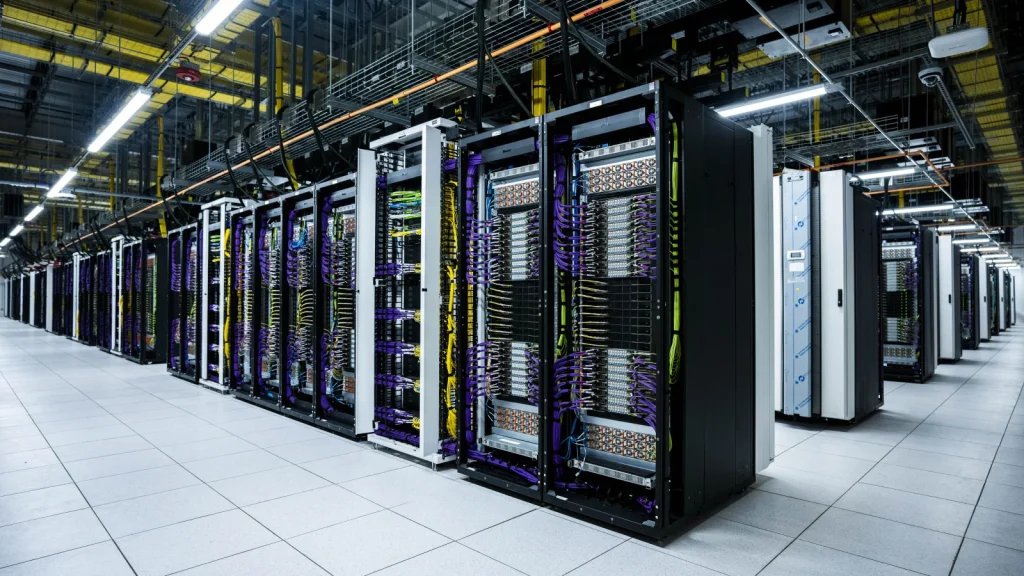

In a significant development for the rapidly evolving artificial intelligence landscape, AI safety and research company Anthropic has announced a new strategic partnership with SpaceX. This collaboration grants Anthropic access to the substantial compute capacity of SpaceX’s state-of-the-art data center, known as Colossus 1. The move is poised to dramatically increase Anthropic’s computational resources, a critical step in its ongoing efforts to scale its advanced AI models, particularly its Claude family of large language models. This infusion of power is also expected to alleviate recent user-reported issues with usage limits, a growing concern as demand for sophisticated AI capabilities surges.
The partnership between Anthropic and Elon Musk’s aerospace giant marks a pivotal moment, providing Anthropic with access to what is described as one of the world’s largest and fastest-deployed AI supercomputers. Colossus 1, located in Memphis, Tennessee, boasts an impressive infrastructure of over 220,000 NVIDIA GPUs, including the high-performance H100 and H200 accelerators, as well as next-generation GB200 accelerators. According to SpaceX’s own descriptions, this facility is engineered to deliver "scale for AI training, fine-tuning inference, and high-performance computing workloads," precisely the capabilities Anthropic requires to meet the escalating demands for its AI services.
The implications of this new compute foothold for Anthropic are multifaceted, directly impacting the user experience and the company’s capacity for innovation. As detailed in its official announcement, Anthropic will leverage more than 300 megawatts of compute capacity from Colossus 1. This substantial increase is earmarked to "directly improve capacity for Claude Pro and Claude Max subscribers," aiming to resolve the very limitations that have led to user frustration.
Specifically, the enhanced compute power translates into tangible improvements for users across various tiers. Anthropic is doubling the five-hour rate limits for Claude Code across its Pro, Max, Team, and Enterprise plans. Furthermore, the reduction in usage limits that previously occurred during peak hours for Pro and Max users will be eliminated. For developers and businesses relying on the Claude Opus models via API, the changes are equally significant. For instance, Tier 1 users will see their maximum input tokens per minute surge from 30,000 to a staggering 500,000, while the maximum output tokens per minute will increase from 8,000 to 80,000.
These adjustments are anticipated to fundamentally alter developer workflows. Elmer Morales, founder of koderAI, shared his perspective with The New Stack, stating, "The shift changes workflows from cautious prompt budgeting to deeper reasoning, bigger tasks, and more complete engineering output." This sentiment is echoed by Andy Pernsteiner, Field CTO at VAST Data, who believes the partnership will empower developers "to use Claude Code to build richer applications and more advanced agents." Pernsteiner further elaborated that this enhanced capacity could free developers from the arduous task of "meticulously maintain[ing] context and reduc[ing] MPC use," which he identified as significant bottlenecks in his daily development processes.
Anthropic’s strategic move to secure this substantial compute resource comes at a critical juncture, following a wave of user complaints regarding the perceived swiftness with which they were encountering usage limits on Claude Code. Reports surfaced on platforms like Reddit, with some users claiming that a single prompt could consume as much as 10% of their allotted limit, a stark contrast to the previously expected 0.5% to 1%. This disparity highlighted a growing tension between the burgeoning capabilities of advanced AI models and the available infrastructure to support their widespread use.
In its official statement, Anthropic acknowledged its reliance on a diverse range of AI hardware for training and running Claude, listing AWS Trainium, Google TPUs, and NVIDIA among its current providers. The company also reiterated its ongoing commitment to "explore opportunities to bring additional capacity online," underscoring the dynamic and resource-intensive nature of AI development. The SpaceX deal is the latest in a series of significant compute acquisition efforts by Anthropic over the past year, signaling a clear strategy to ensure long-term scalability and competitive positioning.
A Timeline of Compute Expansion
Anthropic’s pursuit of augmented compute power has been a consistent theme in recent months, marked by a series of high-profile agreements with major technology players:
-
April 2023: Anthropic and Amazon announced a monumental agreement. This partnership included Anthropic securing up to 5 gigawatts (GW) of compute capacity from Amazon’s Trainium and Graviton cores, coupled with a substantial investment of up to $25 billion from the e-commerce giant. This deal was seen as a significant validation of Anthropic’s potential and a major boost to its infrastructure.
-
April 2023 (Earlier in the month): Anthropic also formalized a deal with Google and Broadcom aimed at expanding its compute infrastructure. This agreement, slated to begin in 2027, will provide "multiple gigawatts of next-generation capacity." This announcement followed an earlier expansion of Anthropic’s use of Google Cloud technologies, including a commitment to utilize up to one million TPUs, which was detailed in October 2025.
-
November 2023: A pivotal partnership was forged with Microsoft and NVIDIA. Under this agreement, Anthropic committed to purchasing $30 billion worth of Azure compute capacity. This collaboration underscored Anthropic’s strategy to diversify its cloud partnerships and secure access to cutting-edge hardware and cloud services.
The SpaceX partnership, while distinct in its focus on a dedicated, high-capacity data center, fits within this broader pattern of aggressive infrastructure investment. It suggests a multi-pronged approach to securing the immense computational resources required for training and deploying increasingly sophisticated AI models.
Broader Impact on the AI Ecosystem
The continuous flurry of high-value partnerships and investments involving Anthropic, alongside industry giants like Amazon, Microsoft, and Google, paints a picture of intense competition and rapid expansion within the AI sector. For software developers and businesses, this intricate web of alliances can make it challenging to predict the long-term trajectory of the industry. However, industry observers suggest that Anthropic’s aggressive compute acquisition strategy is a strong indicator of its commitment to sustained growth and enduring relevance in the AI market.
"It is a renewed commitment to ensuring their platform and ecosystem of tools, applications, and frameworks will have enough juice to run at scale," commented Andy Pernsteiner, reflecting on the broader implications of these strategic moves. This sentiment suggests that Anthropic is not merely seeking to meet immediate demand but is investing in a future where its AI models can operate at an unprecedented scale, supporting a vast array of applications and services.
Even in the face of past challenges, such as its engagement with the Pentagon earlier this year, Pernsteiner believes that developers can view Anthropic’s new deal with SpaceX as a signal of the company’s reliability and forward-thinking approach. The ability to secure such significant compute resources from a company like SpaceX, known for its ambitious technological undertakings, reinforces Anthropic’s position as a key player in the AI race. The partnership signifies a dedication to providing the necessary computational horsepower to fuel the next generation of AI innovation, enabling developers to push the boundaries of what is possible with artificial intelligence.
