

Space42, the United Arab Emirates-based AI-powered space technology powerhouse, has reached a defining milestone in the evolution of satellite communications by successfully completing the technical integration of Skylo Technologies’ standards-based non-terrestrial network (NTN) platform with the Thuraya-4 geostationary (GEO) satellite. This integration marks a pivotal shift in the direct-to-device (D2D) market, signaling that the era of seamless, unmodified smartphone connectivity via satellite is moving from experimental phases into large-scale commercial reality. On Monday, the companies confirmed that their collaborative technology stack is now fully operational and ready for deployment, having successfully demonstrated a bi-directional, real-time voice call over the Thuraya-4 system using a standard, unmodified SIM card and existing mobile operator core infrastructure.
The announcement underscores a significant technological achievement: the ability to provide high-quality voice and data services without requiring hardware modifications to consumer devices or complex overhauls of terrestrial carrier networks. By leveraging Skylo’s 3GPP-compliant NTN platform, Space42 is positioning its Thuraya-4 satellite as a natural extension of terrestrial 5G and 4G LTE networks. This development is expected to bridge the connectivity gap for millions of users across 37 countries, providing a safety net of coverage in regions where traditional cellular towers are absent or unreliable.
Technical Integration and the Breakthrough Voice Demonstration
The core of this achievement lies in the successful marriage of Skylo’s software-defined NTN hub and the sophisticated hardware of the Thuraya-4 satellite. Unlike previous generations of satellite telephony, which required specialized, bulky handsets with large external antennas, the Skylo-Space42 solution utilizes the 3GPP Release 17 and Release 18 standards. These international standards allow standard smartphones to communicate directly with satellites by treating the satellite as a "tower in the sky."
The recent demonstration of a bi-directional voice call serves as a "proof of concept" for the reliability of the system. In this test, the voice signal traveled from an unmodified device to the Thuraya-4 satellite in geostationary orbit—approximately 35,786 kilometers above the Earth—and back down to the terrestrial core network. The completion of this call with no perceptible delay or loss of quality confirms that Space42’s GEO assets can handle the stringent latency and synchronization requirements of real-time voice communication, a feat traditionally thought to be the exclusive domain of Low Earth Orbit (LEO) constellations.
The Strategic Evolution of Space42
The success of the Thuraya-4 integration is a testament to the strategic vision behind the formation of Space42. The company was created through the high-profile merger of Bayanat, an AI-powered geospatial solutions provider, and Yahsat, the UAE’s flagship satellite operator. This merger, finalized in 2024, created a vertically integrated space tech giant with a market capitalization exceeding $4 billion.
By combining Yahsat’s extensive satellite infrastructure—specifically the Thuraya mobile satellite services (MSS) fleet—with Bayanat’s advanced AI analytics, Space42 has moved beyond being a simple "bandwidth provider." The company is now a holistic digital transformation partner. The partnership with Skylo is a key component of this new identity, allowing Space42 to offer "Connectivity-as-a-Service" to mobile network operators (MNOs) who wish to eliminate "dead zones" in their coverage maps without investing in expensive ground-based infrastructure.
Thuraya-4: The Engine of Next-Generation Connectivity
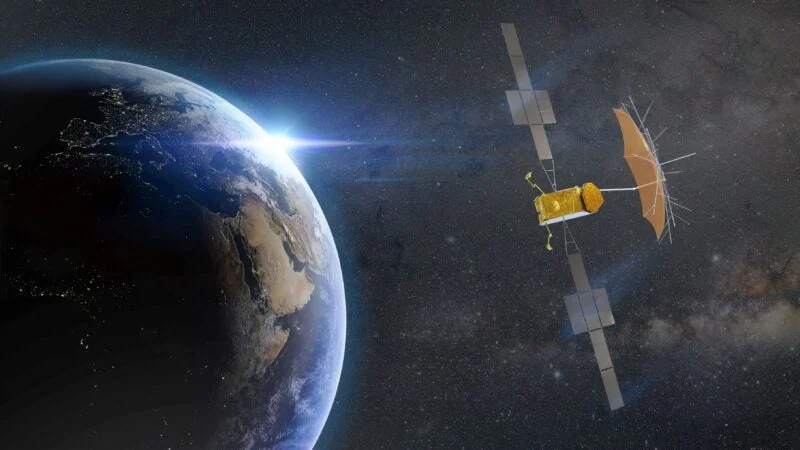
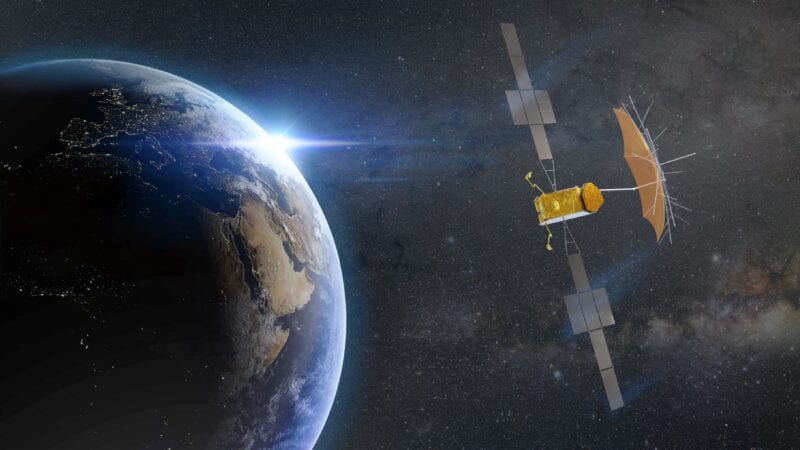
At the heart of this rollout is Thuraya-4, a highly advanced satellite based on the Airbus Eurostar Neo all-electric platform. Designed to provide significantly higher capacity and more flexibility than its predecessors, Thuraya-4 features a large 12-meter L-band antenna. This antenna is critical for D2D services, as its high sensitivity allows it to pick up the relatively weak signals emitted by standard smartphones.
Thuraya-4 was engineered to support a wide range of applications, from high-speed data for maritime and aviation sectors to low-bitrate IoT (Internet of Things) messaging. However, its role in the D2D sector is perhaps its most transformative. Because it operates in the L-band spectrum—a frequency range that is globally harmonized for mobile satellite services—it faces fewer regulatory hurdles than companies attempting to use terrestrial cellular frequencies for satellite links. This technical choice provides Space42 with a "fast track" to international markets.
Chronology of Development and Integration
The path to this week’s announcement has been marked by several years of rigorous development and strategic planning:
- August 2020: Yahsat (now part of Space42) officially contracted Airbus to build the Thuraya-4 NGS (Next Generation System) as part of a multi-billion dollar program to refresh its L-band fleet.
- 2022-2023: Skylo Technologies began expanding its "NTN-as-a-service" platform, securing partnerships with chipmakers like Qualcomm, MediaTek, and Sony to ensure that upcoming smartphone modems would be compatible with its software.
- Late 2023: The merger of Bayanat and Yahsat was announced, creating the entity that would become Space42, with a specific focus on integrating AI with satellite communications.
- Mid-2024: Space42 and Skylo initiated deep-level technical testing, focusing on the synchronization of Skylo’s cloud-native NTN core with the Thuraya-4 ground stations.
- Late 2024: Completion of the first bi-directional voice call and the formal announcement of commercial readiness.
Market Context and Competitive Landscape
The D2D market is currently one of the most competitive sectors in the aerospace industry. Space42 and Skylo are entering a field that includes high-profile players such as SpaceX (partnering with T-Mobile), AST SpaceMobile, and Lynk Global. However, the Space42-Skylo partnership holds a distinct advantage in its use of geostationary satellites and 3GPP standards.
While SpaceX and AST SpaceMobile rely on LEO constellations to reduce latency, those systems require hundreds or thousands of satellites to provide continuous global coverage. In contrast, a single GEO satellite like Thuraya-4 can provide constant, uninterrupted coverage over a massive geographic footprint (encompassing Europe, Africa, and the Middle East) from a fixed position. For mobile operators in these regions, this provides a more immediate and stable solution for rural connectivity and emergency services.
Furthermore, by adhering strictly to 3GPP standards, Skylo ensures that its service is "future-proof." As more smartphone manufacturers integrate NTN capabilities into their devices, the Space42 network will automatically become accessible to a wider user base without the need for proprietary apps or hardware dongles.
Official Responses and Industry Implications
Parthsarathi Trivedi, co-founder and CEO of Skylo, emphasized the seamless nature of the integration in his official statement. He noted that the partnership validates Skylo’s vision of a "carrier-grade connectivity layer," where the satellite is not a separate, niche tool but a "natural extension" of the existing mobile ecosystem. This perspective is shared by many industry analysts who believe that the success of D2D depends on making the satellite link invisible to the end user.
Industry experts suggest that the implications for the "unconnected" are profound. In many parts of Africa and the Middle East, terrestrial infrastructure is difficult to maintain due to geography or conflict. A GEO-based D2D service offers a resilient alternative for government communications, disaster relief, and basic human connectivity.
From a commercial standpoint, the "rolling basis" of the deployment—starting as regulatory clearances are obtained—suggests a pragmatic approach to market entry. Space42 is currently working with regulators in over 37 countries to ensure that the use of L-band for D2D services complies with national spectrum policies.
Looking Ahead: The Future of Space42 and Skylo
As Space42 moves toward the full commercial launch of these services, the focus will shift toward securing agreements with global mobile network operators. For MNOs, the value proposition is clear: they can offer "100% coverage" to their subscribers as a premium add-on, increasing their Average Revenue Per User (ARPU) while reducing churn among customers who live or work in remote areas.
The partnership also paves the way for advanced IoT applications. Beyond consumer smartphones, the Space42-Skylo network is capable of supporting millions of low-power sensors used in agriculture, logistics, and environmental monitoring. This aligns with the UAE’s broader "National Space Strategy 2030," which aims to position the nation as a global hub for space science and commercial space activity.
In conclusion, the successful integration of Skylo’s NTN platform with the Thuraya-4 satellite represents more than just a technical win; it is a signal that the barriers between terrestrial and space-based networks are permanently dissolving. As Space42 begins its commercial rollout, the global telecommunications industry will be watching closely to see how this GEO-based D2D model scales, potentially setting a new standard for how the world stays connected, no matter how remote the location.
