
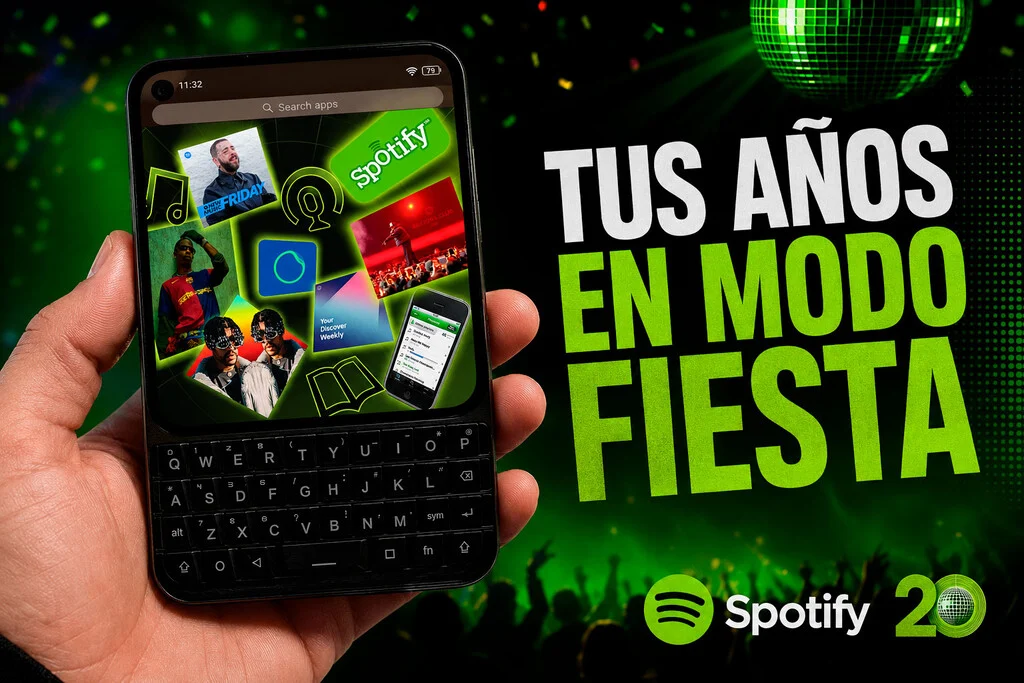

Music streaming giant Spotify has officially launched "Your Years in Party Mode" (Tus Años en Modo Fiesta), a groundbreaking, comprehensive retrospective designed to celebrate two decades of personal listening journeys for its vast global user base. This unique feature, rolled out in commemoration of the platform’s 20th anniversary, provides users with an unprecedented look at their entire listening history, from their very first streamed song to their most recent favorites, encompassing years of evolving musical tastes. Unlike the much-anticipated annual Spotify Wrapped, which summarizes a single year’s listening habits, "Your Years in Party Mode" delves deep into the archives, offering a holistic view of a user’s engagement with the platform since their inception as a Spotify listener. This expansive data includes the total number of songs played, top artists, preferred genres, and pivotal moments in their personal musical evolution, all presented in an engaging, shareable format. The feature is progressively becoming available across all user accounts, both Premium and Free, marking a significant moment for the company and its millions of subscribers worldwide.
Two Decades of Sound: Spotify’s Journey to Global Dominance
The launch of "Your Years in Party Mode" is not merely a nostalgic trip down memory lane for users; it is a celebration of Spotify’s remarkable two-decade trajectory, which fundamentally reshaped the global music industry. Founded in 2006 by Daniel Ek and Martin Lorentzon in Stockholm, Sweden, Spotify officially launched its service in October 2008. Its initial mission was ambitious: to combat rampant music piracy by offering a legal, convenient, and affordable alternative. At a time when digital music was largely dominated by illegal downloads and fragmented ownership models, Spotify championed the "access over ownership" paradigm, allowing users to stream millions of tracks on demand.
The early years were characterized by challenging negotiations with record labels and artists to secure licensing agreements. Despite these hurdles, Spotify steadily expanded its reach, first across Europe and then making its pivotal entry into the United States market in July 2011. This expansion was crucial, introducing the streaming model to a vast new audience and beginning to shift consumer habits away from digital downloads. By 2015, Spotify had amassed 75 million active users, including 20 million paying subscribers, demonstrating the viability of its freemium model.
Key milestones have punctuated Spotify’s journey. In 2018, the company went public on the New York Stock Exchange, a testament to its market leadership and growth potential. The platform strategically diversified its content beyond music, making significant investments in podcasts, acquiring companies like Gimlet Media, Anchor, and The Ringer, and securing exclusive deals with high-profile creators such as Joe Rogan. This expansion into spoken-word audio transformed Spotify into a comprehensive audio entertainment hub, further solidifying its competitive advantage.
Today, Spotify stands as the undisputed leader in audio streaming, boasting over 500 million monthly active users and more than 200 million premium subscribers globally as of early 2023. Its influence extends far beyond mere distribution; Spotify’s data-driven insights have revolutionized artist discovery, marketing, and the very economics of music. The company’s innovative features, such as Discover Weekly, Daily Mixes, and Group Sessions, have continuously pushed the boundaries of personalized content delivery, creating a highly engaging and tailored experience for each user. This continuous innovation and commitment to understanding user preferences laid the groundwork for the annual Wrapped phenomenon and now, the even more expansive "Your Years in Party Mode."
The Cultural Phenomenon of Spotify Wrapped
Before the advent of "Your Years in Party Mode," the most anticipated event in the Spotify calendar was, without a doubt, Spotify Wrapped. Introduced in 2016, Spotify Wrapped quickly transcended its initial function as a simple year-end summary to become a pervasive cultural phenomenon. Each December, millions of users eagerly await their personalized data capsules, detailing their most streamed songs, artists, genres, and podcasts of the past year. The feature cleverly gamifies listening habits, presenting data in visually appealing, shareable infographics and stories that are perfectly tailored for social media dissemination.
The virality of Spotify Wrapped is a testament to its brilliant design and its ability to tap into fundamental human desires for self-expression, nostalgia, and social connection. Sharing one’s Wrapped results became an integral part of the year-end reflection, sparking conversations, debates, and a sense of collective musical identity across platforms like Instagram, X (formerly Twitter), and Facebook. It became more than just a marketing campaign; it transformed into an annual cultural touchstone, generating immense organic reach and solidifying Spotify’s brand identity.
The success of Wrapped is deeply rooted in Spotify’s sophisticated data science and algorithmic prowess. By meticulously tracking every play, skip, and save, Spotify’s algorithms construct a detailed profile of each user’s musical preferences. This vast repository of data allows for hyper-personalization, delivering insights that often surprise and delight users, reinforcing their connection to the platform. The annual Wrapped serves as a powerful reminder of the intimate relationship between users and their music, demonstrating how Spotify acts as a personal soundtrack provider. The introduction of "Your Years in Party Mode" elevates this concept, extending the temporal scope of personalization from a single year to a user’s entire history on the platform, promising an even deeper dive into their musical evolution.
‘Your Years in Party Mode’: A Deep Dive into the Anniversary Feature
"Your Years in Party Mode" represents a monumental leap in personalized listening retrospectives, extending the beloved Wrapped concept to encompass a user’s entire history on Spotify. This anniversary feature, internally dubbed "Wrapped a lo bestia" (a super Wrapped), provides an unprecedented granular view of individual musical journeys. Upon accessing the feature, users are presented with a rich tapestry of data points, meticulously compiled from their initial sign-up date to the present.
Among the key insights offered are:
- Total Songs Played: A staggering number representing every track that has passed through the user’s play queue.
- Most Streamed Artists: A historical ranking of the artists who have consistently dominated their listening habits over the years.
- Top Genres: An analysis of the genres that have defined their musical taste across different periods.
- First Streamed Song and Artist: A nostalgic look back at the very first piece of music they ever played on Spotify, often evoking strong memories.
- Peak Listening Years: Identification of periods when the user was most active on the platform, potentially correlating with significant life events.
- Evolution of Taste: Visualizations or narratives illustrating how musical preferences have shifted, broadened, or solidified over time.
A distinctive visual element accompanying this celebration is the temporary change of Spotify’s app icon to a shimmering disco ball. This playful yet symbolic alteration serves as a vibrant indicator of the anniversary event, transforming the user’s interface into a festive portal to their past. The disco ball, a universal symbol of celebration and timeless music, perfectly encapsulates the spirit of "Your Years in Party Mode"—a journey back through personal musical eras. This limited-edition icon is a fleeting nod to the milestone, designed to enhance the celebratory atmosphere of the feature’s rollout.
Accessing "Your Years in Party Mode" is designed to be straightforward for all Spotify users, regardless of their subscription status (Premium or Free). While the rollout might be staggered and could take a few hours to appear across all accounts, the feature integrates seamlessly into the Spotify experience. Users can typically find it prominently displayed on their Spotify home screen, often alongside other personalized recommendations, or through a dedicated notification or banner. The feature presents its data in an interactive, story-like format, encouraging users to swipe through their musical timeline.
One of the most appealing aspects for users is the ability to save the personalized playlist generated by "Your Years in Party Mode." This playlist compiles the most significant and frequently streamed tracks from their entire history, offering a permanent memento of their musical evolution. Saving this playlist ensures that the curated soundtrack of their past remains accessible long after the anniversary campaign concludes. Furthermore, Spotify has also curated a general, platform-wide playlist titled "Most Streamed Since Inception," which aggregates the most popular songs globally since the platform’s launch. This offers a broader perspective on the defining tracks of the last two decades, allowing users to compare their personal journey with the collective musical zeitgeist.
Leveraging Nostalgia and Data for Enhanced User Engagement
The strategic deployment of "Your Years in Party Mode" is a masterclass in leveraging nostalgia and sophisticated data analytics to deepen user engagement and foster brand loyalty. In an increasingly competitive streaming landscape, where numerous platforms vie for subscriber attention, Spotify continually differentiates itself by offering unparalleled personalized experiences. This anniversary feature is a prime example of that strategy.

The psychological appeal of "Your Years in Party Mode" is multifaceted. It taps into the powerful emotion of nostalgia, allowing users to revisit pivotal moments of their lives through the lens of music. Songs are often deeply intertwined with memories, evoking specific periods, relationships, or emotions. By presenting a chronological overview of listening habits, Spotify helps users reconstruct their personal histories, fostering a profound emotional connection to the platform. This sense of personal connection transcends mere utility, transforming Spotify from a service into a curator of life’s soundtrack.
From a data strategy perspective, this feature underscores Spotify’s expertise in turning vast amounts of user data into a compelling product. Every interaction a user has had with the app—every song played, album saved, or playlist created—contributes to a rich dataset that, when analyzed, reveals unique patterns and preferences. "Your Years in Party Mode" is the culmination of this data intelligence, packaged into an accessible and emotionally resonant experience. This not only delights existing users but also serves as a powerful testament to the value of remaining a Spotify subscriber, as the platform continuously builds an increasingly detailed and meaningful musical archive for each individual.
Moreover, such features play a critical role in customer retention and acquisition. In an era where switching between streaming services is relatively easy, offerings like "Your Years in Party Mode" create a sticky experience. The unique, irreplaceable personal history that Spotify builds for each user becomes a powerful incentive to stay with the platform. Competitors like Apple Music, Amazon Music, and YouTube Music offer their own year-end summaries, but Spotify’s pioneering role and the sheer scale and depth of its data make its personalized retrospectives particularly impactful. This comprehensive historical view further solidifies Spotify’s position as the leading innovator in personalized audio content, setting a high bar for competitor offerings and reinforcing its brand identity as the definitive home for music discovery and personal audio journeys.
Expert Perspectives and Industry Impact
While Spotify has not released specific official statements regarding "Your Years in Party Mode" beyond its general announcement, the intent behind such a comprehensive feature is clear. Industry analysts and cultural commentators widely interpret this initiative as a strategic move to reinforce user loyalty and celebrate the symbiotic relationship between the platform and its listeners. A hypothetical statement from a Spotify spokesperson might emphasize the company’s commitment to "connecting users with their personal sound journeys" and "celebrating two decades of shared musical discovery that has shaped countless lives around the globe." Such a feature aligns perfectly with Spotify’s brand ethos of personalization and community.
From an industry perspective, the rollout of "Your Years in Party Mode" highlights several significant trends. Firstly, it underscores the increasing importance of data-driven storytelling in digital consumer services. By transforming raw listening data into engaging narratives, Spotify not only provides value to its users but also subtly educates them on the richness of their personal data archives. This approach enhances transparency and builds trust, as users see tangible benefits from the data they share.
Secondly, the feature reinforces the concept of "digital legacy." In an increasingly digital world, our online activities create vast personal histories. Spotify, through features like "Your Years in Party Mode," is helping users visualize and preserve their musical legacy, making their past accessible in a meaningful way. This contributes to a broader discussion about how digital platforms can better serve as custodians of personal memory and identity.
Finally, the anniversary celebration and its associated features are expected to have a positive impact on Spotify’s brand perception and user retention rates. In a market where content libraries are increasingly similar across platforms, the quality of the user experience and the emotional connection a brand fosters become paramount differentiators. "Your Years in Party Mode" offers a unique, deeply personal experience that is difficult for competitors to replicate without the equivalent depth of historical user data. This move is likely to be viewed by investors and analysts as a smart investment in long-term customer lifetime value, further solidifying Spotify’s market leadership as it navigates the next two decades of audio innovation.
The Road Ahead: What’s Next for Spotify?
As Spotify marks its 20th anniversary with a celebratory look back, the company is simultaneously charting an ambitious course for the future. The success of features like "Your Years in Party Mode" demonstrates Spotify’s unparalleled ability to leverage data for hyper-personalized experiences, a capability that will undoubtedly drive its future innovations.
The road ahead for Spotify is likely to be defined by several key areas of development. Continued investment in artificial intelligence and machine learning will lead to even more sophisticated recommendation engines, predicting user preferences with greater accuracy and introducing them to new music and audio content they are likely to love. This could extend to dynamic, AI-generated personalized playlists that adapt in real-time to mood or activity.
Spatial audio and immersive listening experiences are another frontier. As audio technology advances, Spotify is expected to explore how to deliver richer, more three-dimensional soundscapes that enhance the listening experience, whether through dedicated hardware or software optimizations. This could transform how users interact with music, podcasts, and audiobooks, making content feel more immediate and enveloping.
Furthermore, Spotify’s aggressive expansion into podcasts and audiobooks is far from complete. The company will likely continue to acquire key content creators, develop exclusive original programming, and integrate audiobooks more seamlessly into its subscription models. The goal is to become the indispensable platform for all forms of audio, not just music, creating a unified and comprehensive audio entertainment ecosystem. This strategy positions Spotify to capture a larger share of consumers’ audio consumption time, reinforcing its market dominance.
Finally, Spotify is expected to deepen its engagement with artists and creators, exploring new monetization models and tools that empower them to connect directly with their fans. This could include enhanced analytics for artists, direct fan-funding options, and innovative ways for creators to promote their work within the platform. By continuously innovating across technology, content, and creator tools, Spotify aims to reinforce its position as the global leader in audio streaming, ensuring that the next 20 years are as transformative as the last two decades have been for the world of sound.
