

Amazon Web Services (AWS) has announced the general availability of AWS Interconnect, a comprehensive managed private connectivity service designed to dramatically simplify network integration for enterprises operating across multicloud and hybrid environments. This significant launch introduces two key capabilities: AWS Interconnect – multicloud, enabling direct private connections between Amazon Virtual Private Clouds (VPCs) and VPCs on other cloud providers, and AWS Interconnect – last mile, which streamlines the establishment of high-speed, private connections from enterprise branch offices, data centers, and remote locations to AWS through existing network providers.
The Evolving Enterprise Landscape: The Imperative for Seamless Connectivity
The modern enterprise IT landscape is increasingly characterized by a strategic embrace of multicloud and hybrid architectures. Organizations are leveraging multiple cloud providers to capitalize on specialized services, meet stringent data residency and compliance requirements, mitigate vendor lock-in risks, and support diverse development teams that may have standardized on different platforms. Industry analysts consistently highlight the growing prevalence of multicloud strategies, with a significant majority of enterprises now employing two or more cloud providers. This shift, while offering unparalleled flexibility and innovation potential, has historically presented formidable networking challenges.

Connecting these disparate environments reliably and securely has traditionally involved a complex and labor-intensive orchestration of resources. IT teams have grappled with managing intricate arrays of VPN tunnels, navigating the logistics and costs associated with colocation facilities, and configuring third-party network fabrics. This "undifferentiated heavy lifting" often diverts valuable engineering talent from focusing on core business applications and strategic initiatives, leading to increased operational overhead, potential security vulnerabilities, and unpredictable network performance. AWS Interconnect emerges as a direct response to these pervasive challenges, aiming to abstract away infrastructure complexities and empower networking teams to focus on innovation.
AWS Interconnect: A Unified Approach to Network Management
At its core, AWS Interconnect is a fully managed connectivity service that streamlines the establishment of private, high-speed network connections with dedicated bandwidth. It provides a turnkey experience for connecting into and out of AWS across both hybrid and multicloud scenarios. The service is engineered to allow users to configure resilient, end-to-end connectivity with remarkable ease, often in just a few clicks through the AWS Console. This process involves selecting the desired location, partner, or cloud provider, specifying the preferred AWS Region, and defining bandwidth requirements, effectively eliminating the friction of partner discovery and the complexities inherent in manual network configurations. Both multicloud and last mile capabilities are built on the same foundational principle: delivering a fully managed, intuitive experience that significantly reduces the infrastructure burden on internal teams.
Deep Dive: AWS Interconnect – Multicloud for Cross-Platform Integration
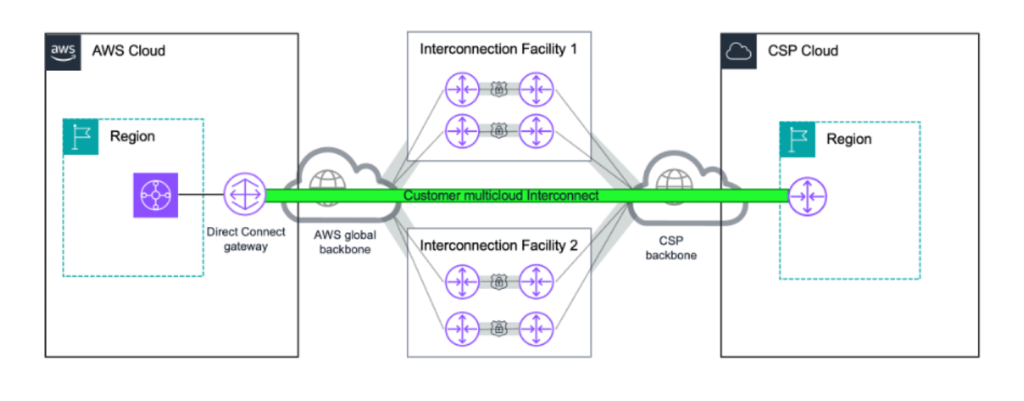
AWS Interconnect – multicloud offers a private, managed Layer 3 connection, creating a direct conduit between an AWS environment and other cloud providers. Initially, this capability supports connectivity with Google Cloud, with plans for Microsoft Azure and Oracle Cloud Infrastructure (OCI) to follow later in 2026. A pivotal feature of this service is that traffic flows entirely over the AWS global backbone and the partner cloud’s private network, ensuring that data never traverses the public internet. This architecture delivers critical benefits, including predictable latency, consistent throughput, and enhanced isolation from internet congestion, all without requiring customers to manage any physical infrastructure themselves.
Private, Secure, and Resilient Backbones
Security is a foundational element of AWS Interconnect – multicloud. Every connection incorporates IEEE 802.1AE MACsec encryption on the physical links between AWS routers and the partner cloud provider’s routers at the interconnection facilities. This crucial layer of encryption is automatically configured, removing the need for customers to manage it separately. It is important to note that each cloud provider independently manages encryption on its own backbone, and customers are advised to review the specific encryption documentation for their deployments to ensure compliance with their particular requirements.
Resiliency is also built into the service’s design. Each connection spans multiple logical links, strategically distributed across at least two distinct physical facilities. This redundant architecture ensures that a single device or building failure will not interrupt connectivity, maintaining high availability for critical workloads. For comprehensive operational visibility, AWS Interconnect – multicloud seamlessly integrates with Amazon CloudWatch. Customers receive a Network Synthetic Monitor as part of each connection, providing continuous tracking of crucial performance metrics such as round-trip latency and packet loss. Additionally, bandwidth utilization metrics are available to support proactive capacity planning and optimization.
Open Collaboration and Partner Ecosystem
In a move that underscores its commitment to open standards and ecosystem expansion, AWS has published the underlying technical specification for AWS Interconnect on GitHub under the Apache 2.0 license. This initiative invites any cloud service provider to collaborate and integrate with AWS Interconnect – multicloud, fostering a broader and more interconnected cloud landscape. To become an AWS Interconnect partner, cloud providers must demonstrate adherence to the technical specification and meet AWS’s rigorous operational requirements, which include stringent resiliency standards, robust support commitments, and adherence to defined Service Level Agreements (SLAs). This open approach is poised to accelerate multicloud adoption by making secure, high-performance connectivity more accessible across the industry.
Streamlining On-Premises to Cloud with AWS Interconnect – Last Mile
Mirroring the architectural principles and design ethos of its multicloud counterpart, AWS Interconnect – last mile offers a similarly streamlined solution for hybrid cloud connectivity. This capability provides the means to connect on-premises data centers, branch offices, and other remote locations directly to AWS. The entire process is managed from the AWS Management Console, leveraging a participating network provider’s existing last-mile infrastructure.
The onboarding process for last mile mirrors the simplicity of multicloud. Users select a network provider from a curated list, authenticate, and then specify their connection endpoints and desired bandwidth. AWS then generates an activation key, which the customer provides to their chosen network provider to finalize the configuration. A key differentiator of last mile is its automated provisioning of four redundant connections, strategically deployed across two physical locations. This configuration includes automatic BGP routing setup and default activation of MACsec encryption and Jumbo Frames. The result is a robust, resilient private connection to AWS that adheres to networking best practices, all without requiring manual configuration of individual networking components.
AWS Interconnect – last mile supports a wide range of bandwidths, from 1 Gbps up to 100 Gbps, with the flexibility to adjust bandwidth directly from the console without requiring a complete reprovisioning of the connection. The service boasts a 99.99% availability SLA, extending up to the Direct Connect port, and includes the CloudWatch Network Synthetic Monitor for continuous connection health monitoring. Similar to multicloud, AWS Interconnect – last mile attaches to a Direct Connect Gateway, which can then connect to a customer’s Virtual Private Gateway, Transit Gateway, or AWS Cloud WAN deployment, offering versatile integration options within the AWS ecosystem. For comprehensive technical details, users can refer to the AWS Interconnect User Guide.
Industry Endorsement
The significance of AWS Interconnect – last mile has been recognized by key industry players. Scott Yow, SVP Product at Lumen Technologies, commented on the collaboration: "By combining AWS Interconnect – last mile with Lumen fiber network and Cloud Interconnect, we simplify the last-mile complexity that often slows cloud adoption and enable a faster, and more resilient path to AWS for customers." This statement underscores the strategic value of such partnerships in bridging the gap between enterprise on-premises infrastructure and the cloud, making high-performance, secure connectivity more accessible and less burdensome.
Operational Workflow: A Simplified Provisioning Experience

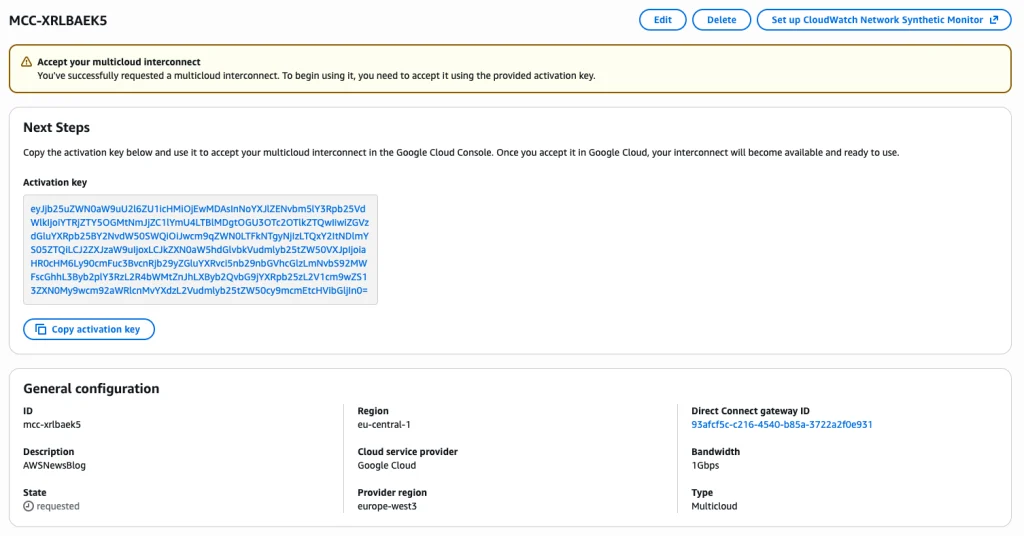
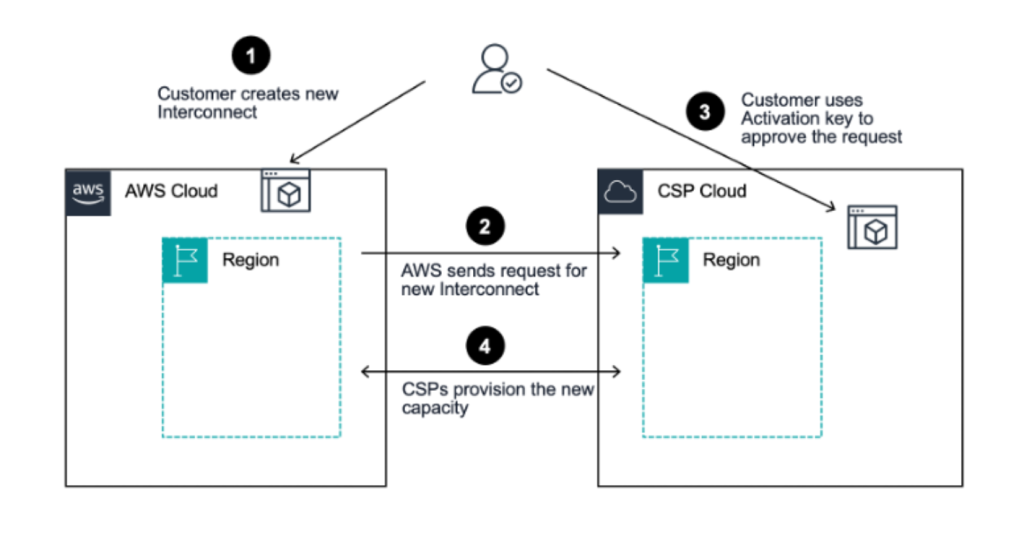
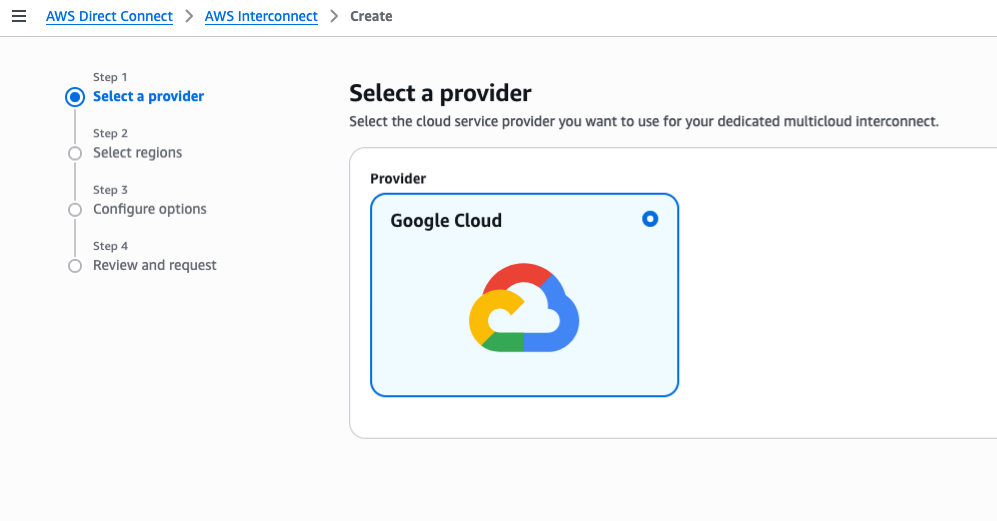
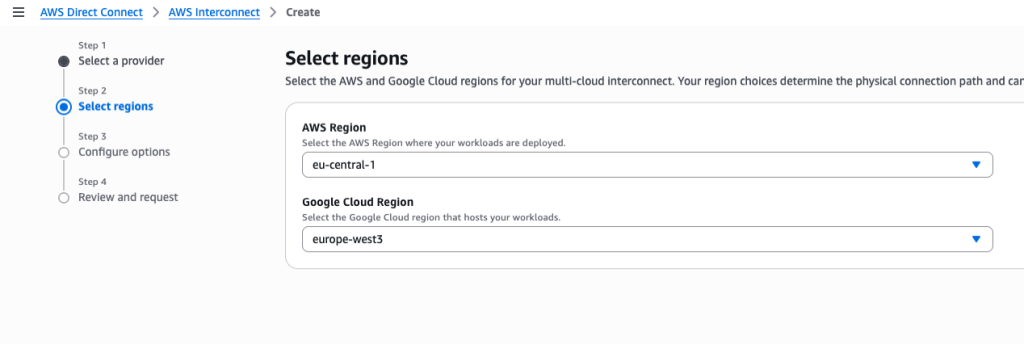
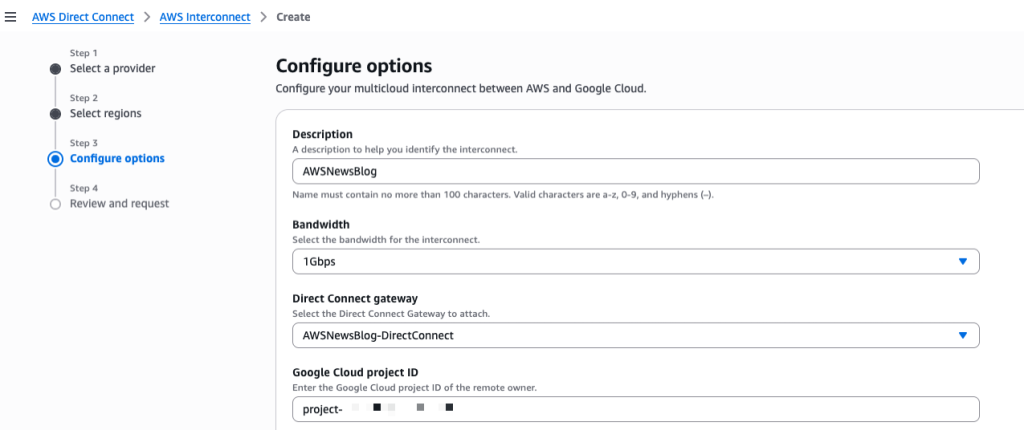
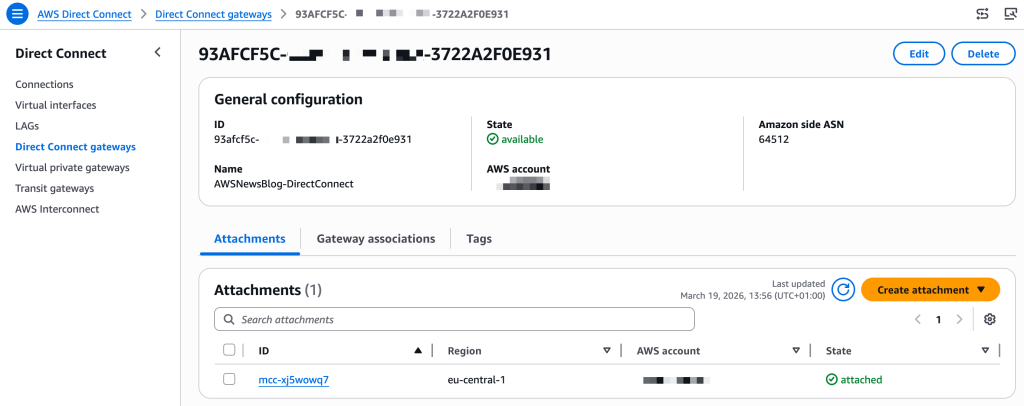
The provisioning of an AWS Interconnect connection is designed for speed and simplicity, typically taking only minutes to initiate. The process begins within the AWS Direct Connect console, under the dedicated AWS Interconnect section. A user first selects their desired cloud provider (e.g., Google Cloud) and specifies the source AWS Region and the destination region within the partner cloud. Next, the user defines the required bandwidth, attaches the connection to an existing Direct Connect gateway, and provides the necessary project or account ID for the partner cloud.
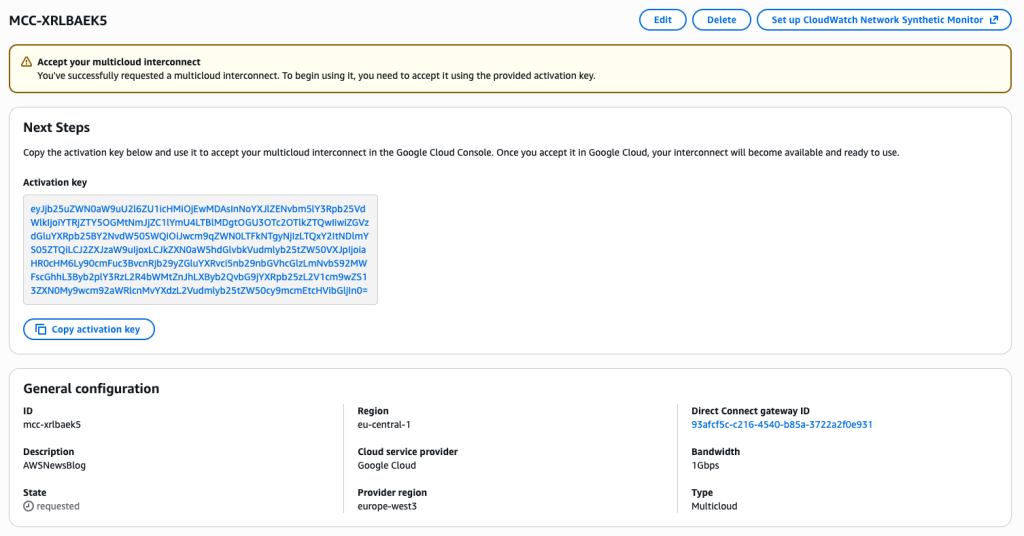
Upon reviewing and confirming these details, the AWS console generates a unique activation key. This key is crucial for validating the connection request on the partner cloud’s side. For instance, in a Google Cloud Platform (GCP) environment, the user would utilize the GCP command-line interface (CLI) to create a network connectivity transport, supplying the activation key along with details like the GCP region, network, and advertised routes. Following this, a peering connection is established between the customer’s GCP VPC and the newly created transport. Once these steps are completed, routes propagate automatically in both directions, allowing workloads on both sides to begin exchanging data almost immediately.

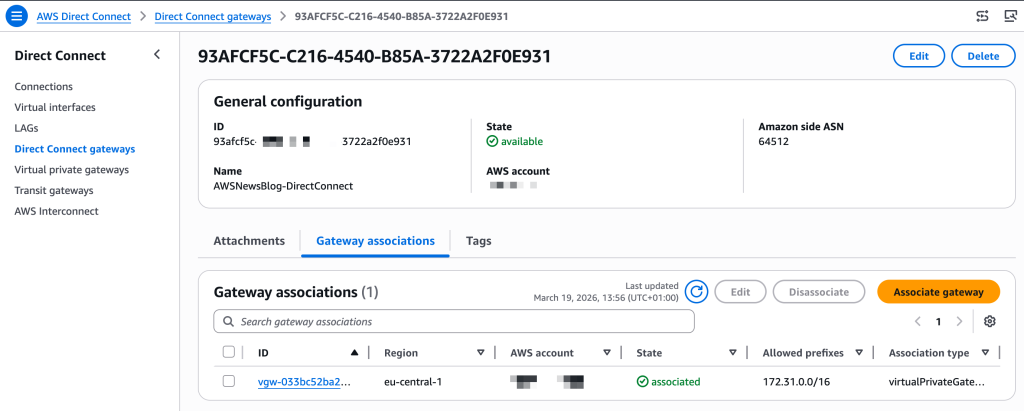
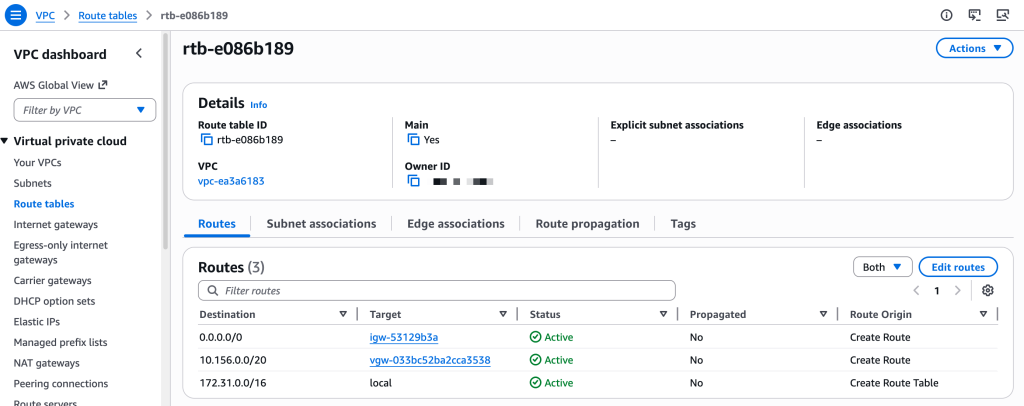
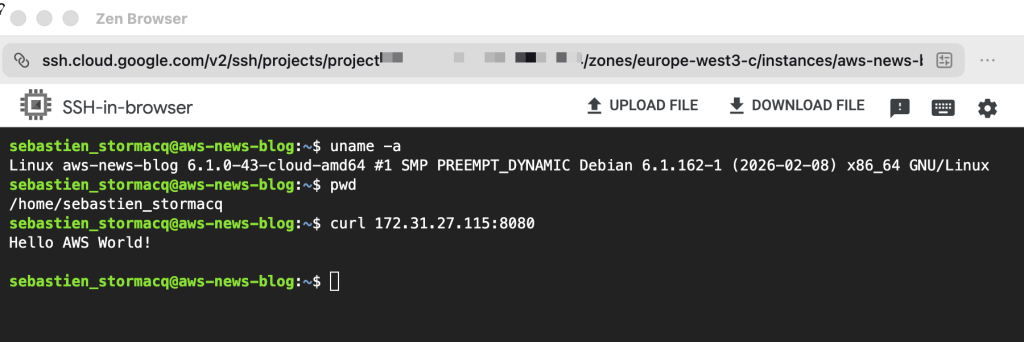
On the AWS side, the final configuration step involves associating the new interconnect attachment with a Virtual Private Gateway (VGW) in the same AWS Region. Subsequently, a route entry must be added to the relevant AWS VPC Route Tables, directing traffic destined for the partner cloud’s IP address range through the Virtual Gateway. This meticulous yet streamlined process ensures that private network routes are established and fully managed by the respective Cloud Service Providers, significantly reducing the manual effort traditionally required. For example, testing connectivity by running a simple web server on an AWS EC2 instance and accessing it from a GCP compute instance via its private IP address quickly demonstrates the seamless, private network route established between the two environments.
Architectural Flexibility for Scalable Deployments
AWS Interconnect is designed to scale with enterprise needs, offering flexible architectural options for growing deployments. For organizations with multiple VPCs within a single AWS Region, AWS Transit Gateway provides a centralized routing hub. This allows all VPCs to connect through a single Interconnect attachment, facilitating traffic segmentation between different environments, enabling the application of consistent routing policies, and integrating with services like AWS Network Firewall for advanced traffic inspection at the cloud boundary.
For enterprises operating at a global scale, with workloads distributed across multiple AWS Regions and various Google Cloud environments, AWS Cloud WAN extends this centralized model worldwide. Cloud WAN enables any region in a customer’s global network to reach any Interconnect attachment, offering centralized policy management and segment-based routing that applies consistently across all operational locations. This comprehensive approach simplifies global network management and ensures high performance and security for geographically dispersed applications. For more in-depth insights into building resilient and scalable multicloud connectivity architectures, AWS has published a dedicated blog post titled "Build resilient and scalable multicloud connectivity architectures with AWS Interconnect – multicloud."
Availability, Pricing, and Ecosystem Expansion
AWS Interconnect is rolling out with a phased availability and a transparent pricing model.
Current Availability
AWS Interconnect – multicloud is currently available in five strategic region pairs: US East (N. Virginia) to Google Cloud N. Virginia, US West (N. California) to Google Cloud Los Angeles, US West (Oregon) to Google Cloud Oregon, Europe (London) to Google Cloud London, and Europe (Frankfurt) to Google Cloud Frankfurt. As announced, support for Microsoft Azure and Oracle Cloud Infrastructure (OCI) is slated for later in 2026, significantly expanding the multicloud integration possibilities.
AWS Interconnect – last mile is launching initially in US East (N. Virginia), with Lumen Technologies as the foundational partner. AWS has also confirmed that additional partners, including AT&T and Megaport, are in progress, with further regional expansions planned to broaden its reach and accessibility.
Pricing Model
The pricing for both AWS Interconnect – multicloud and AWS Interconnect – last mile is based on a flat hourly rate for the capacity requested, billed pro-rata by the hour. Customers select the bandwidth tier that best aligns with their workload requirements. For multicloud connections, pricing can vary by region pair; for example, a connection between US East (N. Virginia) and Google Cloud N. Virginia will have a different cost structure than a connection to a more geographically distant region. When utilizing AWS Cloud WAN, the global any-to-any routing model means traffic might traverse multiple regions, which can influence the total cost of a deployment. AWS strongly recommends reviewing the dedicated AWS Interconnect – multicloud pricing page and AWS Interconnect – last mile pricing page for comprehensive rate cards by region pair and capacity tier before sizing connections.
Strategic Market Position
The introduction of AWS Interconnect represents a significant strategic move by AWS to address one of the most pressing challenges in enterprise cloud adoption: complex, fragmented network connectivity. By offering a managed, secure, and highly resilient service, AWS aims to lower the barrier to entry for multicloud and hybrid strategies, potentially accelerating enterprise migration to the cloud and enhancing operational efficiency for existing users. This service not only simplifies networking for customers but also strengthens AWS’s position as a central orchestrator in the increasingly complex multicloud ecosystem, fostering closer ties with other cloud providers and network partners.
In conclusion, AWS Interconnect marks a pivotal advancement in enterprise cloud networking. By providing a managed, secure, and highly resilient framework for both multicloud and hybrid connections, AWS is directly addressing the operational complexities that have long hindered seamless integration. This service is poised to empower organizations to fully leverage the benefits of diverse cloud environments, optimize their network infrastructure, and reallocate valuable resources towards innovation, ultimately accelerating their digital transformation journeys. Users interested in exploring AWS Interconnect can begin by visiting the AWS Direct Connect console and navigating to the AWS Interconnect section. AWS encourages feedback and engagement from the community via the AWS re:Post community forum.
