

The telecommunications landscape is currently undergoing its most significant structural shift since the introduction of the first mobile networks, driven by the transition from physical SIM cards to embedded SIM (eSIM) technology. An eSIM, or embedded Subscriber Identity Module, represents a fundamental change in how mobile devices connect to cellular networks, replacing the traditional removable plastic card with a permanent, programmable chip integrated directly into the device’s hardware. This digital-first approach allows users to store multiple subscriber profiles, switch carriers via software interfaces, and activate cellular plans without the need for physical logistics or retail visits. As the industry moves toward a more integrated ecosystem, the adoption of eSIM is no longer a niche feature for high-end gadgets but a standard requirement for the next generation of mobile connectivity, including smartphones, wearables, and the burgeoning Internet of Things (IoT) market.
The Historical Context and Chronology of SIM Evolution
To understand the impact of the eSIM, it is necessary to examine the three-decade evolution of the Subscriber Identity Module. The SIM card was first developed in 1991 by Munich-based smart card maker Giesecke & Devrient, which sold the first 300 SIM cards to the Finnish wireless network operator Radiolinja. At its inception, the SIM card was the size of a credit card. Over the subsequent decades, the industry prioritized miniaturization to accommodate thinner and more complex device designs.
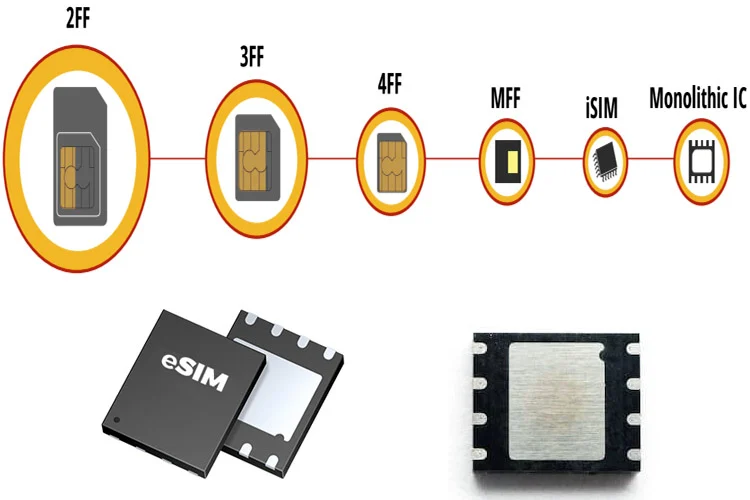
The chronology of this miniaturization includes the transition to the Mini-SIM in 1996, the Micro-SIM in 2003 (popularized by the iPhone 4 in 2010), and the Nano-SIM in 2012. Each iteration reduced the plastic footprint while maintaining the essential gold-plated contact chip. However, even the Nano-SIM required a mechanical tray, a reader, and a physical opening in the device chassis, which consumed valuable internal space and created points of failure for water and dust ingress.
The concept of the "embedded" SIM began to gain traction around 2016, primarily within the industrial IoT sector and the wearables market. The GSMA (Global System for Mobile Communications Association) released the first set of standards for eSIM in 2016, specifically targeting smartwatches and fitness trackers where space was too limited for a traditional SIM tray. The technology hit the mainstream consumer market in 2018 with the release of the iPhone XS and XR, which featured Dual SIM capabilities through one physical slot and one eSIM. The most significant turning point occurred in September 2022, when Apple announced that all iPhone 14 models sold in the United States would ship without a physical SIM tray, relying exclusively on eSIM technology.
Technical Architecture: How the Embedded SIM Functions
Unlike the traditional SIM card, which is a "Read-Only" memory chip in many respects regarding its hardware-carrier lock, the eSIM is based on the eUICC (Embedded Universal Integrated Circuit Card) standard. This is a secure component that can be updated remotely using Remote SIM Provisioning (RSP) technology. The chip is soldered directly onto the device’s motherboard during the manufacturing process.
When a user signs up for a mobile plan, the carrier does not provide a physical piece of plastic. Instead, they provide a digital profile. This profile contains the International Mobile Subscriber Identity (IMSI), authentication keys, and network-specific data required to register the device on a cellular network. This data is transmitted "Over-the-Air" (OTA) using encrypted protocols to ensure that the subscriber information cannot be intercepted during the download process.
The hardware itself is significantly smaller than even a Nano-SIM. While a Nano-SIM measures approximately 12.3mm x 8.8mm, an eSIM chip (typically the MFF2 form factor) is roughly 6mm x 5mm and much thinner. This reduction in size allows manufacturers to utilize the saved space for larger batteries, improved thermal management systems, or additional sensors.
Activation Protocols for Modern Operating Systems
The activation of an eSIM has been streamlined to reduce the "friction" of switching carriers. While the specific user interface may differ between manufacturers, the underlying logic remains consistent: the device must download a signed certificate from a carrier’s server to unlock network access.
Standard Activation for iOS Devices
For Apple devices, the process is integrated into the "Cellular" or "Mobile Data" menu within the Settings app. There are three primary methods for activation:
- eSIM Carrier Activation: The carrier assigns an eSIM to the device digitally based on the device’s unique EID (Embedded Identity Document) number at the time of purchase. Upon turning on the phone, a notification appears saying "Carrier Cellular Plan Ready to Be Installed."
- eSIM Quick Transfer: This allows users to transfer their existing SIM (physical or eSIM) from an old iPhone to a new one without contacting the carrier.
- QR Code Scanning: The most common method for third-party or international travel plans. The user navigates to Settings > Cellular > Add eSIM and uses the camera to scan a QR code provided by the service provider.
Standard Activation for Android Devices
The Android ecosystem, led by Samsung and Google Pixel devices, follows a similar logic but with more variation across different brands.
- The Settings Pathway: Users typically navigate to Settings > Network & Internet > SIMs (or Mobile Network) > Add More.
- Download Procedure: The device prompts the user to "Download a SIM instead?" After confirming, the camera opens to scan the provider’s QR code.
- Manual Entry: In cases where the camera cannot scan the code, Android allows for the manual entry of an SM-DP+ (Subscription Manager Data Preparation) address and an activation code.
Comparative Analysis: eSIM vs. Physical SIM
The transition to eSIM is not merely a change in form factor; it introduces a new paradigm in consumer flexibility and device security.
| Feature | Physical SIM Card | eSIM (Embedded SIM) |
|---|---|---|
| Durability | Prone to damage, loss, or wear of gold contacts. | Highly durable; cannot be lost or damaged as it is internal. |
| Security | Can be removed if a device is stolen, preventing tracking. | Cannot be removed; the device remains connected to the network. |
| Switching | Requires physical swap and often a tool (SIM pin). | Software-based switching; profiles can be changed in seconds. |
| Multiple Lines | Limited by physical slots (usually 1 or 2). | Can store 5-10+ profiles (though usually only 2 are active). |
| Space | Requires a tray, slot, and internal reader mechanism. | Minimal footprint; allows for better water/dust resistance. |
| Logistics | Requires shipping or visiting a retail store. | Instant delivery via email or app. |
Despite these advantages, the physical SIM remains dominant in developing markets where legacy infrastructure is still in place. Furthermore, a physical SIM allows for "blind swapping"—the ability to move a SIM from a broken phone to a working one instantly without needing an internet connection to "download" a profile.
Market Data and Global Adoption Trends
Recent data from the GSMA Intelligence report indicates a rapid acceleration in eSIM support. As of late 2023, over 800 mobile operators worldwide have launched commercial eSIM services for smartphones. This is a significant increase from fewer than 200 operators in 2019.
Market research firms, such as Juniper Research, forecast that the number of eSIMs installed in connected devices will increase from roughly 1.2 billion in 2021 to over 3.4 billion by 2025. This growth is driven not only by consumer electronics but by the automotive industry. Modern vehicles utilize eSIMs for emergency call systems (eCall), real-time navigation updates, and in-car Wi-Fi hotspots. Because a vehicle may be manufactured in one country and sold in another, the ability to program the SIM for a local carrier at the point of sale is a logistical necessity.
Official Responses and Industry Implications
The shift toward eSIM has met with mixed reactions from various stakeholders. Major carriers like AT&T, Verizon, and Vodafone have largely embraced the technology, as it reduces the overhead costs associated with manufacturing and distributing millions of plastic cards annually. However, some smaller regional carriers initially expressed concern that eSIM makes it "too easy" for customers to switch to a competitor, potentially increasing "churn" rates.
Regulators in several jurisdictions have viewed eSIM as a tool for increasing market competition. By lowering the barrier to switching, consumers can more easily opt for the provider offering the best price or coverage at any given moment. In the European Union, the push for "Digital Sovereignty" and environmental sustainability has further bolstered the case for eSIM, as it aligns with goals to reduce plastic waste and carbon emissions from shipping.
From a security perspective, law enforcement agencies have noted both benefits and challenges. While an eSIM makes a stolen phone easier to track (since the thief cannot simply "toss the SIM"), it also necessitates new protocols for digital forensics when seizing devices for investigation, as the subscriber identity is now inextricably linked to the hardware’s secure element.
Environmental and Sustainability Impact
The environmental implications of the eSIM transition are substantial. Traditional SIM card production involves the use of PVC, silicon, and gold. When accounting for the plastic credit-card-sized holders that SIMs are shipped in, the industry generates thousands of tons of plastic waste annually. According to reports from Thales Group, the transition to eSIM could eventually eliminate the need for over 4 billion plastic SIM cards per year.
Moreover, the logistics of the "last mile" delivery—shipping a small piece of plastic via courier—carries a disproportionate carbon footprint. Digital activation eliminates this entire supply chain segment, contributing to the telecommunication industry’s broader goal of reaching net-zero carbon emissions.
Future Outlook: Beyond eSIM to iSIM
The trajectory of this technology does not end with the eSIM. The industry is already moving toward the iSIM (Integrated SIM). While the eSIM is a separate chip soldered to the motherboard, the iSIM integrates the SIM functionality directly into the device’s main processor (the System-on-a-Chip or SoC).
In early 2023, Qualcomm and Thales announced the first commercially ready iSIM on a modified Snapdragon 8 Gen 2 platform. The iSIM further reduces power consumption and frees up even more space, which is critical for the next generation of ultra-compact IoT devices, such as smart glasses and medical implants.
As 5G networks continue to expand globally, the requirement for seamless, high-speed, and easily manageable connectivity will make digital SIM technology the backbone of the connected world. The era of the physical SIM card, while not yet entirely over, is clearly entering its twilight phase, replaced by a more secure, efficient, and environmentally conscious digital alternative.
