

Seattle, WA – Amazon Web Services (AWS) today announced a significant advancement in enterprise artificial intelligence (AI) adoption, revealing that Amazon WorkSpaces now allows AI agents to securely interact with and operate desktop applications without requiring extensive and costly application modernization. This development addresses a long-standing barrier for businesses seeking to leverage AI, particularly those heavily reliant on legacy systems and proprietary desktop software lacking modern Application Programming Interfaces (APIs). The new capability transforms WorkSpaces, traditionally a platform for managed virtual desktops for human employees, into a robust infrastructure for scaling enterprise productivity through intelligent automation.
The challenge for enterprises in deploying AI agents has been substantial and well-documented. A 2024 Gartner report underscores this predicament, stating that a staggering 75% of organizations operate legacy applications that are devoid of modern APIs, effectively isolating them from contemporary AI systems. Furthermore, the report highlights that 71% of Fortune 500 companies run critical business processes on mainframe systems, many of which also lack adequate programmatic access. This technological chasm has presented a difficult choice for organizations: either delay the integration of AI and risk falling behind competitors, or embark on prohibitively expensive and inherently risky modernization projects that can span years and consume significant resources. Such projects often involve refactoring entire codebases, migrating data, and re-architecting applications, a process fraught with potential disruption and failure.
Bridging the AI-Legacy Divide with Amazon WorkSpaces
The newly announced feature from AWS directly tackles this challenge by enabling AI agents to operate within the same secure, managed virtual desktop environments that millions of employees already utilize and trust. This innovative approach means that enterprises can deploy AI agents to automate workflows that reside within their existing desktop applications, bypassing the need for complex API development, application migrations, or the management of new, specialized infrastructure. The core principle is simple yet powerful: if a human can operate an application on a WorkSpace, an AI agent, given the appropriate permissions and capabilities, can now do the same.

Chris Noon, Director at Nuvens Consulting, an early adopter of the new WorkSpaces capability, lauded its potential. "WorkSpaces lets our clients give AI agents the same secure, governed desktop environment their employees already use – no custom API integrations, full audit trails, and enterprise-grade isolation out of the box," Noon stated. "For regulated industries, that’s not a nice-to-have – it’s the baseline." This sentiment underscores the critical importance of security and compliance, especially for sectors such as finance, healthcare, and government, where data privacy and operational integrity are paramount.
Enhanced Security and Compliance for AI Operations
Security is a cornerstone of the WorkSpaces offering for AI agents. Agents authenticate through AWS Identity and Access Management (IAM), leveraging existing enterprise identity management frameworks to ensure that only authorized agents can access specific WorkSpaces environments. Every action performed by an AI agent within a WorkSpace is meticulously logged and auditable through AWS CloudTrail and Amazon CloudWatch. This comprehensive audit trail provides transparency and accountability, crucial for compliance requirements and for debugging agent behavior.
Crucially, because AI agents operate within secure, isolated WorkSpaces environments, they inherit the robust security controls and compliance policies already in place for human users. This means enterprises do not need to re-architect their security posture or develop new compliance frameworks specifically for AI agent deployments. Data remains within the controlled WorkSpaces environment, reducing exposure risks and simplifying adherence to regulatory mandates. This architectural choice minimizes the attack surface and ensures that AI agent activities are contained and monitored, providing peace of mind for security-conscious organizations.
Interoperability through Industry Standards

Another key aspect of this announcement is Amazon WorkSpaces’ support for the industry-standard Model Context Protocol (MCP). MCP is designed to facilitate communication and interaction between AI models and their environments, providing a standardized way for agents to perceive and act within digital interfaces. This adherence to an open standard ensures broad compatibility and flexibility for enterprises. WorkSpaces’ integration with MCP means it works seamlessly with a wide array of popular agent frameworks, including LangChain, CrewAI, and Strands Agents. This interoperability is vital, as it prevents vendor lock-in and allows organizations to leverage their preferred AI development tools and models. Developers can build sophisticated AI agents using these frameworks, confident that they can deploy them on WorkSpaces to interact with desktop applications without proprietary integrations.
A Closer Look at Agent Configuration
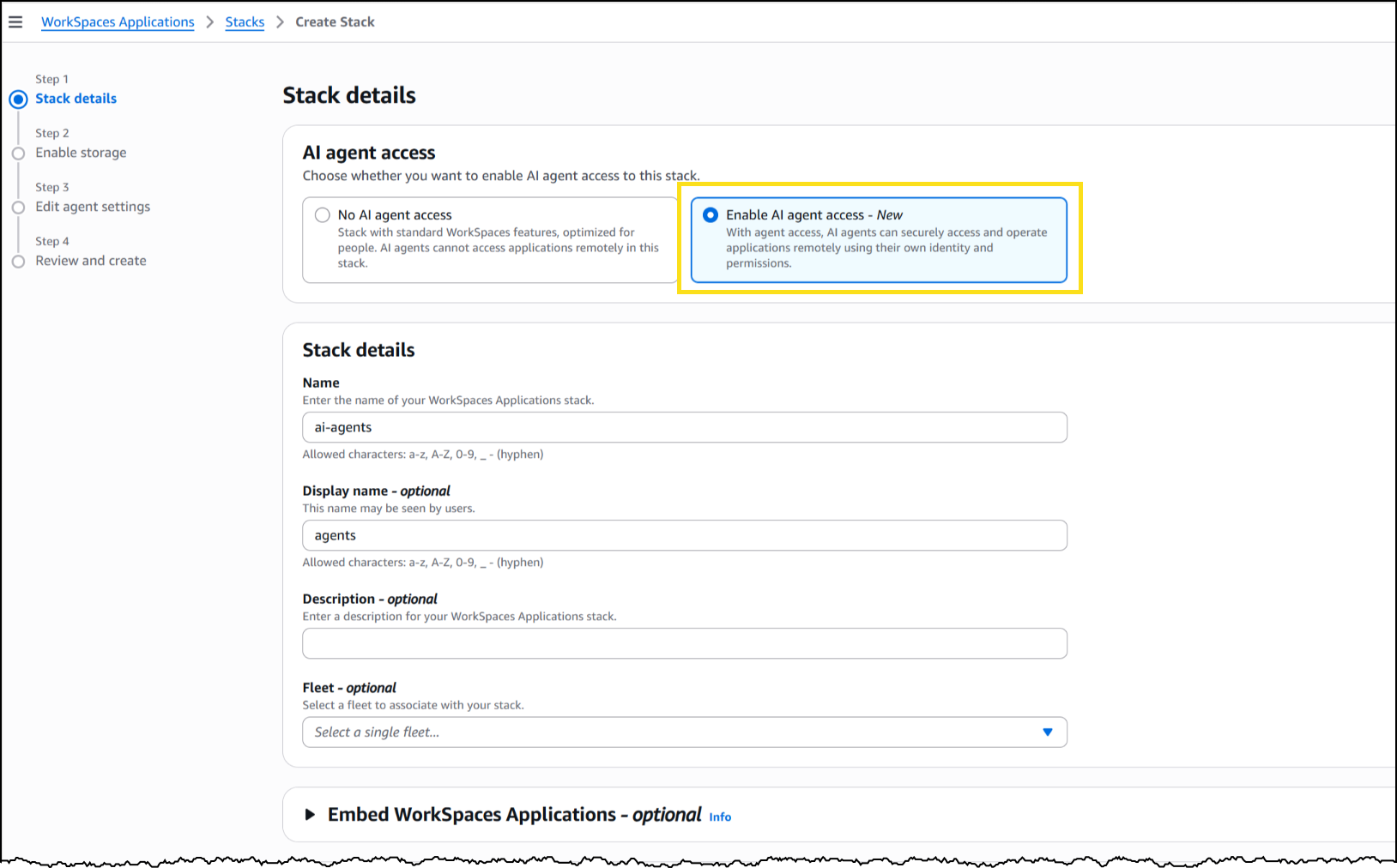
Setting up a WorkSpaces environment for AI agents involves a streamlined process accessible via the AWS Management Console, reflecting AWS’s commitment to user-friendly cloud services. The initial step involves creating a new WorkSpaces Applications stack, which serves as the foundational environment definition, dictating how agents connect and what permissions they hold.
During the stack creation workflow, a new "AI agents" section has been introduced. By default, standard WorkSpaces for human users are configured with "No AI agent access." However, administrators can now select "Add AI Agents" to explicitly enable secure agent connections, granting them their own identity and permissions within the environment.
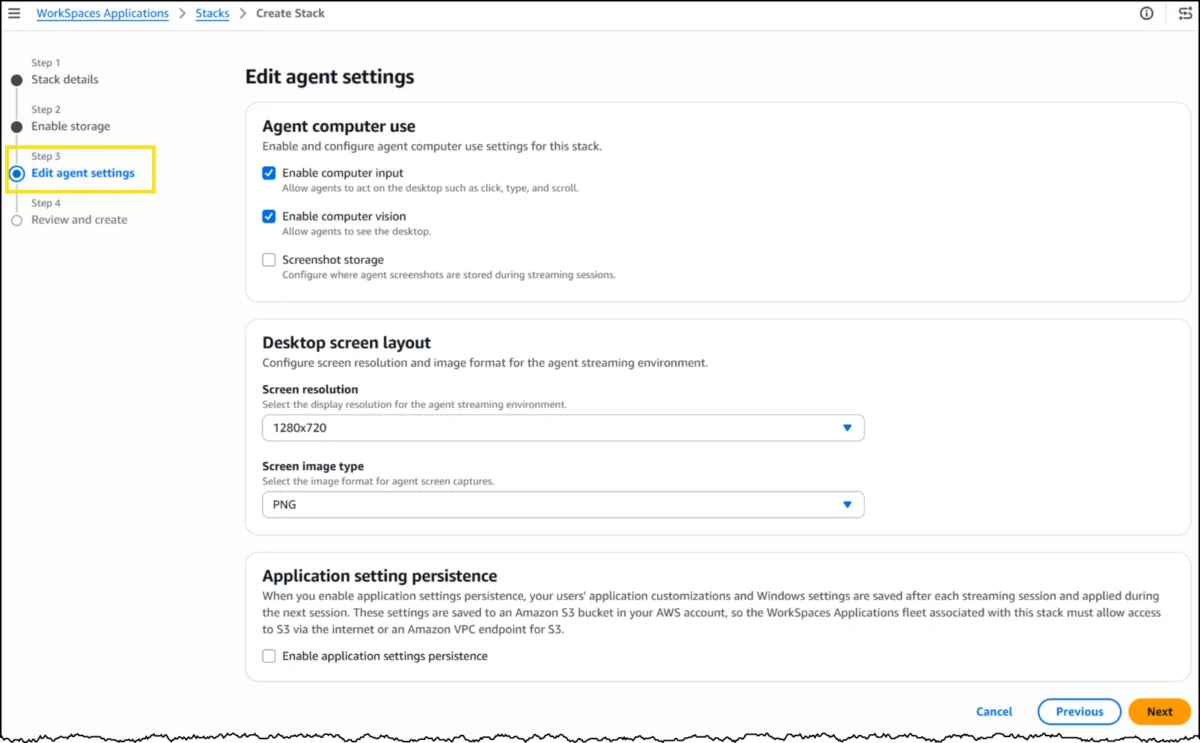
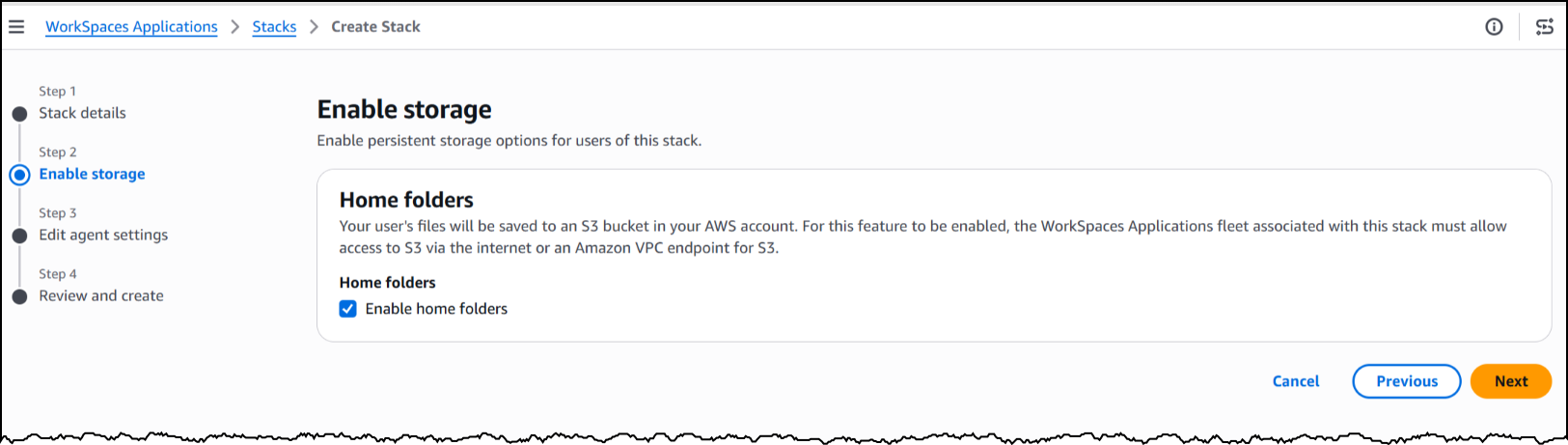
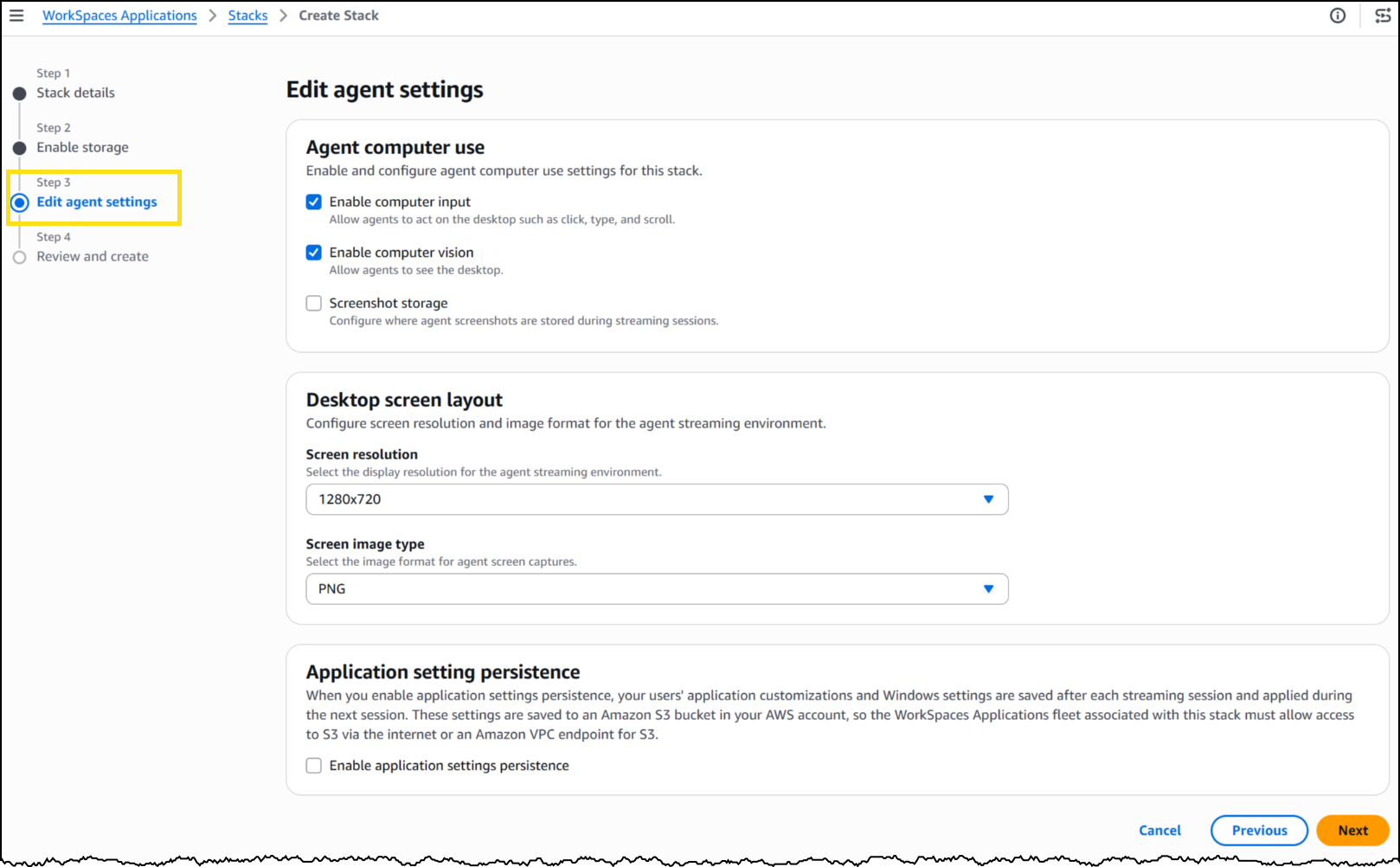
Further configuration involves enabling storage and defining the agent’s interaction capabilities. Under "Agent features," administrators can activate three critical capabilities:
- Computer input: This grants the AI agent the ability to simulate human interaction, such as clicking, typing, and scrolling within the desktop environment. This is fundamental for agents to navigate and manipulate graphical user interfaces (GUIs).
- Computer vision: This feature allows the agent to capture screenshots of the desktop, effectively enabling it to "see" and interpret the application’s interface. Through advanced computer vision algorithms, the agent can identify UI elements, read text, and understand the visual context of the application, mirroring human perception.
- Screenshot storage: This configures where session screenshots are securely stored. This is vital for auditing, debugging, and post-incident analysis, providing a visual record of the agent’s actions for compliance and troubleshooting purposes.
The "Desktop screen layout" settings further optimize the agent’s visual interaction. Parameters such as screen resolution (e.g., 1280×720) and image format (e.g., PNG) can be configured. The chosen resolution directly impacts the fidelity of what the agent perceives during a session. For complex applications with dense UI elements, a higher resolution might be beneficial for precise interaction, while simpler, terminal-style interfaces may function perfectly well at lower resolutions. This granular control allows administrators to tailor the environment to the specific needs of the AI agent and the applications it interacts with.
Once the stack is configured, WorkSpaces exposes a managed MCP endpoint. AI agent frameworks can then be pointed to this endpoint, provided with appropriate IAM credentials for authentication, allowing agents to commence interacting with desktop applications installed on the fleet’s image.
Real-World Application: Automating Complex Workflows
To illustrate the practical implications of this new capability, AWS showcased an AI agent built with the Strands Agent SDK and Amazon Bedrock. This agent demonstrated the automation of a complex prescription refill process within a sample pharmacy system that had no existing APIs. The agent was observed performing a series of intricate steps: looking up a patient record, searching for specific medication, placing the order, and finally confirming a successful refill.
The profound significance of this demonstration lies in the fact that the pharmacy application itself remained entirely unmodified. No code was rewritten, no new APIs were integrated, and no changes were made to the underlying software. The AI agent interacted with the application precisely as a human user would, demonstrating a frictionless integration into existing workflows. This capability unlocks massive potential for automation across various industries, from customer service and back-office operations to specialized engineering tasks and data entry, all without the need for the often-prohibitive cost and time investment associated with traditional modernization.
Industry Implications and Expert Perspectives
This announcement from AWS marks a pivotal moment for enterprise AI adoption. By democratizing access to legacy applications for AI agents, AWS is poised to accelerate the deployment of intelligent automation across a vast spectrum of industries. The economic implications are substantial. Organizations can now realize the benefits of AI-driven efficiency and productivity gains without undertaking multi-million dollar modernization projects. This translates into significant cost savings, faster time-to-value for AI initiatives, and the ability to repurpose human capital from repetitive, mundane tasks to higher-value, strategic work.
The ability for AI agents to operate within a secure, auditable, and compliant virtual desktop environment also lowers the barrier to entry for highly regulated industries. Financial services, healthcare providers, and government agencies, which often grapple with strict compliance mandates and extensive legacy infrastructure, can now explore AI automation with greater confidence. The built-in security features, audit trails, and isolation provided by WorkSpaces are not merely convenient but essential for meeting regulatory requirements.
Furthermore, this development solidifies AWS’s position as a leader in cloud infrastructure for AI. By addressing one of the most persistent practical challenges in enterprise AI, AWS is not only expanding the utility of its WorkSpaces offering but also driving broader market adoption of AI agents. The competition in the AI agent space is intensifying, and solutions that provide practical, secure, and cost-effective ways to integrate AI into existing business processes will be critical differentiators. This move positions AWS as a crucial enabler for enterprises looking to truly operationalize AI at scale.
Availability and Next Steps
The feature is available today in public preview, allowing enterprises to begin experimenting and building their AI agent solutions immediately. It is accessible across several key AWS Regions globally, including US East (N. Virginia, Ohio), US West (Oregon), Canada (Central), Europe (Frankfurt, Ireland, Paris, London), and Asia (Tokyo, Mumbai, Sydney, Seoul, Singapore). This broad availability ensures that a wide range of global customers can access and leverage this new capability.
AWS encourages developers and enterprises to get started by utilizing the provided GitHub repository, which offers sample code and resources for building solutions with WorkSpaces agent access. More comprehensive details and documentation are also available on the official Amazon WorkSpaces page, providing a comprehensive guide for implementation and deployment. This launch signifies a strategic step towards making AI agents an integral, accessible, and secure component of the modern enterprise IT landscape, paving the way for unprecedented levels of automation and efficiency.
