

The landscape of artificial intelligence, particularly in the domain of large language models (LLMs), has been profoundly reshaped by Retrieval-Augmented Generation (RAG) systems. These systems aim to ground LLM responses in external, verifiable knowledge, thereby mitigating the notorious issue of hallucinations and improving factual accuracy. However, the initial promise of RAG has often been hampered by a critical bottleneck: the precision of retrieved information. While initial retrievers excel at speed and recall, they frequently surface a deluge of "relevant" chunks that, upon closer inspection, prove noisy, redundant, or only tangentially related to the user’s query. This inherent limitation in the first stage of retrieval often leads to LLM outputs that are incomplete, incorrect, or burdened with irrelevant details. It is within this context that reranking has emerged as an indispensable second-stage component, significantly refining the relevance of information passed to the LLM and becoming a cornerstone for production-quality RAG deployments in 2026.
The RAG Paradigm and Its Foundational Challenges
Retrieval-Augmented Generation systems fundamentally operate by combining the generative power of LLMs with the ability to retrieve information from vast external knowledge bases. This architecture was conceived to address a primary weakness of LLMs: their tendency to generate plausible but factually incorrect information, often termed "hallucinations," especially when asked about specific, niche, or very recent data not fully captured during their training. By injecting relevant external documents (or "chunks") into the LLM’s prompt, RAG empowers the model to generate more accurate, current, and attributable responses.
The typical RAG pipeline begins with a user query, which is then used by a "retriever" component to search a document corpus. This retriever, often based on dense vector embeddings and similarity search (e.g., using FAISS, Pinecone, or Annoy), is optimized for speed and casting a wide net to ensure high recall. Its primary goal is to fetch a sufficiently large set of candidate documents or text passages that might contain the answer. While this approach is efficient for quickly sifting through massive datasets, it inherently prioritizes quantity over quality in the initial pass. The semantic similarity scores used by many retrievers can be too broad, leading to the inclusion of chunks that share keywords or general themes but lack direct relevance to the precise intent of the query. This "garbage in, garbage out" problem, where an LLM is fed a context polluted with irrelevant information, inevitably degrades the quality of the final generated answer, making it noisy, off-topic, or even leading to new forms of subtle inaccuracies.
The Indispensable Role of Reranking in Precision Enhancement
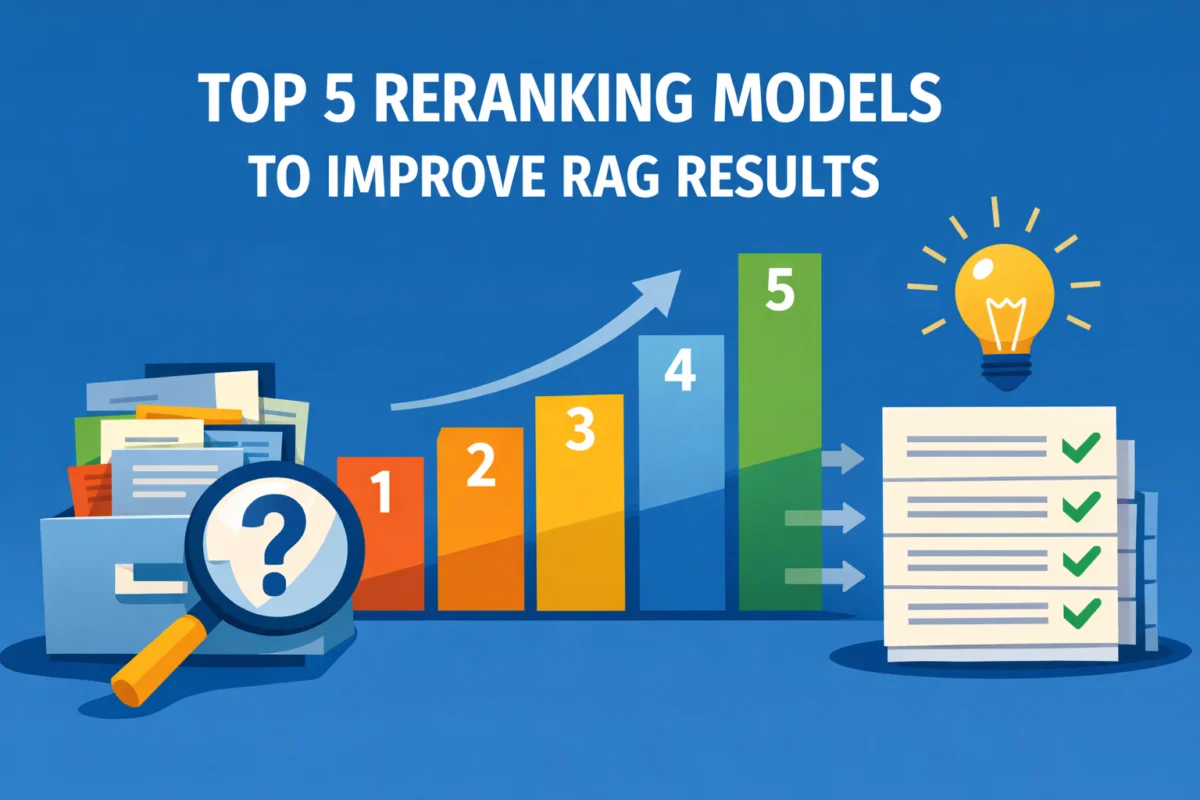
Reranking addresses this fundamental precision gap by introducing a crucial intermediate step between initial retrieval and final generation. After the retriever fetches an initial set of candidate chunks (typically dozens to hundreds), a reranker model takes the original query and each candidate chunk, evaluating their relevance more deeply and reordering them. Unlike the initial retriever, which might rely on a simpler, faster similarity metric, a reranker employs more sophisticated neural network architectures, often trained specifically for fine-grained relevance scoring. These models can understand nuanced semantic relationships, contextual dependencies, and the precise intent behind a query, moving beyond mere keyword matching or general topic similarity.
The mechanism of reranking involves assigning a new, more precise relevance score to each query-chunk pair. This allows the system to identify the truly salient pieces of information from the initial broader set. By presenting the LLM with a highly curated, focused set of the most relevant chunks, reranking significantly improves the chances of generating accurate, concise, and useful responses. Benchmarks consistently demonstrate that incorporating a robust reranker can lead to substantial gains in RAG metrics such as faithfulness (how well the generated answer aligns with the retrieved context), answer relevance (how pertinent the answer is to the query), and context relevance (how much of the retrieved context is actually useful). For instance, studies on popular RAG evaluation datasets have shown rerankers improving Recall@k and nDCG@k metrics by double-digit percentages, directly translating to fewer LLM hallucinations and higher user satisfaction. While reranking introduces a slight increase in computational latency and cost, the improved output quality for critical applications in enterprise, research, and customer service environments overwhelmingly justifies this overhead.
Evolution of Reranking: A Brief Chronology
The concept of reranking has roots in traditional information retrieval, where various methods were employed to refine initial search results. However, its prominence within the context of LLMs and RAG systems is a more recent development, largely coinciding with the rapid advancements in neural network-based language models.
- Pre-LLM Era (Prior to 2018): Traditional search engines and information retrieval systems often used statistical methods, rule-based systems, and feature engineering to rerank documents. These methods, while effective for their time, lacked the deep semantic understanding that modern neural models provide.
- Early Neural IR (2018-2020): With the advent of transformer models like BERT, researchers began applying these powerful architectures to information retrieval tasks. Initial efforts focused on using BERT-like models for direct retrieval or simple pairwise reranking, showing promising improvements over traditional methods.
- The Rise of RAG (2020-2022): The introduction of RAG architectures (e.g., DPR, REALM) highlighted the need for efficient information retrieval to feed LLMs. As RAG gained traction, developers quickly encountered the limitations of raw retriever outputs, particularly for complex queries or when dealing with diverse knowledge bases.
- Reranking as a Critical Component (2022-Present): The recognition grew that a dedicated reranking stage was not merely an optimization but an essential component for achieving high-quality, reliable RAG performance. This period saw a proliferation of specialized reranker models, often distinct from the initial retrievers, and a focus on benchmarks like MTEB, BEIR, and MIRACL to systematically evaluate their performance across diverse languages, domains, and tasks. The industry consensus in 2026 is that a production-ready RAG system almost invariably includes a sophisticated reranking mechanism.
Leading Reranking Models for 2026: An In-Depth Review
The market for reranking models is dynamic, with both open-source and proprietary solutions vying for developer attention. The selection of an optimal reranker depends heavily on specific use case requirements, including data characteristics, latency constraints, cost considerations, and context length needs. Based on performance, versatility, and industry adoption trends, the following five models represent a strong starting point for developers in 2026.
Qwen3-Reranker-4B: The Open-Source Multilingual Powerhouse
The Qwen3-Reranker-4B, developed by Alibaba Cloud, stands out as a leading open-source reranking solution. Released under the permissive Apache 2.0 license, it offers significant commercial flexibility, making it highly attractive for enterprises. Its robust capabilities include support for over 100 languages, critical for global applications, and an impressive 32,000-token context length, enabling it to process and evaluate relevance within very long documents or multiple shorter chunks simultaneously. The model’s published performance metrics are compelling, achieving scores like 69.76 on MTEB-R, 75.94 on CMTEB-R, 72.74 on MMTEB-R, 69.97 on MLDR, and 81.20 on MTEB-Code. These scores signify its exceptional versatility across various data types, including multilingual text, lengthy documents, and even specialized code repositories, making it a highly adaptable choice for diverse RAG scenarios. The broad language support and open-source nature reflect a growing trend towards community-driven innovation in AI, allowing wider adoption and further development.
NVIDIA nv-rerankqa-mistral-4b-v3: Precision for Question Answering
For RAG systems primarily focused on question-answering over text passages, NVIDIA’s nv-rerankqa-mistral-4b-v3 presents a highly specialized and commercially ready option. This model is engineered to deliver high ranking accuracy specifically for QA tasks, as evidenced by its average Recall@5 of 75.45% when paired with NV-EmbedQA-E5-v5 across diverse datasets such as NQ, HotpotQA, FiQA, and TechQA. Its optimization for question-answering workflows makes it particularly effective in scenarios where precise answers need to be extracted from textual evidence. A key consideration for this model is its context size limitation of 512 tokens per pair. While this ensures faster inference and efficiency for short, well-chunked documents, it necessitates careful chunking strategies to avoid truncation of essential information, making it best suited for RAG pipelines where documents are pre-processed into smaller, coherent units.
Cohere rerank-v4.0-pro: Enterprise-Grade Managed Solution
Cohere’s rerank-v4.0-pro positions itself as a premium, managed reranking service tailored for enterprise-level deployments. This proprietary model is designed for quality and ease of integration, featuring a substantial 32,000-token context window and comprehensive multilingual support for over 100 languages. A significant differentiator is its ability to effectively handle semi-structured JSON documents, which are prevalent in enterprise data environments such as CRM records, support tickets, internal tables, and other metadata-rich objects. This capability is crucial for organizations dealing with complex, diverse internal data stores where simple text-based retrieval might fall short. The managed nature of the service means enterprises can leverage Cohere’s expertise without extensive internal infrastructure or MLOps overhead, making it an attractive option for production systems requiring high reliability and performance with minimal management burden.
jina-reranker-v3: Advancing with Listwise Reranking
The jina-reranker-v3 introduces an innovative approach to reranking by employing a "listwise" methodology, a departure from the more common pairwise scoring. Instead of evaluating each document independently against the query, jina-reranker-v3 processes up to 64 documents together within an expansive 131,000-token context window. This allows the model to consider the relative relevance of documents within a set, potentially identifying superior ordering and reducing redundancy that might occur with independent scoring. This method is particularly beneficial for long-context RAG applications, complex multilingual search, and retrieval tasks where the relative position of documents significantly impacts the utility of the overall context. Achieving 61.94 nDCG@10 on the BEIR benchmark, it demonstrates strong performance for these challenging scenarios. Published under the CC BY-NC 4.0 license, it is available for non-commercial use, signaling its potential for research and community-driven projects.
BAAI bge-reranker-v2-m3: The Reliable Baseline
The BAAI bge-reranker-v2-m3, while not the newest entry, remains a highly practical and widely adopted baseline reranker. It is celebrated for being lightweight, multilingual, straightforward to deploy, and offering fast inference speeds. These characteristics make it an excellent choice for initial implementations or for scenarios where computational resources are constrained, or latency is a paramount concern. Its continued relevance underscores a crucial aspect of AI deployment: sometimes, a slightly older, highly optimized model that delivers solid performance efficiently can be more valuable than a cutting-edge model whose marginal performance gains do not justify the added cost, complexity, or latency. The BGE-reranker serves as a reliable benchmark against which newer, more resource-intensive models must demonstrate significant and measurable improvements to warrant their adoption.
Key Considerations for Implementation and Broader Implications
The integration of reranking into RAG systems is no longer an optional enhancement but a critical architectural decision. When selecting a reranker, organizations must weigh several factors:
- Data Characteristics: Is the knowledge base primarily text, code, structured data like JSON, or a mix? Models like Cohere’s excel with semi-structured data, while Qwen3 and NVIDIA are strong for text and code respectively.
- Latency and Cost: Managed solutions like Cohere offer ease of use but come with subscription costs, while open-source models like Qwen3 and BGE require internal infrastructure and MLOps expertise. Inference speed also varies significantly, impacting real-time applications.
- Context Length Requirements: For RAG over very long documents or when synthesizing information from many small chunks, models with larger context windows (e.g., Qwen3, jina-reranker-v3) are advantageous.
- Multilingual Needs: Global deployments necessitate models with robust multilingual capabilities, which Qwen3 and Cohere rerank-v4.0-pro offer extensively.
- Licensing: Open-source licenses (Apache 2.0 for Qwen3) offer greater flexibility than more restrictive non-commercial licenses (CC BY-NC 4.0 for jina-reranker-v3) or proprietary solutions.
The broader implications of advanced reranking models are substantial. For enterprises, improved RAG precision translates directly into more accurate customer service chatbots, more reliable internal knowledge management systems, and enhanced research capabilities. By providing LLMs with truly relevant context, rerankers enable more trustworthy and actionable AI applications across diverse sectors, from finance and healthcare to legal and education. This technology democratizes access to powerful, grounded LLM functionalities, allowing organizations to leverage their proprietary data effectively without succumbing to the pitfalls of ungrounded generation. Looking ahead, the field of reranking is expected to evolve further, potentially incorporating multi-modal inputs (e.g., reranking based on text, images, and audio), adaptive reranking that learns from user feedback, and personalized reranking tailored to individual user preferences or historical interactions.
In conclusion, the journey from basic retrieval to sophisticated reranking marks a pivotal advancement in the maturity of Retrieval-Augmented Generation systems. While the initial retriever lays the groundwork by identifying a broad pool of potential information, it is the reranker that acts as the precision filter, ensuring that only the most pertinent and high-quality data reaches the LLM. In 2026, the strategic implementation of a well-chosen reranking model is not merely an optimization; it is an essential component for any organization seeking to unlock the full potential of RAG for reliable, accurate, and impactful AI applications. The diverse array of models available—from versatile open-source options to specialized commercial services and innovative listwise approaches—provides developers with powerful tools to overcome the inherent challenges of RAG and deliver truly production-ready LLM solutions.