
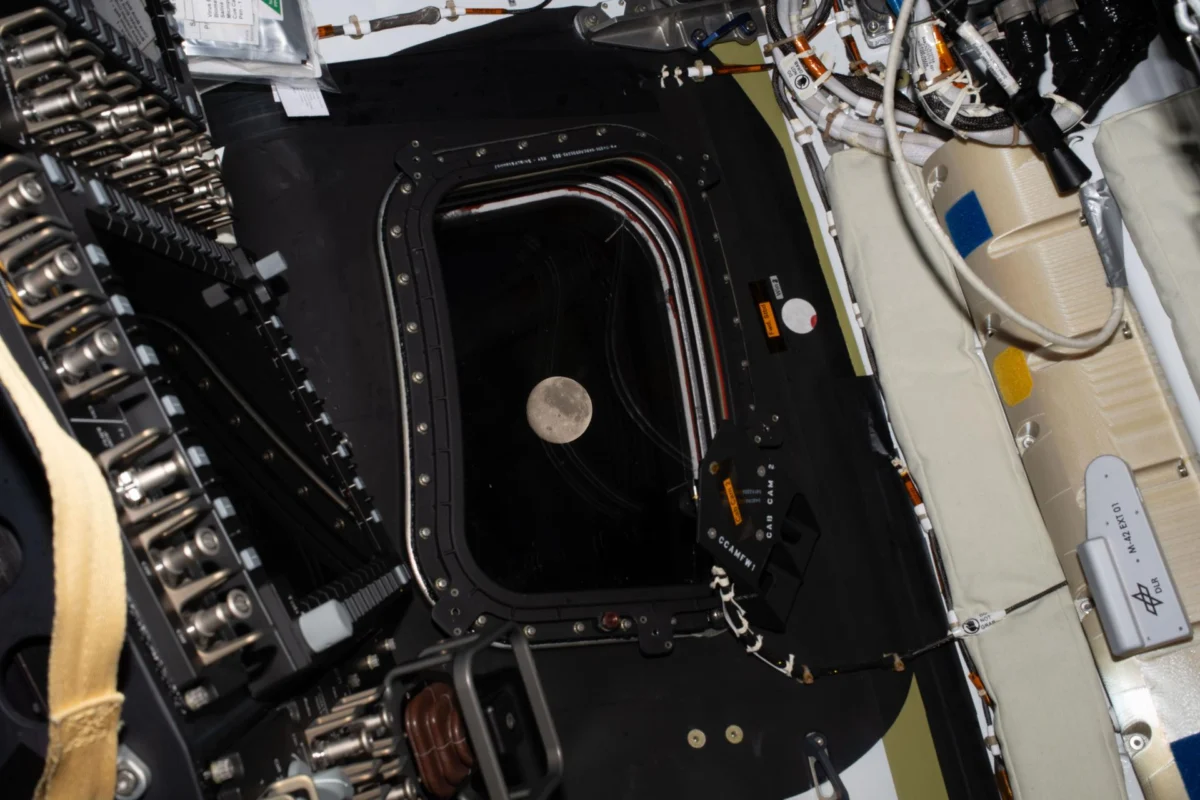

In a definitive milestone for the modern era of space exploration, the four-person crew of the Artemis II mission has officially traveled farther from Earth than any human beings in history. On Monday afternoon, at approximately 1:56 p.m. EDT, the Orion spacecraft carrying NASA astronauts Reid Wiseman, Victor Glover, and Christina Koch, alongside Canadian Space Agency (CSA) astronaut Jeremy Hansen, surpassed the long-standing record set by the Apollo 13 mission in April 1970. For over five decades, the crew of Apollo 13 held the distinction of reaching 248,655 miles (400,171 kilometers) from Earth—a distance reached not by design, but by the necessity of a wide lunar swing during an emergency return trajectory. Today, NASA confirmed that Artemis II has moved beyond that marker, ushering in a new chapter of deep-space manned flight.
The achievement marks a pivotal moment for the Artemis program, which aims to establish a sustainable human presence on and around the Moon. Unlike the Apollo missions, which were designed for short-term lunar sorties, Artemis II serves as a rigorous flight test of the Orion spacecraft’s life-support systems, communication arrays, and navigation capabilities in the harsh environment of deep space. By breaking the distance record, the mission provides critical data on how the spacecraft and its human occupants handle extended exposure to the deep-space radiation environment and the psychological challenges of being further from home than any generation of explorers before them.
The Journey to the Record
The Artemis II mission began its historic journey last Wednesday, launching from Kennedy Space Center’s Launch Complex 39B atop the Space Launch System (SLS), the world’s most powerful operational rocket. After reaching Earth orbit, the crew performed a series of complex maneuvers to test the spacecraft’s handling. This included a high Earth orbit (HEO) phase, where the crew spent approximately 24 hours validating the Orion’s systems before committing to the Trans-Lunar Injection (TLI) burn. This burn set them on a "free-return trajectory," a path that uses the Moon’s gravity to naturally pull the spacecraft around the lunar far side and back toward Earth without the need for a major engine firing to return home.
As the spacecraft moved away from Earth, the crew monitored the gradual increase in distance, eventually crossing the 240,000-mile threshold on Monday morning. As they neared the Apollo 13 record, NASA Mission Control in Houston maintained a steady stream of telemetry, confirming the precise moment the record fell. The spacecraft is scheduled to reach its maximum distance from Earth—an apogee of 252,760 miles—at 7:07 p.m. EDT on Monday. This peak distance occurs while the crew is positioned high above the lunar far side, providing them with a perspective of the Moon and Earth that has never been seen by human eyes in person.
The Human Element: Craters and Tributes
Despite the high-stakes technical nature of the mission, the Artemis II crew has taken time to engage in the human tradition of exploration: naming the landmarks they observe. During their approach to the lunar surface, the crew shared high-resolution observations with NASA teams and the public. In a poignant moment of reflection, the crew suggested names for two previously unnamed lunar craters visible from their windows.
The first crater was proposed to be named "Integrity," a tribute to the Orion spacecraft and the collective effort of the thousands of engineers and scientists who contributed to the mission. The second crater was proposed to be named "Carroll," in honor of Commander Reid Wiseman’s late wife, Carroll Taylor Wiseman, who passed away in 2020. These gestures underscore the personal sacrifices and the profound sense of duty felt by the astronauts as they navigate the void of space.
The crew also received a spiritual "passing of the torch" from the previous record-holders. Before his passing in 2025, Apollo 8 and Apollo 13 veteran Jim Lovell recorded a special message for the Artemis II astronauts. In the recording, Lovell, who was one of the first three humans to reach the Moon and later commanded the perilous Apollo 13 mission, encouraged the crew to savor the view and the historical weight of their journey. His message served as a bridge between the pioneers of the 20th century and the explorers of the 21st.
Navigating the Lunar Far Side and Communication Blackouts
The record-breaking distance comes with significant operational hurdles. As the Orion spacecraft travels behind the Moon, it enters a zone where the Moon’s mass physically blocks radio signals from reaching Earth. This "loss of signal" (LOS) is a standard but tense part of lunar missions. The Artemis II crew is expected to lose contact with Mission Control at approximately 6:44 p.m. EDT on Monday.
This period of silence is projected to last roughly 40 minutes. During this time, the crew will be entirely autonomous, relying on the spacecraft’s onboard computers and their own training to manage systems while they are at their furthest point from Earth. This phase is a critical test of the Deep Space Network (DSN), the global array of giant radio antennas that supports interplanetary missions. Once the spacecraft emerges from the lunar shadow, communication will be re-established via the Goldstone, Madrid, or Canberra tracking stations, allowing the crew to transmit the data and imagery collected during their closest approach to the lunar surface.
Technical Specifications: Orion vs. Apollo
To understand the magnitude of this achievement, one must look at the technological leap between the Apollo Command Module and the Orion Multi-Purpose Crew Vehicle (MPCV). While both are capsule-based designs, Orion is significantly larger and more capable.
The Orion spacecraft provides approximately 330 cubic feet of habitable volume, compared to the 210 cubic feet of the Apollo capsules. This extra space is vital for a four-person crew on a mission lasting up to 21 days. Furthermore, Orion features advanced shielding to protect the crew from solar eruptive events and galactic cosmic radiation—threats that are significantly more intense once a spacecraft leaves the protection of Earth’s magnetic field.
The guidance and navigation systems on Artemis II are also generations ahead of the Apollo Guidance Computer (AGC). While the AGC was a marvel of its time, Orion utilizes redundant flight computers with processing power millions of times greater, allowing for real-time autonomous navigation and complex telemetry processing that would have been impossible in 1970.
International Cooperation and Geopolitical Context
Artemis II is not merely a NASA mission; it is a symbol of international cooperation in the "Artemis Accords" era. The inclusion of Jeremy Hansen from the Canadian Space Agency marks the first time a non-American has traveled beyond low Earth orbit. Canada’s contribution to the Artemis program, specifically the development of the Canadarm3 for the future Lunar Gateway, has earned the nation a seat on this historic flight.
CSA Astronaut Jeremy Hansen reflected on this global unity during a broadcast from the spacecraft. “As we surpass the distance humans have ever traveled from Earth, we do so in honoring the extraordinary efforts and feats of our predecessors in human space exploration,” Hansen said. “We will continue our journey into space even farther from Mother Earth… but we most importantly choose this moment to challenge this generation and the next, to make sure this record is not long-lived.”
This mission also serves as a strategic demonstration of Western capabilities in space. With other nations, including China, announcing plans for crewed lunar missions by 2030, the success of Artemis II re-establishes the United States and its partners as the leaders in deep-space exploration.
Looking Ahead: The Return and Artemis III
Once the crew completes the lunar flyby and reaches the 252,760-mile peak, the Orion spacecraft will begin its trek back toward Earth. The return journey will take several days, culminating in a high-speed atmospheric entry. Orion will hit the Earth’s atmosphere at speeds exceeding 25,000 mph (40,000 km/h), generating temperatures of nearly 5,000 degrees Fahrenheit on the heat shield.
A successful splashdown in the Pacific Ocean will pave the way for Artemis III, the mission currently scheduled to land the first woman and the first person of color on the lunar surface. The data gathered during Artemis II’s record-breaking flight—specifically regarding the spacecraft’s thermal performance and the crew’s health—will be instrumental in finalizing the flight plan for the lunar landing.
The record set today by Wiseman, Glover, Koch, and Hansen is expected to be surpassed again within the next decade as missions to the Lunar Gateway and eventually Mars push the boundaries of human reach. However, for now, the Artemis II mission stands as the high-water mark of human travel, a testament to the enduring spirit of discovery that has propelled humanity from the shores of Earth to the doorstep of the stars.
As the Orion spacecraft begins its swing back toward home, the images captured and the data recorded will be analyzed by scientists for years to come. But beyond the numbers and the technical validations, the mission has already achieved its most important goal: proving that humanity is no longer content with staying in the cradle of Earth orbit. The moon is no longer just a destination; it is the gateway to the rest of the solar system.