

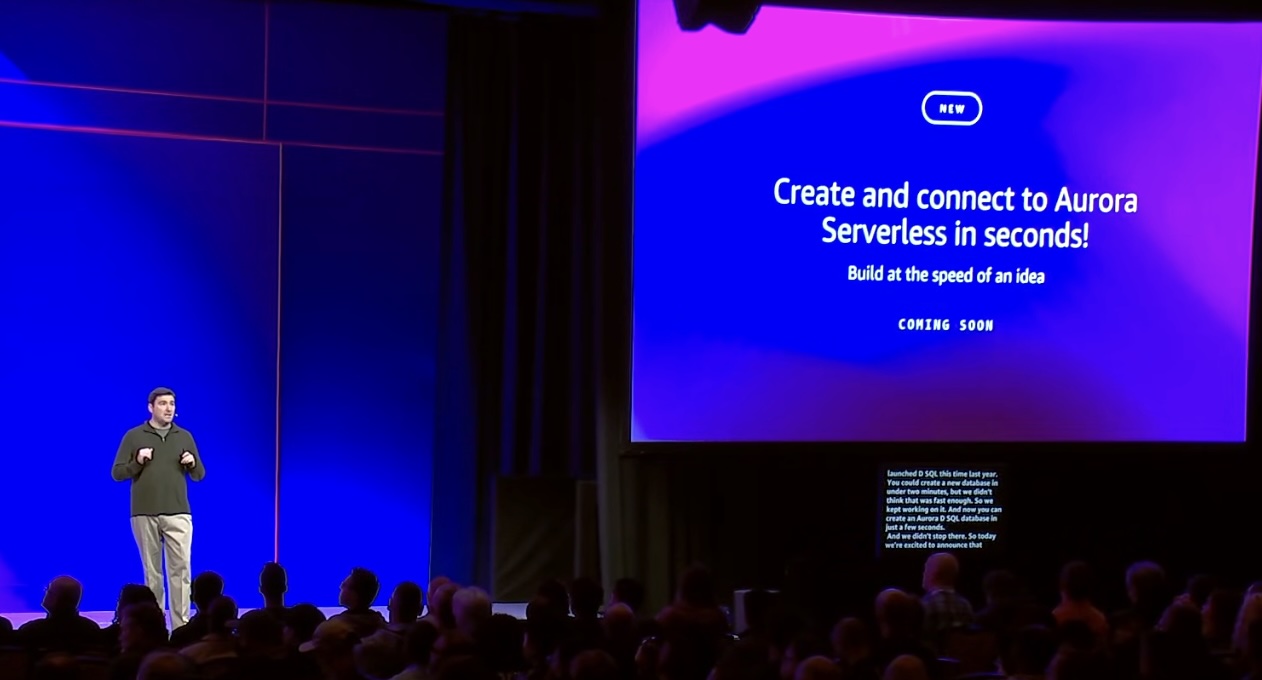
SEATTLE, WA – Amazon Web Services (AWS) today announced the general availability of a new express configuration for Amazon Aurora PostgreSQL, a streamlined database creation experience designed to enable developers to launch production-ready serverless databases in seconds. This release directly addresses the growing demand for rapid prototyping and deployment, echoing the core philosophy articulated by Colin Lazier, Vice President of Databases at AWS, at re:Invent 2025: the imperative to "build at the speed of an idea." The initiative aims to dramatically reduce the friction between conceptualization and a fully operational application, a critical factor in today’s fast-paced digital economy.
The announcement follows a highly anticipated preview at re:Invent 2025, where Lazier demonstrated the capability to instantiate an Amazon Aurora serverless database with unprecedented speed, mirroring the existing rapid deployment options for Amazon DynamoDB tables and Amazon Aurora DSQL databases. Customer feedback since the preview has consistently emphasized the desire for immediate and widespread access to this accelerated provisioning. This general availability marks a significant milestone in AWS’s commitment to enhancing developer productivity and democratizing access to powerful cloud database technologies.

A New Paradigm for Database Deployment
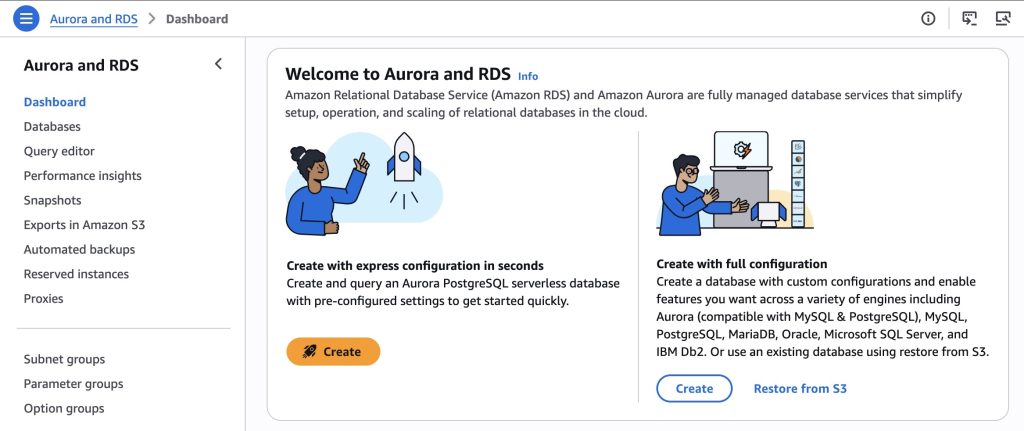
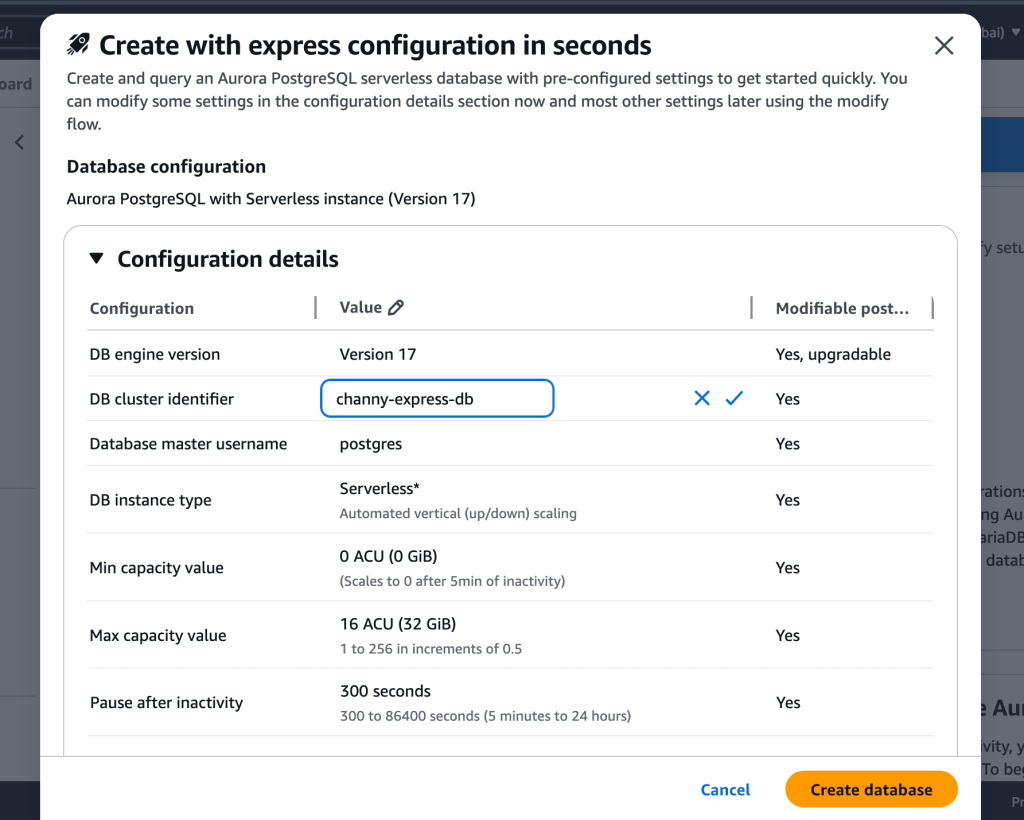
The express configuration for Amazon Aurora PostgreSQL introduces a fundamentally simplified workflow. With just two clicks, developers can provision a fully functional Aurora PostgreSQL serverless database. This streamlined process relies on intelligently preconfigured defaults, removing the need for extensive initial setup decisions that can often delay development cycles. Despite the rapid deployment, the new configuration retains crucial flexibility, allowing users to modify specific settings both during and after the initial database creation. For instance, developers can adjust the capacity range for their serverless instance at the time of creation or add read replicas and modify parameter groups post-deployment to fine-tune performance and availability.
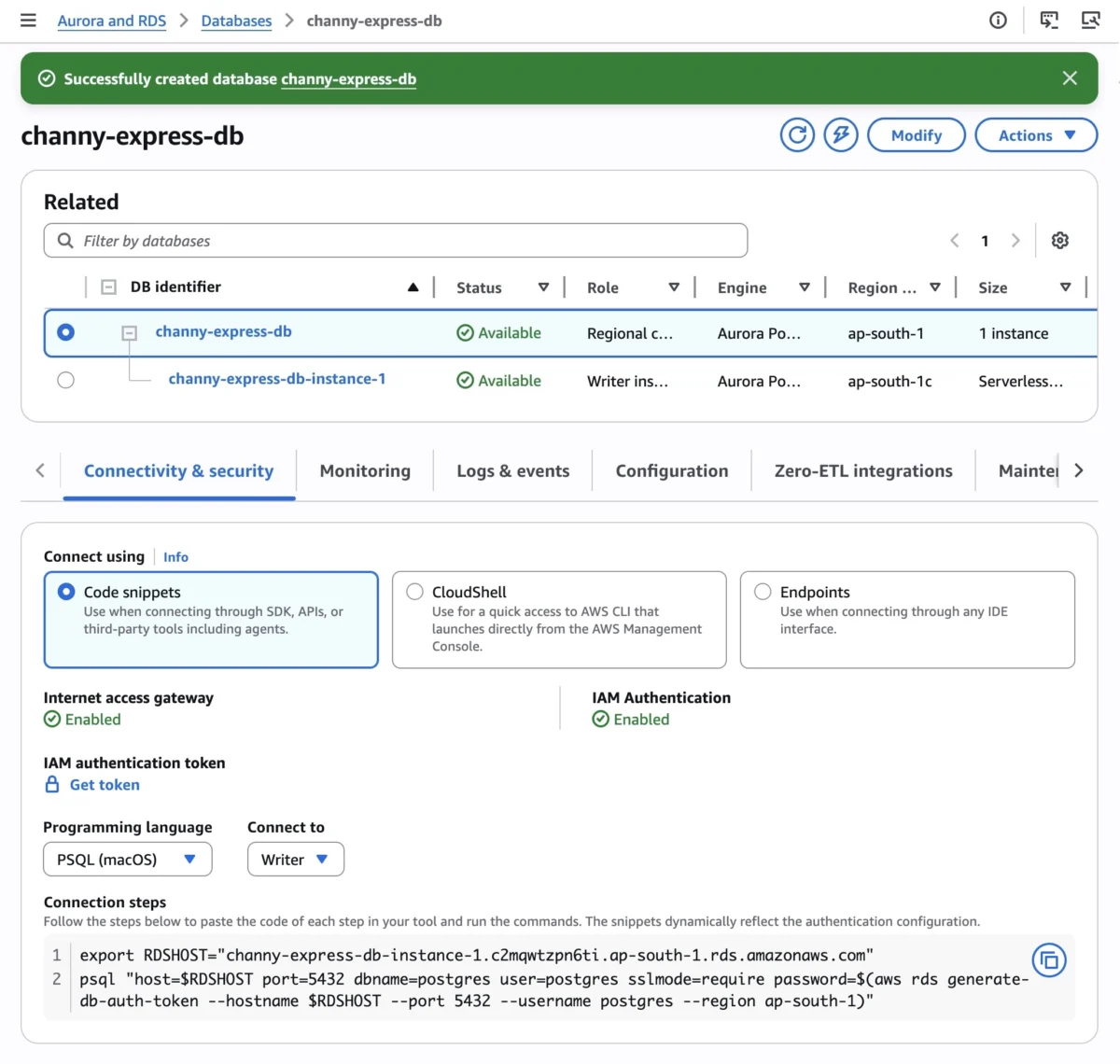
One of the most notable features of the express configuration is the creation of Aurora clusters without the immediate requirement for an Amazon Virtual Private Cloud (Amazon VPC) network. Instead, these clusters now include an internet access gateway, facilitating secure connections directly from popular development tools. This innovation eliminates a common barrier for new users and rapid prototyping scenarios, as it bypasses the need for complex VPN configurations or AWS Direct Connect setups. This direct internet accessibility, while secure, dramatically lowers the entry barrier for developers looking to quickly test and iterate on their applications.

Security remains paramount, even with accelerated provisioning. The express configuration automatically sets up AWS Identity and Access Management (IAM) authentication for the administrator user by default. This enables passwordless database authentication from the outset, enhancing security posture and simplifying connection management without requiring additional configuration steps. This integration of IAM authentication is a testament to AWS’s focus on secure-by-default practices, ensuring that convenience does not come at the expense of robust access control.
Under the Hood: High Availability and Global Connectivity
Once provisioned, an Aurora PostgreSQL serverless database created with the express configuration provides access to the full suite of features available for Aurora PostgreSQL serverless. This includes the ability to deploy additional read replicas for enhanced high availability and automated failover capabilities, ensuring business continuity and resilience against potential disruptions. The underlying serverless architecture means the database automatically scales capacity up or down based on application demand, and even shuts down to zero capacity when idle, optimizing cost efficiency by billing only for consumed Aurora Capacity Units (ACUs) per second.
A significant architectural enhancement supporting this launch is the introduction of a new internet access gateway routing layer for Aurora. This feature, enabled by default for new serverless instances, allows applications to connect securely from virtually anywhere in the world over the internet using the standard PostgreSQL wire protocol. This global connectivity is crucial for distributed teams and geographically dispersed applications. Critically, this gateway is distributed across multiple AWS Availability Zones, offering the same level of high availability and fault tolerance as the Aurora cluster itself, reinforcing the robustness of the connection mechanism.
The ability to create and connect to an Aurora database in seconds represents a fundamental shift in how developers can initiate and run their applications. This goes beyond just provisioning; AWS has simultaneously launched multiple capabilities that work in concert to streamline the entire onboarding and development lifecycle.
Democratizing Access and Fostering Innovation
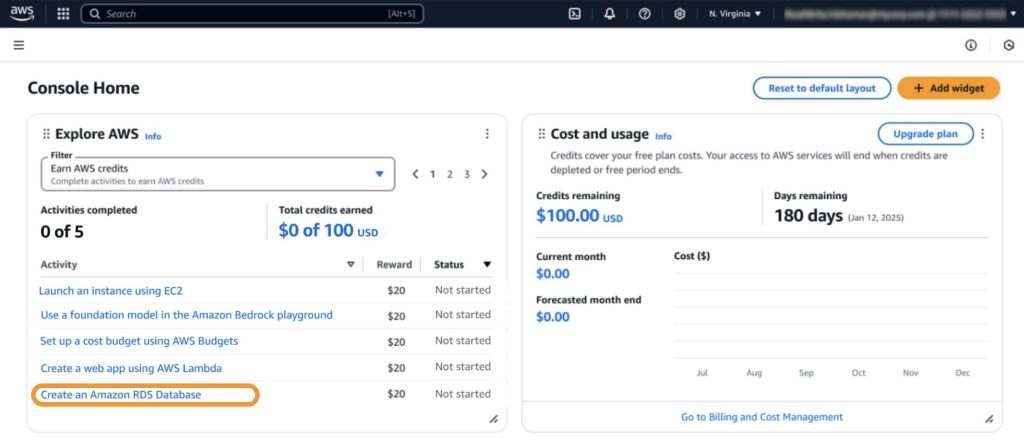
Further enhancing accessibility, Amazon Aurora is now available on the AWS Free Tier. This allows new and existing customers to gain hands-on experience with Aurora at no upfront cost, providing a valuable sandbox for experimentation and learning. This is part of a broader enhancement to the AWS Free Tier program, announced at re:Invent 2025, which offers up to $200 in AWS credits ($100 upon sign-up, with an additional $100 earnable through usage of services like Amazon RDS, AWS Lambda, and Amazon Bedrock). This financial incentive significantly reduces the initial investment barrier for individuals and startups.
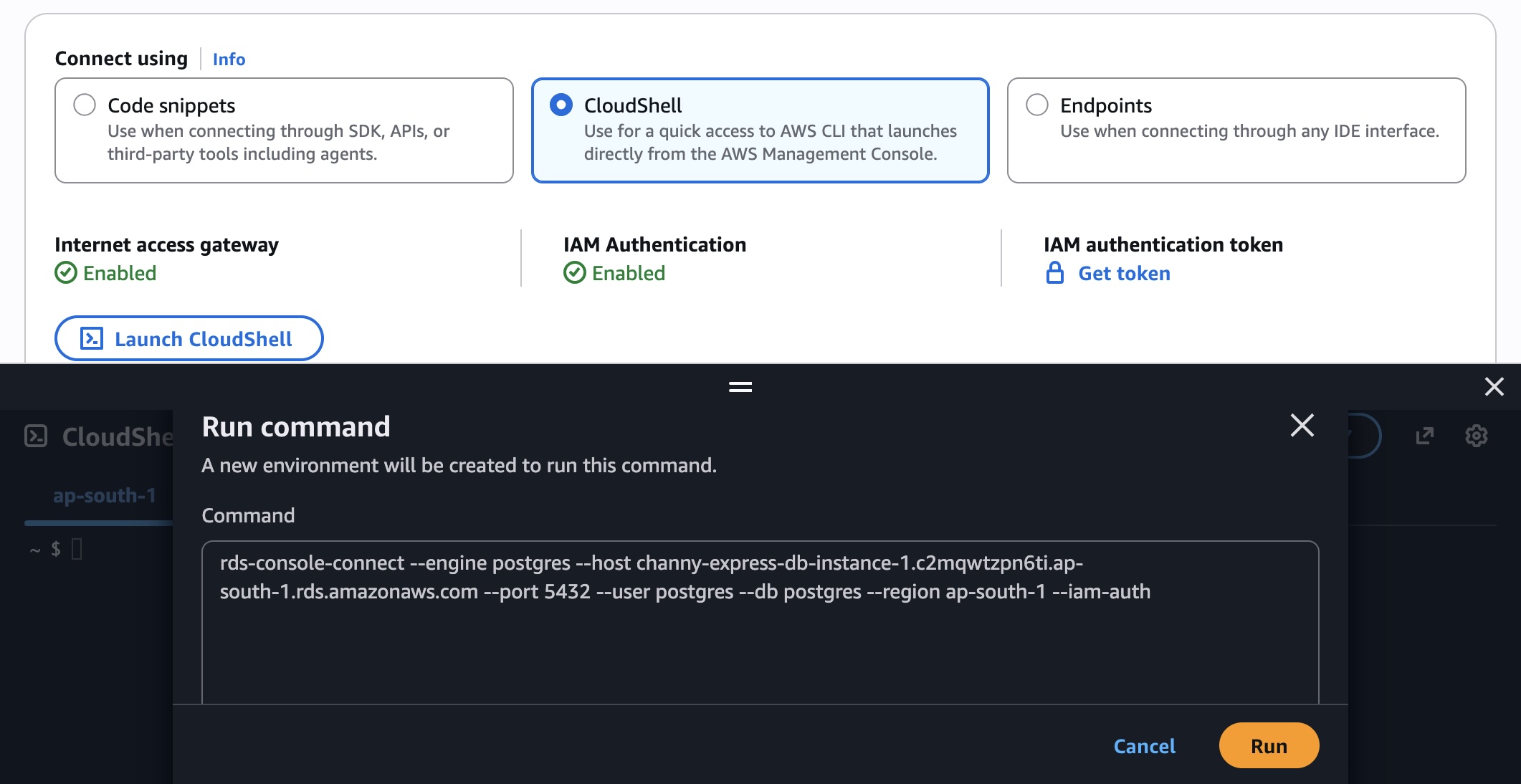
Beyond simplified creation, AWS is also deeply integrating Aurora with popular developer tools and platforms to facilitate rapid application development. After creation, developers can directly query an Aurora database using AWS CloudShell, which launches directly from the console with pre-populated connection commands. Alternatively, they can leverage programming languages and developer tools via the new internet-accessible routing component.
Ecosystem Integrations: Vercel and Kiro
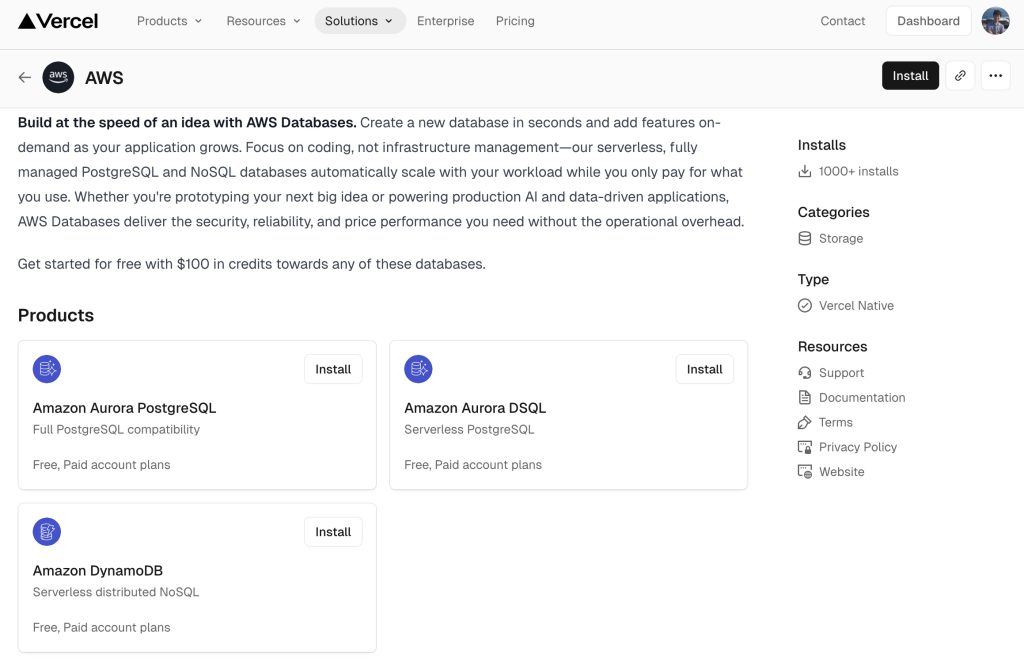
A key component of building at the "speed of an idea" involves seamless integration with modern development ecosystems. AWS has forged strategic partnerships to embed Aurora’s capabilities directly into the workflows of developers. At re:Invent 2025, AWS announced integrations with the Vercel Marketplace, enabling users to create and connect to AWS databases directly from the Vercel platform in seconds. This partnership has evolved to include v0 by Vercel, an AI-powered tool designed to transform natural language ideas into production-ready, full-stack web applications in minutes. This powerful combination now includes support for Aurora PostgreSQL, Aurora DSQL, and DynamoDB, allowing developers to rapidly scaffold applications with a robust AWS database backend. Existing databases created via the express configuration can also be seamlessly connected with Vercel, bridging the gap between AWS’s native console and popular front-end development platforms.
In a similar vein, AWS has introduced Aurora PostgreSQL integration with Kiro, an AI agent-assisted development platform. Kiro enables developers to build Aurora PostgreSQL-backed applications faster through intelligent code generation and automation. Kiro Power for Aurora PostgreSQL can be accessed within the Kiro IDE or installed with a single click from the Kiro powers webpage. These integrations underscore AWS’s commitment to meeting developers where they are, embedding database capabilities into widely adopted frameworks, AI assistant coding tools, and development environments.
Developer Experience: Code Snippets and CLI
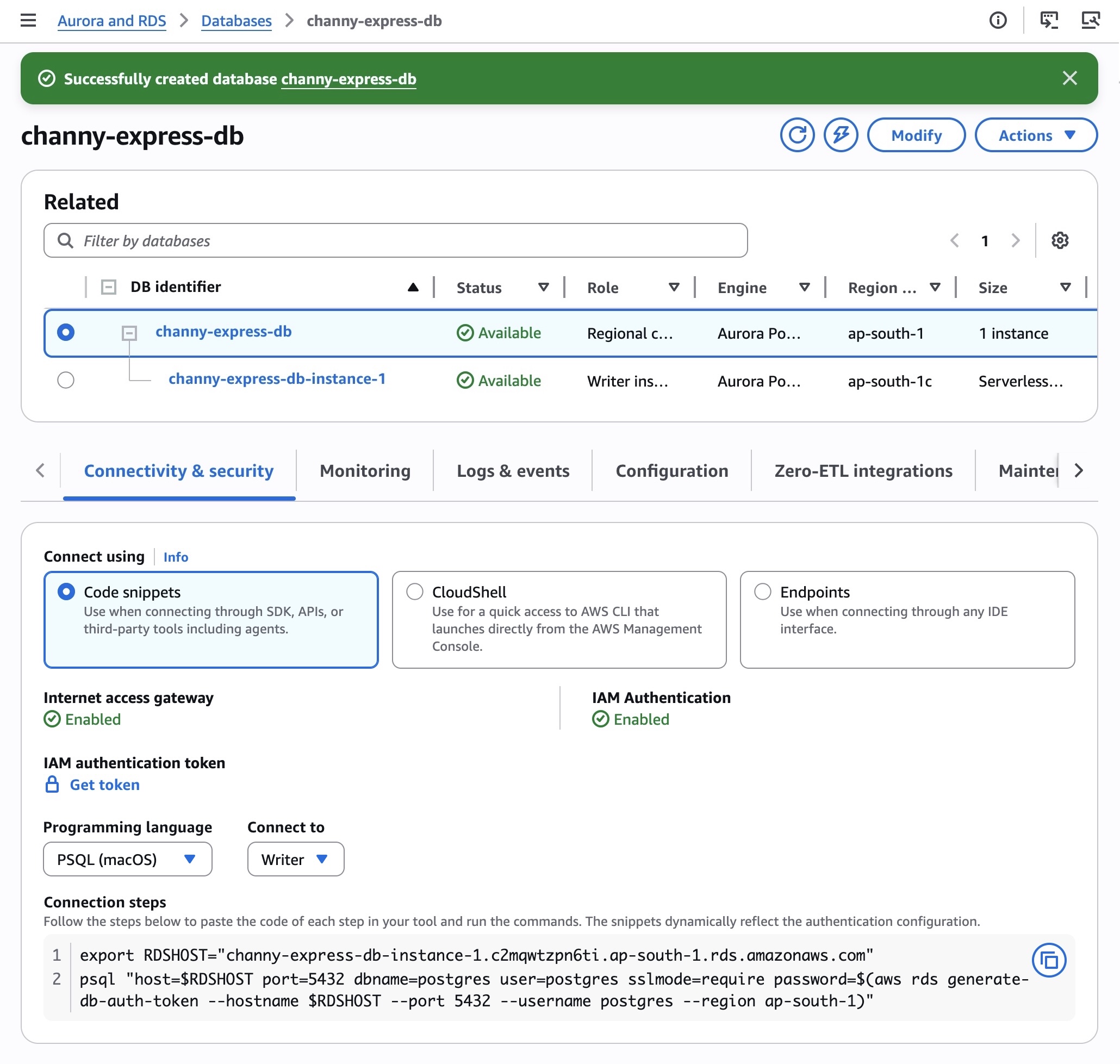
For programmatic access, the AWS Command Line Interface (AWS CLI) and AWS SDKs now support the --with-express-configuration parameter. This allows developers to create both an Aurora cluster and an instance within it with a single API call, making the database ready for queries in seconds programmatically. This feature is particularly valuable for automation, CI/CD pipelines, and infrastructure-as-code practices.
Upon successful creation, the Aurora and RDS console provides immediate access to connection options via a "Connectivity & security" tab. This includes dynamically generated code snippets for various programming languages such as .NET, Golang, JDBC, Node.js, PHP, PSQL, Python, and TypeScript, reflecting the specific authentication configuration. For instance, a Python code snippet demonstrates how to connect using psycopg2 and boto3 to generate an IAM authentication token, streamlining secure programmatic access.
For tools that traditionally rely on username and password credentials, such as pgAdmin, the console offers an "Endpoints" option to generate an IAM authentication token. This token, valid for 15 minutes, can be used in the password field, ensuring secure access even with legacy tools while adhering to IAM best practices.
Strategic Implications and Future Outlook
The general availability of Aurora PostgreSQL express configuration is more than just a feature launch; it represents a strategic move by AWS to further simplify cloud database management and accelerate the pace of innovation across the developer community. By removing common hurdles like complex networking setups and manual authentication configurations, AWS empowers a broader range of users, from individual hobbyists and startups to large enterprises, to leverage the power of Aurora.
The emphasis on "building at the speed of an idea" aligns with broader industry trends focusing on developer experience (DX) and low-code/no-code platforms. As AI-powered development tools become more prevalent, the ability to quickly spin up a robust database backend with minimal configuration becomes a critical enabler. This offering positions Aurora PostgreSQL as an even more attractive option for rapid application development, microservices, and serverless architectures. The integration with AWS Free Tier further solidifies its appeal for experimentation and educational purposes, potentially fostering a new generation of cloud-native developers.
Availability and Pricing
The Aurora PostgreSQL serverless database with express configuration is now generally available in all AWS commercial Regions. For detailed regional availability and future roadmap information, developers can consult the AWS Capabilities by Region page.
Pricing for Aurora serverless remains highly flexible and cost-effective. Customers pay only for the capacity consumed, based on Aurora Capacity Units (ACUs) billed per second from zero capacity. This consumption-based model ensures that resources automatically scale up or down in response to application needs, providing significant cost savings for intermittent workloads and applications with variable traffic patterns.
AWS encourages developers to try out the new express configuration via the Aurora and RDS console. Feedback can be submitted through AWS re:Post for Aurora PostgreSQL or via standard AWS Support channels, ensuring continuous improvement and responsiveness to customer needs. This launch underscores AWS’s ongoing commitment to evolving its database services to meet the dynamic requirements of modern application development.