

Amazon Web Services (AWS) today announced the general availability of OpenClaw on Amazon Lightsail, marking a significant step in making sophisticated, self-hosted autonomous private AI agents more accessible to a broader range of users. This new offering allows developers, small businesses, and individuals to quickly launch a pre-configured OpenClaw instance, seamlessly integrating browser-based interaction, enabling advanced AI capabilities, and offering optional connectivity to popular messaging channels. The integration is particularly noteworthy for its default configuration with Amazon Bedrock as the underlying AI model provider, ensuring that users can immediately leverage powerful generative AI capabilities without complex setup or additional configurations.
The launch addresses a growing demand from AWS customers seeking to deploy OpenClaw within a managed cloud environment, circumventing the inherent complexities and security concerns associated with self-hosting such advanced AI agents on local machines or less-managed cloud instances like Amazon EC2. By streamlining the deployment process through Lightsail, AWS aims to democratize access to personal digital assistants that can perform a wide array of tasks, extending far beyond simple question-answering to include actions such as managing emails, browsing the web, and organizing files.

Understanding OpenClaw: The Autonomous Private AI Agent
OpenClaw is an open-source, self-hosted autonomous private AI agent designed to function as a personal digital assistant. Its core distinction lies in its autonomy and its ability to run directly within a user-controlled environment. Unlike many cloud-based AI services that process data on third-party servers, OpenClaw’s self-hosted nature provides users with greater control over their data privacy and the operational parameters of their AI assistant. This privacy-centric approach resonates deeply with users and organizations increasingly concerned about data sovereignty and security in the age of pervasive AI.
The agent’s capabilities extend beyond conversational AI. OpenClaw is engineered to perform multi-step tasks across various digital domains. For instance, it can manage email correspondence, automatically categorize and file documents, assist with web research by browsing and synthesizing information, and even interact with other applications through messaging channels. This functional breadth positions OpenClaw as a powerful tool for enhancing personal and professional productivity, automating routine tasks that typically consume significant time and effort. Its open-source foundation further fosters transparency, allowing users and developers to inspect, modify, and contribute to its codebase, promoting a collaborative ecosystem and continuous improvement.
Amazon Lightsail: Simplifying Cloud Infrastructure
Amazon Lightsail is AWS’s answer to simplified cloud computing, designed specifically for developers, small businesses, and students who need an easy-to-use, cost-effective platform for launching and managing virtual private servers (VPS), databases, containers, and other cloud resources. It abstracts much of the underlying AWS infrastructure complexity, offering predictable pricing and a streamlined management console. This approach significantly lowers the barrier to entry for cloud adoption, enabling users to deploy applications and websites with just a few clicks, without needing deep expertise in cloud architecture or resource provisioning.

The choice of Lightsail for OpenClaw deployment is strategic. Many AWS customers had previously explored running OpenClaw on Amazon EC2 instances, AWS’s flagship compute service. While EC2 offers unparalleled flexibility and power, configuring and securing an EC2 instance for a complex application like OpenClaw can be challenging. As highlighted by the original announcement, the experience of installing OpenClaw directly on a home device or a raw EC2 instance often involves intricate setup procedures and necessitates careful consideration of numerous security aspects, including network configurations, access management, and ongoing maintenance. Lightsail mitigates these challenges by offering pre-configured blueprints and a more managed environment, transforming a potentially daunting deployment into a straightforward process.
The Power of Amazon Bedrock Integration
A critical component of the OpenClaw on Lightsail offering is its seamless integration with Amazon Bedrock. Amazon Bedrock is a fully managed service that provides access to a choice of high-performing foundation models (FMs) from leading AI companies like AI21 Labs, Anthropic, Cohere, Meta, Stability AI, and Amazon itself, along with a broad set of capabilities to build generative AI applications. Bedrock simplifies the development of generative AI solutions by offering a secure, scalable, and API-driven platform to leverage FMs for tasks such as text generation, summarization, image creation, and more.
By pre-configuring OpenClaw instances on Lightsail with Amazon Bedrock as the default AI model provider, AWS has eliminated the need for users to provision or integrate their own AI models. This "out-of-the-box" functionality means that once the Lightsail instance is set up, the OpenClaw AI assistant is immediately ready to engage in intelligent tasks, powered by enterprise-grade generative AI. This integration not only simplifies the technical stack but also ensures that OpenClaw benefits from the continuous advancements and robust performance of Bedrock’s underlying foundation models, offering a reliable and powerful AI backbone for the autonomous agent.
Addressing the Self-Hosting Conundrum: Security and Simplicity
The journey to bring OpenClaw to Lightsail was significantly influenced by user feedback and the inherent challenges of self-hosting. While the open-source community often values the control and customization that self-hosting offers, it comes with a steep learning curve and significant operational overhead, especially concerning security. Unsecured self-hosted applications are vulnerable to a myriad of cyber threats, ranging from data breaches and malware infections to denial-of-service attacks. Ensuring proper firewall rules, regular software updates, robust access controls, and data encryption can be a full-time job, often beyond the capacity of individual users or small teams.
AWS’s decision to offer OpenClaw as a Lightsail blueprint directly addresses these pain points. Lightsail provides a more secure and managed environment compared to a personal device. It benefits from AWS’s foundational security infrastructure, which includes physical data center security, network security, and compliance certifications. While users are still responsible for configuring certain aspects of their OpenClaw instance, the Lightsail platform significantly reduces the burden of infrastructure management and fundamental security hardening. This makes the powerful capabilities of an autonomous AI agent accessible without compromising on the critical aspects of data protection and system integrity.
A Chronology of AI Agent Evolution and AWS’s Strategic Response
The concept of intelligent agents dates back decades in AI research, evolving from rule-based systems to knowledge-based systems, and more recently, to machine learning-driven and now generative AI-powered agents. The emergence of large language models (LLMs) has supercharged the capabilities of these agents, enabling them to understand complex instructions, reason, and generate human-like responses and actions. Autonomous AI agents, capable of initiating and executing multi-step tasks without constant human prompting, represent the next frontier in this evolution.
AWS has been a consistent leader in providing cloud infrastructure and services for AI and machine learning. From Amazon SageMaker, launched in 2017 to simplify the end-to-end machine learning lifecycle, to the more recent introduction of Amazon Bedrock in 2023, AWS has systematically built a comprehensive portfolio catering to various levels of AI expertise and application needs. The demand for running advanced open-source tools like OpenClaw on AWS reflects the broader industry trend of enterprises and developers seeking flexible and powerful platforms for deploying cutting-edge AI. The launch of OpenClaw on Lightsail in early 2026 (as per the metadata date) signifies AWS’s commitment to extending these capabilities to an even wider audience, ensuring that even users with minimal cloud experience can harness sophisticated AI. This move aligns with AWS’s strategy of democratizing technology, making advanced computing accessible through simplified services.
Deployment Walkthrough: A Glimpse into Simplicity
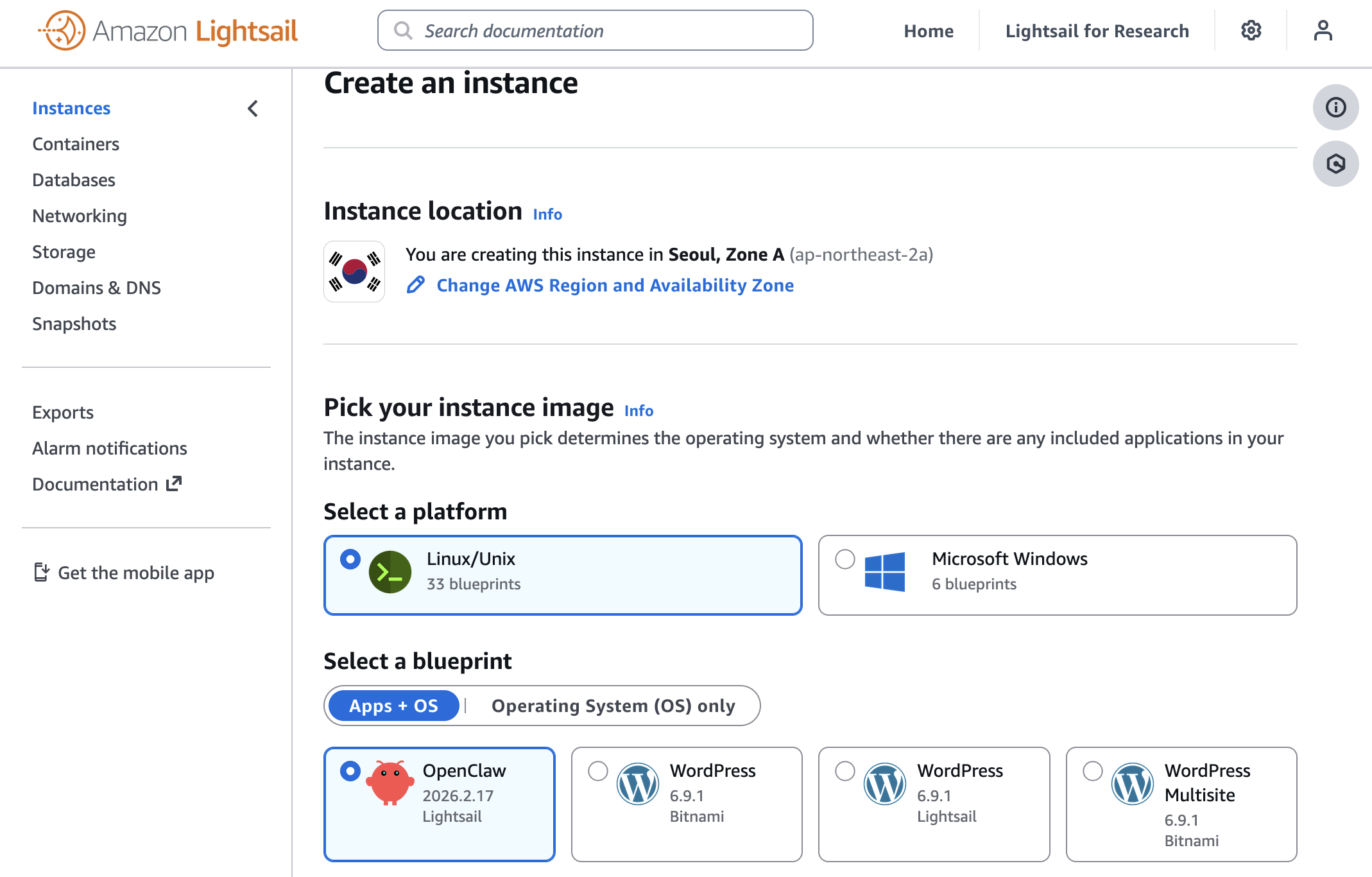
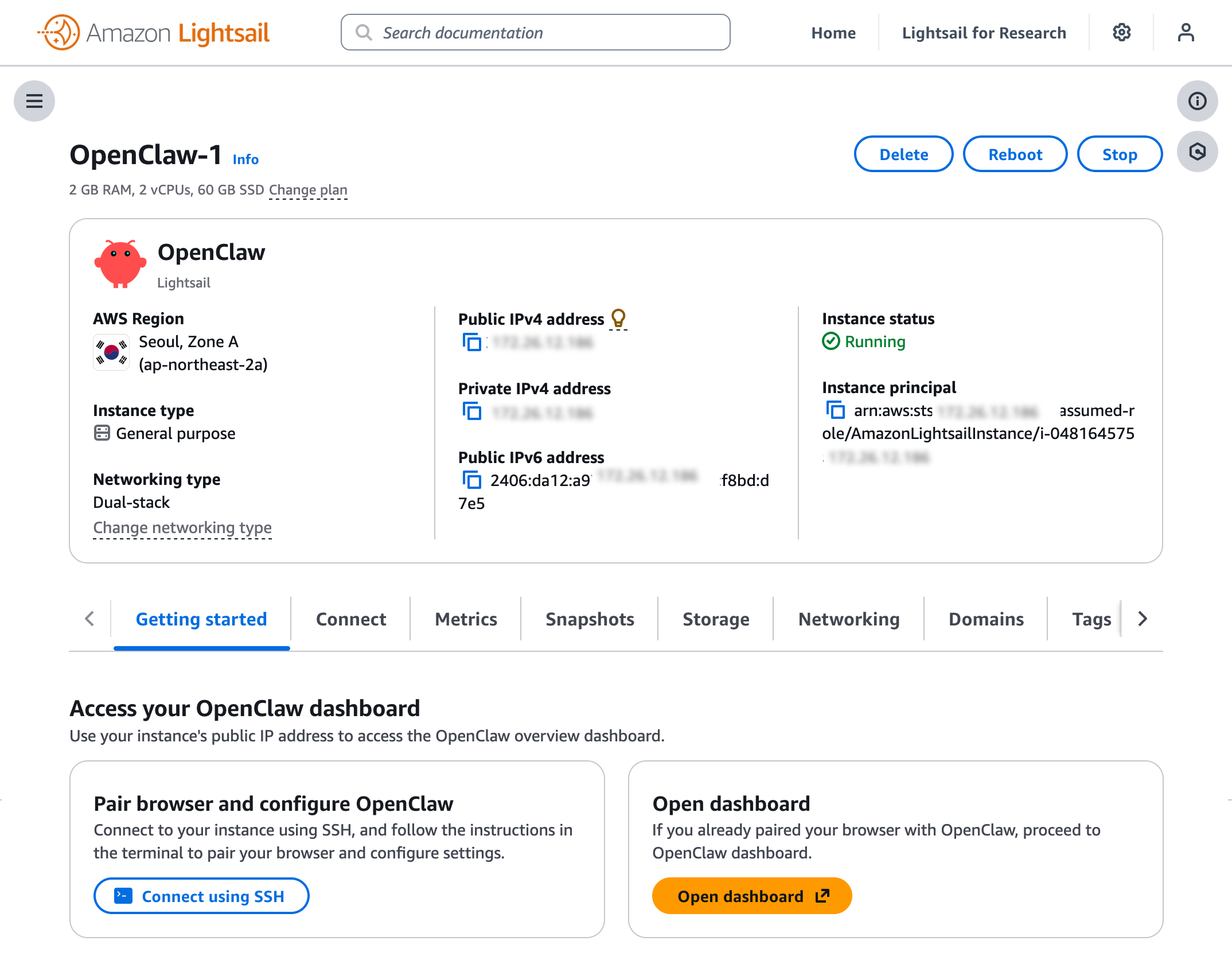
The process of deploying OpenClaw on Amazon Lightsail is designed for utmost simplicity. Users begin by navigating to the Amazon Lightsail console and selecting the "Create instance" option. After choosing their preferred AWS Region and Availability Zone, and specifying the Linux/Unix platform, they can easily select "OpenClaw" from the available blueprints. AWS recommends a 4 GB memory plan for optimal performance, ensuring the AI agent has sufficient resources to operate efficiently. Naming the instance and clicking "Create instance" initiates the provisioning process, with the instance typically transitioning to a "Running" state within minutes.
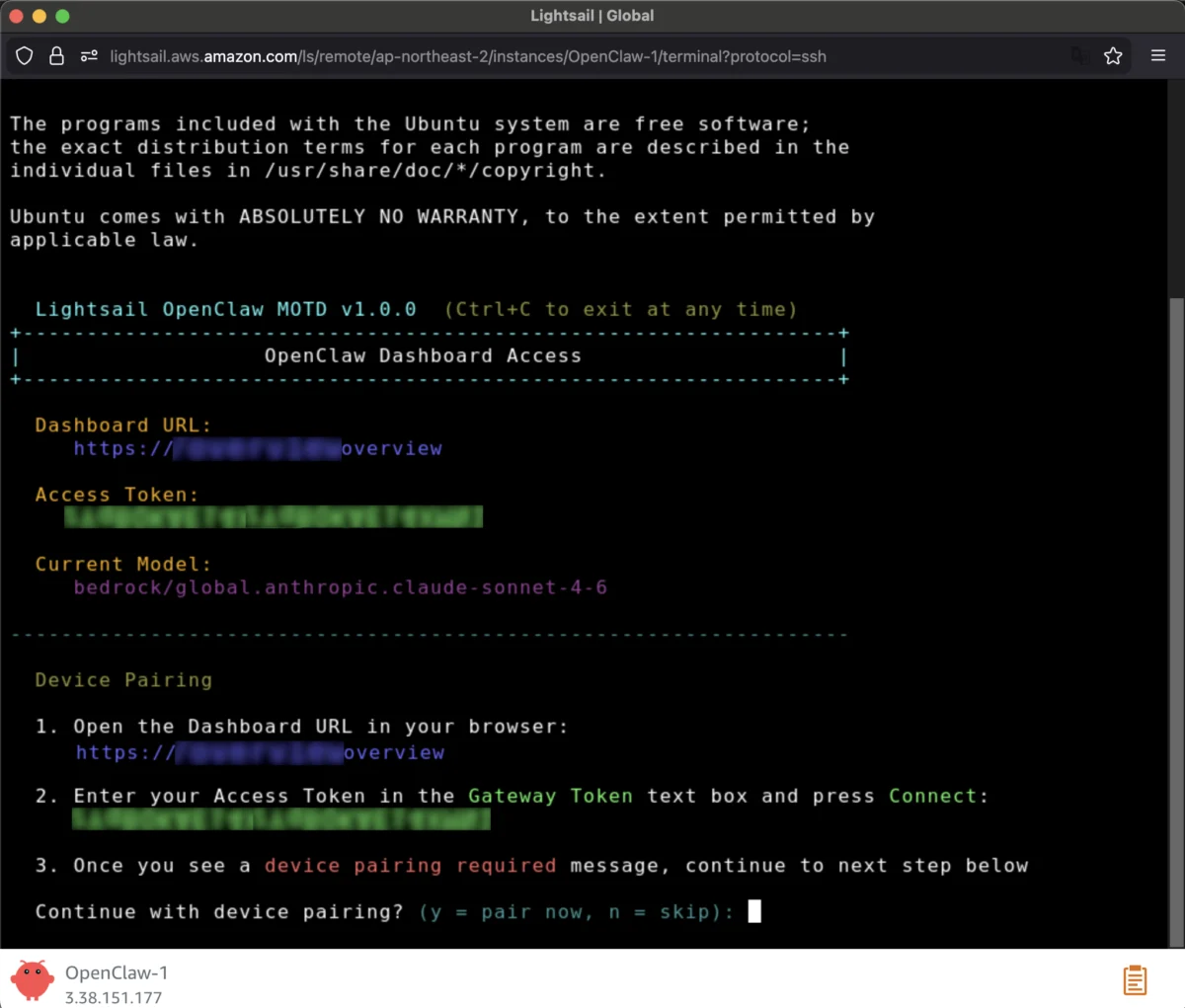
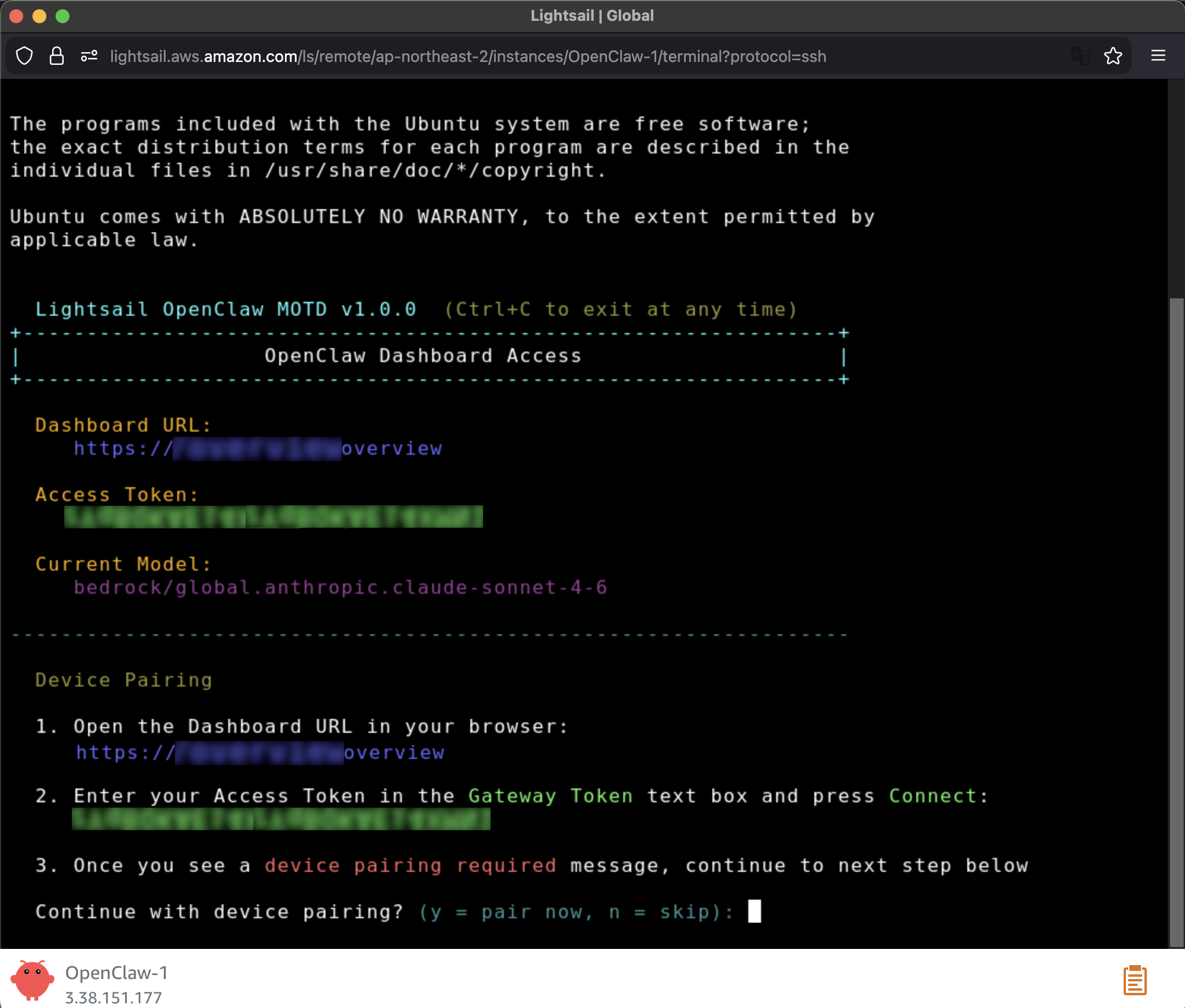
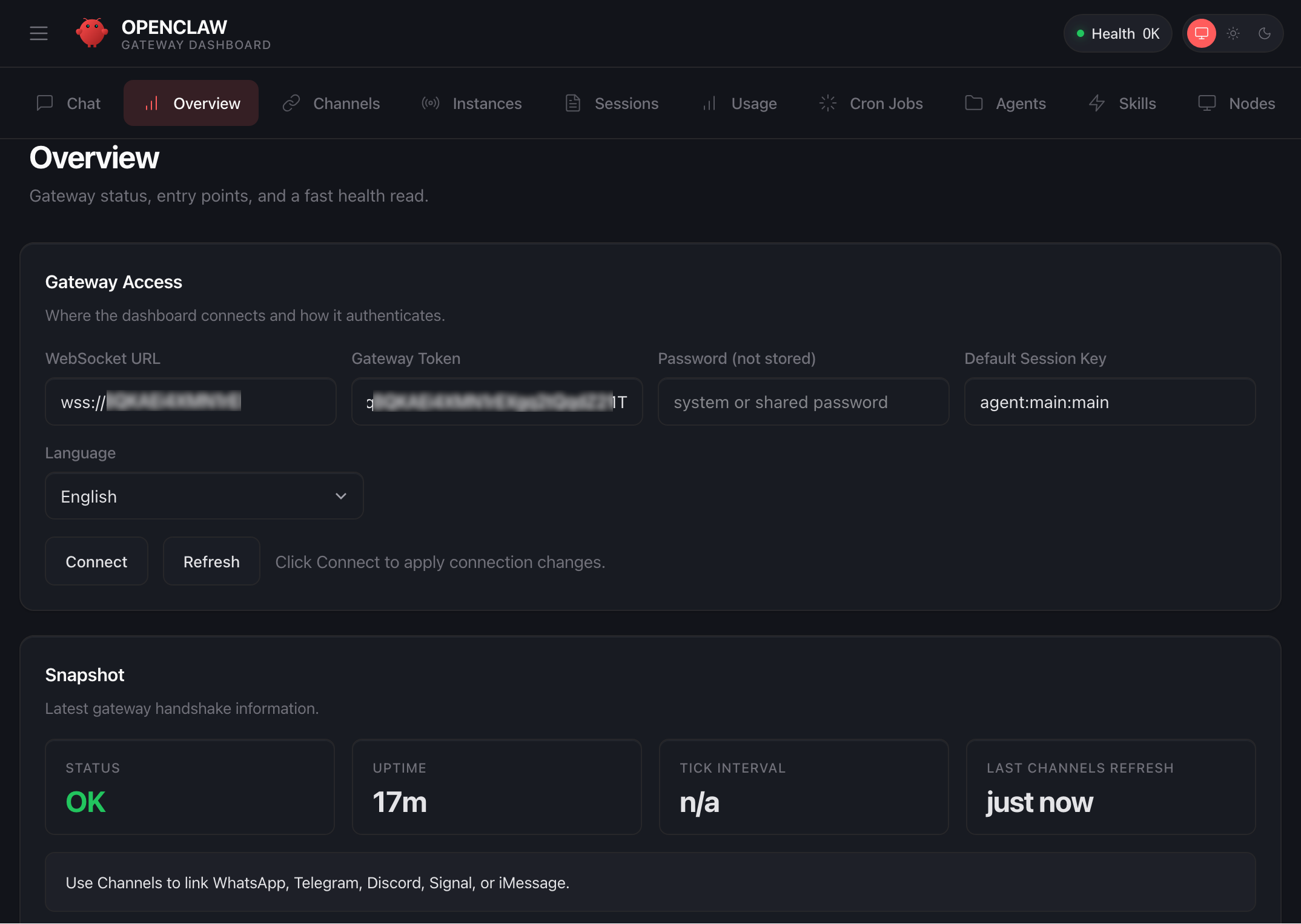
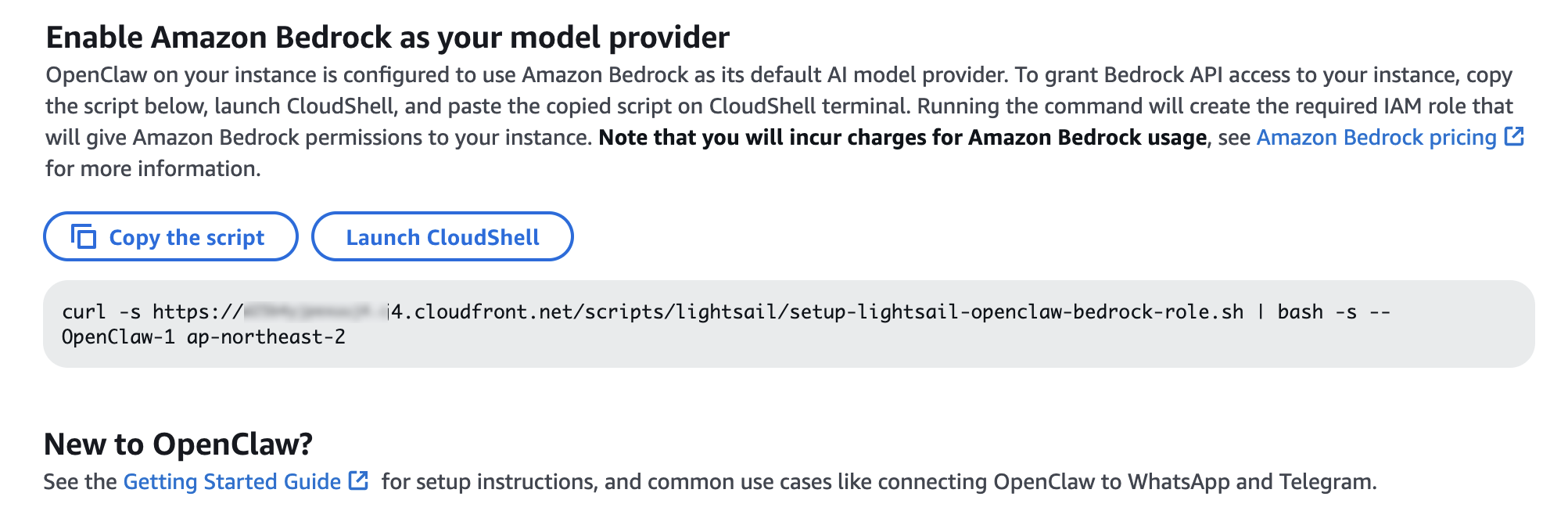
Once the instance is active, a secure connection between the user’s browser and OpenClaw is established through a pairing process. This involves connecting via SSH directly from the Lightsail console, where a welcome message provides the dashboard URL and security credentials. Users then paste an access token into the OpenClaw dashboard’s Gateway Token field. A final approval in the SSH terminal completes the pairing, establishing a secure communication channel. To enable Bedrock API access, a pre-provided script is executed in the AWS CloudShell terminal, granting the OpenClaw instance the necessary permissions to leverage Bedrock’s generative AI capabilities. After these straightforward steps, the AI assistant is ready for use via the OpenClaw dashboard’s "Chat" interface. Furthermore, the platform supports integration with popular messaging applications like WhatsApp, Discord, or Telegram, allowing users to interact with their AI assistant directly from their preferred communication channels, enhancing convenience and accessibility.
Broader Implications and Market Impact
The general availability of OpenClaw on Amazon Lightsail carries significant implications for the broader AI market and its user base.
Democratization of Advanced AI: This offering significantly lowers the barrier to entry for deploying autonomous AI agents. Small and medium-sized businesses (SMBs), independent developers, and even individual users can now access powerful automation capabilities that were previously complex or cost-prohibitive. This move aligns with broader industry trends where AI is becoming more accessible, moving beyond the exclusive domain of large enterprises.
Enhanced Data Privacy and Control: In an era marked by increasing concerns over data privacy and security, the "private" and "self-hosted" nature of OpenClaw, combined with the secure environment of Lightsail, offers a compelling value proposition. Users retain control over their agent’s operational environment and the data it processes, a stark contrast to many SaaS AI solutions where data residency and usage policies can be less transparent. This aspect is particularly attractive for businesses handling sensitive information.
Validation of Open-Source AI: The integration of an open-source project like OpenClaw into a mainstream cloud offering like Lightsail underscores the growing importance and maturity of the open-source AI ecosystem. It provides validation for community-driven innovation and demonstrates AWS’s commitment to supporting a diverse range of technologies.
Acceleration of AI Agent Adoption: By simplifying deployment and integrating with a robust AI backbone like Bedrock, AWS is poised to accelerate the adoption of autonomous AI agents. As users experience the benefits of automated task management and intelligent assistance, demand for such solutions is likely to grow, spurring further innovation in the field. Gartner, for instance, predicts that by 2026, over 80% of enterprises will have used generative AI APIs or deployed generative AI-enabled applications, with autonomous agents playing an increasingly critical role.
Strengthening AWS’s AI/ML Ecosystem: This launch further solidifies AWS’s position as a comprehensive provider for AI and ML workloads. By offering solutions that cater to various levels of technical expertise—from advanced AI research with SageMaker to simplified application deployment with Lightsail—AWS ensures it can support the entire spectrum of AI development and deployment needs.
Availability and Future Outlook
OpenClaw on Amazon Lightsail is now available in all AWS commercial Regions where Amazon Lightsail services are offered. This widespread availability ensures that a global customer base can leverage this new capability, subject to regional service availability and any specific local regulations. AWS encourages users to explore the new offering through the Lightsail console and provide feedback via AWS re:Post for Amazon Lightsail or through their usual AWS support channels. This commitment to customer feedback highlights AWS’s iterative approach to product development, ensuring that new services continue to evolve based on real-world user needs and experiences.
The introduction of OpenClaw on Lightsail is more than just a new service; it represents a strategic move to empower a wider audience with sophisticated AI capabilities, packaged in an accessible, secure, and managed cloud environment. As autonomous AI agents continue to evolve, platforms like Lightsail will play a crucial role in bringing these innovations from research labs to everyday applications, transforming how individuals and businesses interact with technology.