

Seattle, WA – Amazon Web Services (AWS) today announced the general availability of OpenClaw on Amazon Lightsail, marking a significant step in making self-hosted, autonomous private AI agents more accessible to developers, small businesses, and individual users. This new offering allows users to quickly launch a pre-configured OpenClaw instance, seamlessly integrating browser-based interaction, robust AI capabilities powered by Amazon Bedrock, and optional connectivity to popular messaging channels like WhatsApp, Discord, and Telegram. The announcement addresses a growing demand for secure, manageable personal AI assistants, moving beyond complex installations and offering a streamlined, cloud-based deployment solution.
Simplifying Autonomous AI Agent Deployment
The introduction of OpenClaw on Amazon Lightsail directly responds to a persistent challenge faced by the AI community: the complexity of deploying and managing sophisticated AI agents. OpenClaw, an open-source, self-hosted autonomous private AI agent, is designed to act as a personal digital assistant, capable of performing a wide array of tasks such as managing emails, browsing the web, and organizing files, rather than merely answering questions. Its value lies in its autonomy and the privacy afforded by its self-hosted nature. However, as noted by AWS, running OpenClaw directly on local devices often presents significant technical hurdles, including intricate setup procedures and critical security considerations.

Amazon Lightsail, known for its ease of use and predictable pricing model, emerges as the ideal platform to mitigate these complexities. Lightsail offers virtual private servers (VPS) in the cloud, simplifying the entire lifecycle of deploying and managing web applications and development environments. By bundling OpenClaw as a pre-configured blueprint within Lightsail, AWS eliminates the need for manual server setup, dependency installation, and complex security configurations that typically deter non-expert users from leveraging such advanced tools. This strategic integration positions Lightsail as a pivotal gateway for a broader audience to harness the power of autonomous AI.
Background: The Rise of Autonomous AI and AWS’s Response
The concept of autonomous AI agents, capable of executing multi-step tasks and interacting with various digital environments without constant human intervention, has been a rapidly evolving frontier in artificial intelligence. Unlike traditional chatbots that primarily respond to direct queries, autonomous agents can take initiative, plan actions, and adapt to achieve user-defined goals. This paradigm shift holds immense potential for boosting productivity, automating routine tasks, and providing personalized digital assistance across personal and professional domains.
OpenClaw represents a significant open-source contribution to this movement, providing a flexible and customizable framework for building such agents. Its "self-hosted" and "private" attributes resonate strongly with users concerned about data privacy and control, offering an alternative to proprietary, cloud-only AI solutions where data handling policies might be less transparent.

Prior to this official integration, AWS customers had already expressed strong interest in running OpenClaw on AWS infrastructure. Some early adopters attempted to deploy OpenClaw on Amazon EC2 instances. While EC2 offers immense flexibility and power, its comprehensive suite of configuration options and granular control can be overwhelming for users seeking a quick, straightforward setup for a single application. The complexities of configuring EC2 instances, managing security groups, and ensuring proper networking for an AI agent like OpenClaw often required significant technical expertise, highlighting a gap that Lightsail is now designed to fill.
AWS’s decision to offer OpenClaw on Lightsail is a direct strategic response to this observed customer demand and aligns with the company’s broader mission to democratize access to advanced cloud technologies. By providing a curated, one-click deployment experience, AWS lowers the barrier to entry, enabling more individuals and small businesses to experiment with and deploy cutting-edge AI solutions securely and efficiently. This move also reinforces Lightsail’s role as a simplified entry point into the AWS ecosystem for specific, well-defined workloads, further diversifying its appeal beyond traditional web hosting and development environments.
Seamless Deployment and Enhanced Security
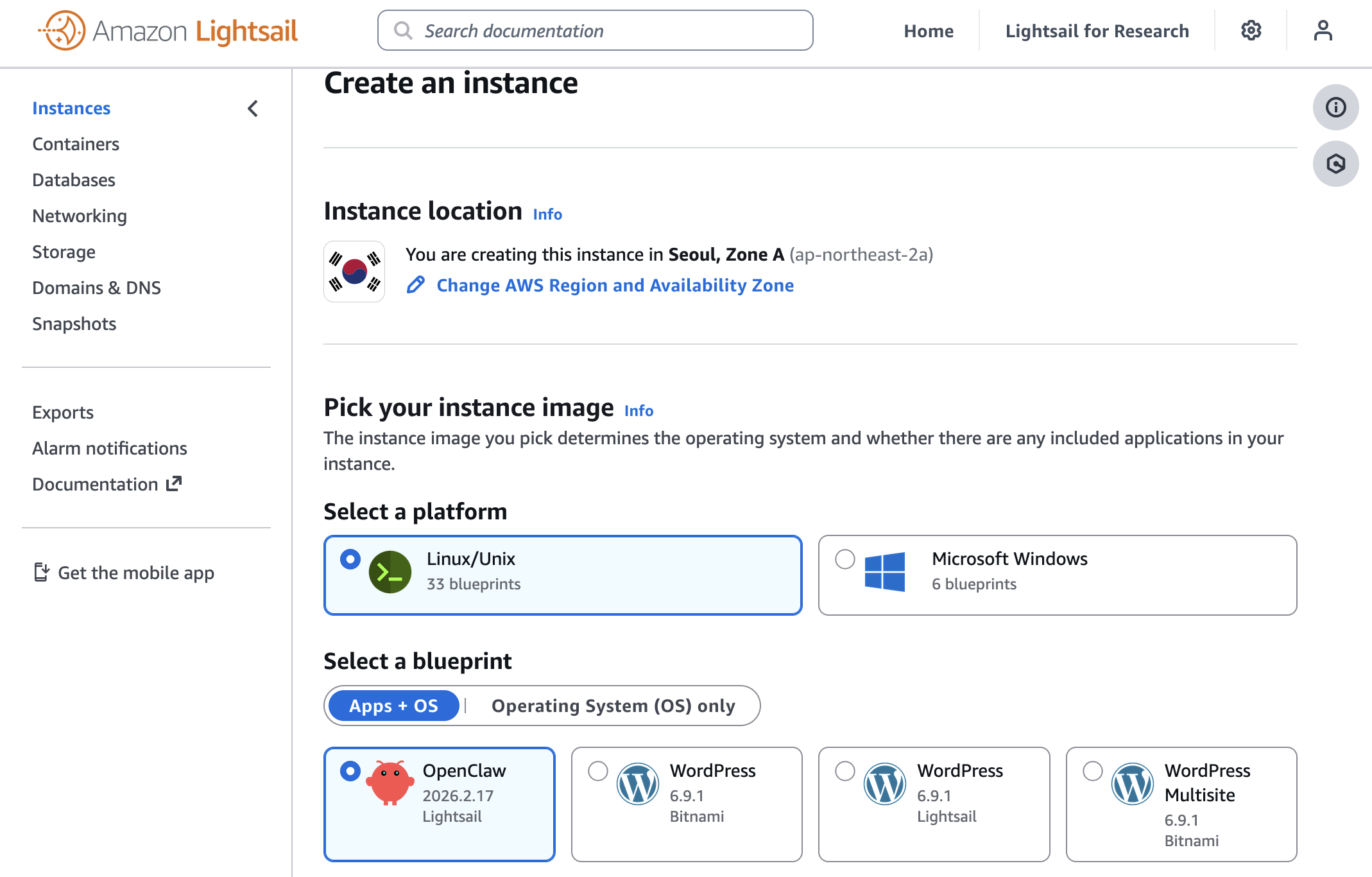
The process of launching an OpenClaw instance on Amazon Lightsail is designed for simplicity, reflecting Lightsail’s core philosophy. Users begin by navigating to the Amazon Lightsail console, selecting "Create instance," and choosing their preferred AWS Region and Availability Zone. The crucial step involves selecting "OpenClaw" under the "Select a blueprint" option, which pre-configures the instance with all necessary software and dependencies. AWS recommends a 4 GB memory plan for optimal performance, ensuring the AI agent has sufficient resources to operate effectively.
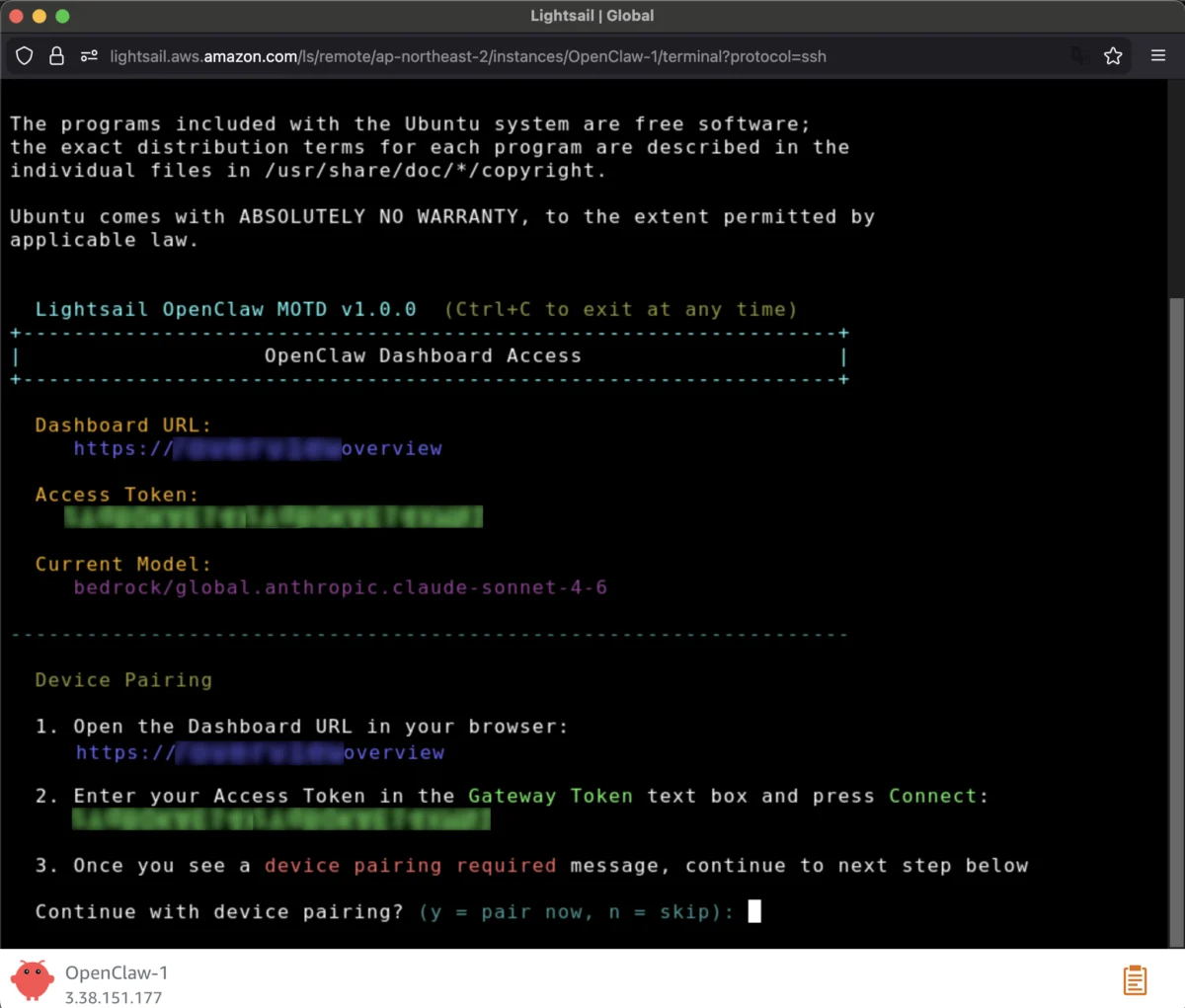
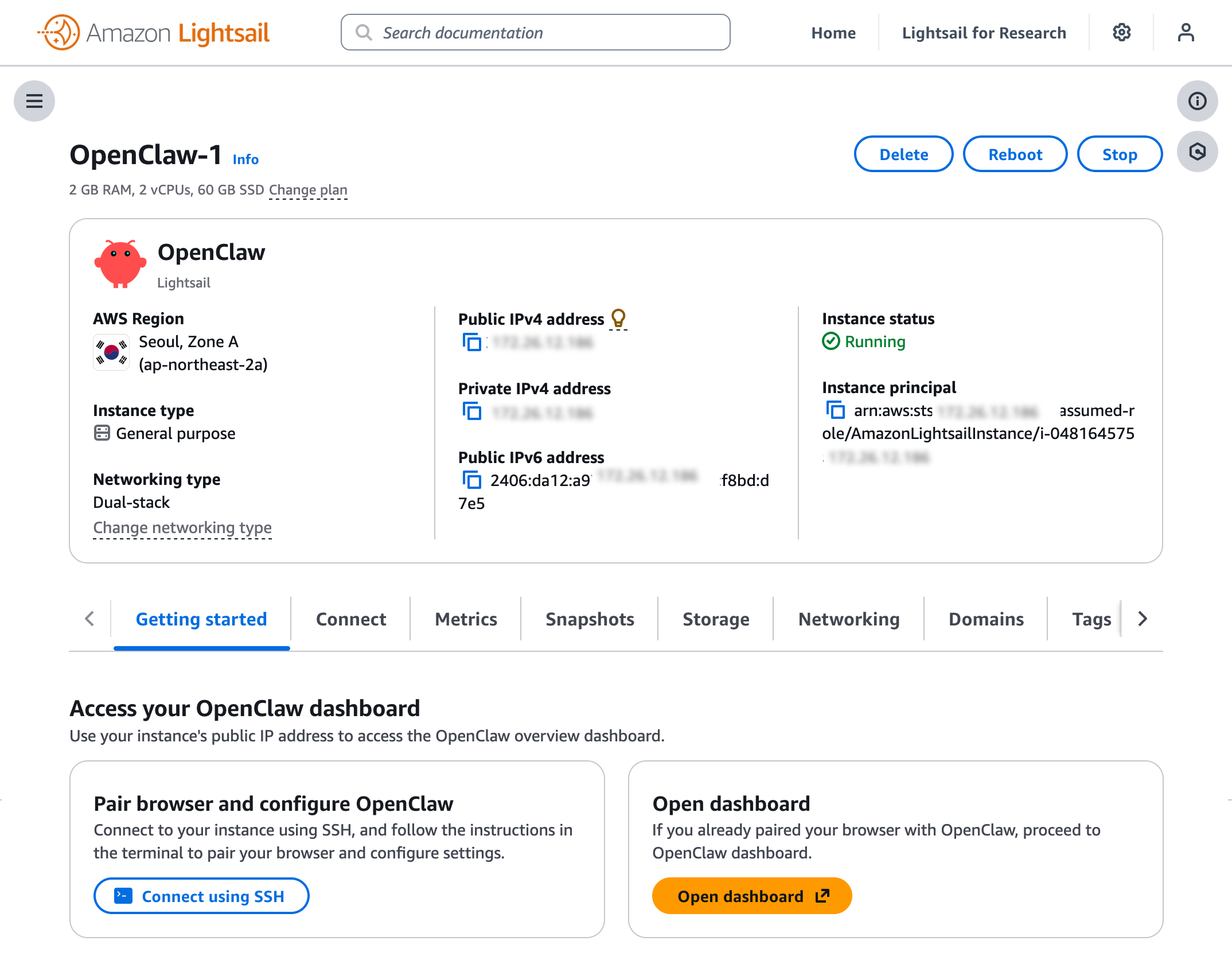
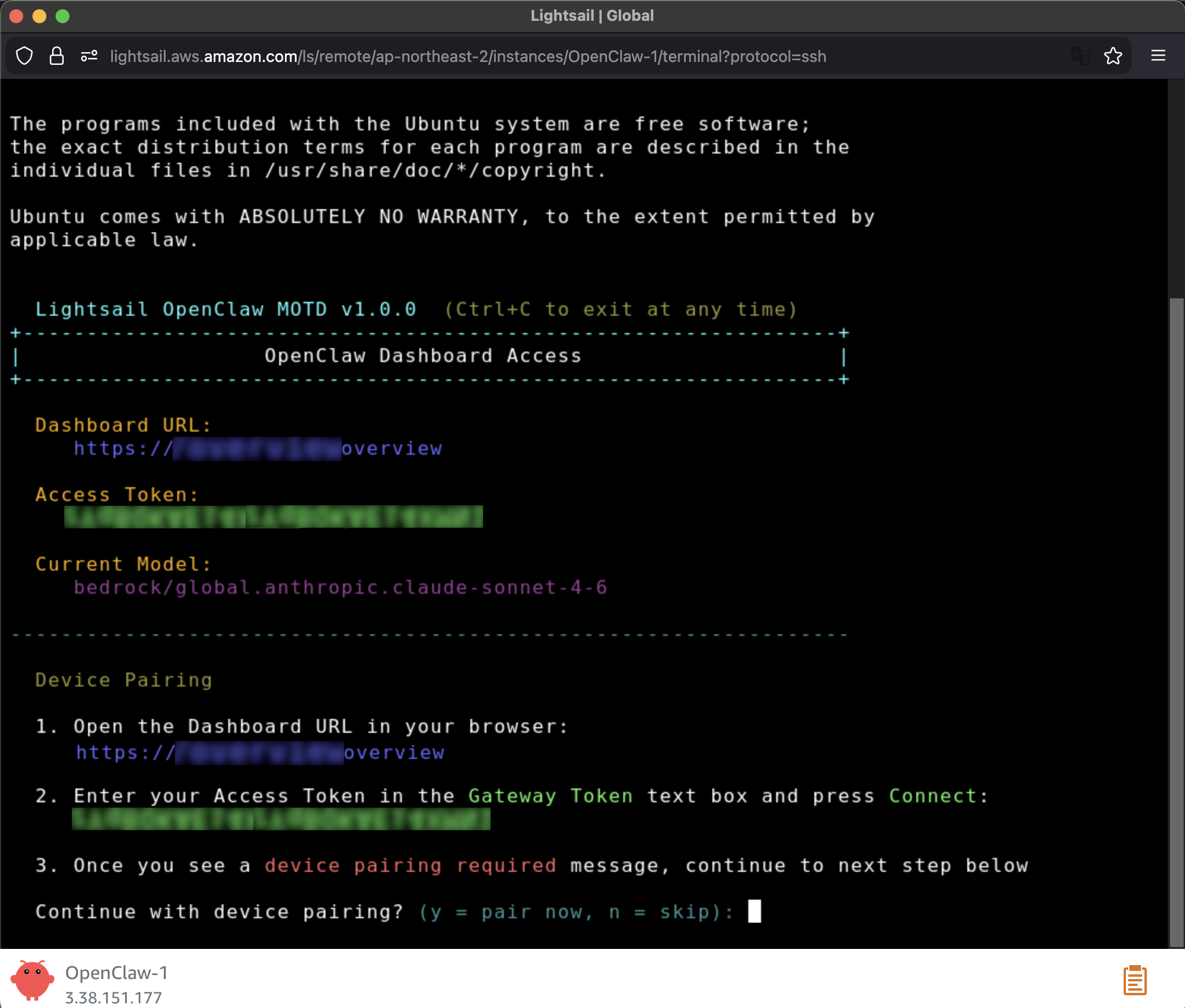
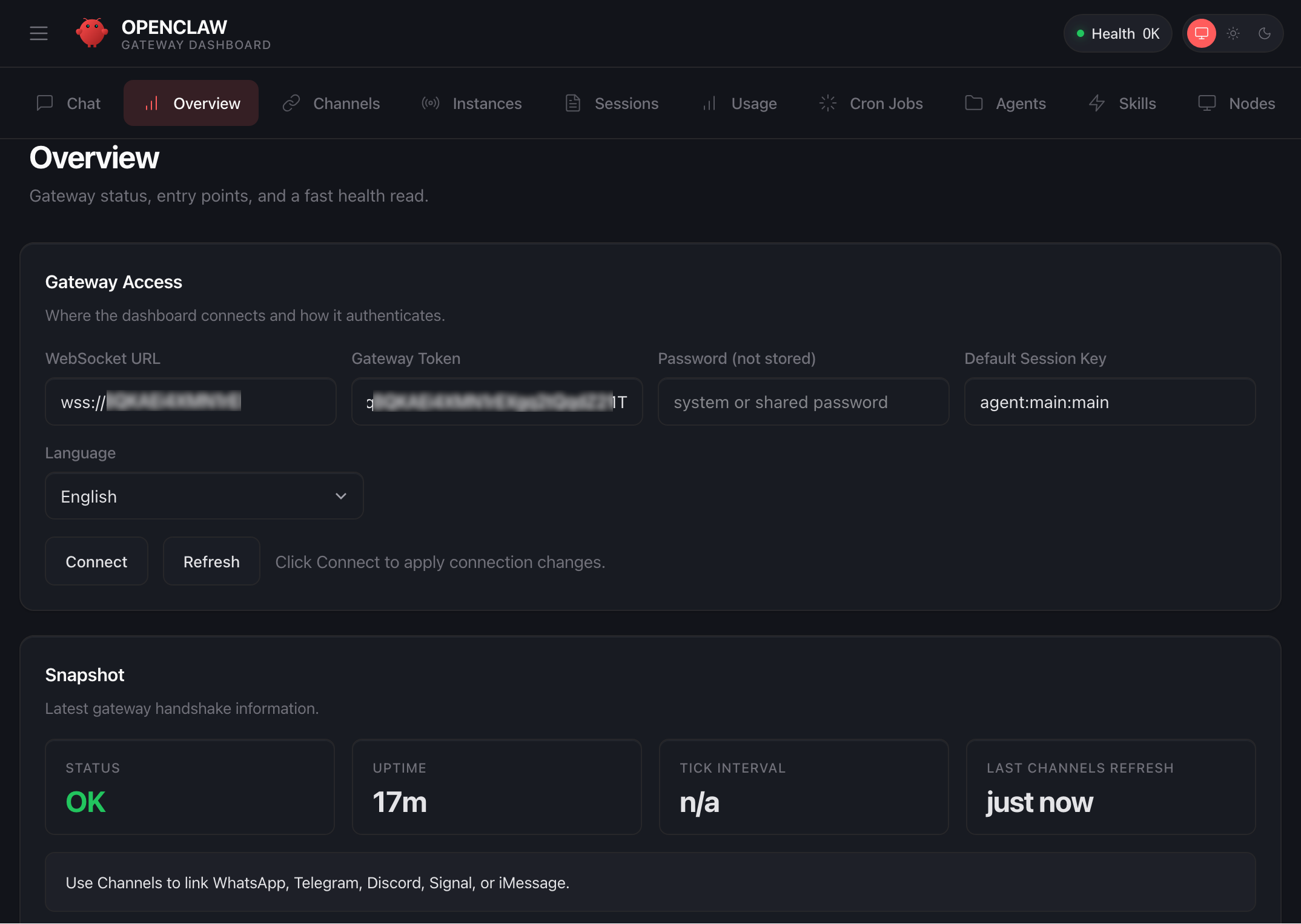
Once the instance is created, it moves to a "Running" state within minutes, ready for initial setup. A key security feature of this integration is the browser pairing process. Before accessing the OpenClaw dashboard, users establish a secure connection between their browser session and the OpenClaw instance via SSH. This involves connecting through a browser-based SSH terminal, where unique security credentials (dashboard URL and access token) are displayed. This mechanism ensures that only authorized users can interact with their private AI agent, safeguarding the instance from unauthorized access. The secure pairing process is completed by pasting the access token into the OpenClaw dashboard and confirming the connection in the SSH terminal, resulting in an "OK" status indicating successful pairing.
Leveraging Amazon Bedrock for Powerful AI Capabilities
A core advantage of OpenClaw on Lightsail is its default integration with Amazon Bedrock as the AI model provider. Amazon Bedrock is a fully managed service that offers access to a choice of high-performing foundation models (FMs) from leading AI companies, as well as Amazon’s own FMs, via a single API. This allows developers to build and scale generative AI applications without managing underlying infrastructure.
By pre-configuring OpenClaw to utilize Amazon Bedrock, AWS ensures that users have immediate access to powerful, enterprise-grade generative AI capabilities. This eliminates the need for users to configure their own AI models or manage complex API integrations, significantly streamlining the setup process. To enable Bedrock API access, users simply copy and run a provided script in the AWS CloudShell terminal. This script configures the necessary permissions and API endpoints, allowing OpenClaw to leverage Bedrock’s diverse array of foundation models for its autonomous operations. The result is an AI assistant that is ready for immediate use, capable of advanced tasks and intelligent interactions from the moment setup is complete.
The choice of Amazon Bedrock is strategic. It provides a robust, scalable, and secure backend for OpenClaw’s AI functions. Bedrock’s ability to offer a variety of models allows for flexibility and potential future enhancements, ensuring that OpenClaw users can benefit from the latest advancements in generative AI without having to re-architect their deployment. This integration underscores AWS’s commitment to providing a seamless, end-to-end solution for AI agent deployment.
Expanding Reach Through Messaging Channel Integration
Beyond browser-based interaction, OpenClaw on Lightsail extends its utility by supporting integration with popular messaging applications such as Telegram and WhatsApp. This feature allows users to interact with their AI assistant directly from their mobile phones or preferred messaging clients, enhancing convenience and accessibility. For instance, a user could ask OpenClaw via WhatsApp to summarize recent emails, draft a response, or find specific information online, receiving the output directly within the chat interface.
This messaging integration is particularly impactful for users who require on-the-go access to their digital assistant or prefer a conversational interface for task management. It transforms OpenClaw from a desktop-bound tool into a ubiquitous personal assistant, accessible from virtually anywhere. Detailed instructions for connecting these messaging channels are available in the Amazon Lightsail User Guide, ensuring users can easily extend their AI agent’s reach.
Market Implications and Broader Impact
The general availability of OpenClaw on Amazon Lightsail carries significant implications for various stakeholders and the broader AI market:
- For Individual Developers and Researchers: This offering drastically lowers the barrier to entry for experimenting with and deploying autonomous AI agents. Developers can focus on customizing OpenClaw’s functionalities or integrating it with other tools, rather than spending time on infrastructure setup. This could foster a new wave of innovation in personalized AI and automation.
- For Small and Medium-sized Businesses (SMBs): SMBs often lack the dedicated IT staff or budgets for complex cloud deployments. OpenClaw on Lightsail provides an affordable, easy-to-manage solution for automating repetitive tasks like customer support, data entry, content generation, or internal communication. This can significantly boost productivity and efficiency, enabling SMBs to compete more effectively.
- For AWS’s Strategy: This launch strengthens Lightsail’s position as a versatile platform beyond simple web hosting. It showcases Lightsail’s capability to host cutting-edge AI applications, attracting a new segment of users interested in AI experimentation and deployment. Furthermore, it expands the reach and utility of Amazon Bedrock, driving its adoption among a broader user base. This move reinforces AWS’s reputation for providing comprehensive, scalable, and accessible cloud services.
- For the Open-Source AI Ecosystem: By providing a simplified deployment path, AWS is likely to accelerate the adoption and development of OpenClaw and similar open-source AI agents. Easier deployment means more users, more feedback, and potentially more contributions to the open-source project, fostering a virtuous cycle of innovation.
- Data Privacy and Control: The "private AI agent" aspect, combined with self-hosting on a user-controlled Lightsail instance, addresses growing concerns about data privacy in the age of AI. Users retain more control over their data and the agent’s operations compared to fully managed SaaS AI solutions, where data governance might be less transparent. While the AI model (Bedrock) is cloud-based, the agent’s core operations and data it processes are confined to the user’s Lightsail instance, offering a degree of isolation.
Availability and Future Outlook
OpenClaw on Amazon Lightsail is now generally available in all AWS commercial Regions where Amazon Lightsail operates. This widespread availability ensures that a global audience can access and leverage this new capability. For specific regional availability and a comprehensive future roadmap, users are directed to the AWS Capabilities by Region page.
AWS encourages users to explore this new offering via the Lightsail console and provide feedback through AWS re:Post for Amazon Lightsail or their usual AWS support contacts. This commitment to customer feedback underscores AWS’s iterative development approach, promising potential future enhancements, such as additional messaging integrations, advanced monitoring tools, or further optimizations for performance and cost-effectiveness.
The integration of OpenClaw with Amazon Lightsail represents a strategic confluence of open-source innovation and cloud accessibility. By simplifying the deployment of powerful, private AI agents, AWS is not only catering to an immediate customer need but also paving the way for wider adoption of autonomous AI, empowering individuals and organizations to build more intelligent, automated, and private digital experiences.