

Amazon Web Services (AWS) is intensifying its engagement with the global developer community, spotlighting the transformative potential of AI agents and human-AI co-development in the evolving landscape of software engineering. Recent participation at Developer Week in San Jose and upcoming keynotes at dev/nexus in Atlanta underscore AWS’s commitment to empowering developers with the tools and insights necessary to build the next generation of intelligent applications. This strategic outreach reflects a broader industry shift towards leveraging artificial intelligence as a collaborative partner in the development lifecycle, promising enhanced efficiency and unprecedented innovation.
AWS at Developer Week: Pioneering Human-AI Collaboration
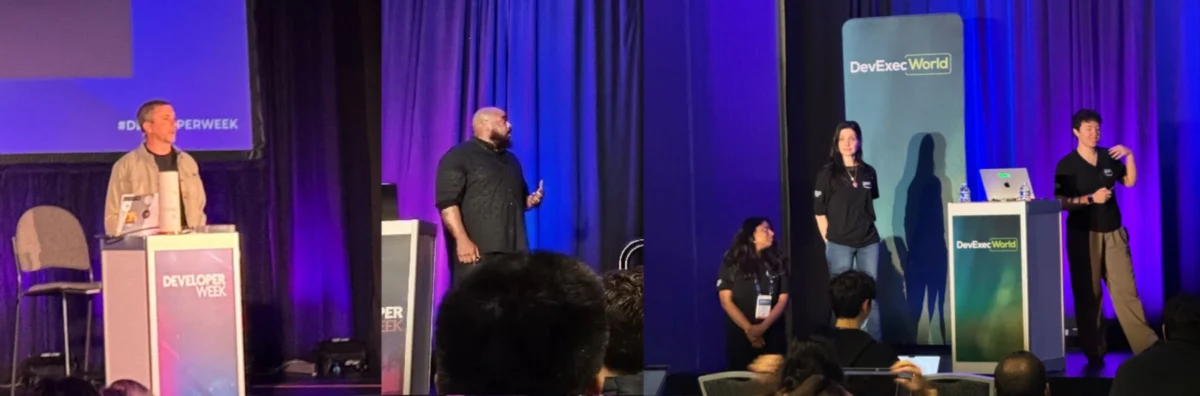
In a significant display of its forward-thinking approach, AWS actively participated in Developer Week in San Jose, a prominent gathering for developers, engineers, and tech leaders. The conference, known for bringing together thousands of attendees to explore cutting-edge technologies and trends, served as a crucial platform for AWS to disseminate its vision for "renascent software." This concept, championed by AWS colleague Vinicius Senger in a highly anticipated keynote, posits a revolutionary paradigm where humans and artificial intelligence systems collaborate seamlessly as co-developers. Senger’s address delved into the practical applications of this collaborative model, particularly through the use of tools like Kiro, an AI-powered platform designed to facilitate such synergistic development. The keynote illuminated how AI can assist in everything from code generation and debugging to architectural design, thereby accelerating development cycles and enabling developers to focus on higher-level problem-solving and creative tasks.
Beyond the keynote, AWS experts hosted several sessions dedicated to the practicalities of building and deploying production-ready AI agents. Colleagues Du’An Lightfoot, Elizabeth Fuentes, Laura Salinas, and Sandhya Subramani shared their collective expertise, guiding developers through the intricacies of agent architecture, deployment strategies, and operational best practices. These sessions attracted significant interest, with attendees actively engaging in discussions and posing questions related to critical challenges in AI agent development. Key areas of inquiry included the complexities of agent memory management, the design and implementation of robust multi-agent patterns for complex tasks, and the burgeoning fields of meta-tooling and hooks that enable agents to interact with and extend existing software ecosystems. The overwhelming attendance and depth of technical questions underscored a palpable enthusiasm within the developer community for AI agents, signaling a clear trend towards their mainstream adoption. Developers across various industries are increasingly exploring how AI agents can automate routine tasks, provide intelligent assistance, and even autonomously execute segments of software development, marking a pivotal moment in the industry’s evolution.
Developer Week, held annually, consistently draws a diverse audience ranging from startups to established enterprises, making it an ideal venue for AWS to gauge developer sentiment and gather direct feedback on emerging technologies. The enthusiastic response to the AI agent discussions reinforces AWS’s strategic focus on providing the underlying cloud infrastructure and services essential for scaling AI-driven applications. The event served not just as a platform for AWS to showcase its capabilities but also as a vital feedback loop, informing future service development and community support initiatives.
The Rise of AI Agents in Software Development: A Paradigm Shift
The burgeoning interest in AI agents, as observed at Developer Week, is indicative of a broader paradigm shift occurring across the software development landscape. Traditionally, AI has been leveraged for specific tasks such as machine learning model training, data analysis, or natural language processing. However, the concept of "AI agents" extends this significantly, envisioning autonomous or semi-autonomous entities capable of understanding context, making decisions, and executing complex tasks within a software ecosystem, often interacting with other agents or human developers.
This shift towards human-AI co-development, or "renascent software," is driven by several factors. The increasing complexity of modern applications, the demand for faster development cycles, and the shortage of skilled developers are pushing the industry to explore new methodologies. AI agents promise to alleviate these pressures by automating repetitive coding tasks, assisting with architectural design, identifying potential bugs, and even generating entire code modules based on high-level specifications. Industry data supports this trend; recent reports indicate a significant increase in enterprise investment in AI-powered developer tools, with market projections suggesting a multi-billion dollar valuation for this segment within the next five years. Surveys among developers frequently highlight a growing willingness to integrate AI tools into their workflows, provided these tools offer tangible benefits in terms of productivity and code quality.
The implications of this shift are profound. For individual developers, it means a reallocation of effort from mundane, repetitive coding to more strategic, creative, and problem-solving activities. For organizations, it translates into faster time-to-market, reduced development costs, and the ability to innovate at an unprecedented pace. Cloud providers like AWS play a critical role in this transformation by offering the scalable compute, storage, and specialized AI/ML services (such as Amazon SageMaker, Amazon Bedrock, and various AI services) that are essential for developing, deploying, and managing these sophisticated AI agents. The discussions around agent memory, multi-agent patterns, and meta-tooling at Developer Week highlight the ongoing technical challenges that AWS and the broader community are actively working to address, ensuring that these powerful new tools are robust, efficient, and secure.
Continuing Engagement: Looking Ahead to dev/nexus
AWS’s commitment to fostering innovation in the developer community extends beyond past events, with a strong presence planned for upcoming conferences. The team is scheduled to participate in dev/nexus, one of the largest and longest-running Java ecosystem conferences, taking place from March 4-6 in Atlanta. This engagement signals AWS’s recognition of the enduring importance of the Java community and its pivotal role in enterprise software development.
At dev/nexus, AWS colleague James Ward is slated to deliver a session focusing on "Building AI Agents with Spring and MCP." This talk is particularly relevant given Spring’s pervasive use in enterprise Java applications and the growing need to integrate AI capabilities into existing and new systems. Ward’s presentation is expected to provide practical guidance on how developers can leverage familiar frameworks like Spring to construct robust AI agents, bridging the gap between traditional enterprise development and cutting-edge AI methodologies. Furthermore, Vinicius Senger, alongside Jonathan Vogel, will present a session titled "10 Tools and Tips to Upgrade Your Java Code with AI." This talk promises to offer actionable insights and practical demonstrations of how Java developers can immediately begin incorporating AI-driven enhancements into their codebase, ranging from intelligent refactoring tools to AI-powered code generation assistants.
dev/nexus holds significant historical importance, having been a cornerstone event for the Java community for many years. It consistently attracts thousands of Java developers, architects, and decision-makers, making it an invaluable forum for AWS to connect with a critical segment of the enterprise software world. The focus on Java and AI at this conference is strategic, as Java remains a dominant language for backend systems, large-scale enterprise applications, and cloud-native services. By showcasing how AI can be seamlessly integrated into Java ecosystems, AWS aims to accelerate the adoption of AI-powered development tools and methodologies among a vast and established developer base. This approach ensures that the benefits of AI agents are not confined to emerging languages or niche applications but become accessible to the broadest possible spectrum of software professionals.
AWS’s Broader Strategy for Developer Enablement
AWS’s active participation in leading developer conferences like Developer Week and dev/nexus is a cornerstone of its broader strategy for developer enablement. This strategy is multi-faceted, encompassing not just physical presence at events but also a robust ecosystem of online resources, community platforms, and continuous innovation in cloud services. The company consistently emphasizes the importance of direct developer feedback in shaping its product roadmap, ensuring that its offerings remain relevant and effective in addressing real-world challenges.
The "What’s New with AWS" page serves as a dynamic, real-time chronicle of the continuous advancements across the AWS cloud. This page is updated frequently with announcements ranging from new services and features to significant updates in existing offerings, covering areas such as compute, storage, networking, databases, security, and crucially, artificial intelligence and machine learning. For developers building AI agents, these updates often include new foundational models, enhanced machine learning services, more powerful computing instances, and improved developer tools that streamline the AI development lifecycle. This consistent cadence of innovation is critical for developers who need to stay abreast of the latest capabilities to build competitive and scalable AI-driven applications.
Beyond formal announcements, AWS fosters a vibrant community through platforms like the AWS Builder Center. This initiative is designed to be a central hub for developers to connect with peers, share knowledge, access educational content, and discover best practices. The Builder Center provides resources that support developers at every stage of their journey, from learning the fundamentals of cloud computing to mastering advanced AI/ML techniques. By cultivating such communities, AWS not only supports its users but also gleans valuable insights into the evolving needs and challenges of developers, which in turn informs future service development and strategic initiatives. This comprehensive approach ensures that developers are not merely consumers of AWS services but active participants in shaping the future of cloud computing and AI.

The Evolving Landscape of Cloud and AI: Implications for Enterprise IT
The convergence of cloud computing and artificial intelligence, exemplified by AWS’s focus on AI agents, carries significant implications for enterprise IT and the broader technology industry. Cloud platforms provide the scalable, on-demand infrastructure — including specialized hardware like GPUs and TPUs — that is essential for training complex AI models and deploying AI agents that can handle real-time processing and large datasets. Without the flexibility and power of the cloud, the widespread adoption of sophisticated AI agents would be economically prohibitive for many organizations.
AWS’s strategic positioning aims to make these advanced capabilities accessible to developers of all skill levels, enabling them to integrate AI into their applications without needing to manage complex underlying infrastructure. This democratizes AI development, allowing enterprises to infuse intelligence into everything from customer service chatbots and personalized recommendation engines to complex backend automation and predictive analytics. The challenges identified by developers at conferences, such as managing agent memory and orchestrating multi-agent systems, highlight areas where cloud providers must continue to innovate, offering managed services and frameworks that abstract away complexity and improve operational efficiency.
The long-term impact on enterprise IT includes a significant shift in resource allocation, with increased investment in AI talent and cloud infrastructure. Organizations will need to adapt their talent development strategies to equip their workforce with the skills required for human-AI collaboration and AI agent management. Furthermore, the competitive landscape will increasingly favor companies that effectively leverage AI agents to drive innovation, improve operational efficiency, and enhance customer experiences. AWS, by actively engaging with developers and continuously expanding its AI/ML offerings, is positioning itself as a pivotal enabler in this new era of intelligent software.
Community and Resources for AI Builders
Recognizing that technology adoption thrives on community and accessible resources, AWS actively promotes various avenues for developers to connect, learn, and grow. The AWS Builder Center is a prime example, offering a centralized platform where developers can engage with peers, share insights, and access a wealth of content tailored to their development needs. This includes tutorials, workshops, documentation, and case studies that help demystify complex AI concepts and demonstrate practical applications.
Beyond digital platforms, AWS facilitates a diverse array of events designed to cater to different segments of the developer ecosystem. This includes AWS-led in-person and virtual events, such as summits and re:Invent, which provide deep dives into AWS technologies and strategic announcements. Additionally, AWS supports numerous startup events, fostering innovation within the entrepreneurial community by providing guidance, resources, and mentorship to emerging companies building on the cloud. A dedicated calendar for developer-focused events ensures that professionals can easily find and register for workshops, hackathons, and conferences that align with their specific interests and skill development goals. These events often feature expert-led sessions, hands-on labs, and networking opportunities, all crucial for staying current in the rapidly evolving fields of cloud computing and artificial intelligence.
These initiatives collectively form a robust ecosystem that not only supports the immediate needs of developers but also helps to shape the future direction of technology. By providing comprehensive resources and fostering a strong sense of community, AWS empowers developers to confidently explore the frontiers of AI agent development, transforming innovative ideas into tangible, production-ready solutions. This ongoing commitment to developer enablement is critical for ensuring that the promise of human-AI collaboration and intelligent software development is fully realized across industries worldwide.
AWS’s continuous engagement with the developer community, exemplified by its presence at Developer Week and upcoming participation in dev/nexus, underscores its strategic commitment to driving the future of software development through AI agents and human-AI collaboration. As the industry moves towards increasingly intelligent and autonomous systems, AWS remains at the forefront, providing the essential cloud infrastructure, innovative services, and community support necessary to empower developers worldwide. The enthusiastic reception of AI agent discussions and the strategic focus on integrating AI into established ecosystems like Java indicate a clear path forward, where human ingenuity and artificial intelligence converge to unlock unprecedented levels of innovation and efficiency in software engineering.