
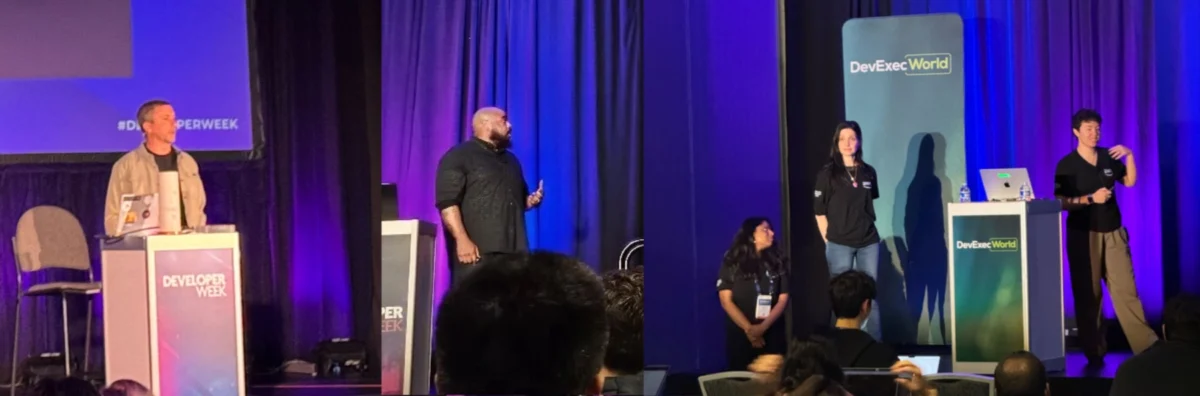

Amazon Web Services (AWS) recently concluded a significant presence at Developer Week in San Jose, California, where its team engaged with a diverse array of developers, spotlighting the burgeoning field of AI agent development and a revolutionary concept of "renascent software." This engagement underscores AWS’s strategic commitment to fostering innovation within the developer community and its proactive role in shaping the future of software engineering, particularly at the intersection of human creativity and artificial intelligence. The discussions and presentations at Developer Week provided a critical pulse on the industry’s rapid evolution, setting the stage for further interactions at upcoming events like dev/nexus.
Developer Week Highlights: Pioneering AI-Human Collaboration
Developer Week, renowned as one of the largest annual developer conferences globally, typically draws tens of thousands of attendees, ranging from startups to established enterprises, all keen on exploring the latest tools, technologies, and methodologies. AWS’s participation focused heavily on the transformative potential of AI in software development. A central theme was introduced by Vinicius Senger, a distinguished colleague from AWS, who delivered a compelling keynote address on "renascent software." This concept posits a new paradigm for building and evolving applications, one where humans and AI collaborate seamlessly as co-developers. Senger’s presentation specifically highlighted Kiro, a platform designed to facilitate this symbiotic relationship, enabling developers to leverage AI assistance throughout the software lifecycle, from ideation and coding to testing and deployment. The vision of renascent software suggests a future where AI does not replace human developers but rather augments their capabilities, allowing for unprecedented levels of productivity, innovation, and error reduction.
Beyond the keynote, a dedicated session on building and deploying production-ready AI agents garnered substantial attention. Led by AWS experts Du’An Lightfoot, Elizabeth Fuentes, Laura Salinas, and Sandhya Subramani, the session delved into the intricate technical challenges and best practices associated with operationalizing AI agents. The discussions were particularly focused on critical areas such as agent memory, which is vital for maintaining context and learning over time; multi-agent patterns, exploring how multiple AI agents can collaborate to solve complex problems; and meta-tooling and hooks, which enable agents to interact with and extend existing development tools and systems. The overwhelming turnout and the depth of questions from attendees regarding these advanced topics revealed a significant and active developer community already deeply invested in building sophisticated AI agents. This keen interest observed at Developer Week underscores the industry’s rapid embrace of AI-driven paradigms and the urgent need for robust, scalable solutions to support this evolution.
Upcoming Engagement: dev/nexus – Advancing Java with AI
Building on the momentum from Developer Week, AWS is extending its outreach to the developer community at dev/nexus, scheduled for March 4-6 in Atlanta. As the largest and longest-running Java ecosystem conference, dev/nexus attracts thousands of Java developers, architects, and industry leaders, making it a pivotal venue for discussing advancements in enterprise software. AWS’s presence at dev/nexus will continue to emphasize the practical application of AI in contemporary software development, particularly within the vast Java ecosystem.
At dev/nexus, James Ward, another prominent AWS colleague, is slated to deliver a session on building AI Agents using Spring and MCP. This presentation is highly anticipated, given Spring’s ubiquity in enterprise Java development. Ward’s talk is expected to provide actionable insights into integrating AI capabilities, specifically intelligent agents, within existing Spring-based applications, potentially leveraging frameworks like Spring AI and exploring how Model-View-Controller (MVC) patterns can be adapted for agent-driven architectures. This focus addresses a critical need for Java developers to modernize their applications with intelligent features without necessitating a complete overhaul of their established technology stacks.
Furthermore, Vinicius Senger will return to the speaking circuit alongside Jonathan Vogel to present "10 Tools and Tips to Upgrade Your Java Code with AI." This session promises to be a practical guide for Java developers looking to immediately integrate AI into their daily workflows. It is expected to cover a range of AWS services and open-source tools that can enhance code quality, automate routine tasks, and introduce intelligent functionalities into Java applications. Topics could potentially include leveraging AWS CodeWhisperer for AI-powered code suggestions, utilizing Amazon SageMaker for machine learning model deployment within Java applications, or integrating natural language processing capabilities via Amazon Comprehend. These sessions collectively highlight AWS’s commitment to equipping Java developers with the knowledge and tools necessary to thrive in an AI-first world. The strategic choice of dev/nexus for these discussions underscores the company’s recognition of the Java community’s foundational role in enterprise software and the imperative to empower this demographic with cutting-edge AI capabilities.
Broader AWS Developer Engagement Strategy and Community Building
AWS’s consistent presence at major developer conferences like Developer Week and dev/nexus is a cornerstone of its broader developer engagement strategy. These events serve as invaluable platforms for gathering direct feedback from the community, understanding emerging pain points, and showcasing the latest advancements in AWS services. By actively participating in these forums, AWS aims to foster a collaborative environment where developers can not only learn about new technologies but also contribute to their evolution. This strategy is critical for ensuring that AWS’s offerings remain aligned with developer needs and industry trends.
The company’s commitment to the developer community extends beyond conferences to various online platforms and initiatives. The AWS Builder Center, for instance, is a dedicated hub designed to connect developers, facilitate knowledge sharing, and provide access to a wealth of content supporting development efforts. This platform exemplifies AWS’s investment in creating a robust ecosystem where developers can find resources, collaborate on projects, and grow their skills. Such community-driven approaches are essential for democratizing access to advanced technologies like AI and ensuring that a broad spectrum of developers can leverage them effectively. The insights gained from direct interactions at conferences often feed directly into the development roadmap for AWS services, illustrating a feedback loop that benefits the entire cloud computing ecosystem.
Recent Innovations and Updates from AWS
While specific detailed launch announcements were not enumerated in the initial report, a typical "Last Week’s Launches" section from AWS would likely encompass significant updates reflecting current industry trends, especially concerning AI, serverless computing, and developer tools. For instance, recent weeks have seen a surge in innovations surrounding large language models (LLMs) and their integration into various applications. A hypothetical announcement might include the general availability of new foundational models or enhanced model evaluation capabilities within Amazon Bedrock, allowing developers to fine-tune and benchmark LLMs more efficiently for specific use cases. Another plausible launch could be new serverless deployment options for AWS Lambda, simplifying the management of containerized applications or expanding support for additional programming runtimes, further enhancing the flexibility and scalability of serverless architectures. These types of updates consistently aim to reduce operational overhead, improve performance, and expand the capabilities available to developers.
"Additional updates" would typically cover broader advancements or feature enhancements across the vast AWS service portfolio, potentially including new security features for data protection services like AWS Key Management Service (KMS) or Amazon Macie, emphasizing AWS’s continuous effort to enhance cloud security. Improvements in observability tools such as Amazon CloudWatch or AWS X-Ray could also be announced, providing developers with deeper insights into their application performance and operational health. Updates in sustainability initiatives, such as new reporting tools for carbon footprint analysis or energy efficiency enhancements in data centers, also frequently feature in these sections, aligning with global corporate responsibility trends.
The "From AWS Community" segment often highlights innovative projects, insightful blog posts, or open-source contributions from developers leveraging AWS technologies. Recent community spotlights might include a detailed guide on orchestrating complex multi-agent AI systems using AWS Step Functions and Amazon SageMaker, demonstrating practical patterns for building robust, fault-tolerant AI workflows. Another could feature a serverless data lake implementation for real-time analytics, showcasing how developers combine services like Amazon Kinesis, AWS Glue, and Amazon S3 to process and analyze vast datasets efficiently. These community contributions are crucial for sharing best practices, inspiring new use cases, and fostering a vibrant ecosystem of innovation around AWS.

Upcoming AWS Events and Continuous Learning
AWS maintains a comprehensive calendar of events designed to provide continuous learning opportunities for its global developer community. Upcoming AWS-led events typically include a mix of virtual workshops, webinars, and in-person summits. For example, a future event might include a "DeepRacer League" competition, where developers can learn about machine learning through autonomous racing, or "AWS Summit Online" events focusing on specific regions or industries, offering keynotes, breakout sessions, and technical deep dives into various AWS services. Specialized workshops on topics such as "Building Generative AI Applications with Amazon Bedrock" or "Advanced Kubernetes Deployment on Amazon EKS" would also be common, catering to developers seeking hands-on experience with cutting-edge technologies.
Beyond AWS-led events, the company also actively supports startup events and developer-focused meetups globally, recognizing the importance of local communities and grassroots innovation. These events offer unique networking opportunities, peer-to-peer learning, and platforms for showcasing early-stage projects built on AWS. The comprehensive nature of AWS’s event strategy ensures that developers at all stages of their careers and across various geographical locations have ample opportunities to connect, learn, and contribute to the cloud computing landscape.
Analysis and Implications of the AI Shift
The recurring emphasis on AI agents and "renascent software" at these developer conferences signals a pivotal shift in the software development paradigm. The traditional model of human-centric coding is evolving towards a more collaborative approach, where AI acts as an intelligent partner, assisting in everything from code generation and debugging to architectural design and deployment optimization. This evolution has profound implications for developer productivity, potentially accelerating development cycles, improving code quality, and enabling smaller teams to tackle more ambitious projects.
AWS’s strategic positioning in this evolving landscape is evident. By providing foundational services like Amazon Bedrock for generative AI, Amazon SageMaker for machine learning, and a robust suite of developer tools, AWS is empowering developers to build, deploy, and scale AI-driven applications with unprecedented ease. The focus on practical challenges such as agent memory and multi-agent orchestration reflects a deep understanding of the complexities involved in bringing AI agents from conceptualization to production readiness. Furthermore, the emphasis on integrating AI capabilities into existing ecosystems, as seen with the Java-focused sessions at dev/nexus, demonstrates a pragmatic approach to widespread adoption, ensuring that current developers can seamlessly transition and upgrade their skills.
The collective interest from developers in these topics underscores a significant industry trend: AI is no longer a niche specialization but an integral component of mainstream software development. The future of software engineering will increasingly involve human and AI co-developers, leveraging intelligent tools and agents to create more sophisticated, efficient, and innovative applications. AWS’s commitment to engaging with the developer community, understanding their needs, and providing the necessary tools and platforms is crucial for driving this transformation forward.
This dynamic interaction between AWS and the developer community, showcased through recent conferences and upcoming events, ensures that the future of cloud computing and AI-powered software remains vibrant, innovative, and deeply responsive to the needs of those who build it. The continuous dialogue, feedback loops, and educational initiatives are indispensable for navigating the complexities and harnessing the full potential of this exciting technological frontier.