

Amazon Web Services (AWS) has announced a significant new feature for its industry-leading object storage service, Amazon Simple Storage Service (Amazon S3), enabling customers to create general-purpose buckets within their own account regional namespace. This innovation addresses long-standing challenges related to bucket naming, particularly for large enterprises and developers managing vast, geographically distributed data, by simplifying creation and ensuring predictable, unique bucket names across multiple AWS Regions. The feature is now available in 37 AWS Regions, including AWS China and AWS GovCloud (US) Regions, at no additional cost.
Understanding the New Account Regional Namespace Feature
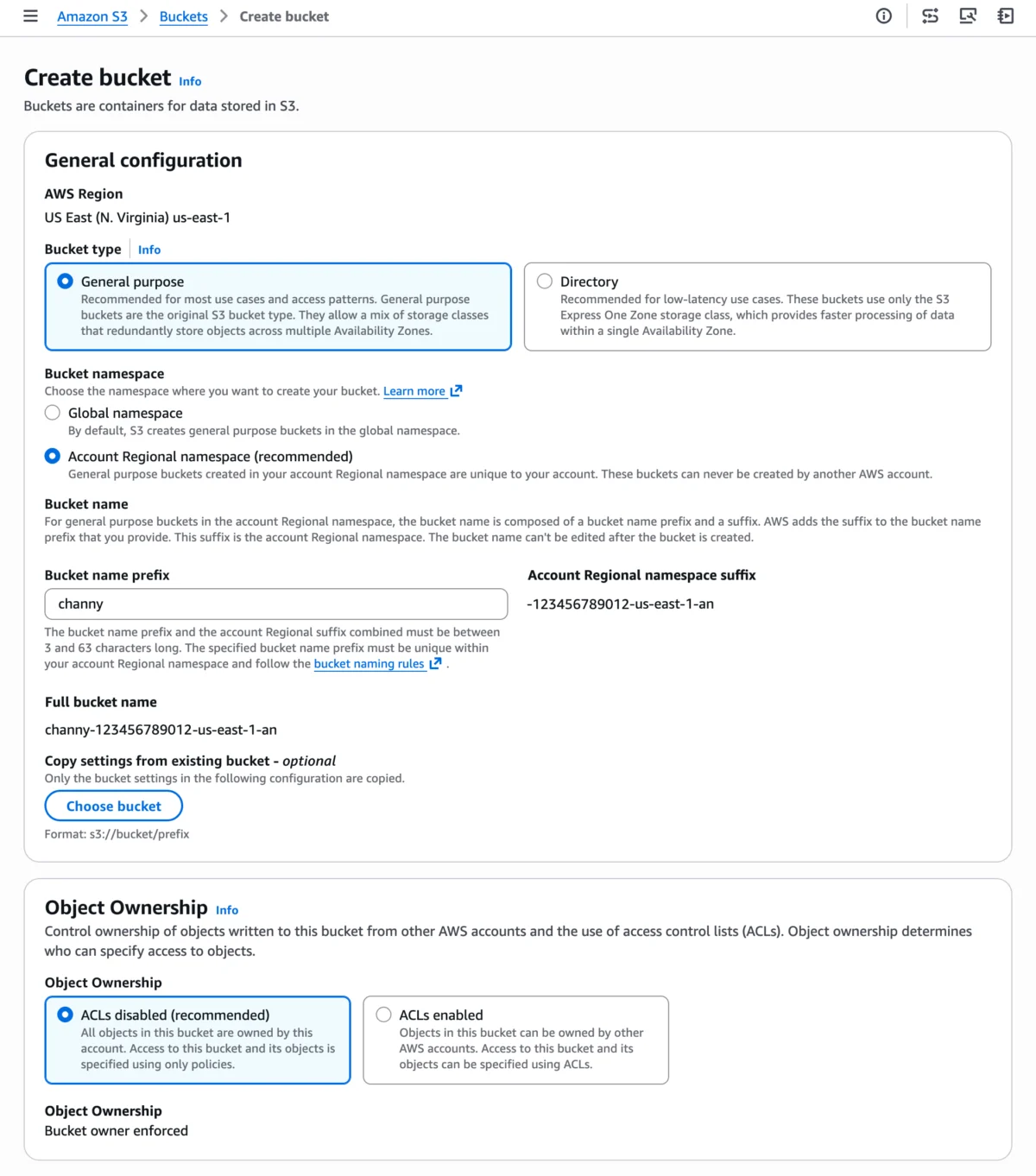
Historically, S3 bucket names have been required to be globally unique across all AWS accounts and regions. While providing a universal identifier, this global namespace often led to complexities for users, including naming collisions, the need for intricate naming conventions, and challenges in maintaining consistency across multi-region deployments. The newly introduced account regional namespace fundamentally shifts this paradigm by appending a unique, system-generated suffix to the user-defined bucket name prefix. This suffix includes the AWS account ID and the specific region, ensuring that the complete bucket name is unique within the customer’s own account for that particular region.
For instance, a user can now create a bucket named mybucket in their account, and the system will automatically append a suffix such as -123456789012-us-east-1-an, resulting in the full bucket name mybucket-123456789012-us-east-1-an. The mybucket portion is the customer’s chosen prefix, while -123456789012-us-east-1-an represents their unique account regional suffix. This design guarantees that only the originating account can create buckets with that specific suffix, automatically rejecting any attempts by other AWS accounts to use the same account-regional identifier. This eliminates the race condition for globally unique names and allows organizations to reuse intuitive prefixes across their different regional deployments without conflict. The combined bucket name prefix and account regional suffix must adhere to S3’s existing length requirements, falling between 3 and 63 characters.
The Evolution of S3 Naming: A Historical Perspective
Amazon S3, launched in 2006, revolutionized cloud storage by offering a highly scalable, durable, and cost-effective object storage solution. Its original global namespace model, while foundational to its simplicity and universality, presented growing pains as AWS adoption soared. Developers and enterprises often struggled to find globally unique names for their buckets, especially in multi-account or multi-region environments. This led to:
- Naming Collisions: The most common issue, where a desired bucket name was already taken by another AWS user worldwide.
- Complex Naming Strategies: Organizations had to devise convoluted naming conventions (e.g.,
company-project-region-env-data) to ensure uniqueness, which could be cumbersome to manage and prone to human error. - "Bucket Squatting": Instances where individuals or entities registered desirable bucket names to prevent others from using them, sometimes for malicious purposes or future resale.
- Automation Challenges: Automating bucket creation via Infrastructure as Code (IaC) tools required dynamic name generation or extensive validation logic to avoid conflicts.
The introduction of the account regional namespace is a direct response to these long-standing customer challenges, reflecting AWS’s continuous commitment to refining its services based on user feedback and evolving cloud deployment patterns. This move aligns S3’s general-purpose bucket naming more closely with the operational realities of large-scale cloud deployments, where regional specificity and account isolation are paramount for security and management.
Operational Benefits for Developers and Enterprises
The implications of this new feature are far-reaching, offering substantial operational benefits across various user groups:
- Simplified Deployment and Automation: Developers can now predictably name their S3 buckets without needing to check for global availability. This drastically reduces the friction associated with deploying applications that rely on S3 storage, especially in multi-region setups. Infrastructure as Code (IaC) tools like AWS CloudFormation and Terraform will see enhanced efficiency. CloudFormation, for instance, can leverage pseudo-parameters like
AWS::AccountIdandAWS::Regionto automatically construct account-regional bucket names, as demonstrated by examples likeBucketName: !Sub "amzn-s3-demo-bucket-$AWS::AccountId-$AWS::Region-an". Alternatively, theBucketNamePrefixproperty simplifies this further, allowing users to specify only the desired prefix, with the suffix automatically generated. This streamlined process reduces template complexity and accelerates deployment cycles. - Enhanced Multi-Region Strategies: For organizations implementing multi-region architectures for disaster recovery, data locality, or compliance, this feature is a game-changer. It allows for consistent bucket naming conventions across regions, simplifying cross-region replication, data synchronization, and application failover strategies. For example, a company might use
company-logs-us-east-1-anandcompany-logs-eu-west-1-anwithout worrying about global name collisions, even if the base prefixcompany-logsis common. - Improved Organizational Consistency: Large enterprises with numerous AWS accounts and teams can enforce standardized bucket naming across their entire cloud footprint. This consistency improves governance, auditing, and overall data management practices.
- Reduced Human Error: By removing the burden of manually ensuring global uniqueness, the likelihood of human error during bucket creation is significantly reduced, leading to fewer deployment failures and less time spent on troubleshooting.
Strengthening Security and Governance with IAM and AWS Organizations
Beyond operational simplicity, the account regional namespace feature also introduces robust mechanisms for security and governance. AWS Identity and Access Management (IAM) policies and AWS Organizations Service Control Policies (SCPs) can now leverage a new condition key: s3:x-amz-bucket-namespace.
This condition key empowers security teams to enforce that employees and automated processes within an organization only create buckets using their account regional namespace. This prevents the accidental or intentional creation of buckets in the global namespace, which could lead to naming conflicts or less controlled environments. For a large enterprise, this means a centralized security team can dictate a mandatory naming convention, ensuring all new S3 buckets automatically conform to the organization’s unique regional identifier.
Industry experts emphasize that this level of control is crucial for maintaining a strong security posture and achieving regulatory compliance in complex cloud environments. While AWS’s existing global namespace had its benefits, the ability to enforce account-level regional naming conventions offers a more granular and practical approach for managing sensitive data at scale. An unnamed AWS product manager was quoted as stating, "This feature empowers our customers to build more robust and compliant cloud environments, giving them greater control over their data’s identity and location."
Implementation Pathways: Console, CLI, SDKs, and IaC
AWS has ensured that the new feature is accessible through all standard S3 interaction methods:

- Amazon S3 Console: Users can select "Account regional namespace" during the "Create bucket" wizard. This option allows them to specify any desired bucket name prefix unique to their account and region.
- AWS Command Line Interface (AWS CLI): The
aws s3api create-bucketcommand now supports the--bucket-namespace account-regionalparameter, alongside the bucket name and region. - AWS SDKs: Developers can integrate this functionality into their applications using AWS SDKs. For example, the AWS SDK for Python (Boto3) allows creating an account-regional bucket by including
"BucketNamespace": "account-regional"in theCreateBucketAPI request. The provided Python example demonstrates how to dynamically resolve the AWS account ID and region using the STSGetCallerIdentityAPI, ensuring the correct suffix is generated. - AWS CloudFormation: As mentioned, CloudFormation templates can be easily updated using
!SubwithAWS::AccountIdandAWS::Regionor by using theBucketNamePrefixproperty combined withBucketNamespace: "account-regional". This ensures seamless integration into existing infrastructure provisioning workflows.
Key Considerations and Limitations
While highly beneficial, it is important to note certain aspects of this new feature:
- No Renaming Existing Buckets: Existing general-purpose buckets created in the global namespace cannot be renamed to adopt the account regional namespace format. Users must create new buckets if they wish to leverage this feature for existing data, which may involve data migration.
- Specific to General-Purpose Buckets: The account regional namespace is exclusively for general-purpose S3 buckets. Other specialized S3 bucket types, such as S3 Table buckets, S3 Vector buckets, and S3 Directory buckets, already operate within their own distinct account-level or zonal namespaces, and thus are not affected by this change. These specialized namespaces are designed to optimize for specific use cases, such as high-performance access or data lakes, and have their own naming conventions tailored to those requirements.
- No Additional Cost: AWS has confirmed that there is no extra charge for creating or using general-purpose buckets within the account regional namespace. This makes the feature immediately accessible and attractive for all S3 users.
- Broad Regional Availability: The feature’s immediate availability in 37 AWS Regions, including critical sovereign cloud environments like AWS China and AWS GovCloud (US), underscores its strategic importance and broad applicability for global enterprises.
Broader Impact on the Cloud Storage Landscape
The introduction of the account regional namespace for Amazon S3 is more than just a minor update; it represents a significant refinement in how organizations manage their foundational cloud storage. By addressing a long-standing pain point of global uniqueness, AWS further solidifies S3’s position as the leading object storage solution, enabling greater agility, control, and security for its vast customer base.
Industry analysts suggest this move will be particularly welcomed by enterprises managing vast, geographically distributed datasets, those adhering to strict data sovereignty requirements, and organizations heavily invested in automated cloud infrastructure. It removes a layer of complexity that often slowed down development and increased operational overhead, allowing teams to focus more on innovating with their data rather than managing its storage identifiers. This enhancement is expected to drive even greater adoption of S3’s advanced features, as the underlying naming hurdle is effectively removed. As cloud storage continues its exponential growth, features that enhance manageability, predictability, and security at scale become increasingly critical for sustained innovation and enterprise confidence.
AWS encourages users to try out the new functionality via the Amazon S3 console and provide feedback through AWS re:Post for Amazon S3 or their usual AWS Support contacts. This continuous feedback loop is a hallmark of AWS’s development philosophy, ensuring that services evolve in direct response to customer needs.
In conclusion, the account regional namespace for Amazon S3 general-purpose buckets is a practical, impactful update that simplifies cloud storage management, enhances security governance, and streamlines multi-region deployments. It reflects AWS’s ongoing commitment to delivering robust, scalable, and user-friendly cloud infrastructure, further cementing S3’s role as the backbone of modern data architectures.