
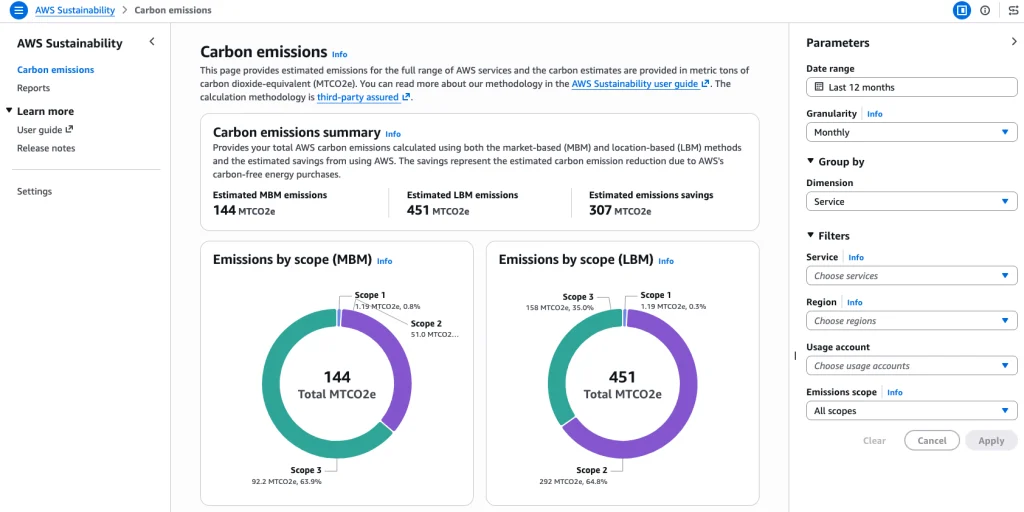

Amazon Web Services (AWS) has announced the launch of its new AWS Sustainability Console, a standalone service designed to consolidate all AWS sustainability reporting and resources into a single, accessible platform. This strategic development marks a significant step in AWS’s ongoing commitment to both its own environmental goals and assisting its vast customer base in accurately measuring and reducing the environmental footprint of their cloud workloads. The console, accessible at no additional cost, aims to democratize access to critical carbon emissions data, moving it beyond the sole purview of billing departments and into the hands of sustainability professionals and reporting teams.
The Evolving Landscape of Corporate Sustainability and Cloud Computing
The introduction of the AWS Sustainability Console arrives at a pivotal moment when environmental stewardship has transitioned from a niche corporate social responsibility initiative to a core business imperative. Global climate concerns, coupled with increasing regulatory pressures and stakeholder demands for transparency, have propelled sustainability reporting to the forefront of corporate strategy. Companies worldwide are grappling with the complexities of Environmental, Social, and Governance (ESG) disclosures, necessitating robust tools to track and report their environmental impact accurately.
Cloud computing, while offering immense efficiencies and scalability, also carries an environmental footprint due to the energy consumption of data centers. As organizations migrate more of their operations to the cloud, understanding and managing the associated emissions becomes crucial. AWS, as a leading cloud provider, has long recognized this responsibility. In 2019, Amazon, its parent company, co-founded The Climate Pledge, setting an ambitious goal to reach net-zero carbon across its operations by 2040—a decade ahead of the Paris Agreement’s target. This commitment underpins AWS’s infrastructure design, emphasizing renewable energy, water efficiency, and sustainable hardware. AWS has also committed to powering its operations with 100% renewable energy by 2025, having reached 90% in 2023.
Prior to this launch, AWS offered the Customer Carbon Footprint Tool (CCFT) within the AWS Billing Console, providing users with an estimate of their carbon emissions. While valuable, its integration with billing functionalities posed a practical challenge: accessing emissions data often required permissions that also granted access to sensitive financial information, a setup not ideal for sustainability teams. The new Sustainability Console directly addresses this friction point, reflecting AWS’s responsiveness to customer feedback and the evolving needs of corporate sustainability workflows.
Key Features and Enhanced Capabilities of the AWS Sustainability Console

The AWS Sustainability Console builds upon the foundation of the CCFT but introduces a suite of new capabilities designed to offer greater flexibility, accessibility, and depth in sustainability reporting.
Decoupled Permissions Model: A standout feature of the new console is its independent permissions model. Unlike its predecessor, the Sustainability Console allows organizations to grant specific access to emissions data without simultaneously requiring billing-level permissions. This crucial enhancement empowers sustainability officers, environmental compliance teams, and ESG reporting specialists to access relevant data directly, streamlining internal processes and improving data governance. This addresses a common bottleneck where valuable time was spent navigating complex internal permission structures or relying on other departments to extract data.
Comprehensive Emissions Data and Granular Breakdown: The console provides a detailed breakdown of Scope 1, Scope 2, and Scope 3 emissions attributed to AWS usage. This data is further segmented by AWS Region and specific AWS services, such as Amazon CloudFront, Amazon Elastic Compute Cloud (Amazon EC2), and Amazon Simple Storage Service (Amazon S3). This granular view enables customers to identify "hotspots" or areas of high emissions within their cloud architecture, facilitating targeted optimization efforts. The underlying data and methodology remain consistent with those used by the CCFT, ensuring continuity and reliability.
- Scope 1 emissions refer to direct emissions from sources owned or controlled by the customer or AWS (e.g., fuel combustion in data centers).
- Scope 2 emissions are indirect emissions from the generation of purchased energy. The console provides both Market-Based Method (MBM) and Location-Based Method (LBM) data. MBM accounts for energy attribute certificates (like Renewable Energy Certificates), reflecting purchasing choices, while LBM uses average emissions intensity of the local grid.
- Scope 3 emissions encompass all other indirect emissions that occur in a company’s value chain, including upstream activities like the manufacturing of servers and data center construction, and downstream activities. For cloud users, these typically include the indirect emissions associated with the cloud provider’s operations.
This comprehensive reporting aligns with global standards such as the Greenhouse Gas Protocol, providing organizations with the necessary data points for their broader ESG disclosures.
Flexible Reporting and Customization: Recognizing the diverse reporting requirements of different organizations, the console includes a dedicated "Reports" page. Here, users can download preset monthly and annual carbon emissions reports, covering both MBM and LBM data. Beyond standard reports, a powerful customization feature allows users to build custom comma-separated values (CSV) reports. This flexibility extends to selecting specific fields to include, defining time granularity, and applying various filters, enabling tailored data exports for specific analytical or compliance needs.
Fiscal Year Alignment: A common challenge for finance and sustainability teams is the misalignment between calendar year reporting and an organization’s fiscal year. The AWS Sustainability Console now allows users to configure the console to match their specific reporting period. Once set, all data views and exports reflect the organization’s fiscal year and quarters, eliminating a significant point of friction in cross-departmental reporting and analysis.
Programmatic Access via API and SDKs: For organizations with advanced data integration needs, the console offers programmatic access to emissions data through a new API and AWS SDKs. This feature is particularly valuable for teams that need to integrate emissions data into their existing reporting pipelines, custom dashboards, or compliance workflows. It facilitates the automated pulling of data for specific periods across a multitude of accounts without manual export setups. Furthermore, it supports the establishment of custom account groupings that may not align with existing AWS Organizations structures, offering unparalleled flexibility for complex enterprises. The ability to programmatically access this data via tools like the AWS Command Line Interface (AWS CLI) underscores AWS’s commitment to automation and integration.

Continuous Improvement and Transparency: The console also features a "Release notes" page under the "Learn more" tab, providing transparent updates on the latest features and methodology changes. This commitment to ongoing development ensures that the console will continue to evolve alongside customer needs and advancements in sustainability science.
Methodology and Independent Verification
The accuracy and reliability of emissions data are paramount for credible sustainability reporting. AWS’s methodology for calculating customer carbon footprints is detailed in a publicly available document, which has been independently verified by Apex, a third-party consultant. This external validation lends significant credibility to the data provided by the Sustainability Console, assuring customers that the figures they report are based on a robust and verified framework. The inclusion of Scope 1, 2, and 3 emissions, along with both market-based and location-based accounting, reflects a comprehensive approach to carbon footprint assessment that aligns with international best practices.
Implications for Businesses and the Environment
The launch of the AWS Sustainability Console carries profound implications for businesses leveraging cloud technology and for broader environmental efforts.
Empowering Sustainability Professionals: By providing direct, unencumbered access to emissions data, the console empowers sustainability teams to proactively monitor, analyze, and report on their cloud-related environmental impact. This shift from reactive data requests to proactive data access fosters greater autonomy and efficiency within these critical departments.
Driving Greener Cloud Adoption and Optimization: With enhanced visibility into the carbon footprint of specific services and regions, customers are better equipped to make informed decisions about their cloud architecture. This could lead to optimizing workloads for lower emissions regions, choosing more energy-efficient services, or rightsizing resources to reduce unnecessary consumption. The console transforms abstract environmental goals into actionable insights, potentially accelerating the adoption of greener cloud practices across industries.
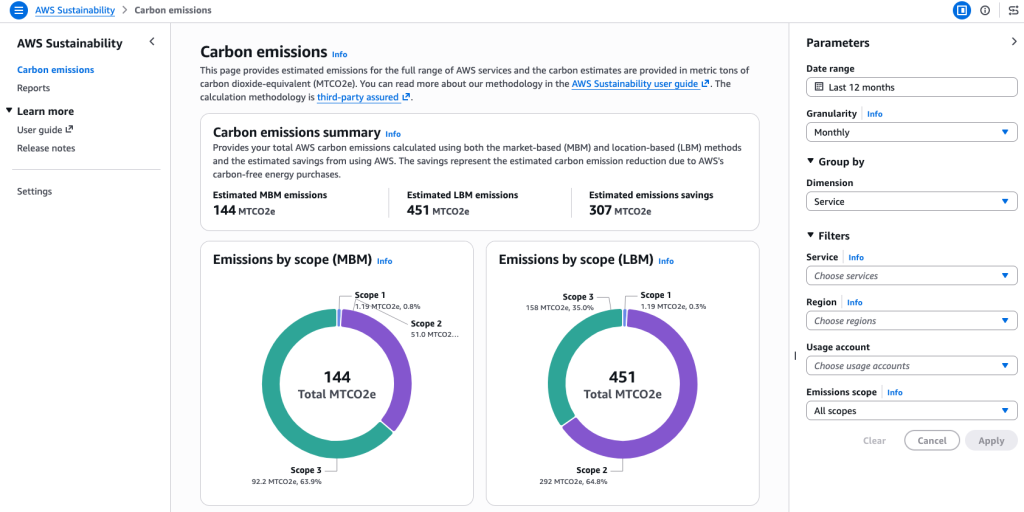
Facilitating ESG Reporting and Compliance: As regulatory bodies worldwide introduce stricter climate disclosure requirements (e.g., the EU’s Corporate Sustainability Reporting Directive (CSRD), the SEC’s climate disclosure rule), accurate and auditable emissions data becomes indispensable. The AWS Sustainability Console provides a standardized, verified source of Scope 1, 2, and 3 emissions data, significantly simplifying the complex task of ESG reporting and helping organizations meet their compliance obligations. This can reduce the financial and operational burden associated with data collection and validation.
Enhancing Supply Chain Transparency: For many organizations, the emissions associated with their cloud providers fall under their own Scope 3 emissions. By providing detailed, verifiable data, AWS helps its customers improve their own supply chain transparency and report their indirect emissions more accurately, contributing to a more holistic view of global carbon footprints.
Broader Industry Impact: The introduction of a dedicated, feature-rich sustainability console by a major cloud provider like AWS sets a new benchmark for the industry. It signals a maturation of environmental tools within the cloud ecosystem and may prompt other providers to enhance their own offerings, ultimately benefiting all cloud users and advancing collective sustainability goals. This competitive drive can foster innovation in green cloud technologies and reporting.
A Step Towards a Sustainable Digital Future
The AWS Sustainability Console is more than just a reporting tool; it is a manifestation of a deeper commitment to fostering a sustainable digital future. As an integral component of Amazon’s broader Climate Pledge, it reflects a belief that technology can be a powerful enabler of environmental progress. By providing granular data, flexible reporting, and programmatic access, AWS is not only helping customers understand their current impact but also empowering them to actively manage and reduce it.
Looking ahead, AWS has indicated that the console is designed to grow, with plans to continuously release new features and capabilities. This iterative approach ensures that the platform will evolve to meet the dynamic needs of customers and the ever-changing landscape of sustainability reporting. Historical data dating back to January 2022 is available immediately within the console, allowing users to analyze past trends and establish baselines for future improvement.
In an era where environmental accountability is paramount, the AWS Sustainability Console provides a vital resource for organizations striving to build a more sustainable future, both for their businesses and for the planet. It stands as a testament to the idea that technological innovation and environmental stewardship can, and must, go hand in hand.