
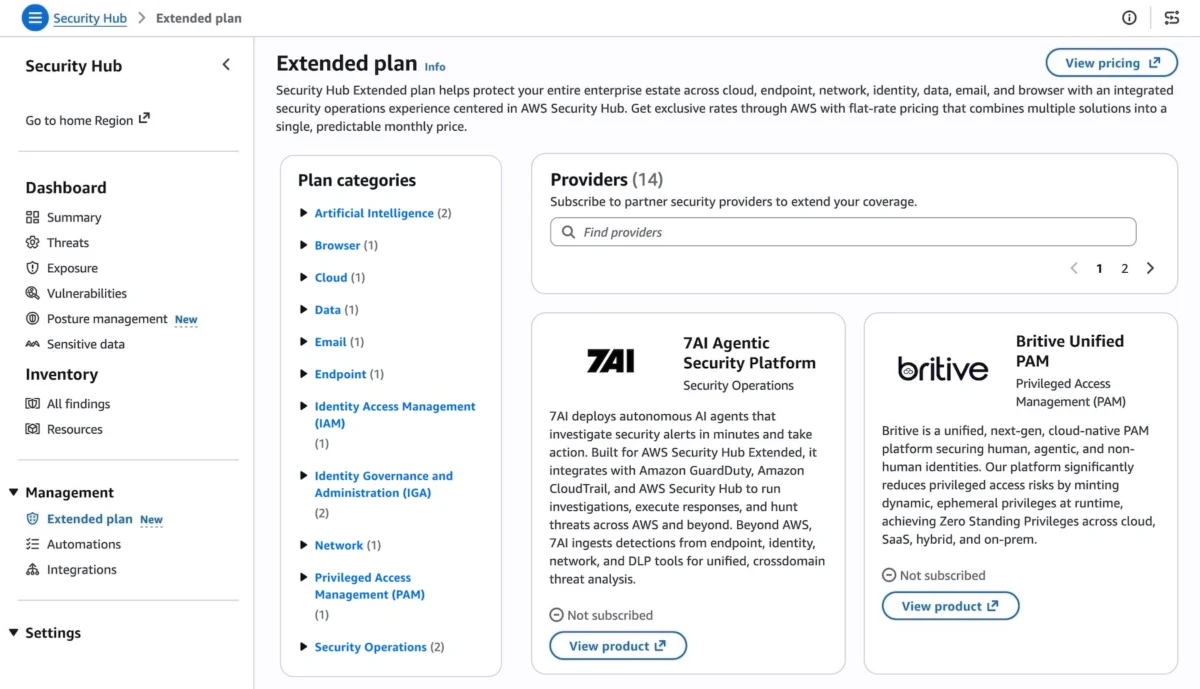

Amazon Web Services (AWS) today announced the general availability of AWS Security Hub Extended, a significant evolution of its security management service designed to provide a comprehensive, full-stack enterprise security solution. This new offering simplifies the procurement, deployment, and integration of security capabilities across a vast array of domains, including endpoint, identity, email, network, data, browser, cloud, artificial intelligence (AI), and security operations. Leveraging a curated selection of AWS Partner solutions alongside native AWS security services, Security Hub Extended aims to address the escalating complexity and fragmentation plaguing modern enterprise cybersecurity landscapes.
Addressing the Cybersecurity Conundrum: A Fragmented Landscape
The modern cybersecurity environment presents an increasingly formidable challenge for enterprises globally. Organizations grapple with a sprawling array of security tools, often from dozens of different vendors, each generating its own alerts and operating in silos. This vendor sprawl leads to significant operational inefficiencies, including fragmented visibility, alert fatigue, complex integration challenges, and a prolonged incident response cycle. A recent report by Cybersecurity Ventures projected global cybersecurity spending to exceed $262 billion by 2026, yet despite this investment, data breaches continue to rise in frequency and sophistication. IBM’s 2023 Cost of a Data Breach Report indicated the average cost of a data breach reached an all-time high of $4.45 million, underscoring the severe financial and reputational impact of security incidents. The complexity is further compounded by the prevalence of multi-cloud and hybrid IT architectures, demanding a security strategy that transcends traditional perimeters and cloud boundaries. Enterprises have long expressed frustration over managing multiple procurement cycles, negotiating individual vendor contracts, and integrating disparate security findings, consuming valuable time and resources that could otherwise be directed towards innovation and threat hunting. It is this pervasive challenge that AWS Security Hub Extended seeks to alleviate.
The Genesis: From re:Invent 2025 to Comprehensive Coverage
The journey towards AWS Security Hub Extended began with a foundational announcement at re:Invent 2025, where AWS introduced a "completely re-imagined AWS Security Hub." This initial overhaul focused on unifying AWS security services such as Amazon GuardDuty, Amazon Inspector, and others into a single, cohesive experience. The goal was to automatically and continuously analyze security findings from these native services, enabling customers to prioritize and respond to critical risks within their AWS environments with near real-time analytics. This represented a strategic move by AWS to consolidate its robust suite of security tools, moving from individual service offerings to a more integrated platform approach.

The introduction of Security Hub Extended represents the next logical, and arguably more ambitious, phase of this strategy. Recognizing that enterprise security extends far beyond the confines of a single cloud provider, even one as extensive as AWS, the company sought to bridge the gap between cloud-native security and the broader enterprise security posture. The shift from a cloud-centric unification to an "enterprise-wide" solution signifies a deeper commitment to solving holistic security challenges, irrespective of where an asset resides or what technology it employs. This expansion acknowledges that a truly robust security posture requires a unified view across cloud, on-premises, and SaaS environments, encompassing all critical vectors of attack.
A Curated Ecosystem: Deep Dive into Partner Solutions
Central to the value proposition of AWS Security Hub Extended is its curated selection of AWS Partner solutions. By integrating offerings from industry leaders, AWS is enabling customers to extend their security portfolio with proven technologies across the entire enterprise estate. This curated list includes prominent names such as 7AI, Britive, CrowdStrike, Cyera, Island, Noma, Okta, Oligo, Opti, Proofpoint, SailPoint, Splunk (a Cisco company), Upwind, and Zscaler. Each partner brings specialized expertise to bolster specific security domains:
- Endpoint Security: Solutions like CrowdStrike provide advanced endpoint detection and response (EDR), threat intelligence, and next-gen antivirus capabilities, crucial for protecting devices and preventing malware propagation.
- Identity and Access Management (IAM): Partners such as Okta and SailPoint offer robust identity governance, access management, and privileged access management (PAM) solutions, essential for controlling who has access to what, and under what conditions.
- Email Security: Proofpoint, a leader in email security, helps protect against phishing, malware, and other email-borne threats, which remain a primary vector for cyberattacks.
- Network and Cloud Security: Zscaler, known for its Zero Trust Exchange platform, provides secure access service edge (SASE) capabilities, securing users, devices, and applications regardless of location. Solutions like Upwind and Noma likely contribute to cloud workload protection and network visibility.
- Data Security: Cyera and other data security posture management (DSPM) providers help discover, classify, and protect sensitive data across various repositories, ensuring compliance and preventing data exfiltration.
- Browser Security: Island’s Enterprise Browser technology offers a new layer of control and visibility for web-based activities, critical in an era of distributed workforces.
- AI Security: With AI becoming increasingly pervasive, partners like 7AI and Oligo focus on securing AI models and applications, addressing emerging threats specific to machine learning pipelines.
- Security Operations (SecOps): Splunk, a long-standing leader in security information and event management (SIEM) and security orchestration, automation, and response (SOAR), plays a pivotal role in centralizing log management, threat detection, and incident response workflows.
The critical enabler for this comprehensive integration is the adoption of the Open Cybersecurity Schema Framework (OCSF). Security findings from all participating solutions are emitted in the OCSF schema and automatically aggregated within AWS Security Hub. OCSF is a collaborative, open-source project aimed at standardizing cybersecurity data. By providing a common language and structure for security events, OCSF eliminates the need for complex, bespoke integrations between disparate security tools. This standardization is a game-changer for security operations, allowing for faster correlation of events, streamlined automation, and a more accurate understanding of the overall threat landscape, irrespective of the originating source. The ability to combine AWS-native and partner security solutions, all speaking the same OCSF language, empowers security teams to quickly identify and respond to risks that span traditional boundaries, from a user’s laptop to a cloud database or an AI model.
Streamlined Procurement and Operations: The Economic and Operational Advantages
Beyond the technical integration, AWS Security Hub Extended delivers substantial economic and operational advantages. One of the most significant benefits is AWS acting as the seller of record for all partner solutions within the Extended plan. This means customers benefit from pre-negotiated pay-as-you-go pricing, a single consolidated bill from AWS, and crucially, no long-term commitments. This model stands in stark contrast to the traditional process of managing multiple vendor contracts, each with its own pricing structure, negotiation cycles, and billing schedules. For large enterprises, this simplification translates directly into reduced administrative overhead, faster time-to-value for new security capabilities, and greater financial agility. Procurement teams can bypass lengthy individual negotiations, while finance departments benefit from predictable, consumption-based billing consolidated under their existing AWS relationship.

Furthermore, the Extended plan offers a unified security operations experience within the Security Hub console itself. This centralized view aggregates findings from both AWS and partner solutions, presenting a coherent picture of an organization’s security posture. For AWS Enterprise Support customers, this also extends to unified Level 1 support, streamlining the troubleshooting and issue resolution process. Instead of navigating separate support channels for each security vendor, customers can leverage their existing AWS Support contacts, further reducing operational friction and accelerating incident resolution. This directly addresses the feedback AWS received from customers about the complexities and resource drains associated with managing a multitude of security vendors. By curating partner offerings and simplifying their consumption, AWS aims to empower organizations to establish more comprehensive protection across their entire technology stack through a single, simplified experience.
How It Works: A Seamless Integration Experience
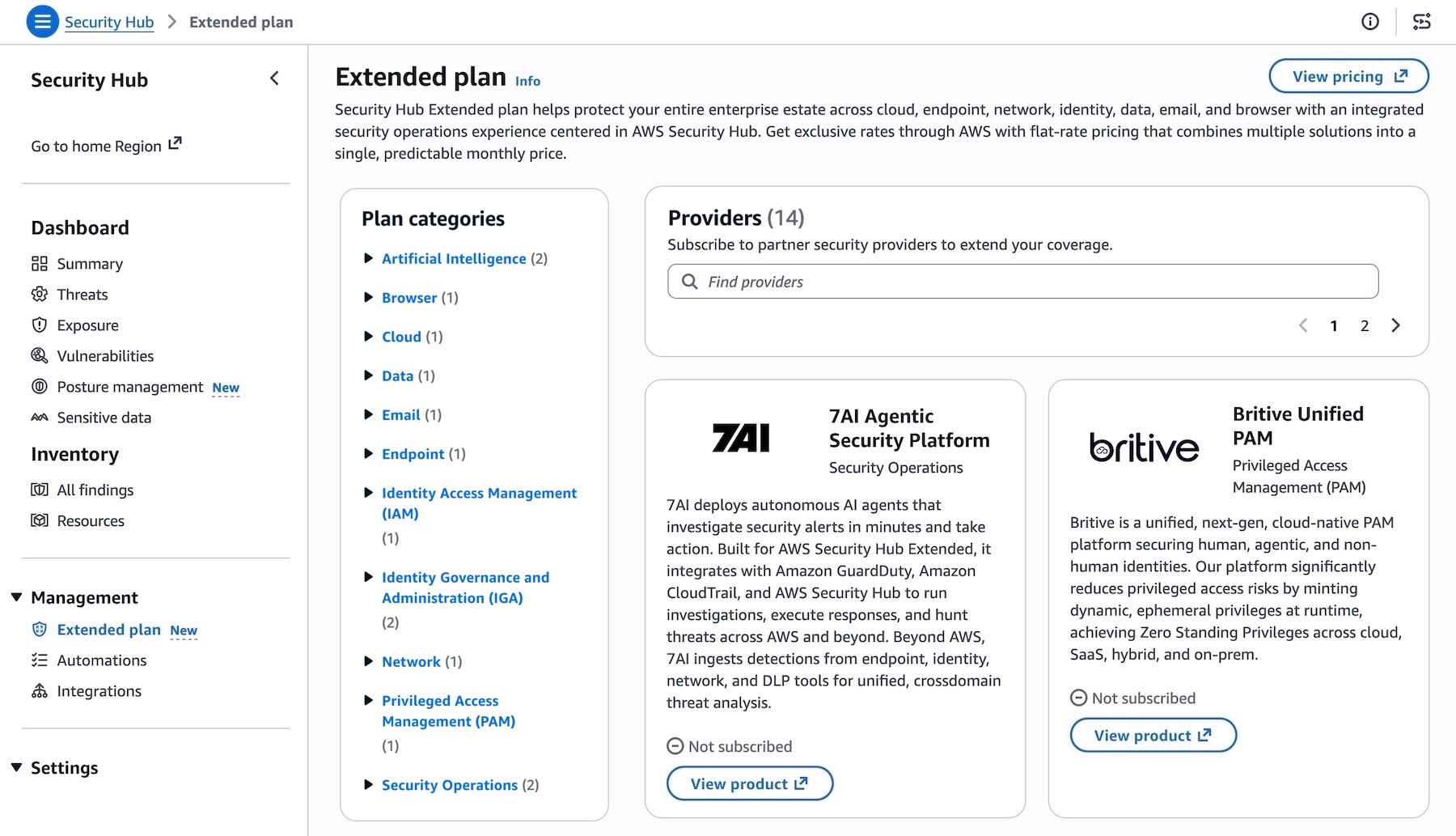
Accessing and deploying partner solutions within the Security Hub Extended plan is designed to be intuitive and efficient. Customers can navigate directly to the Security Hub console and select "Extended plan" under the "Management" menu. From this centralized interface, they gain access to a marketplace-like view, allowing them to review details of each curated partner offering. The console provides sufficient information to understand the capabilities of each solution, enabling informed decision-making.
Once a customer decides to subscribe to a particular partner offering, they are directed to an automated onboarding experience provided by that specific partner. This ensures that the specialized setup and configuration unique to each solution are handled efficiently. Post-onboarding, consumption-based metering is automatically initiated, and customers are billed monthly as part of their existing Security Hub bill. This seamless process eliminates manual tracking and billing reconciliation for individual solutions, further reinforcing the single-bill advantage. All security findings generated by these integrated solutions are automatically consolidated within AWS Security Hub, presented in the normalized OCSF schema. This immediate and direct access to standardized security intelligence across their entire environment empowers security teams with unprecedented visibility and actionable insights, facilitating rapid identification and response to risks that might otherwise remain hidden across disparate systems.
Industry Implications and Strategic Vision
The introduction of AWS Security Hub Extended carries significant implications for the broader cybersecurity industry and solidifies AWS’s strategic position in the enterprise security market. It represents a clear acceleration of the trend towards security platform consolidation, where customers seek integrated solutions rather than standalone tools. By acting as the central nexus for both cloud-native and third-party security services, AWS is positioning Security Hub as the de facto security operations platform for organizations operating in the cloud era. This move could encourage other cloud providers to adopt similar strategies, fostering greater interoperability and standardization across the industry.
For partner companies, this offers a new go-to-market channel and simplified sales motion, leveraging AWS’s vast customer base and trusted relationship. It allows them to reach a broader audience of enterprises seeking integrated solutions without the typical procurement hurdles. For enterprises, it means moving closer to the long-sought-after goal of a "single pane of glass" for security, reducing complexity, improving efficiency, and ultimately strengthening their overall security posture. This strategic initiative underscores AWS’s commitment not only to securing its own cloud infrastructure but also to enabling its customers to secure their entire digital estate, recognizing the interconnected nature of modern IT environments. The future could see even deeper integrations, AI/ML-driven threat intelligence, and further expansion of the curated partner ecosystem, continually adapting to the evolving threat landscape.
Availability and Accessibility
The AWS Security Hub Extended plan is now generally available across all AWS commercial Regions where Security Hub is already offered. This widespread availability ensures that a broad spectrum of AWS customers can immediately leverage the benefits of this integrated security solution. Pricing models are flexible, offering both pay-as-you-go and flat-rate options, eliminating the need for upfront investments or long-term commitments. Detailed pricing information is accessible on the AWS Security Hub pricing page, allowing organizations to choose the model that best suits their operational and financial requirements. AWS encourages customers to explore the capabilities of Security Hub Extended directly within the Security Hub console and to provide feedback via AWS re:Post for Security Hub or through their established AWS Support contacts. This ongoing dialogue is crucial for the continuous evolution and refinement of the service, ensuring it continues to meet the dynamic needs of enterprise cybersecurity.