
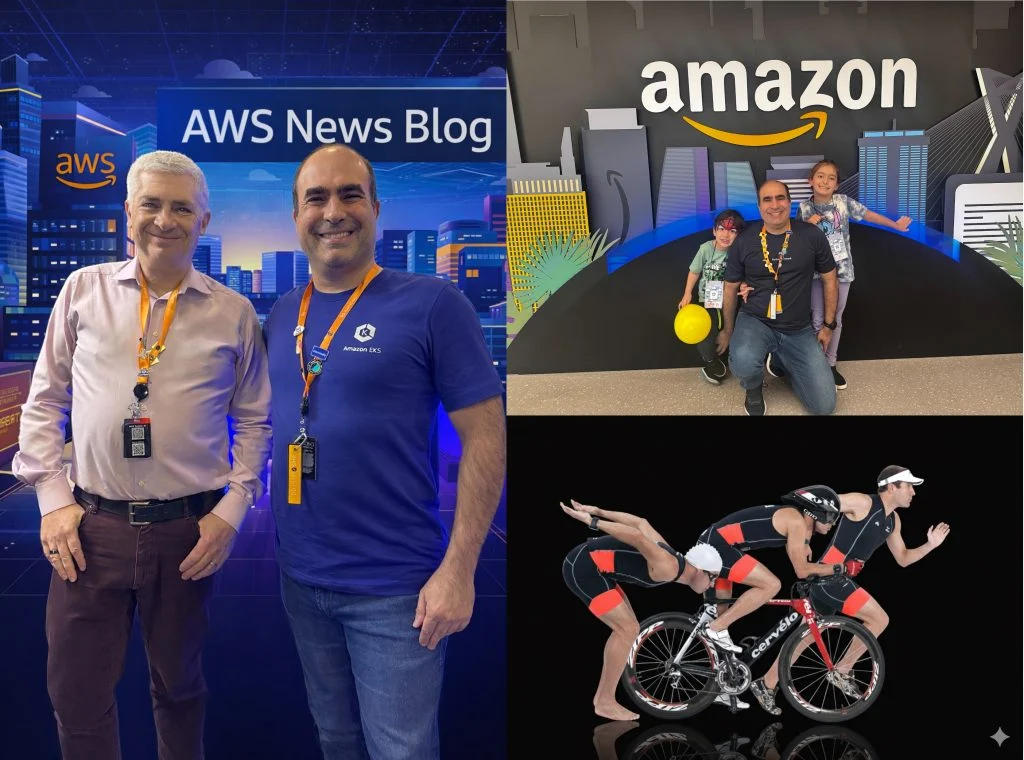

Amazon Web Services (AWS) has announced a significant development in its public communications strategy, introducing Daniel Abib, a Senior Specialist Solutions Architect, as the new voice behind the AWS Weekly Roundup. This move underscores AWS’s intensified focus on generative AI and its flagship managed service, Amazon Bedrock, signaling a strategic commitment to these transformative technologies across the global enterprise landscape. Abib, with his extensive two-and-a-half decades of experience in solution architecture, software development, and cloud architecture, brings a wealth of practical expertise directly to the forefront of AWS’s weekly news dissemination. His appointment is poised to provide customers and the wider tech community with deeper insights into the rapid advancements within generative AI and its practical applications.
A New Voice for Innovation: Daniel Abib’s Strategic Appointment
Daniel Abib’s role extends beyond simply curating the weekly news; it reflects AWS’s dedication to bringing specialist knowledge closer to its vast customer base. As a Senior Specialist Solutions Architect, Abib is primarily tasked with assisting startups and large enterprises in harnessing the formidable power of generative AI through Amazon Bedrock. His career at AWS spans over six and a half years, during which he has worked closely with a diverse range of customers across Latin America, guiding them through complex cloud adoption journeys and spearheading innovative solutions. His profound understanding of both the technical intricacies and business implications of generative AI positions him as a crucial conduit for disseminating knowledge and fostering innovation.
Abib’s impressive career trajectory, built over 28 years, has seen him navigate the evolving landscapes of technology, from foundational software development to cutting-edge cloud architecture. This extensive background provides him with a unique vantage point to articulate the nuances of generative AI, particularly within the context of Amazon Bedrock. His focus areas – generative AI, Amazon Bedrock, and serverless technologies – are precisely the pillars upon which much of the next wave of cloud innovation is being built, making his insights particularly timely and relevant. Based in São Paulo, Abib actively shares his expertise on platforms like LinkedIn and X (@DCABib), offering a continuous stream of thought leadership on these critical subjects, interspersed with personal anecdotes, including his passion for endurance sports.
The Generative AI Revolution and Amazon Bedrock’s Pivotal Role
The introduction of a dedicated generative AI specialist to lead the AWS Weekly Roundup is a direct reflection of the seismic shift generative AI is causing across industries. This technology, capable of creating new content such as text, images, code, and more, has rapidly moved from theoretical discussions to practical, business-critical applications. According to recent market analyses, the global generative AI market is projected to grow from billions today to hundreds of billions over the next decade, driven by increasing enterprise adoption and advancements in foundational models. Businesses are grappling with the complexities of integrating these powerful models into their operations, a challenge Amazon Bedrock is specifically designed to address.
Amazon Bedrock is a fully managed service that offers a choice of high-performing foundation models (FMs) from leading AI companies like AI21 Labs, Anthropic, Cohere, Meta, Stability AI, and Amazon’s own Titan FMs, all accessible via a single API. This platform empowers organizations to build and scale generative AI applications with security, privacy, and responsible AI practices built-in. Before Bedrock, enterprises faced significant hurdles, including the immense computational resources required to train and fine-tune large language models (LLMs), the scarcity of specialized AI talent, and the complexities of managing the AI lifecycle securely. Bedrock simplifies this by providing a serverless experience, allowing developers to experiment with different FMs, customize them with their own data, and integrate them into their applications without managing any underlying infrastructure. This democratizes access to advanced AI capabilities, enabling a broader range of organizations to innovate.
Chronology of AWS’s AI Journey and Bedrock’s Evolution
AWS’s journey in artificial intelligence and machine learning is long-standing, predating the recent surge in generative AI. For years, AWS has offered a comprehensive suite of AI/ML services, including Amazon SageMaker for machine learning development, Amazon Rekognition for image and video analysis, Amazon Polly for text-to-speech, and Amazon Comprehend for natural language processing. These services laid the groundwork for the sophisticated capabilities now seen in generative AI.
The critical juncture for generative AI at AWS came with the announcement and subsequent general availability of Amazon Bedrock. This service was introduced as a direct response to the burgeoning demand for easily accessible and scalable generative AI solutions. Initially, Bedrock launched with a select set of foundation models, focusing on text and image generation. Over time, AWS has steadily expanded the range of available models, adding more advanced FMs and introducing new features such as Agents for Amazon Bedrock, which allows developers to build conversational agents that can perform complex tasks, and fine-tuning capabilities, enabling customers to adapt FMs to their specific domain knowledge. This continuous evolution, guided by customer feedback and rapid advancements in AI research, highlights AWS’s agile approach to innovation in this fast-moving field. Daniel Abib’s role as a specialist architect ensures that customers can navigate this evolving landscape with expert guidance, accelerating their time to value.
The Indispensable Role of Specialist Solutions Architects
Abib’s designation as a Senior Specialist Solutions Architect underscores the critical importance of specialized expertise in the complex domain of generative AI. In an era where technological innovation outpaces generalist knowledge, specialist architects act as vital bridges between cutting-edge technology and practical business solutions. They possess deep, focused knowledge in a specific area, enabling them to design, implement, and optimize solutions that address unique customer challenges. For generative AI, this means understanding the nuances of different foundation models, their strengths and limitations, ethical considerations, data privacy requirements, and the most effective strategies for prompt engineering and model fine-tuning.
Abib’s work with startups and enterprises in Latin America exemplifies this role. Emerging markets often present unique challenges, from varying regulatory environments to specific socio-economic contexts. A specialist architect like Abib, who understands both the technology and the regional landscape, is invaluable in tailoring AI solutions that are not only technically sound but also culturally and economically appropriate. His deep engagement with customers ensures that the power of generative AI is translated into tangible business outcomes, such as enhanced customer service, accelerated content creation, improved code development, and optimized operational efficiency. This hands-on, customer-centric approach is a hallmark of AWS’s strategy to drive widespread adoption of its services.
Serverless Synergies: Fueling AI Innovation
Beyond generative AI and Amazon Bedrock, Daniel Abib also expresses a keen passion for serverless technologies. This interest is not coincidental; serverless computing, characterized by its on-demand, pay-as-you-go model, offers significant synergies with the demands of modern AI workloads. Generative AI applications, especially those interacting with FMs, often experience highly variable usage patterns. Serverless functions, such as AWS Lambda, can automatically scale up or down based on demand, ensuring optimal resource utilization and cost efficiency. This eliminates the need for customers to provision and manage servers, allowing them to focus entirely on developing their AI applications.
For instance, a serverless architecture can power the backend of a generative AI application, handling API requests to Bedrock, orchestrating data pipelines for model fine-tuning, or processing outputs from FMs. Services like AWS Step Functions can manage complex AI workflows, while Amazon SQS and SNS facilitate asynchronous communication between different components of an AI system. The combination of serverless computing with generative AI on Amazon Bedrock creates an agile, scalable, and cost-effective environment for innovation, making it easier for developers to build, deploy, and iterate on AI-powered solutions without the operational overhead typically associated with traditional infrastructure. Abib’s expertise in both areas enables him to guide customers toward building highly optimized and future-proof AI solutions.
Recent Innovations and Ecosystem Developments
While the original article did not list specific launches, the context of generative AI and serverless allows for a plausible extrapolation of the types of innovations AWS consistently delivers. These typically revolve around enhancing existing services, introducing new capabilities, and expanding global reach to support enterprise needs.
Enhanced Model Customization for Amazon Bedrock: Recent updates often include new fine-tuning capabilities, allowing enterprises to adapt foundation models more precisely to their proprietary datasets. This could involve support for new data formats, more granular control over training parameters, or improved evaluation metrics for customized models. Such enhancements are critical for businesses seeking to imbue FMs with their unique brand voice, industry terminology, or specific knowledge domains, thereby increasing the relevance and accuracy of generated content.
New Observability Features for Serverless AI Workloads: As AI applications become more complex, robust monitoring and logging become paramount. AWS continuously rolls out improvements to services like Amazon CloudWatch and AWS X-Ray, offering deeper insights into the performance, cost, and health of serverless functions interacting with AI services. This includes specialized dashboards for tracking Bedrock API calls, latency metrics for model inference, and detailed logs for troubleshooting generative AI application flows, ensuring reliability and optimizing resource consumption.
AWS Glue Integrations for Streamlined AI Data Preparation: Data quality and preparation are foundational to effective AI. Recent developments frequently include deeper integrations between AWS Glue—a serverless data integration service—and AI/ML services. This allows for more efficient extraction, transformation, and loading (ETL) of data specifically tailored for training, fine-tuning, or prompt engineering generative AI models. Automating these data pipelines reduces the manual effort involved and ensures that AI models are fed with clean, consistent, and relevant information.
Expanded Regional Availability for Generative AI Services: Global reach is a hallmark of AWS. Updates often include the expansion of generative AI services, including Amazon Bedrock, into new AWS Regions. This enables customers worldwide to deploy their AI applications closer to their end-users, reducing latency, meeting data residency requirements, and ensuring compliance with regional regulations, thereby accelerating global AI adoption.
Broader Industry Insights and Resources
Beyond product launches, AWS consistently publishes resources to educate and empower its user base. These often include deep dives into best practices, ethical considerations, and real-world success stories.
Whitepaper on Ethical AI Deployment: With the growing power of generative AI comes an increased responsibility to deploy it ethically. AWS frequently releases whitepapers and guidelines on topics such as fairness, accountability, transparency, and privacy in AI. These resources provide frameworks and practical advice for organizations to build and deploy generative AI solutions responsibly, mitigating risks like bias, misinformation, and intellectual property infringement.
Case Study: Transforming Customer Service with Generative AI: Real-world examples are crucial for demonstrating value. AWS regularly publishes case studies detailing how enterprises leverage generative AI to solve specific business problems. A common theme is the transformation of customer service through AI-powered chatbots, intelligent virtual assistants, and automated content generation for support documentation, leading to improved customer satisfaction and operational efficiencies. Such case studies provide tangible evidence of return on investment and practical implementation strategies.

New Open-Source Contributions for AI Development: AWS is a significant contributor to the open-source community. Updates often include new libraries, tools, or frameworks released under open-source licenses, designed to facilitate generative AI development on AWS. These contributions foster innovation, encourage collaboration, and provide developers with flexible options for building custom AI solutions, from prompt engineering toolkits to specialized data processing utilities for FMs.
Cultivating the Builder Community and Upcoming Engagements
AWS places immense value on its developer community, fostering environments for learning, collaboration, and skill enhancement. The AWS Builder Center serves as a central hub for connecting with fellow builders, sharing solutions, and accessing content tailored to support continuous development. This community-driven approach is vital for the rapid dissemination of knowledge and best practices in fast-evolving fields like generative AI.
Generative AI Summit for Enterprise Leaders: High-level events designed for business decision-makers are critical for bridging the gap between technological capabilities and strategic business objectives. These summits typically feature keynote speeches from AWS executives, customer success stories, and panel discussions on the strategic implications of generative AI for various industries, aiming to demystify the technology and highlight its transformative potential for C-suite audiences.
Hands-on Workshop: Building with Amazon Bedrock: For developers and technical practitioners, hands-on workshops offer invaluable practical experience. These events provide guided exercises on using Amazon Bedrock, covering topics such as model selection, prompt engineering techniques, fine-tuning FMs with proprietary data, and integrating generative AI into applications using AWS SDKs. Such workshops are crucial for skill development and accelerating practical adoption.
Serverless Architectures for AI/ML Applications Webinar Series: Educational webinars provide accessible, expert-led training on specific topics. A series focused on serverless architectures for AI/ML applications would delve into designing scalable, cost-effective, and resilient solutions using services like AWS Lambda, Step Functions, and DynamoDB in conjunction with generative AI workloads, catering to architects and developers looking to optimize their cloud deployments.
The Human Element: Beyond the Cloud
Amidst the technical discussions and strategic implications, Daniel Abib’s personal life offers a glimpse into the human side of innovation. His dedication as a father to Cecília (7) and Rafael (4), whom he affectionately notes keep him "busier—and happier—than any distributed system ever could," provides a relatable perspective. This balance between a demanding professional career at the forefront of AI and a rich personal life, coupled with his passion for endurance sports, reflects a broader culture at AWS that values diverse experiences and well-rounded individuals. These personal dimensions underscore that behind every technological breakthrough are passionate individuals driving progress.
Strategic Implications and Future Outlook
Daniel Abib’s prominent role in the AWS Weekly Roundup signifies a clear strategic direction for AWS: to cement its leadership in generative AI by empowering enterprises with accessible, secure, and scalable solutions. By placing a specialist architect at the helm of its news dissemination, AWS is directly addressing the industry’s need for expert guidance in navigating the complexities of this nascent yet powerful technology. The emphasis on Amazon Bedrock highlights AWS’s commitment to democratizing advanced AI, making it available to a wider array of businesses without the prohibitive costs and technical barriers traditionally associated with AI development.
The integration of generative AI with serverless technologies further strengthens AWS’s position, offering a compelling proposition for agile and cost-efficient innovation. As generative AI continues its rapid evolution, the demand for specialized knowledge, practical implementation strategies, and robust cloud infrastructure will only intensify. AWS, through its services like Amazon Bedrock and the expertise of individuals like Daniel Abib, is actively shaping the future of enterprise AI, driving digital transformation, and fostering a new era of intelligent applications across the globe. The weekly roundup, now imbued with the insights of a leading specialist, promises to be an even more essential resource for those charting a course through the dynamic world of cloud computing and artificial intelligence.