
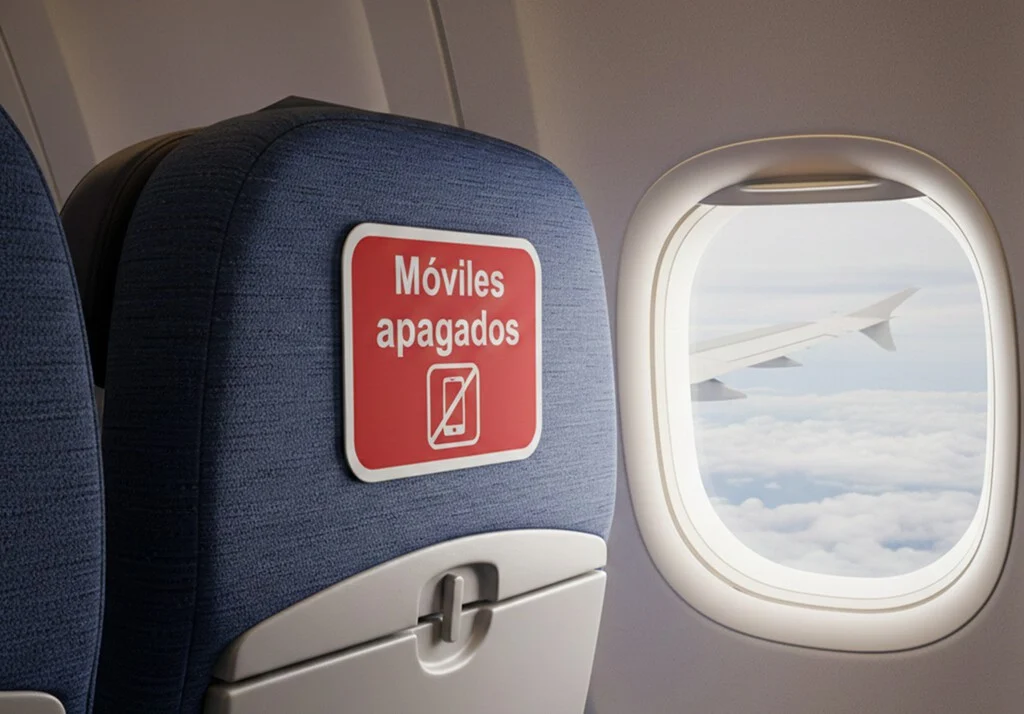

While the use of "airplane mode" on personal electronic devices (PEDs) has become a standard and largely accepted practice during flights, allowing passengers to keep their smartphones and tablets active in a restricted capacity, there are rare yet critical instances when flight crews issue a far more stringent directive: the complete shutdown of all electronic devices. This mandate, often met with confusion or even resistance, typically signals a specific and highly sensitive operational procedure: an automatic landing, or "autoland." The requirement to power off devices entirely, rather than merely engaging airplane mode, underscores a profound commitment to safety in aviation, highlighting the intricate balance between technological convenience and the absolute imperative of interference-free operations during critical flight phases.
The European Union Aviation Safety Agency (EASA), along with other international regulatory bodies, has progressively relaxed guidelines regarding PEDs, acknowledging that modern devices operating in airplane mode generally pose no significant threat to aircraft systems. This shift has allowed passengers to remain connected (via Wi-Fi) or entertained throughout much of their journey. However, the scenario where a crew specifically requests a full shutdown transcends these general allowances, pointing to an extraordinary circumstance demanding maximum precaution.
The Mechanics of Autoland: Precision in Adversity
At the heart of such a request lies the autoland system. This sophisticated technology enables an aircraft to perform a fully automated landing, from approach to touchdown, without direct human input on the flight controls. It is predominantly employed in conditions of extremely low visibility, such as dense fog, heavy rain, or severe snow, where human pilots might struggle to maintain the visual references necessary for a safe landing. The system relies on highly precise radio signals, typically from an Instrument Landing System (ILS), transmitted from the airport ground. These signals guide the aircraft along a predefined glide path and runway centerline, feeding critical data to the aircraft’s flight computers and autopilot.
Autoland systems are classified into categories based on the minimum visibility and decision height they can operate under. Category I (CAT I) allows for approaches down to a decision height of 200 feet and a runway visual range (RVR) of 550 meters. CAT II reduces these to 100 feet and 300 meters, respectively. However, it is Category III (CAT III) operations that most often necessitate autoland and the strictest adherence to electromagnetic silence. CAT III approaches are further subdivided: CAT IIIa allows for RVR as low as 200 meters, CAT IIIb to 50 meters, and CAT IIIc allows for a zero-visibility landing without a decision height. These advanced operations demand unparalleled accuracy and an environment devoid of any potential interference.
The development of autoland technology dates back to the 1960s, with systems like the British Hawker Siddeley Trident being among the first to achieve fully automatic landings in commercial service. Over decades, these systems have evolved dramatically, integrating with advanced avionics, flight management systems, and redundant safeguards. Modern autoland systems are incredibly reliable, often surpassing human capabilities in maintaining precise parameters under adverse conditions. However, their reliance on sensitive radio navigation signals makes them inherently vulnerable to electromagnetic interference (EMI).
The Threat of Electromagnetic Interference (EMI)
While the general consensus, backed by extensive research, suggests that devices in airplane mode pose minimal risk, the criticality of an autoland procedure elevates the standard of caution. "Airplane mode" primarily disables the cellular radio, which is the most powerful transmitter in a mobile phone. However, Wi-Fi and Bluetooth capabilities can often remain active, and even when disabled by software, the device’s internal circuitry still generates low-level electromagnetic radiation.
During a CAT III autoland, the aircraft’s systems are operating with extremely tight tolerances. The ILS receivers, radio altimeters (which measure height above the ground very precisely during the final stages of landing), and other navigation equipment are designed to pick up faint, specific signals from ground transmitters. Even minor, unpredicted electromagnetic noise from hundreds of active or even passively "on" devices could theoretically degrade the integrity of these critical signals. While the probability of a direct causal link between a single phone and an aviation incident remains statistically low and difficult to prove conclusively, the aviation industry operates on a "precautionary principle." This principle dictates that even a remote or theoretical risk to safety, especially during high-stakes maneuvers like autoland, must be mitigated.
Pilots and aviation safety experts understand that the cumulative effect of dozens or hundreds of devices, each emitting subtle electromagnetic fields, could create a "noise floor" that potentially masks or distorts the ultra-precise signals required by autoland systems. This is particularly true for older aircraft or specific types of avionics that might be more susceptible. Therefore, in these rare moments, the request for a complete power-off is not merely a suggestion but a crucial safety directive designed to eliminate every conceivable source of interference, however minor.
A Recent Incident: The Madrid-Luxembourg Flight
A vivid illustration of this protocol unfolded a few months ago on a flight from Madrid to Luxembourg. As the aircraft neared its destination, the flight crew issued an unequivocal announcement: all passengers were to power off their mobile phones and any other electronic devices completely. The message explicitly stressed that merely activating "airplane mode" was insufficient. To ensure compliance, cabin crew members systematically moved through the aisles, conducting visual checks of devices in plain sight. This meticulous enforcement underscores the gravity with which the flight crew perceived the landing conditions and the operational requirements.
The likely scenario in this instance was the initiation of an autoland procedure, probably due to challenging weather conditions such such as dense fog or low cloud cover prevalent around Luxembourg Findel Airport (ELLX) at certain times of the year. The captain, in conjunction with air traffic control and the airline’s operational guidelines, would have made the decision to execute a CAT III approach, necessitating the absolute minimization of electromagnetic interference. While passengers might have been initially surprised or inconvenienced, the crew’s actions were a direct reflection of their responsibility as the ultimate authority for the safety of everyone on board.
Regulatory Authority and Pilot Discretion
Under international aviation law, specifically the provisions outlined by the International Civil Aviation Organization (ICAO) and implemented by national authorities like EASA and the Federal Aviation Administration (FAA), the pilot-in-command holds ultimate authority for the safe operation of the aircraft. This includes the right to issue directives concerning passenger behavior and the use of electronic devices, even if those directives temporarily override standard operating procedures or general regulatory allowances.
EASA’s current guidelines allow PEDs to remain switched on in "flight mode" for the entire flight, even allowing for Wi-Fi and Bluetooth use when permitted by the airline. However, these guidelines always include a caveat: "the aircraft operator may decide to restrict the use of PEDs at any time." Furthermore, "If there is any doubt about the safety of the flight, the crew may still ask you to switch off your PEDs." This critical discretion empowers the pilot to make real-time decisions based on prevailing conditions, aircraft status, and specific operational requirements, such as an autoland. Non-compliance with a crew’s safety instructions is not only a breach of airline policy but can also carry legal penalties.
Societal Implications: The Challenge of Digital Disconnection
Perhaps one of the most striking observations from the Madrid-Luxembourg incident, as recounted by an eyewitness, was not the crew’s request itself, but the palpable difficulty many passengers exhibited in complying. Despite the clear instructions and the visible checks by cabin crew, some individuals were reportedly seen attempting to surreptitiously retrieve and activate their phones once the crew had passed. This behavior, even for a mere ten minutes, highlights a concerning societal trend: the pervasive and often compulsive attachment to mobile devices.
This phenomenon points to a growing challenge of digital dependency or even addiction. Studies by organizations like the American Psychological Association and various university research centers consistently show high rates of smartphone usage, with many individuals experiencing anxiety or discomfort when separated from their devices. Terms like "nomophobia" (no-mobile-phone phobia) have entered the lexicon to describe this fear. The perceived "need" to be constantly connected, to check notifications, or to alleviate boredom, even during a brief, critical phase of flight, underscores a potential erosion of situational awareness and adherence to authority.
From a sociological perspective, this non-compliance can be viewed as a symptom of a broader societal struggle with self-regulation in the digital age. When personal comfort or habit overrides clear safety directives, especially in an environment like an aircraft where collective safety is paramount, it raises questions about civic responsibility and the understanding of shared risk. Aviation safety is a collective endeavor; every passenger plays a role by adhering to regulations and crew instructions. The implications extend beyond individual flights, suggesting a need for greater public education on the rationale behind aviation safety protocols and the potential dangers of non-compliance. It also prompts reflection on whether our relationship with technology is evolving in a way that sometimes undermines critical judgment and adherence to rules designed for collective well-being.
Moving Forward: Education and Compliance
The rarity of a full device shutdown request should not diminish its importance. It serves as a powerful reminder of the sophisticated technology safeguarding air travel and the rigorous standards of safety applied. For passengers, understanding the "why" behind such directives can foster greater compliance and alleviate anxiety. Airlines and aviation authorities have a role to play in enhancing passenger education, explaining the specific circumstances that might lead to such requests and the critical safety implications.
As aircraft technology continues to advance, including the potential for future generations of avionics that might be even more resilient to EMI, the fundamental principle of eliminating all foreseeable risks during critical flight phases will remain. The human element, however, remains a variable. The incident on the Madrid-Luxembourg flight, while seemingly minor, offers a valuable lesson: that the safety of hundreds can, in rare but vital moments, hinge on the willingness of each individual to momentarily disconnect, prioritizing collective security over personal digital engagement. It is a stark reminder that while technology enables incredible convenience, it also demands responsible use and unwavering respect for the protocols that ensure our safety in the skies.