

Chainguard OS Packages represents a significant advancement for organizations seeking granular control over their Linux environments while maintaining robust security. Unveiled at the recent Chainguard Assemble event in New York, this new offering allows engineering teams to assemble bespoke container images and Linux distributions, leveraging Chainguard’s secure-by-design principles without the burden of manual vulnerability management. This innovation addresses a long-standing challenge in the industry: the trade-off between customization and the inherent security risks associated with maintaining custom Linux builds.
The problem, as articulated by Dustin Kirkland, VP of Engineering at Chainguard, stems from the dependency on upstream base distributions like Debian, Fedora, or Alpine. "Anyone who’s building a derivative distro can only go as fast as their base distro – Debian, Fedora, Alpine – can go," Kirkland explained to The New Stack at the event. This inherent delay in patching vulnerabilities within the base distribution can leave custom builds exposed to known security threats, a growing concern in an era of rapidly evolving cyberattacks. Chainguard’s solution, Chainguard OS Packages, aims to break this dependency by providing a foundation built on the company’s continuously updated and security-hardened Chainguard OS.
A New Paradigm for Linux Customization
Chainguard OS Packages empowers advanced engineering teams to construct their own container images with unprecedented control. The core innovation lies in its ability to circumvent the arduous task of independently tracking and remediating Common Vulnerabilities and Exposures (CVEs). Instead, users can tap into the same curated, zero-known-CVE packages and secure base images that form the bedrock of all Chainguard Containers.
The entire ecosystem underpinning Chainguard OS Packages is meticulously built from source and managed within Chainguard’s automated Chainguard Factory 2.0. This robust pipeline ensures that every component is subjected to rigorous security checks and continuous updates. The Packages offer customers direct access to these underlying components, enabling them to compose images using familiar tooling such as Dockerfiles, Bazel rules, or apko configurations. This flexibility ensures a smooth integration into existing development workflows.
For end-users, this translates to a significant shift in control. Instead of inheriting a broad, often bloated, set of features from a generic base image, teams can now explicitly define the precise features, dependencies, and update cadences for their production images. This granular control is paramount for optimizing performance, reducing attack surfaces, and ensuring compliance with specific regulatory requirements. Crucially, while customers retain full command over their image composition, Chainguard shoulders the responsibility for rebuilding, CVE remediation, and compliance management in the background, freeing up valuable engineering resources.
The Michelin-Starred Meal Kit Analogy
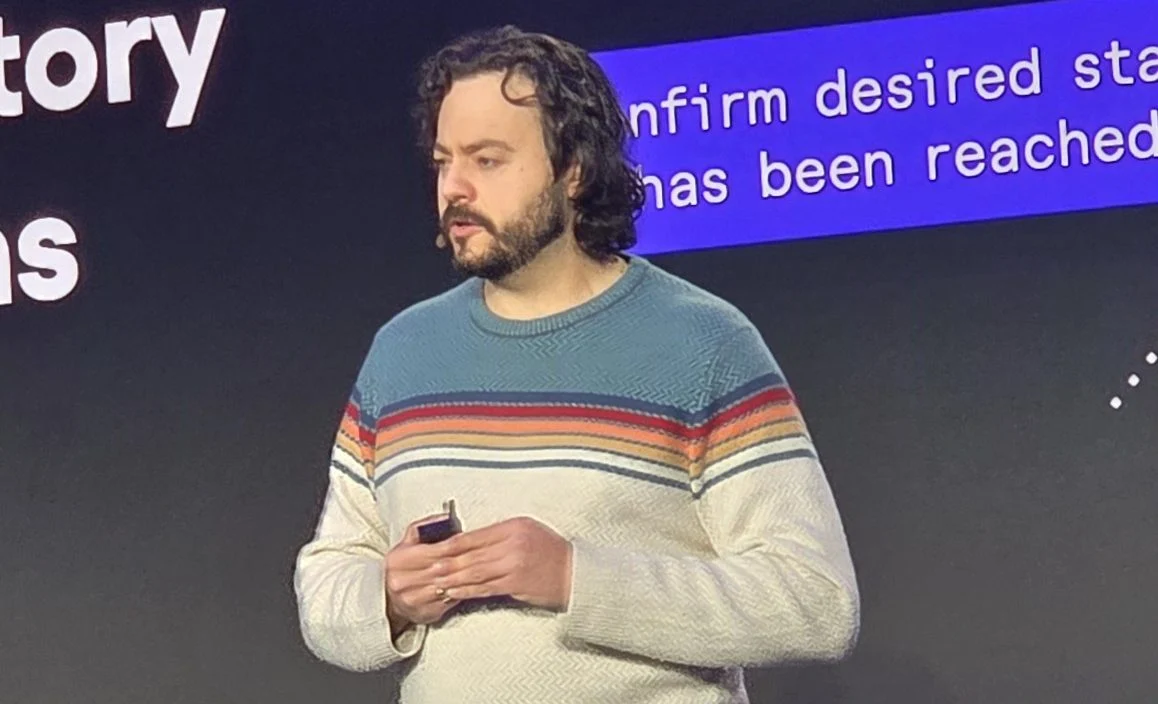
Dan Lorenc, CEO and co-founder of Chainguard, drew a compelling analogy during his keynote address at Chainguard Assemble to illustrate the value proposition of Chainguard OS Packages. He described the offering as akin to "receiving a professional meal kit from a Michelin-starred supplier." He elaborated, "It’s for teams that don’t need the finished meal but want control over their recipe and look to us for trusted ingredients. Just as most chefs build a custom dish from trusted ingredients rather than growing every herb in their garden, Chainguard OS enables organizations to build custom container images from trusted packages without managing CVEs themselves. Customers keep full control of the final image while Chainguard handles sourcing and quality."
This analogy effectively highlights the core benefit: providing high-quality, secure building blocks that allow for extensive customization without compromising on the foundational integrity of the system. Organizations can focus on the unique aspects of their applications and services, trusting Chainguard to provide the secure and up-to-date underlying infrastructure.
The AI Imperative: Speed and Security in a New Era
Lorenc further underscored the critical need for this level of control and automation in the context of artificial intelligence. He posited that AI is rapidly transforming software development from "hand tools to power tools to industrialized software supply chains," a shift that accelerates not only development but also the sophistication and speed of programming attacks.
"We need to move to automated assembly lines, where security and compliance and trust are built in, and we need to do that quickly," Lorenc urged attendees. He issued a stark warning about the obsolescence of traditional security patch cycles. The conventional model of discovering a CVE, initiating a ticket, and then patching across 30, 60, or even 90-day windows "is going to go away quickly." The implication is clear: to maintain secure systems in the age of AI-driven development and attack, organizations must operate at the speed of AI itself.
Lorenc was unequivocal in his assessment: the primary bottleneck in modern software development is no longer code generation, but trust. He detailed how AI is compressing exploit development timelines from months down to mere hours. This unprecedented speed renders manual patch cycles untenable for defenders attempting to keep pace.
"The only way to keep up here is automation and starting with something secure by design," he argued, presenting a compelling case for hardened operating systems and automated rebuild pipelines as essential prerequisites for any modern software operation. This viewpoint positions Chainguard OS Packages not as a mere convenience, but as a strategic necessity for organizations looking to future-proof their security posture.
Evolving Needs of Mature Container Security Programs
As container security programs mature within organizations, a common trend emerges: many outgrow the limitations of simple base-image swaps. These teams develop a strong desire for precise control over every element deployed in their production environments. Historically, achieving this level of control has necessitated building and maintaining proprietary package repositories. This arduous process involves constant monitoring of upstream projects for new releases, rebuilding packages to integrate them into their custom stacks, and meticulously tracking emerging vulnerabilities. This undertaking represents a substantial investment in time, resources, and specialized expertise.
Chainguard OS Packages aims to alleviate this burden. The company asserts that these same teams can now achieve a "do-it-yourself" experience without shouldering the entire operational overhead. Chainguard provides access to over 30,000 enterprise-grade packages through a private APK repository. This repository is complemented by a selection of secure base images, all of which are continuously rebuilt and validated within Chainguard’s automated Factory pipeline. A critical feature of each package is the inclusion of Software Bill of Materials (SBOMs) generated by Chainguard’s software factory. This transparency ensures that customers have a clear and detailed understanding of precisely what components are being incorporated into their custom images, enhancing auditability and compliance.
Accessibility and Future Outlook
Chainguard OS Packages is currently available in beta, signaling an ongoing phase of refinement and user feedback. Organizations interested in exploring this advanced customization and security solution can submit access requests through the Chainguard company website. The beta program offers a valuable opportunity for early adopters to integrate the technology, provide crucial input, and prepare for the broader release.
The implications of Chainguard OS Packages extend beyond mere convenience. By democratizing access to secure, customizable Linux components, Chainguard is positioning itself as a key enabler of secure-by-design principles at scale. As the software supply chain becomes increasingly complex and threats evolve at an accelerated pace, solutions that automate security, provide transparency, and empower granular control will become indispensable. Chainguard OS Packages appears poised to meet this growing demand, offering a robust platform for organizations to build and deploy Linux environments that are both highly tailored and exceptionally secure. The shift towards industrialized software supply chains, fueled by AI, necessitates a corresponding evolution in how operating systems are built and secured, a transition that Chainguard OS Packages aims to facilitate. The company’s focus on continuous rebuilding, automated CVE remediation, and providing deep visibility into image composition addresses critical pain points that have long hindered organizations striving for both agility and security in their software development lifecycle.