
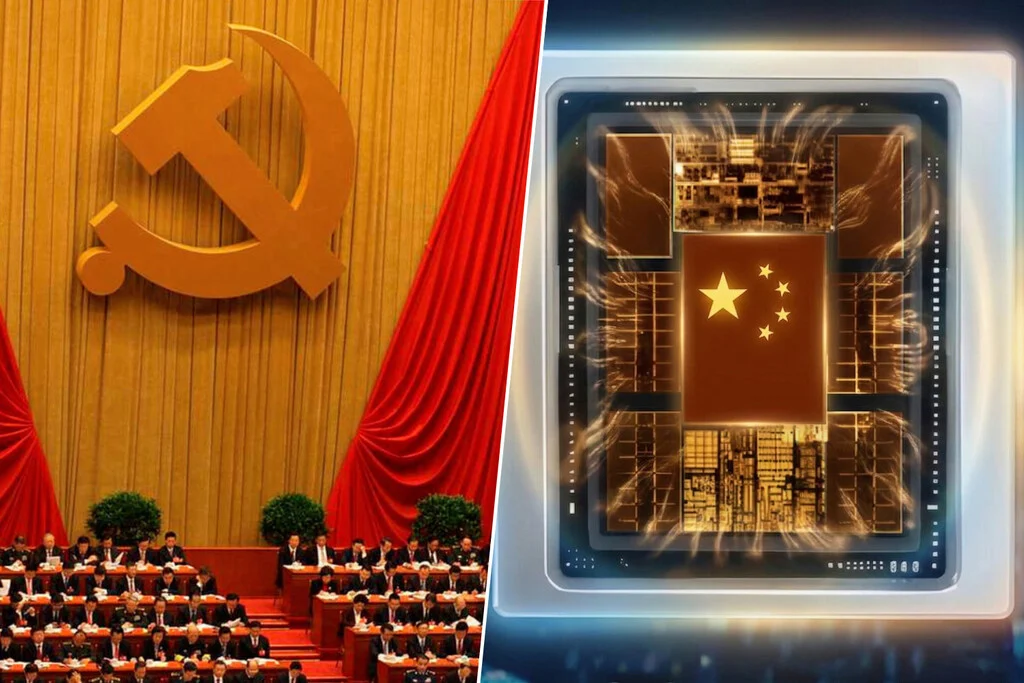

Understanding the long-term trajectory of the Asian giant is often as straightforward as examining its meticulously crafted five-year plans. With its sights set on the latter half of the current decade, Chinese authorities recently unveiled the draft of their 15th Five-Year Plan (2026-2030) during the annual "Two Sessions" meetings in Beijing. Far from being a mere bureaucratic exercise, this document stands as the most ambitious to date, serving as an unequivocal roadmap designed to overcome Western technological blockades and solidify China’s preeminent position in the global technological race. This strategic blueprint signals a profound shift, cementing a national policy of extreme self-reliance across critical sectors, a direct response to an increasingly fragmented and challenging geopolitical landscape.
The Blueprint for Self-Reliance: National Fortification Against "Extreme Contingencies"
The draft of the 15th Five-Year Plan, revealed amidst intense scrutiny, underscores a radical departure from any lingering reliance on external dependencies. Beijing is actively preparing for what it explicitly terms "extreme contingencies," a directive that translates into a singularly clear mandate: to construct an impenetrable national fortress across all fronts. This encompasses everything from achieving complete self-sufficiency in fundamental areas like food and energy to, most critically, mastering advanced technology. At the heart of this comprehensive strategy lies an unwavering focus on semiconductors, recognized as the foundational pillar of modern technological power. This aggressive pursuit of autonomy is not merely a defensive posture but a proactive strategy to assert technological supremacy.
The unveiling of the 15th Five-Year Plan draft at the National People’s Congress (NPC) and the Chinese People’s Political Consultative Conference (CPPCC) – collectively known as the "Two Sessions" – represents a pivotal moment. These annual gatherings are where China’s political elite gather to deliberate and approve major policy directives, setting the tone for the nation’s development agenda for the coming years. The very act of presenting such an ambitious and inward-looking plan during these high-profile sessions signals the Chinese leadership’s deep commitment to its objectives and its assessment of the external environment.
Historical Context: The Enduring Legacy of Five-Year Plans
China’s Five-Year Plans (FYPs) are a cornerstone of its governance, a tradition that dates back to the 1950s. These plans are not just economic targets but comprehensive socio-economic roadmaps that articulate the Communist Party of China’s vision for the nation’s development. Historically, they have guided everything from industrialization and agricultural reforms to urbanization and environmental protection. Each plan builds upon the last, reflecting evolving national priorities and global circumstances. The 14th Five-Year Plan (2021-2025), for instance, already emphasized innovation and dual circulation, laying the groundwork for the more assertive self-sufficiency articulated in the 15th iteration. The current draft, therefore, is a logical, albeit intensified, progression of China’s long-term strategic planning, directly addressing vulnerabilities exposed by recent geopolitical tensions.
Semiconductors: The Core of China’s Technological Ambition
The official text of the 15th Five-Year Plan places extraordinary emphasis on the imperative to overcome technological "chokepoints." While the document broadly covers multiple sectors, this particular focus undeniably points to the ongoing global "semiconductor war." China has already made significant strides in conquering key technologies outlined in its "Made in China 2025" initiative, an industrial policy aimed at upgrading the country’s manufacturing capabilities. However, the administration of Xi Jinping is acutely aware that the single greatest impediment to its advanced technological development remains unfettered access to cutting-edge lithography machinery, particularly from companies like the Netherlands-based ASML.
Without the sophisticated extreme ultraviolet (EUV) equipment produced by ASML, China is currently compelled to manufacture its most advanced processors using older-generation deep ultraviolet (DUV) technology. This process is inherently slower, less efficient, and significantly more costly, placing China at a disadvantage in the race for next-generation computing power. To rectify this critical weakness over the next half-decade, the new plan dramatically escalates the commitment to extreme self-sufficiency in semiconductor manufacturing. This aligns with recent, albeit often unwritten, regulations that increasingly demand local chip factories to utilize at least 50% domestic technology and machinery when expanding their facilities. The ambitious goal is for this enhanced sovereignty to enable China to achieve the monumental milestone of 3-nanometer chip production by 2030 – a leap that, given current restrictions, appears exceedingly challenging.
The Lithography Challenge: "Hacking" DUV to 3nm
China’s aspiration to achieve 3-nanometer chip production by 2030 is predicated not on the expectation of a sudden relaxation of Western sanctions and renewed access to ASML’s EUV machines, but on a concerted and highly innovative engineering effort. Given that the country is currently barred from acquiring EUV technology, the strategic roadmap centers on pushing the limits of the DUV technology it already possesses. Chapter eight of the Five-Year Plan explicitly states that a key priority is to "focus on core key technologies in fields such as integrated circuits (high-end chips, core equipment, and key materials)."
How does China intend to overcome these formidable barriers? The strategy hinges on a multi-pronged approach:
- Advanced Multi-Patterning Techniques: DUV machines, while less precise than EUV, can be used for multi-patterning, where a single layer is etched multiple times to achieve finer details. This is a complex and expensive process, significantly increasing manufacturing time and cost, but it can push DUV limits closer to advanced nodes. China is heavily investing in research and development to optimize these techniques.
- Material Science Innovation: Achieving smaller nodes also requires breakthroughs in material science, including photoresists, etching chemicals, and deposition materials. China is pouring resources into domestic research to develop and produce these critical components internally, reducing reliance on foreign suppliers.
- Indigenous Equipment Development: Beyond lithography, the entire chip manufacturing process relies on a vast array of specialized equipment – from etching and deposition tools to inspection and testing systems. China is aggressively developing its own domestic alternatives for every step of the semiconductor production line, often reverse-engineering or innovating on existing technologies.
- Advanced Packaging: While true lithographic parity is difficult without EUV, China can mitigate some of the performance gaps through advanced packaging techniques. Technologies like chip stacking (3D integration) allow multiple smaller, less advanced chips to be combined into a single, more powerful package, effectively creating a "system in a package" that can rival the performance of monolithic, smaller-node chips for certain applications.
This objective of mastering 3nm technology transcends mere consumer electronics. Chapter 12 of the document highlights the critical need for "efficient and strengthened supply of computing power, algorithms, and data" to underpin the deployment of "Digital China." This directly refers to artificial intelligence (AI) and advanced computing, areas where China aims for global leadership. Without 3nm chips manufactured on domestic soil, the necessary infrastructure to lead global AI development and manage critical national projects – such as operating the first "real" quantum computer by 2030 or achieving commercially viable nuclear fusion by 2035 – would simply lack the efficiency and scale to compete with advanced data centers in the United States and other leading nations.
Broader Technological Horizons: AI, Quantum, and Fusion
The pursuit of semiconductor self-sufficiency is not an isolated endeavor but is deeply intertwined with China’s broader technological ambitions. The 15th Five-Year Plan explicitly connects advanced chip capabilities to the strategic development of:
- Artificial Intelligence (AI): AI models require immense computing power, often relying on specialized AI accelerators built on advanced process nodes. China’s goal to become a global AI superpower necessitates a domestic supply of cutting-edge chips to train and deploy its large language models and other AI applications without external bottlenecks.
- Quantum Computing: China has made significant investments in quantum research, aiming to have a practical quantum computer by 2030. These complex machines require advanced control systems and cryogenic technologies, which, while not directly tied to 3nm logic chips in the same way as AI, still benefit from robust, domestically controlled high-tech manufacturing ecosystems.
- Nuclear Fusion: China has aggressively pursued nuclear fusion research, with ambitious timelines for achieving commercially viable fusion energy by 2035. This monumental engineering challenge demands highly sophisticated control systems, advanced materials, and immense computational capabilities for simulation and management, all of which ultimately depend on a robust and independent high-tech industrial base.
These ambitious goals illustrate that China views technological self-reliance not just as an economic imperative but as a matter of national security and a cornerstone of its vision for future global leadership.
Economic and Geopolitical Ramifications
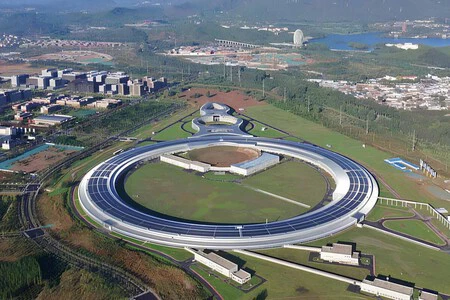
China’s 15th Five-Year Plan outlines a closed ecosystem of national survival and technological advancement. Beijing has evidently accepted that the path to 3-nanometer chips will be inefficient and costly in the short term. However, this is a price they appear willing to pay to ensure that, in the foreseeable future, their critical machinery and technological infrastructure do not depend on the licenses, whims, or political decisions of any foreign nation.
The implications of this strategy are profound, both economically and geopolitically.
- Global Supply Chains: A truly self-sufficient China in semiconductors could significantly alter global supply chains, potentially fragmenting the integrated semiconductor industry. While it could create new domestic champions, it might also lead to less efficient global production and higher costs for consumers worldwide.
- Economic Impact: The massive investment required for this endeavor will divert significant resources within China. While fostering domestic innovation and job creation, it could also strain public finances and potentially lead to overcapacity in some sectors if not managed carefully. For Western companies, it signals a reduced market share in China for key components and technologies.
- Geopolitical Tensions: The plan’s explicit aim to overcome Western blockades will likely intensify the ongoing "tech war," potentially leading to further rounds of sanctions and counter-sanctions. This could deepen the divide between technological blocs, with implications for international cooperation, trade, and standards setting.
- Technological Leadership: If China succeeds in its 3nm goal, it would fundamentally shift the balance of technological power, enabling it to compete on equal footing with, or even surpass, current leaders in AI, quantum computing, and other frontier technologies.
Expert Perspectives and Challenges Ahead
While China’s ambition is undeniable, experts caution about the immense technical and economic hurdles. Reaching 3nm solely with DUV technology is an unprecedented challenge. It would require highly complex multi-patterning techniques, which are not only expensive and time-consuming but also introduce yield issues and design complexities. The development of an entire ecosystem of domestic equipment, materials, and software to support this goal is a multi-decade undertaking, requiring sustained investment and breakthroughs.
Analysts point out that even if China achieves 3nm DUV production, it would likely still lag behind the efficiency, cost-effectiveness, and perhaps even the performance of EUV-based 3nm chips produced by industry leaders like TSMC and Samsung. The cost of manufacturing these chips could be prohibitively high, potentially limiting their commercial viability outside of strategically critical applications.
However, the Chinese government’s resolve, demonstrated through massive state-backed investments and coordinated national efforts, should not be underestimated. The strategic imperative for self-reliance, driven by national security concerns, often overrides purely economic considerations in Beijing’s decision-making.
In conclusion, China’s 15th Five-Year Plan is a declaration of technological independence and a bold assertion of its long-term strategic vision. It represents a calculated gamble, accepting short-term inefficiencies and costs for the promise of enduring technological sovereignty. As the world watches, China’s determined pursuit of 3-nanometer chips and broader technological self-sufficiency will undoubtedly reshape the global technological landscape for decades to come, ushering in an era of heightened competition and strategic decoupling.