
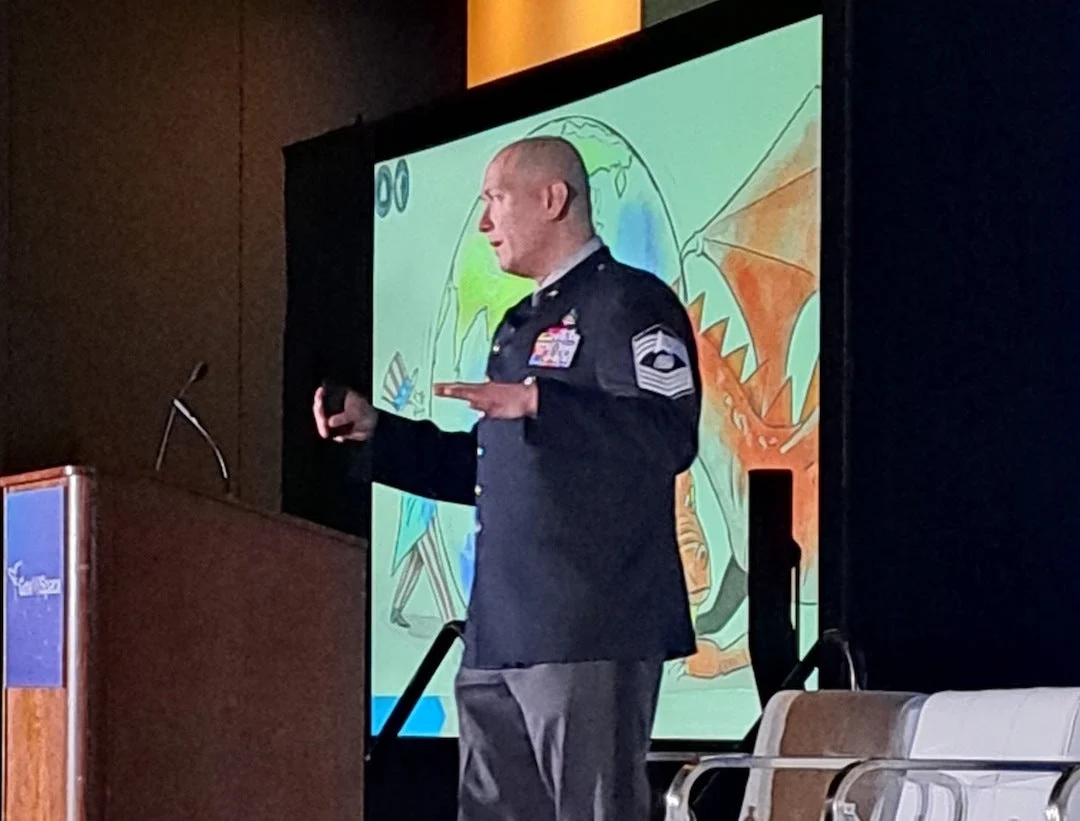

The global space race has entered a transformative and increasingly competitive phase as the People’s Republic of China (PRC) accelerates its efforts to become the world’s preeminent space power. According to U.S. Space Force Chief Master Sgt. Ron Lerch, speaking in a keynote address at GovMilSpace during the annual SATShow Week, the velocity of China’s space asset development has reached a "fast and furious" pace. This rapid expansion has not only allowed China to outpace Russia in technological sophistication and orbital density but has also necessitated a more rigorous and focused analytical posture from U.S. Space Command. As China drives toward its goal of comprehensive space leadership, the strategic landscape of Earth’s orbit and the cislunar environment is being fundamentally redefined.
Chief Master Sgt. Lerch identified China as the "primary competitor" to the United States in the space domain, a designation that reflects a decade of disciplined investment and structural reform within the Chinese defense and technological apparatus. Central to this trajectory is Beijing’s 14th Five-Year Plan, which laid the groundwork for strengthening national strategic scientific capabilities and achieving self-reliance in critical technologies. As China transitions into its 15th Five-Year Plan, the emphasis on space as a "strategic high-tech domain" has only intensified, with massive capital allocations toward satellite manufacturing, advanced launch systems, and deep-space exploration.
A Decade of Unprecedented Growth and Reform
The current state of China’s space capabilities is the result of a deliberate long-term strategy initiated shortly after President Xi Jinping took office in 2012. A cornerstone of this strategy was a major defense reform effort that saw China become the first nation to establish a dedicated space force-like entity as part of its military modernization. According to Lerch, these reforms have been an "overwhelming success," with the Chinese military-industrial complex meeting or exceeding the vast majority of its stated objectives over the last ten years.
The most striking metric of this success is the sheer volume of hardware placed into orbit. Since 2015, China has experienced nearly 700% growth in the number of satellites it operates. Today, there are approximately 1,300 Chinese satellites currently on orbit, a figure that is expected to climb sharply as the nation begins deploying its own versions of proliferated low-Earth orbit (pLEO) constellations. This surge is not merely a quantitative achievement; it represents a qualitative shift in how China intends to project power and manage information on a global scale.
The timeline of this growth reveals a significant inflection point in mid-2025, during which the frequency of Chinese launches saw a dramatic surge. This period marked the transition from experimental deployments to the mass-production and launch of operational constellations. Lerch noted that the momentum behind these launches shows no signs of decelerating, as Beijing continues to prioritize space as the ultimate "high ground" for both economic and military superiority.
The Rise of Proliferated Constellations and Commercial Entanglement
A key element of China’s strategy is the development of two massive satellite constellations, often compared to the American Starlink system. These two projects currently consist of over 100 spacecraft each, but they are projected to scale to staggering numbers—roughly 13,000 and 15,000 satellites, respectively. While it remains unclear whether these two constellations are intended to compete against one another or operate in a synchronized, complementary fashion, their combined scale poses a significant challenge to space traffic management and orbital security.
A complicating factor for U.S. intelligence and defense analysts is the "Military-Civil Fusion" (MCF) policy that governs the Chinese aerospace sector. Unlike the relatively clear distinctions between commercial and government sectors in the West, the Chinese commercial space industry is deeply entangled with the People’s Liberation Army (PLA). Lerch pointed out that while China demonstrates high confidence in its commercial providers, the underlying technology is often shared or derived from military research. "There’s likely a capability that exists for their military assets that’s probably better than what we see on the commercial side," Lerch observed, suggesting that the public-facing capabilities of Chinese satellites may only be the tip of the iceberg.
Furthermore, a significant number of the 1,300 satellites currently on orbit are categorized by U.S. Space Command as being on "unknown missions." The lack of transparency regarding the purpose and maneuverability of these assets creates a persistent fog of war in the space domain, requiring the U.S. Space Force to maintain constant surveillance to ensure the safety and security of American and allied orbital assets.
The Reusability Gap and the Quest for Launch Efficiency
Despite China’s rapid gains, the United States maintains a significant advantage in certain key areas, most notably in payload capacity and launch efficiency. The U.S. currently places more total payload weight into orbit than China, largely due to the maturity of reusable launch systems developed by private American companies. These reusable systems allow for a launch cadence that China has yet to match.
"We are more efficient at doing it than the Chinese currently are," Lerch stated. However, he cautioned that this gap is a primary focus for Chinese engineers. Recognizing that reusability is the key to sustained orbital presence and economic viability, Beijing is aggressively pursuing its own reusable rocket technology. These efforts are heavily funded and prioritized within the national agenda. As China masters the complexities of vertical landing and rapid refurbishment, their launch cadence is expected to increase exponentially, potentially closing the efficiency gap with the United States within the next decade.
The pursuit of reusability is not just about cost-cutting; it is about the ability to rapidly reconstitute space capabilities in the event of a conflict. If a competitor can replace lost satellites faster than an adversary can disable them, they gain a significant strategic advantage. This "resilience through volume" is a core tenet of the proliferated constellations China is currently building.
Expanding the Frontier: Cislunar Space and Robotic Infrastructure
Beyond Earth’s immediate orbit, China is aggressively carving out a presence in cislunar space—the region of space between the Earth and the Moon. Currently, China has three assets positioned in this domain, conducting initial testing for communication relays and navigational infrastructure. These assets are designed to support future robotics capabilities and long-term lunar exploration.
The cislunar environment is increasingly viewed as critical terrain for the next century of space activity. By establishing a "head start" in this area, China aims to set the standards for lunar communications and logistics. Lerch noted that China’s activities in cislunar space are intended to transition the nation from being a mere participant in space exploration to being a recognized leader that defines the rules of the road for the lunar economy.
The development of navigational systems for the Moon and robust communication links suggests that China is preparing for a permanent or semi-permanent presence on the lunar surface. This infrastructure would not only support scientific endeavors but could also serve as a platform for secondary military or strategic applications, such as monitoring deep-space activities or providing a backup to Earth-based systems.
Strategic Implications and the U.S. Response
The implications of China’s space trajectory are profound. The shift from a 700% growth in satellite numbers to the development of 30,000-satellite constellations suggests that the space domain will soon become much more "crowded and contested," a phrase frequently used by Space Force leadership. The sheer density of Chinese assets increases the risk of orbital collisions and complicates the ability of the U.S. to monitor hostile intent.
In response to these developments, U.S. Space Command and the U.S. Space Force are shifting their focus toward "Integrated Space Liberty" and enhanced domain awareness. The U.S. is also moving toward its own proliferated architectures, such as the Space Development Agency’s (SDA) Proliferated Warfighter Space Architecture, to ensure that American capabilities are not vulnerable to "single-point-of-failure" attacks.
Furthermore, the rapid rise of China has necessitated a diplomatic and normative response. The U.S. has been working with international partners to establish "Tenets of Responsible Behavior in Space," aiming to create a global consensus that discourages the creation of space debris and the testing of kinetic anti-satellite (ASAT) weapons. However, the success of these norms depends heavily on whether China views them as being in its own strategic interest.
Conclusion: A New Era of Space Leadership
As SATShow Week highlights the latest in satellite technology and policy, the message from the U.S. Space Force is clear: the era of uncontested American dominance in space has ended. China’s disciplined adherence to its Five-Year Plans, its successful military reforms, and its aggressive pursuit of both orbital density and cislunar infrastructure have positioned it as a formidable peer competitor.
The "unknown missions" of many Chinese satellites and the deep entanglement between their military and commercial sectors remain significant concerns for global security. As China masters reusable technology and expands its launch capacity, the next five to ten years will be critical in determining the future balance of power in the final frontier.
For the United States, maintaining its lead will require not only continued innovation in launch and satellite technology but also a heightened level of strategic analysis and international cooperation. The goal, as underscored by Chief Master Sgt. Lerch, is to ensure that space remains a stable and secure domain for all, even as it becomes the primary stage for 21st-century geopolitical competition. The race is no longer just about reaching the stars; it is about who will lead the way in the vast, complex, and increasingly vital regions of Earth’s orbit and beyond.