
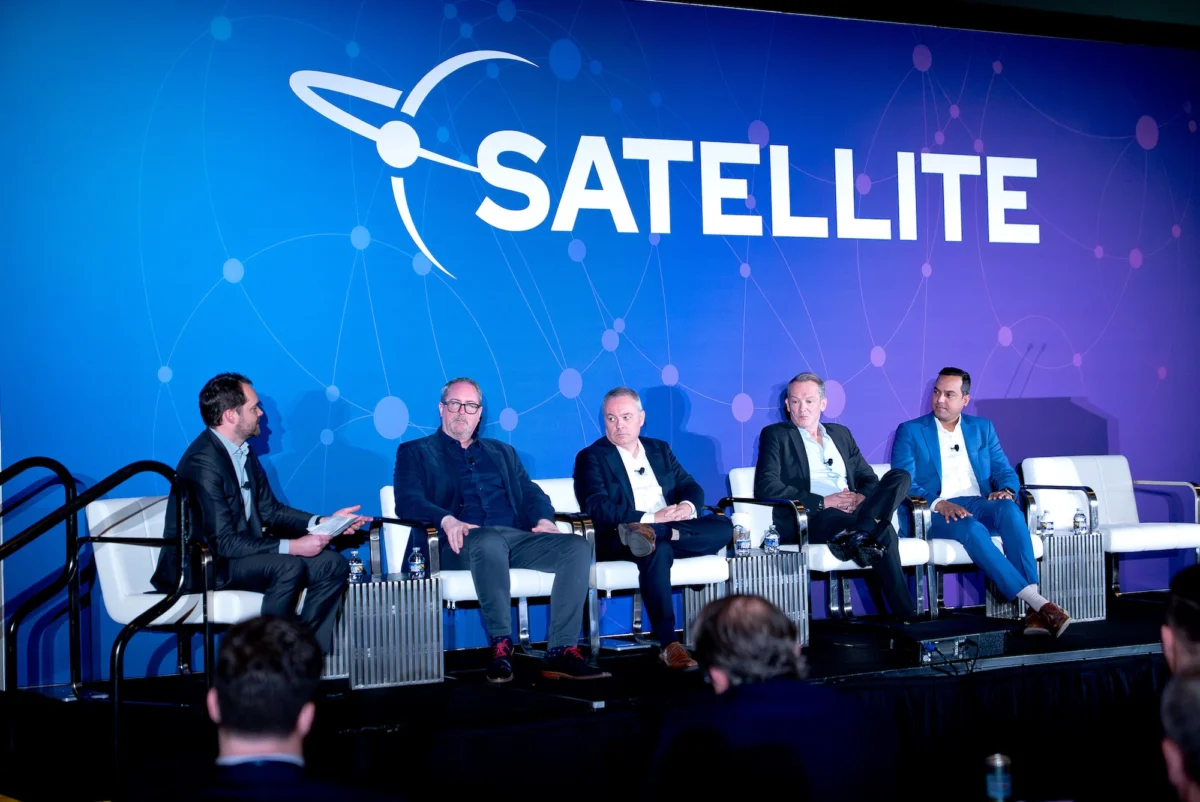

The commercial space sector stands at a critical juncture where financial structures must rapidly evolve to match the unprecedented technological leaps achieved by private industry over the last decade. This was the primary consensus among leading venture capitalists and financial experts speaking at a business panel during the SATShow on March 24. As the industry transitions from a niche "frontier" market to a pillar of global infrastructure, the influx of institutional capital, the democratization of space investment through public markets, and the emergence of sophisticated leasing models are redefining the economic landscape of the Final Frontier.
The Maturation of Space as a Strategic Asset Class
For decades, space was the exclusive playground of government agencies and a handful of massive defense contractors. However, according to Mark Boggett, CEO of Seraphim Space, the sector is currently experiencing the first definitive "throes of maturation." This phase is characterized by a significant shift in the profile of the investors entering the market. While early-stage venture capital (VC) provided the initial spark for the "NewSpace" movement, the current era is being defined by the arrival of "heavyweight" institutional players.
Boggett noted that sovereign wealth funds, infrastructure investment firms, and traditionally risk-averse pension funds are now actively seeking exposure to the space economy. "What we are seeing is that space is now being viewed as a strategic asset class by a much broader range of investors than in the past," Boggett stated during the panel. This transition signifies a move away from speculative "moonshot" funding toward a more stable, long-term capital base. This new influx of capital is expected to provide the necessary liquidity to finance "more audacious opportunities," such as large-scale orbital manufacturing, lunar logistics, and persistent satellite constellations that require billions in sustained CAPEX.
The SpaceX IPO: A Trillion-Dollar Tipping Point
The most significant looming milestone for the industry is the anticipated Initial Public Offering (IPO) of SpaceX. With internal valuations already exceeding $200 billion and projections suggesting a public market valuation of more than $1.5 trillion, the event is being viewed as a generational catalyst for the entire sector. Raphael Roettgen, founding partner of E2MC Ventures, argued that the SpaceX IPO would serve as an unavoidable signal to the global financial community.
"In terms of the maturation of the financing ecosystem, it’s going to be a giant catalyst," Roettgen said. He explained that a $1.5 trillion valuation would essentially force the hand of every major investment bank, equity analyst, and asset manager. In the current environment, many mainstream financial professionals still view space as a peripheral interest. However, once a space company reaches the scale of a "Magnificent Seven" tech giant, ignoring the sector becomes a professional liability. Roettgen noted that any analyst who fails to cover the space sector following such a listing would risk their career, effectively institutionalizing space investment expertise across Wall Street.
Public Markets and the Democratization of Space Wealth
The debate over public versus private funding remains a central theme in space commerce. Roettgen championed the role of U.S. public equity markets, describing them as one of the nation’s "biggest strategic assets." The sheer scale of the space economy—which the World Economic Forum and McKinsey & Company project could reach $1.8 trillion by 2035—requires the kind of massive capital infusion that only public markets can provide.
Beyond the ability to raise hundreds of billions of dollars, public markets offer a "societal benefit" by democratizing investment. Historically, investment in high-growth space startups was limited to "accredited and qualified" investors—typically individuals or entities with high net worth. By listing space companies on public exchanges, the wealth generated by the expansion into orbit becomes accessible to retail investors and people of more modest means. This allows a broader segment of the population to participate in the "wealth generation that’s going to happen" as humanity becomes a multi-planetary species.
The Shadow of the SPAC Era: A Cautionary Tale
However, the enthusiasm for public markets is tempered by the recent history of Special Purpose Acquisition Companies (SPACs). Between 2020 and 2022, a wave of space companies went public via SPAC mergers, many of which subsequently saw their valuations plummet as they failed to meet ambitious revenue targets. Michael Mealling, a general partner with Starbridge Venture Capital, expressed concern regarding the ability of retail investors to accurately assess the high-risk nature of space ventures.
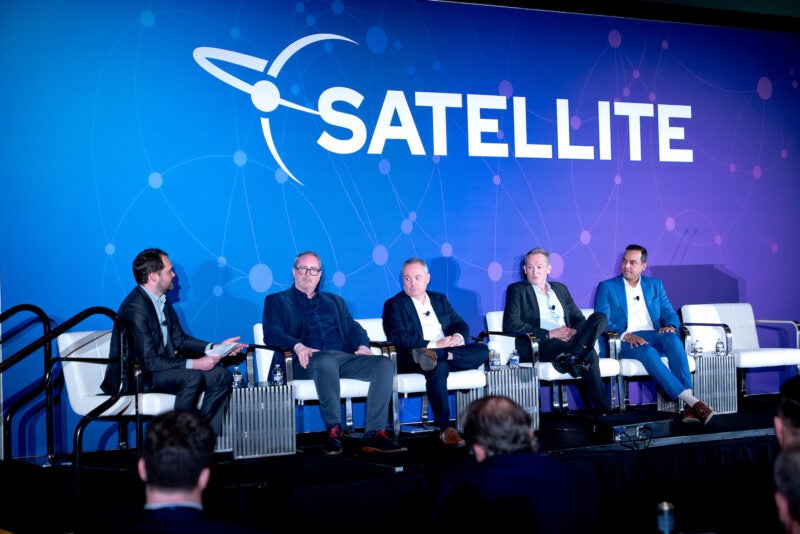
"I am a little concerned about public markets investors looking at the space sector and not understanding the level of risk," Mealling warned. He pointed out that many companies that took the SPAC route were those that had been "rejected by venture capital funds" because they lacked viable business plans or sustainable technology. Mealling emphasized that the high-profile successes of companies like SpaceX can sometimes create a "halo effect" that masks the deficiencies of less capable competitors. He urged investors to conduct rigorous due diligence, noting that "not every company that goes public is a good company."
Vertical Integration and the "Elon Musk" Exception
Mealling further analyzed the unique position of dominant players like SpaceX and the defense-tech firm Anduril. These companies have achieved a level of success that allows them to "make their own reality." Through extreme vertical integration and the ability to attract top-tier talent, these firms are insulated from many of the market pressures that affect smaller startups.
Mealling described these dominant entities as having the power to "drag the future back" with them, effectively redefining markets and neutralizing competition through sheer force of execution. However, he cautioned that such talent and leadership are exceptionally rare. From an investment perspective, betting on a company with the assumption that its CEO is "the next Elon Musk" is a high-risk strategy, as the number of individuals capable of such industry-wide disruption is extremely limited.
Bridging the Gap: Lessons from Shipping and Aviation
While the technology of the space industry is forward-looking, its financial engineering has historically been described as "primitive." Praveen Vetrivel, CEO of Space Leasing International (SLI), highlighted the disconnect between the sector’s engineering prowess and its financial tools. He compared space to the shipping industry—one of the oldest global trades—which possesses highly sophisticated financing products, including indices, trades, options, and complex leasing structures.
When SLI began applying the leasing models common in the aviation and shipping sectors to satellites three years ago, they found an industry largely reliant on "double bags of cash"—a metaphor for simple, direct equity or debt arrangements without the nuance of modern asset-backed finance. Vetrivel argued that for the space economy to truly scale, it must adopt these proven financial structures. Leasing allows operators to manage cash flow more effectively and reduces the barrier to entry for new constellation operators, much like how aircraft leasing revolutionized the commercial airline industry in the late 20th century.
A Chronology of Space Investment: From State to Street
To understand the current shift, one must look at the timeline of space investment:
- 1950s–1980s (The Cold War Era): Funding was almost exclusively state-driven, focused on national security and prestige.
- 1990s–2000s (The Transition): The emergence of commercial satellite communications and the founding of "NewSpace" companies like SpaceX (2002) and Blue Origin (2000).
- 2010–2019 (The VC Boom): A massive influx of venture capital fueled by low interest rates and the successful flight of the Falcon 9.
- 2020–2022 (The SPAC Frenzy): A period of market exuberance that saw numerous space firms go public, followed by a market correction.
- 2023–Present (The Institutional Era): A focus on "unit economics," profitability, and the entry of sovereign wealth and infrastructure funds.
Implications for the Global Space Economy
The shift toward institutional and public market financing has profound implications for the global landscape. As space becomes a "strategic asset class," nations that provide the most stable and transparent financial environments will likely attract the most innovative companies.
The move toward more sophisticated financial instruments like satellite leasing will also lower the "cost of failure" for startups, allowing for more rapid iteration in orbit. Furthermore, the ability to "short" or bet against public space companies—a feature of public markets highlighted by Raphael Roettgen—will provide a necessary reality check, weeding out companies with unsustainable business models and ensuring that capital is allocated to the most efficient players.
As the panel concluded, the "disconnect" between space technology and space finance is finally closing. With the SpaceX IPO on the horizon and the entry of the world’s largest asset managers, the commercial space sector is no longer a speculative venture; it is an established pillar of the modern global economy, ready to be financed at a scale previously reserved for the world’s largest industrial sectors.