
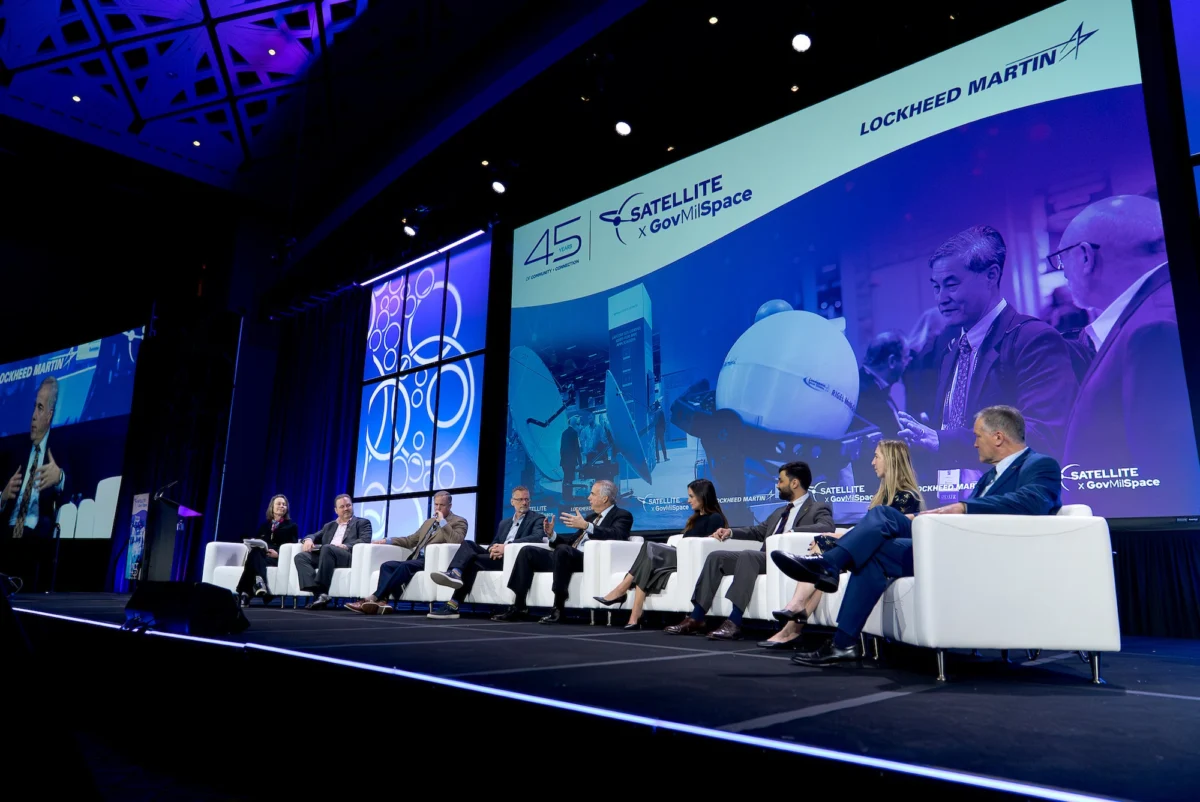

The global space industry stands at a critical juncture, characterized by a dichotomy of record-breaking investment potential and profound structural uncertainty. At the opening of Wednesday’s General Session at the annual SATShow, a real-time poll of attendees underscored this sentiment: a majority of participants indicated that the industry’s outlook is currently too volatile to assess with certainty, while a vocal minority described the current climate as "great," buoyed by technological breakthroughs and a surge in national security spending. Against this backdrop, a panel of prominent experts across the satellite, defense, and venture capital sectors gathered to dissect the forces reshaping the extraterrestrial market. Led by policy specialists Karen Jones and Brian Weeden of The Aerospace Corporation, the discussion pivoted between the transformative potential of Direct-to-Device (D2D) technology, the evolving nature of public-private partnerships, and the massive liquidity events expected to redefine the sector’s financial future.
The Direct-to-Device Revolution: Timelines and Market Realities
Perhaps no topic dominated the discourse more than Direct-to-Device (D2D) connectivity. The promise of connecting standard smartphones directly to satellite constellations without the need for specialized ground hardware has become the "talk of the show," according to Matt Desch, CEO of Iridium. Desch, a veteran of the mobile satellite services (MSS) market, provided a grounded yet bullish perspective on the technology’s trajectory. He noted a staggering discrepancy in market forecasts, recalling that the early days of MSS were met with predictions of a $3 billion to $4 billion market. In contrast, contemporary estimates for the D2D sector range from a conservative $10 billion to a stratospheric $1 trillion.
Desch emphasized that the primary difference in the current era is "patience." Unlike previous cycles of satellite communication development, the modern industry is characterized by vertical integration and deep-pocketed backers who can afford to let the market mature. However, he tempered expectations regarding the speed of adoption. Desch anticipates that the industry will not "move the needle" significantly until the period between 2029 and 2035. This timeline accounts for the necessity of 5G radio system integration and the gradual replacement of consumer hardware. While D2D is unlikely to disrupt the established terrestrial wireless market in the near term, Desch suggested it might pose a significant threat to the broadband VSAT (Very Small Aperture Terminal) market as satellite-to-phone capabilities expand in bandwidth and reliability.
Former NASA Administrator Jim Bridenstine, now a managing partner at The Artemis Group, expanded on this vision by highlighting the "democratization of the Internet of Things (IoT)." Bridenstine argued that D2D will allow for the mass distribution of affordable IoT devices, ensuring that everything from agricultural sensors to maritime logistics trackers remains connected in a cost-effective manner. This shift represents a move away from niche, high-cost satellite hardware toward a ubiquitous connectivity layer that leverages existing consumer electronics.
Redefining Public-Private Partnerships and the Challenge of Monopolies
The session also addressed the shifting dynamics between government agencies and commercial providers. Jim Bridenstine reflected on his tenure at NASA, where he championed the transition toward the agency being "one customer of many" in a robust commercial marketplace. This philosophy is most visible in the Artemis Program, which relies heavily on private companies for lunar landing systems and orbital logistics. However, Bridenstine issued a stern warning regarding the risks of market consolidation. "The only thing worse than a government monopoly is a private monopoly the government is dependent upon," he remarked, an observation widely interpreted as a reference to SpaceX’s current dominance in the United States launch market.
To mitigate these risks, Bridenstine urged the industry to adopt an operating model similar to the commercial airline industry, where multiple players compete on innovation, safety, and cost. He argued that a competitive "innovation metabolism" is essential for maintaining U.S. preeminence in space.
The conversation around sovereignty was furthered by Steve Collar, board chairman of Swissto12 and former CEO of SES. Collar noted that while increased government interest in space is a positive indicator of the industry’s importance to daily life, it brings new complexities. He expressed concern over large space corporations becoming "semi-sovereign entities" capable of making unilateral decisions about how their constellations are used during geopolitical conflicts. As a result, Collar argued that governments must establish frameworks to ensure they can influence the use of these critical orbital assets without stifling the private sector’s agility.
National Security and the Resiliency of Sovereign Space
The intersection of national security and space spending remains one of the few areas of unambiguous growth. Brian Weeden noted that the United States has increased its national space spending by approximately 10%, while Germany has signaled an intent to invest $50 billion over the next few years. Joseph Rickers, Vice President of Transport, Tracking, and Warning at Lockheed Martin, confirmed that "money is starting to flow," but cautioned that bureaucratic hurdles remain a significant obstacle.
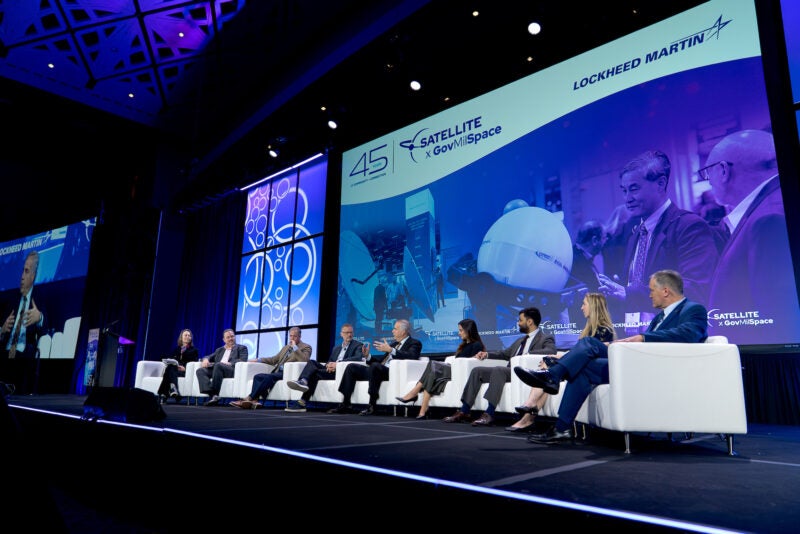
Rickers emphasized that the nature of space-based threats has evolved. The industry is moving away from "purpose-driven systems"—single-function satellites that are vulnerable to disruption—toward "layered defense." This new architecture integrates diverse orbital altitudes, artificial intelligence, and rapid manufacturing capabilities to create resilient networks. "We have to shift; we have to go faster; we have to get there sooner," Rickers stated, highlighting the urgency of building international defense capabilities alongside allies to counter the rising threats in contested space environments.
The Investment Landscape: From SPACs to the $1.75 Trillion IPO
The financial health of the space sector was a focal point for Tess Hatch, Managing Director of Stifel Venture Banking. Hatch identified three critical "liquidity events" that have defined, or will define, venture capital appetite for space. The first was Google’s $500 million acquisition of Skybox Imaging in 2014, which proved to investors that space startups could provide significant returns. The second was the "year of the SPAC" in 2021, where special purpose acquisition companies provided a "backdoor" for space firms to go public, including companies like Rocket Lab.
However, the most anticipated event on the horizon is the potential SpaceX IPO. With a valuation that could reach $1.75 trillion—roughly 1.75% of the entire global economy—the scale of SpaceX’s financial footprint is unprecedented. Hatch noted that $15.8 billion has already flowed into the space economy this year, but a SpaceX public offering would serve as a massive catalyst for the next generation of venture-backed startups, providing the exit opportunities that institutional investors require to justify high-risk bets on orbital technology.
Remote Sensing and the Quest for the "Internet Moment"
Despite the technological leaps in Earth observation, the remote sensing market continues to struggle with profitability. Lisa Rich, founder and COO of Xplore, observed that while demand for data regarding wildfires, maritime monitoring, and climate management is ubiquitous, deriving commercial value remains "elusive."
Rich explained that the industry has yet to experience its "internet moment"—a point where data acquisition becomes so cost-effective and the delivery systems so efficient that it becomes a "goldmine" for the commercial marketplace. She suggested that the integration of Artificial Intelligence (AI) may be the key to cracking this code. By using AI to process vast amounts of raw satellite imagery into actionable insights, companies can reduce the overhead of data delivery and provide more specific value to end-users in sectors like insurance, agriculture, and urban planning.
The Tipping Point: Economic Data and In-Situ Resource Utilization
The session concluded with a look at the broader economic infrastructure supporting the space industry. Akhil Rao, Chief Economist at Rational Futures and former acting chief economist for NASA, lamented the loss of "statistical supremacy" in the United States. He argued that the loss of governmental big-picture data—tools that were originally developed during the WWII era to manage production—is hindering the ability of space companies to make informed production decisions. Without accurate market requirements and macroeconomic data, the industry risks misallocating resources.
When asked about the ultimate "tipping point" for the space economy, Jim Bridenstine pointed toward "in-situ resource utilization" (ISRU). Currently, all space activity is entirely dependent on resources launched from Earth. Bridenstine posited that once the industry can harvest resources on the Moon or Mars to sustain operations and manufacture hardware in orbit, the space economy will become self-sustaining.
The sentiment of the session was perhaps best summarized by audience member Tim Logue, a veteran of the Pacific Telecom Council, who noted that in his 50 years in the industry, there has never been a more exciting—or uncertain—time. The consensus among the experts was clear: while the hurdles of regulation, bureaucracy, and market profitability remain, the convergence of massive capital, national security imperatives, and technological breakthroughs like D2D has set the stage for a transformative decade in the final frontier.