
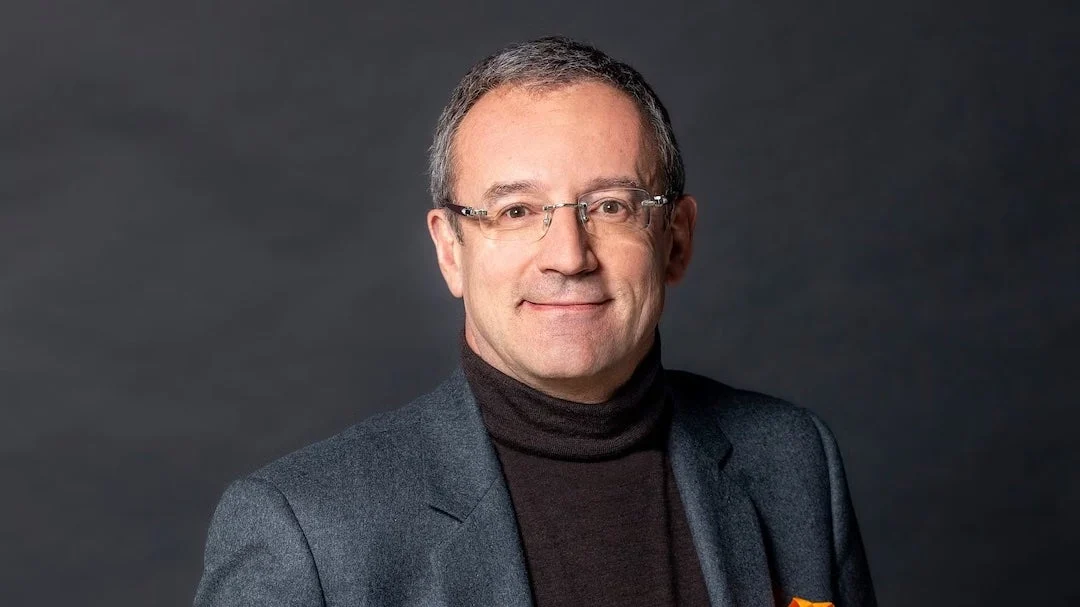

The global satellite industry is currently navigating one of the most significant architectural shifts since the dawn of the space age, moving away from a total reliance on massive Geostationary Orbit (GEO) satellites toward integrated, multi-orbit architectures that include Low-Earth Orbit (LEO) constellations. At the center of this transition is Eutelsat Group, a company that has spent the last year redefining its identity following its landmark merger with OneWeb. Leading this transformation is Jean-François Fallacher, who assumed the role of CEO nearly one year ago. Fallacher, a veteran of the terrestrial telecommunications industry with over three decades of experience at Orange, has been tasked with steering the French-headquartered giant through a period of intense financial restructuring, technological integration, and geopolitical positioning.
As Eutelsat prepares for a pivotal era of growth, the company is balancing a legacy business in video and broadcast—which still accounts for the majority of its profits—with a high-growth future in global broadband connectivity. This dual-track strategy aims to leverage the high throughput and reliability of GEO assets alongside the low latency and global reach of the OneWeb LEO constellation. With a newly secured multi-billion euro financing package and a strategic focus on sovereign defense and high-end enterprise markets, Eutelsat is positioning itself as the primary European alternative to American-led constellations like SpaceX’s Starlink.
A Telecom Veteran in a New Frontier
Jean-François Fallacher’s appointment as CEO signaled a clear intent by the Eutelsat Board to transition the company from a traditional satellite operator into a modern telecommunications provider. Having previously led major Orange affiliates across Europe, Fallacher brings a "telco-first" perspective to an industry historically dominated by aerospace engineers. In reflecting on his first eight months, Fallacher noted two primary realizations about the space sector: the extreme necessity for long-term anticipation and the current lack of technological standardization.
In the classical telecom business, network upgrades and capacity adjustments can often be implemented with relatively short lead times. In contrast, the space industry operates on a five-year horizon. An investment made today in a satellite platform will not yield operational results or revenue for half a decade. Furthermore, Fallacher highlighted the "siloed" nature of current LEO technologies. Unlike the terrestrial mobile world, where 5G standards allow for interoperability across different vendors and operators, LEO constellations are currently proprietary and specific to each operator, requiring bespoke engineering for every component of the ecosystem.
Financial Restructuring and Capital Allocation
To support its ambitious transition, Eutelsat has undergone a comprehensive and aggressive refinancing initiative. The company’s financial health is a cornerstone of its ability to compete in the capital-intensive LEO market. Currently, Eutelsat generates approximately €1.2 billion ($1.4 billion) in annual revenue, a figure that has remained stable despite the structural decline in the traditional video broadcast market.
The company recently completed a €5 billion ($5.8 billion) restructuring of its debt and capital. This includes:
- Capital Increase: A €1.5 billion ($1.7 billion) equity raise supported by key strategic shareholders and the public markets.
- Export Credit Agency (ECA) Financing: A €1 billion ($1.1 billion) facility specifically designated to cover the procurement of 440 new satellites from Airbus.
- High-Yield Bond Issue: A recently closed bond offering to further diversify the company’s debt profile.
- Bank Debt Renewal: A total overhaul of existing credit lines to ensure liquidity through 2030.
This war chest is earmarked for a massive capital expenditure (CapEx) program. Eutelsat plans to invest roughly €1 billion annually over the coming years. This funding is split into two primary tranches: €2 billion to maintain and improve the current OneWeb constellation (Gen 1) and another €2 billion reserved for the company’s participation in the IRIS² project, Europe’s sovereign multi-orbit constellation, expected to materialize post-2028.
The Pivot from GEO to Multi-Orbit Architecture
For decades, Eutelsat’s business model was built on 36,000-kilometer-high GEO satellites providing television signals to millions of homes. Today, GEO assets still represent 80% of the company’s business and the lion’s share of its EBITDA. However, this sector is experiencing a slow but steady decline. Conversely, the LEO segment, while currently representing only 20% of the business, is the primary engine of growth.
Fallacher recently made headlines by canceling the "FlexSat" GEO satellite program, citing a "shaky" business case. This decision reflects a new era of capital discipline, where GEO investments are only greenlit if they offer guaranteed returns in specific, high-value orbital slots. Despite this cancellation, Eutelsat remains committed to GEO where it makes sense, such as its ongoing partnership with Thaicom for a satellite scheduled for 2027. Fallacher anticipates that the revenue split between GEO and LEO will likely reach a 50/50 equilibrium within the next few years as LEO adoption accelerates.
Competitive Positioning: The B2B Focus vs. Starlink
While SpaceX’s Starlink has captured the public imagination and a significant portion of the consumer "Direct-to-Consumer" market, Eutelsat OneWeb is carving out a distinct niche in the Business-to-Business (B2B) and Government sectors. Fallacher emphasizes that Eutelsat’s strategy is built on partnerships rather than direct sales. By working with specialized distributors in aviation, maritime, and telecommunications, Eutelsat avoids the high customer acquisition costs associated with the retail market.
The OneWeb constellation, which has been operational since 2022, is already seeing capacity sell-outs in key strategic geographies. Countries like Ukraine, Taiwan, and Saudi Arabia have high demand for secure, low-latency connectivity, leading to near-total utilization of available beams in those regions. To maintain this momentum, Eutelsat is working on "Version 2" of the constellation. This next generation will be integrated with the European Union’s IRIS² initiative and will feature multi-orbit capabilities, inter-satellite laser links, and advanced digital payloads to increase total system capacity.
Geopolitics and the "European Sovereign" Advantage
In the current geopolitical climate, sovereignty has become a primary selling point for satellite services. Governments and military entities are increasingly wary of relying on a single, foreign-controlled constellation for critical communications. Eutelsat’s unique governance structure—featuring significant stakes from the French and UK governments, as well as India’s Bharti Group—positions it as a "sovereign alternative" to American providers.
This status has already yielded significant contracts:
- French Ministry of Defense: A €1 billion, 10-year contract signed in 2023.
- UK Foreign Office: A strategic agreement to connect UK diplomatic entities globally.
- International Reach: While European sovereignty is a selling point, 75% of Eutelsat’s revenue comes from outside Europe, highlighting the global nature of the demand for diversified satellite providers.
Fallacher notes that many nations are looking for a "second leg" to stand on, ensuring that their national security and economic infrastructure are not dependent on the whims or regulatory environment of a single nation or a single private individual.
Expansion into High-Growth Verticals
Beyond government and defense, Eutelsat is aggressively targeting the mobility sector. The aviation vertical is a major focus, with 1,500 "tails" (aircraft) already signed to use the service and 600 currently provisioned. The maritime industry, including cruise lines and commercial shipping, represents another high-growth area where low-latency LEO connectivity is transforming onboard operations and passenger experiences.
The company is also exploring fixed commercial use cases, such as providing backhaul for terrestrial telecom operators in remote regions. By using LEO satellites to connect cell towers, mobile operators can expand their 4G and 5G footprints without the prohibitive cost of laying fiber-optic cable in difficult terrain. New discussions are also underway with railway operators to provide consistent high-speed Wi-Fi on high-speed trains, a notoriously difficult environment for traditional cellular networks.
Challenges and the Road to 2030
Despite the optimistic outlook, significant challenges remain. The French government recently blocked the sale of Eutelsat’s ground assets, labeling them "strategic infrastructure" that must remain under European control. This decision forced Eutelsat to pivot its asset-light strategy and retain ownership of its 41 ground stations.
Furthermore, the market is becoming increasingly crowded. With Amazon’s Project Kuiper and Telesat’s Lightspeed constellation on the horizon, Eutelsat must leverage its "first-mover" advantage. Fallacher estimates the B2B satellite broadband market will grow from $2 billion today to $12 billion by 2033, a compound annual growth rate of over 20%.
The primary challenge for Eutelsat over the next three years will be the seamless execution of the Gen 2 constellation while managing the natural decline of the GEO video business. As Fallacher moves into his second year, the focus shifts from securing the company’s financial foundation to delivering the technical performance required to win in a multi-orbit world. The success of Eutelsat will be measured by its ability to prove that a legacy satellite operator can successfully reinvent itself as a high-tech, global telecommunications powerhouse in the most demanding environment known to man.