
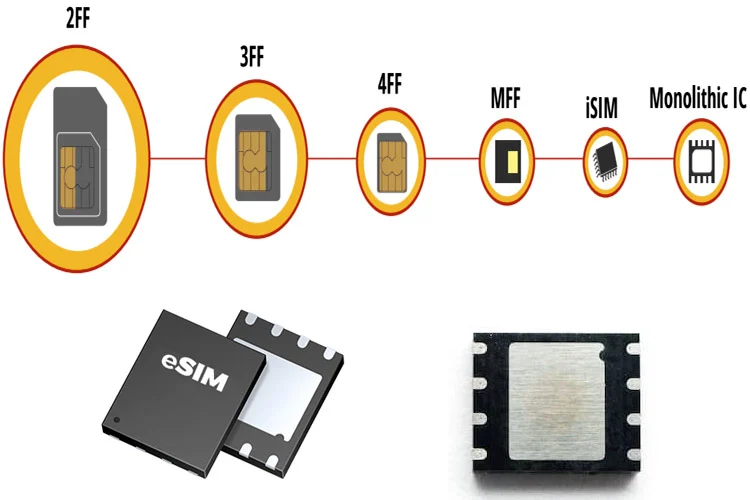

The telecommunications landscape is currently undergoing its most significant structural shift in decades as the traditional, removable plastic SIM card begins to vanish from the consumer electronics market. This transition is driven by the rise of the eSIM, or embedded Subscriber Identity Module, a technology that replaces the physical card with a permanent, programmable chip soldered directly onto a device’s motherboard. While the concept of the SIM—a secure token identifying a subscriber to a mobile network—remains unchanged, the move to a digital-first architecture is fundamentally altering how consumers interact with carriers, how manufacturers design hardware, and how global roaming is managed.
The Evolution of the Subscriber Identity Module: A Brief History
To understand the significance of the eSIM, one must look at the trajectory of mobile connectivity. The first SIM cards, introduced in 1991 by Munich smart card maker Giesecke & Devrient, were the size of a credit card. As mobile phones became more compact, the industry saw a progression of shrinking form factors: the Mini-SIM (2FF) in 1996, the Micro-SIM (3FF) in 2003, and finally the Nano-SIM (4FF) in 2012.
The push for an embedded solution began in earnest around 2010, initially targeting the Machine-to-Machine (M2M) and Industrial Internet of Things (IoT) sectors, where physical access to swap SIM cards in remote sensors or vehicles was impractical. The GSM Association (GSMA), the global organization representing mobile operators, released the first standardized specifications for consumer eSIMs in 2016. The technology gained mainstream visibility with the launch of the Apple Watch Series 3 and the Google Pixel 2, eventually becoming a standard feature in flagship smartphones starting with the iPhone XS in 2018.
Technical Architecture: How the eSIM Operates
At its core, an eSIM is a small chip known as an eUICC (Embedded Universal Integrated Circuit Card). Unlike a traditional SIM, which is "read-only" regarding its primary carrier identity until it is physically replaced, an eUICC is designed to be rewritten. This is made possible through Remote SIM Provisioning (RSP) technology.
When a user signs up for a mobile plan, the carrier provides a digital profile rather than a physical card. This profile contains the International Mobile Subscriber Identity (IMSI), authentication keys, and other network-specific data. The activation process typically involves the following steps:
- Request: The device requests a profile from the carrier’s Subscription Manager Data Preparation (SM-DP+) server.
- Download: The server sends an encrypted digital profile over the air (OTA) via Wi-Fi or a temporary cellular connection.
- Installation: The device’s secure enclave decrypts and installs the profile onto the eSIM chip.
- Activation: The device authenticates with the network, and the service becomes active.
This architecture allows a single device to store multiple "profiles" simultaneously. While usually only one or two can be active at a time (Dual SIM Dual Standby), users can switch between different carriers and plans via software settings in seconds.
Market Data and Global Adoption Trends
The adoption of eSIM technology is accelerating at an exponential rate. According to data from Juniper Research, the number of eSIM-installed devices is expected to rise from roughly 1.2 billion in 2021 to over 3.4 billion by 2025. This growth is largely driven by the smartphone sector, but the automotive and wearable markets are significant contributors.
In 2022, Apple made a landmark decision by removing the physical SIM tray entirely from all iPhone 14 models sold in the United States. This move served as a massive catalyst for carrier readiness. While some regional carriers initially struggled with the transition, the industry has largely stabilized, with over 400 mobile operators worldwide now supporting eSIM services.
From an environmental perspective, the shift is equally significant. The mobile industry produces billions of plastic SIM cards annually, contributing to plastic waste and carbon emissions through manufacturing and shipping. By moving to a digital-only format, the industry can significantly reduce its environmental footprint, a factor that many corporate sustainability officers have highlighted in recent annual reports.
Comparative Analysis: eSIM vs. Physical SIM
The transition to eSIM offers a variety of advantages and a few notable challenges compared to traditional SIM cards.
Advantages of eSIM
- Convenience for Travelers: International travelers can download a local data plan before they even land in a new country, avoiding exorbitant roaming fees and the need to find a local kiosk to buy a physical card.
- Space Efficiency for Manufacturers: Removing the physical SIM slot frees up valuable internal space in a device. This allows for larger batteries, improved water resistance (by removing an entry point for liquid), or slimmer device profiles.
- Enhanced Security: A physical SIM card can be removed if a phone is stolen, allowing a thief to potentially access the victim’s phone number for two-factor authentication intercepts. An eSIM cannot be removed, and its settings can be locked behind the device’s passcode or biometric security.
- Multiple Profiles: Users can maintain a work number and a personal number on a single device without needing to carry two phones.
Challenges of Physical SIMs
- Fragility and Loss: Nano-SIMs are incredibly small and easy to lose or damage during the swapping process.
- Logistical Friction: Obtaining a new SIM card requires visiting a retail store or waiting for a delivery, which can take days.
- Manual Configuration: Physical SIMs occasionally require manual APN (Access Point Name) settings, which can be confusing for non-technical users.
Device Compatibility and Ecosystem Support
Currently, most premium and mid-range devices support eSIM technology. The list includes:
- Apple: Every iPhone model from the iPhone XS/XR onwards, as well as cellular-capable iPads and all Apple Watches since Series 3.
- Samsung: The Galaxy S20 series and newer, the Galaxy Z Fold and Flip series, and Galaxy Watches.
- Google: Every Pixel smartphone since the Pixel 2 (though the Pixel 2 was limited to Google Fi).
- Other Manufacturers: Brands like Motorola (notably the Razr), Huawei, Sony, and Oppo have integrated eSIM into their flagship lineups.
Industry analysts expect that within the next five years, the physical SIM slot will disappear from most mid-range smartphones, following the trend set by the removal of the 3.5mm headphone jack.
Detailed Activation Procedures
The activation process has been standardized across most platforms to ensure a seamless user experience.
For iOS Devices
- Navigate to Settings > Cellular.
- Tap Add eSIM or Set Up Cellular.
- Select Use QR Code and scan the code provided by your carrier.
- Follow the on-screen prompts to label your plans (e.g., "Primary" and "Travel").
- If the carrier supports it, "eSIM Carrier Activation" allows the carrier to assign an eSIM to your iPhone digitally at the time of purchase, requiring only a notification tap to activate.
For Android Devices
- Go to Settings > Network & Internet.
- Tap the + or Add icon next to "SIMs" or "Mobile Network."
- Select Download a SIM instead?
- Scan the QR code provided by the service provider.
- Once downloaded, select the plan to activate it.
Industry Implications and Future Outlook
The broader implications of eSIM technology extend into the realm of market competition and consumer rights. Advocacy groups have noted that eSIMs make it easier for consumers to "switch" carriers, as there is no physical barrier to changing providers. This could lead to increased competition and lower pricing as carriers fight to retain customers who can leave with just a few taps on their screen.
However, some critics and industry observers have raised concerns regarding "carrier locking." While the technology allows for easy switching, carriers still have the software-level ability to lock a device to their network until a contract is fulfilled. Furthermore, in countries with strict telecommunications regulations, such as China, the adoption of eSIM for smartphones has been slower due to government requirements for real-name registration and tracking, which are traditionally tied to physical SIM card distribution.
Looking further ahead, the industry is already moving toward the iSIM (Integrated SIM). While an eSIM is a separate chip on the motherboard, an iSIM integrates the SIM functionality directly into the device’s main processor (System on a Chip). This will further reduce space requirements and power consumption, paving the way for a new generation of ultra-compact wearable devices and ubiquitous IoT sensors.
Conclusion
The transition from physical SIM cards to eSIM technology represents a natural evolution in our increasingly digital world. By eliminating the need for a physical medium to carry a digital identity, the telecommunications industry is streamlining the user experience, enhancing device security, and reducing environmental waste. While the shift requires a period of adjustment for both carriers and consumers, the benefits of a more flexible, software-driven approach to connectivity are undeniable. As the technology matures and iSIMs begin to emerge, the era of the plastic SIM card is rapidly drawing to a close, marking the beginning of a truly borderless and digital era for global communication.