
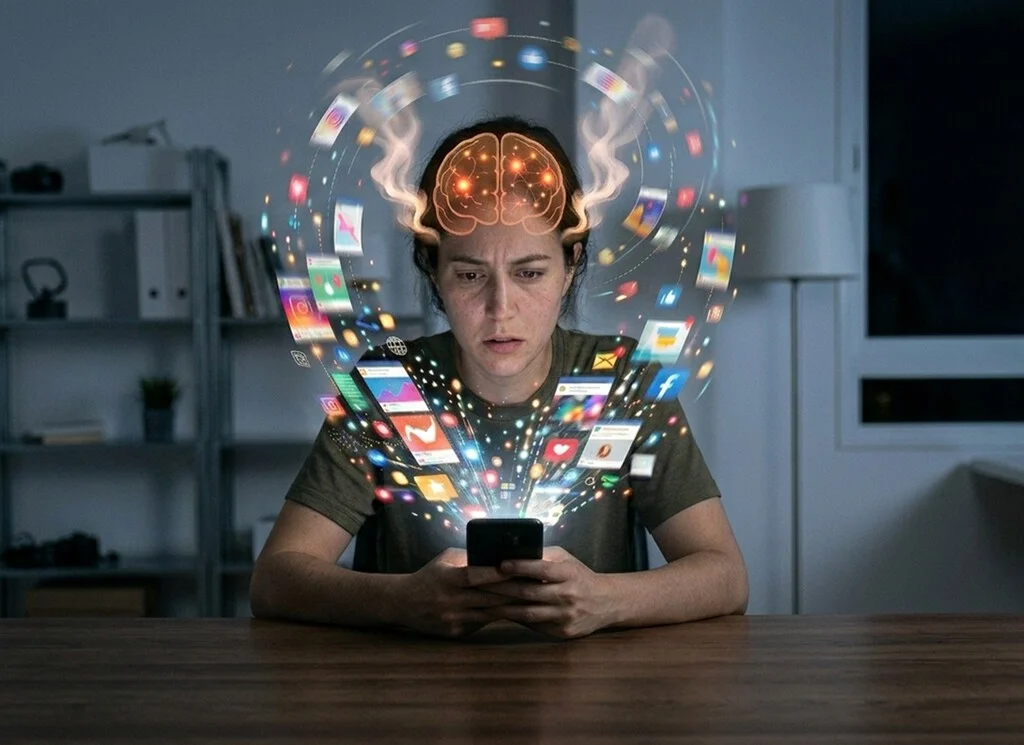

It is no longer a revelation to state that smartphones are increasingly encroaching upon our physical and mental well-being; the critical issue lies not in the devices themselves, but rather in the pervasive and often unexamined ways in which they are integrated into daily life. Habits as seemingly innocuous as sleeping with a mobile device nearby or consuming meals while fixated on a screen are accumulating a growing body of evidence demonstrating their profound negative consequences on human health and cognitive function. This burgeoning crisis is prompting a global reevaluation of our relationship with technology, particularly as scientific research illuminates the insidious ways in which contemporary digital platforms are engineered to monopolize our attention and reshape our brains.
In an era where the true luxury is the ability to disconnect and ignore the incessant demands of our mobile devices, applications have strategically deployed features like the "infinite scroll" — a design element crafted to maximize user engagement and time spent online. This continuous stream of content, devoid of natural stopping points, has been shown to exploit fundamental psychological vulnerabilities, effectively creating a perpetual loop of consumption that, as emerging studies suggest, can have detrimental effects on our neural pathways, metaphorically "rotting our brain" by fostering an environment of constant, low-level stimulation and fragmented attention.
The Evolution of a Problematic Relationship
The journey to this point has been gradual but relentless. The smartphone, once primarily a tool for communication and productivity, has evolved into an omnipresent digital companion. Its ubiquity means that we live in constant proximity to a screen, often impulsively unlocking our phones even when there’s no immediate notification or task, a phenomenon frequently described as "the finger that slides alone." This automatic, almost reflexive behavior underscores a deeper issue: a significant segment of the population has, to varying degrees, become enslaved by technology. Compounding this challenge is the alarming trend of increasingly early adoption, with the average age for a child receiving their first mobile device now hovering around 10 years old – a statistic that many public health experts are identifying as a serious concern, contributing to anxiety, poorer quality of life, and exposure to digital violence among minors.
While the mobile device itself is a marvel of engineering and a powerful enabler of connectivity and information, the design philosophy behind many popular applications is far more questionable. These apps are meticulously crafted to be as addictive as possible, leveraging sophisticated behavioral psychology to maintain user engagement. This deliberate engineering has given rise to phenomena like "doomscrolling," where users compulsively consume negative news or content, trapped in a feedback loop that the technology has skillfully exploited to retain attention. The success of these design strategies is undeniable, as evidenced by widespread reports of individuals struggling to disengage from their devices.
Scientific Evidence Mounts: Brain Scans Reveal Disturbing Changes
The scientific community has been increasingly focused on quantifying these anecdotal observations, turning to advanced neuroimaging techniques to understand the physiological changes occurring in the brain. A recent, compelling investigation spearheaded by CNN journalist Bill Weir offered a unique, real-world experiment to mark Apple’s 50th anniversary. Weir undertook a personal challenge: he swapped his advanced smartphone for a "dumb phone" – a basic device equipped with a low-resolution camera, a traditional keypad, devoid of modern apps, and limited to SMS messaging – for a period of 14 days. This deliberate digital detox was not merely a personal anecdote; it was supported by a team of scientists who meticulously monitored Weir’s brain activity using advanced scanners throughout the duration of the trial.
The findings from Weir’s experiment were unequivocally clear and strikingly positive. Following the two-week period, Weir demonstrated a significant 23% improvement in his reaction times. Furthermore, the neuroimaging data revealed beneficial shifts in his overall brain activity. Subjectively, the journalist reported a marked improvement in his concentration levels and a substantial reduction in the impulsive urge to consume social media content. This direct correlation between reduced smartphone use and enhanced cognitive function provides powerful empirical support for the growing concerns regarding digital overload.
Weir’s experience is not an isolated case but rather aligns with a growing body of scientific literature. For instance, research published in 2023, utilizing magnetic resonance imaging (MRI) techniques, uncovered a concerning link between excessive smartphone usage and a reduction in the brain’s gray matter. Gray matter, crucial for processing information, decision-making, memory, and emotional regulation, is concentrated in areas like the prefrontal cortex and hippocampus. Its reduction can have profound implications for executive functions, impulse control, and the ability to manage emotions effectively, suggesting a tangible physical alteration in the brain structure due to prolonged digital interaction. Studies have shown that adolescents with higher screen time exhibit reduced gray matter volume in regions associated with reward processing and cognitive control, potentially impacting their emotional stability and decision-making capabilities.
Further solidifying these concerns, a more recent study published in 2025 employed functional magnetic resonance imaging (fMRI) to analyze the brain reactions of participants after extended periods without their mobile phones. The results were particularly unsettling, revealing patterns of brain activation strikingly similar to those observed in individuals experiencing withdrawal syndromes associated with established substance addictions. This discovery suggests that the brain’s reward pathways, particularly those involving dopamine, can become dysregulated by constant smartphone stimulation, leading to genuine craving and distress when the device is absent – a hallmark characteristic of addictive behaviors. These findings underscore the profound psychological and neurological grip that these devices can exert, challenging the simplistic notion that smartphone overuse is merely a bad habit.
The Broader Spectrum of Negative Impacts
Beyond the direct neurological changes, the pervasive integration of smartphones into daily life has unleashed a cascade of adverse effects on mental and cognitive health. Studies consistently indicate higher levels of anxiety and depression among heavy smartphone users, particularly adolescents and young adults. A 2023 meta-analysis involving over 30,000 participants found a significant correlation between problematic smartphone use and increased symptoms of anxiety and depression. The constant comparison fostered by social media platforms, coupled with the pressure to maintain an idealized online persona, contributes significantly to mental distress, often leading to feelings of inadequacy and social isolation despite heightened digital connectivity.
Memory, another cornerstone of cognitive function, is also taking a hit. The phenomenon of "digital amnesia" or "Google effect" describes our increasing reliance on external devices to store information, rather than committing it to our own memory. While convenient, this outsourcing of memory reduces the brain’s active engagement in recall and consolidation, potentially diminishing our innate memory capabilities over time. The constant stream of notifications and the fragmented attention demanded by multitasking across various apps also impair the ability to form deep, lasting memories, as the brain struggles to encode information effectively amidst perpetual distractions. Research from universities like the University of California, San Diego, has highlighted how constant interruptions from notifications can disrupt working memory and long-term memory formation.
Perhaps one of the most widely acknowledged consequences is the severe erosion of attention spans. In an age of instant gratification and rapid content consumption, the capacity for sustained focus is diminishing. Data from various cognitive studies indicate a significant decline in our collective ability to concentrate on a single task for extended periods, with experts increasingly pointing to the role of algorithms designed to deliver novel, engaging content every few seconds as a primary culprit. This "attention crisis" has far-reaching implications for education, professional productivity, and even the quality of interpersonal relationships. A study by Microsoft in 2015, for instance, suggested that the average human attention span had dropped from 12 seconds in 2000 to 8 seconds, less than that of a goldfish, though this specific comparison is often debated, the general trend of diminished attention is widely accepted.
Some individuals report feeling "less human" in their interactions, observing a reduction in empathy and genuine connection as face-to-face communication is increasingly supplanted by digital exchanges. This sense of detachment highlights the profound social and emotional costs associated with an overreliance on virtual interfaces, leading to concerns about the erosion of fundamental human capacities for deep connection and presence. Physical ailments, such as "tech neck" (cervical pain from looking down at devices), eye strain, and nerve compression in the hand (e.g., cubital tunnel syndrome from holding phones), further underscore the comprehensive impact of this digital integration.
Industry Perspectives and Calls for Responsibility
The debate surrounding the ethical responsibilities of technology companies in designing addictive applications is gaining momentum. While tech leaders often defend their products as tools that empower users, critics argue that the underlying business models, heavily reliant on advertising revenue derived from user engagement, inherently incentivize addictive design. Instagram CEO Adam Mosseri’s controversial statement, suggesting that using the app for 16 hours a day is not necessarily an addiction, exemplifies a perspective that many find dismissive of the growing body of scientific evidence and widespread user struggles. This stance underscores a perceived disconnect between industry views and public health concerns.
There is an increasing global call for greater accountability from tech giants. This includes demands for more transparent algorithms, the implementation of "digital well-being" features that are genuinely effective in limiting usage, and even regulatory measures aimed at curbing addictive design practices, particularly those targeting minors. Educators and child development specialists are advocating for stricter age restrictions on social media platforms and comprehensive digital literacy programs to equip younger generations with the skills to navigate the digital world responsibly. Organizations like the American Academy of Pediatrics have issued guidelines for media use in children, emphasizing the importance of setting limits and fostering healthy digital habits from an early age.
Pathways to Digital Well-being: Reclaiming Control
The central message from this mounting evidence is clear: smartphones are not inherently malevolent, but their current usage patterns, heavily influenced by intentionally addictive app design, are creating significant health challenges. It is imperative for individuals to engage in a conscious examination of their digital habits and to re-evaluate their relationship with these powerful devices.
Reclaiming control over our digital lives requires proactive strategies. These can range from simple behavioral changes to more comprehensive "digital detoxes." Practical steps include:
- Setting Boundaries: Establishing specific "no-phone zones" (e.g., bedrooms, dining tables) and "no-phone times" (e.g., an hour before bed, during meals).
- Mindful Usage: Actively questioning the impulse to check the phone, deleting unnecessary apps, and turning off non-essential notifications. This involves cultivating self-awareness about one’s digital triggers and developing coping mechanisms.
- Utilizing Device Features: Employing built-in screen time limits, grayscale modes to make screens less appealing, and "do not disturb" functions. Many operating systems now offer detailed reports on app usage, empowering users to track and manage their digital consumption.
- Exploring Alternatives: For those seeking a more radical shift, experimenting with "dumb phones" or minimalist phone setups, as Bill Weir did, can provide a powerful reset and reveal the extent of one’s reliance. This can help re-establish a more intentional relationship with technology.
- Prioritizing Real-World Interactions: Consciously dedicating time to face-to-face conversations, hobbies, and activities that do not involve screens. Engaging in activities like reading physical books, spending time in nature, or pursuing creative endeavors can help recalibrate attention and reduce digital dependency.
Ultimately, fostering a healthier digital ecosystem requires a multi-pronged approach involving individual responsibility, ethical technology design, public health education, and potentially, regulatory oversight. The science has unequivocally demonstrated the profound impact of our digital habits on our brains and well-being. It is now incumbent upon us, as individuals and as a society, to adapt our behaviors and demand more responsible technology, ensuring that these powerful tools serve humanity rather than enslave it, paving the way for a future where digital innovation coexists harmoniously with human flourishing. The call for a conscious re-evaluation of our digital consumption is not merely a recommendation; it is an urgent imperative for safeguarding our collective cognitive and mental health in the 21st century.