
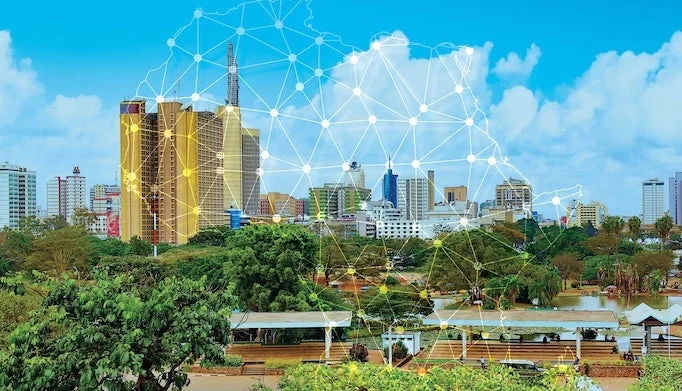

The African continent, a vast landmass spanning approximately 11.7 million square miles, has historically presented one of the most significant logistical and geographical challenges for the deployment of traditional telecommunications infrastructure. However, as of late 2024 and heading into 2025, a paradigm shift is occurring within the global space industry. According to data from the Africa Center for Strategic Studies, more than 21 African nations have now established formal space programs, with 18 of those countries successfully launching at least one satellite into orbit. This surge in orbital activity marks the transition from theoretical exploration to the practical implementation of digital inclusion, enterprise application, and national development initiatives aimed at connecting hundreds of millions of citizens.
During the recent SATShow Week, industry experts and regional stakeholders gathered to discuss the unprecedented momentum in the African satellite market. The consensus among participants was that the continent is no longer a peripheral player in the space domain but has emerged as one of the fastest-growing markets globally. With limited terrestrial fiber-optic infrastructure and a rapidly urbanizing population, the demand for reliable connectivity has reached a critical mass, necessitating a space-based solution to bridge the persistent digital divide.
The Evolution of the African Space Domain: A Chronological Perspective
The journey toward African space sovereignty has been decades in the making, characterized by a shift from reliance on international partners to the development of indigenous capabilities. The chronology of this evolution highlights a maturing ecosystem:
- The Early Pioneers (1998–2010): South Africa led the way with the launch of SUNSAT in 1998, followed by Nigeria’s launch of NigeriaSat-1 in 2003. These early missions were primarily focused on Earth observation and disaster management.
- The Expansion Phase (2011–2020): Countries such as Egypt, Algeria, Morocco, and Ghana joined the orbital club. This era saw the launch of NigComSat-1R, which aimed to provide commercial telecommunications services, though it faced challenges in market penetration.
- The Modern Surge (2021–Present): A new wave of "NewSpace" activity has taken hold. In 2023 alone, Kenya launched its first operational 3U Earth observation satellite, Taifa-1. As of September 2024, African nations and private entities have launched a combined total of 65 satellites.
- The 2030 Vision: Projections indicate that over 120 additional satellites are currently in various stages of development across the continent, with expectations for them to be in orbit by the end of the decade.
This timeline reflects a strategic shift in how African governments view space technology—not as a luxury or a prestige project, but as a fundamental utility for economic survival in the 21st century.
Broadband Penetration and the Billion-Person Opportunity
The primary driver of this orbital expansion is the urgent need for broadband access. Jane Nkechi Egerton-Idehen, CEO of the Nigerian satellite operator Nigcomsat, emphasized during the SATShow panel that satellite services will be the cornerstone of the African market for at least the next decade.
"For a population of over 1.4 billion, there is currently less than 50% broadband penetration," Egerton-Idehen noted. "There is still a massive need to breach that divide. It remains an incredibly interesting market with huge potential, but the sustainable growth will definitely come from broadband delivery."
The statistics back this assertion. While mobile network operators (MNOs) have made strides in urban centers like Lagos, Nairobi, and Cairo, the "last mile" connectivity to rural areas remains economically unfeasible through terrestrial means. Satellite technology offers a bypass to the high costs of laying fiber-optic cables across deserts, rainforests, and mountain ranges.
Anshu Vij, Managing Director of EMEA for Hughes Network Systems, provided a quantitative look at this growth. He noted that only four years ago, there were approximately 100,000 satellite terminals in service across the continent, many of which were severely capacity-constrained. Today, that number has surged to over half a million subscribers. This five-fold increase in just a few years signals a change in both consumer demand and the technological capability to meet it.
Overcoming Geographic and Technical Barriers
The African terrain has long been the primary antagonist in the story of regional connectivity. In the past, the installation of a single satellite terminal in a remote village could be a multi-day ordeal involving specialized engineers and bulky equipment. However, advancements in ground segment technology have streamlined this process.
According to Vij, the industry has moved toward more "plug-and-play" solutions. Terminals can now be deployed in a fraction of the time, allowing service providers to scale their operations rapidly. This technical evolution is crucial because, as Vij argued, the key to growing broadband access in Africa lies in service distributor partnerships that bridge the gap between global satellite operators and local government or enterprise needs.
Despite these improvements, the "edge" of the network remains a point of contention. Jean-Phillipe Gillet, President of the Fixed and Maritime vertical at SES, suggested that the industry must rethink its approach to satellite integration.
"Satellite has always been viewed as a solution of last resort—expensive and difficult to deploy," Gillet explained. "To truly scale, we need to reform the ‘edge.’ Satellite connectivity must be viewed as a core component of the network, working in tandem with terrestrial systems rather than as a separate, isolated backup."
Government as the Anchor Tenant
In many developed markets, the private sector drives satellite adoption. In Africa, however, the government remains the largest and most influential client. This is largely due to the push for "e-government" services designed to modernize bureaucracy and improve transparency.
In Nigeria, the government is actively working toward the electronic transfer of election results to ensure greater electoral integrity. Such a feat requires reliable internet access in every local government area, many of which are currently "dark" zones. Furthermore, the rollout of digital ID cards and international passports relies on a centralized database that must be accessible from rural administrative offices.
"Over 70% of our citizens reside in rural areas," Egerton-Idehen said. "Governments are now forced to create access in those areas so that citizens can participate in the digital economy. If you cannot reach the rural population, you cannot claim to have a functioning national digital strategy."
The Economics of Inclusion: The Terminal Cost Dilemma
One of the most significant hurdles to universal access is the cost of hardware. Egerton-Idehen, drawing on her background as a satellite engineer, raised a critical point regarding the "closed" nature of the satellite industry.
Currently, many satellite terminals are proprietary, meaning a terminal purchased for one provider’s network cannot be used on another. Furthermore, these terminals often cost upwards of $500. In a region where the average monthly income in rural areas may be less than $100, a $500 entry fee is an insurmountable barrier.
"Why does the terminal have to cost more than $500?" Egerton-Idehen asked. "The segment of the market we are trying to serve is the very segment that cannot afford it. The industry’s reliance on closed-off, expensive systems is a weakness that we must address if we want to see deep penetration."
This sentiment is shared by many African regulators who are calling for more standardized, interoperable hardware that can lower the cost of entry for local entrepreneurs and schools.
Strategic Partnerships and the Rise of Rural Business Models
Despite the cost challenges, companies like SES are finding success through strategic partnerships with Mobile Network Operators (MNOs). One notable example is the collaboration with Africa Mobile Networks (AMN). AMN operates in deep rural areas, sometimes in villages with fewer than 2,000 residents. By using satellite backhaul to power local cell towers, they provide mobile connectivity to people who previously had none.
Gillet emphasized that there is a viable business model in rural Africa, provided the scale is right. "When you make money, you can scale it," he said. "Profitability in these regions allows for the raising of more funding, which in turn allows for further deployment. It is a virtuous cycle that begins with proving that rural connectivity is not just a charity project, but a sustainable business."
Analysis of Implications: High Risk, High Reward
The rapid expansion of the African satellite market carries profound implications for the global space economy. As traditional markets in North America and Europe reach saturation, Africa represents the "final frontier" for satellite growth.
However, the market is not without its risks. Currency fluctuations, political instability, and evolving regulatory frameworks can make long-term investments challenging. Yet, as Egerton-Idehen concluded, the "pent-up demand" on the continent outweighs these concerns for those with a long-term vision.
The entry of Low Earth Orbit (LEO) constellations, such as SpaceX’s Starlink, which has already begun operations in countries like Nigeria, Rwanda, and Kenya, is further disrupting the landscape. These LEO providers offer lower latency and higher speeds than traditional Geostationary (GEO) satellites, forcing incumbent operators to innovate or lower their prices.
The next five years will likely determine whether Africa can move from being a consumer of satellite technology to a hub of space innovation. With the African Space Agency (AfSA) now established in Cairo, the continent is moving toward a unified regulatory approach that could simplify cross-border satellite services and foster a more competitive market.
In summary, the African satellite sector is at a crossroads. The transition from 65 to 180+ satellites by 2030 represents more than just a numerical increase; it represents a fundamental change in the continent’s infrastructure. While the challenges of cost and geography remain, the combination of government necessity, private sector innovation, and a billion-person demand for connectivity has created a "high-risk, high-reward" environment that is increasingly impossible for the global space industry to ignore.