
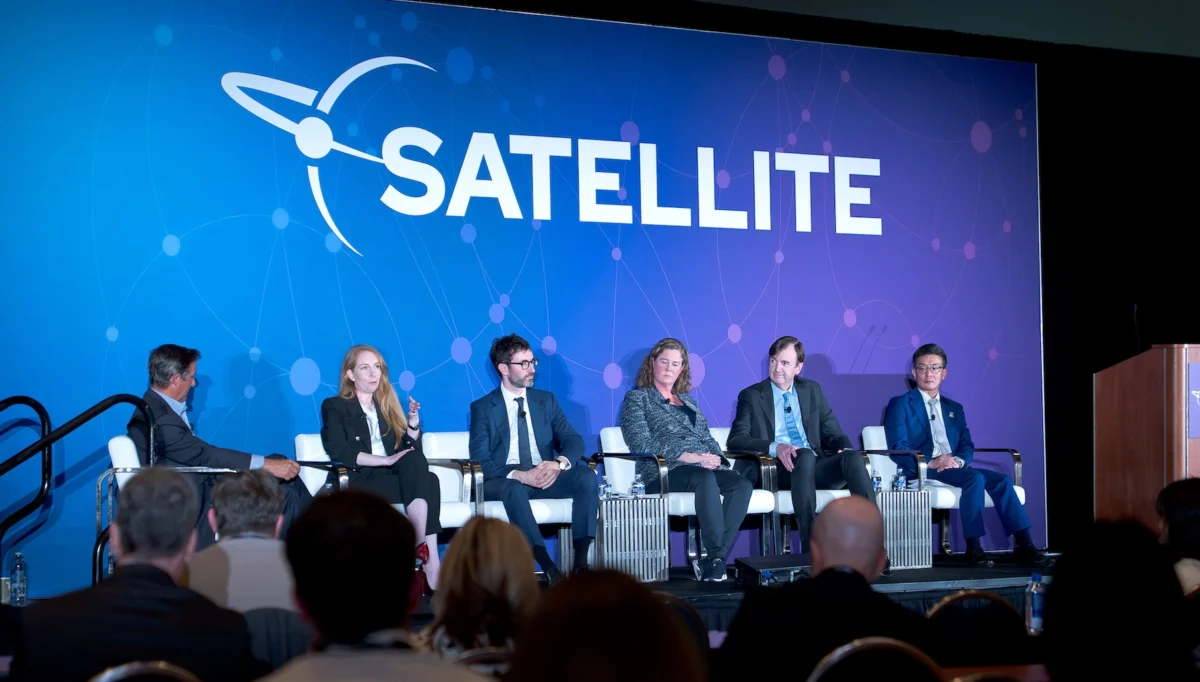

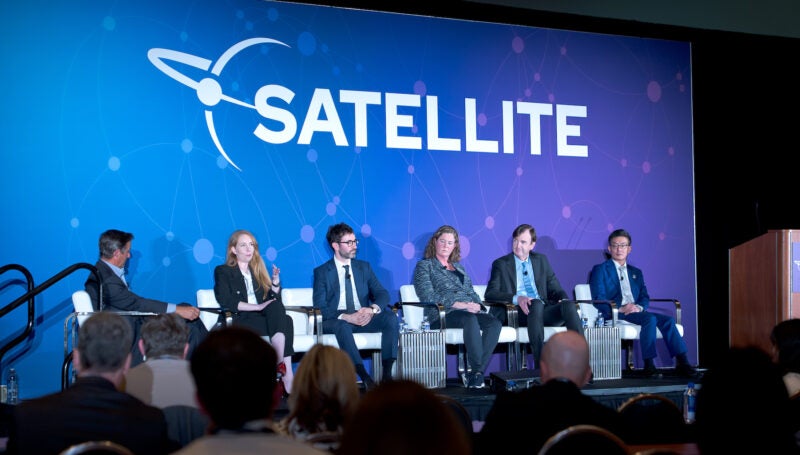
The global space launch sector is currently navigating an unprecedented era of demand that shows no signs of abating, characterized by "really, really busy" manifests and a structural shortage of orbital capacity. During a high-level executive panel on heavy-lift launch competition at the annual SATShow on Tuesday, representatives from the world’s leading launch providers—SpaceX, Arianespace, Blue Origin, United Launch Alliance (ULA), and Mitsubishi Heavy Industries (MHI)—unveiled a landscape where the primary challenge has shifted from finding customers to managing an overwhelming backlog of commercial, civil, and sovereign missions.
As the industry moves deeper into 2026, the transition from development to high-cadence operations is the dominant theme. While new heavy-lift vehicles like the Ariane 6, Vulcan Centaur, New Glenn, and H3 have all entered or are nearing operational maturity, the consensus among leadership is that the supply of rockets is still struggling to keep pace with the exponential growth of the satellite economy.
SpaceX and the Era of High-Cadence Execution
SpaceX, which has set the industry standard for launch frequency, continues to operate at a scale that remains the benchmark for the sector. Stephanie Bednarek, Vice President of Commercial Sales at SpaceX, described the company’s manifest for the 2026–2028 period as "packed," with 2029 already looking "very busy."
The company is coming off a record-breaking 2025, during which it executed 165 missions. For the current cycle, SpaceX is maintaining a dual-track strategy: maximizing the reliability and throughput of the workhorse Falcon 9 while aggressively pushing toward operational status for Starship. Bednarek emphasized that the company is focused on execution, ensuring that the high volume of launches does not compromise mission success. However, she noted that the bottleneck is shifting. While the industry has historically focused on the availability of the launch vehicle, the current constraint is increasingly the physical space and infrastructure required for payload processing before a satellite ever reaches the pad.
Arianespace and the Restoration of European Sovereignty
For Arianespace, 2026 represents a year of recovery and expansion. Following the successful inaugural flight of the Ariane 64 variant in February, the European provider is working to restore independent access to space for the European Union while capturing a larger share of the global commercial market.
Arianespace CEO David Cavaillolès outlined an ambitious roadmap to double the company’s launch cadence. The company is targeting seven to eight launches in 2026, with the goal of reaching nine to ten flights annually by 2027. Cavaillolès noted that the company is currently prioritizing the Ariane 64—the heavy-lift configuration featuring four solid rocket boosters—over the medium-lift Ariane 62. This shift is a direct response to market demand for heavier payloads and the deployment of large-scale constellations.
"The current schedule can cover European institutions as well as commercial demand," Cavaillolès stated, though he left the door open for further expansion. "Depending on how things go, we might consider going up beyond 10 flights per year." He dismissed concerns about market saturation, describing the current environment as a "situation of scarcity" that will likely persist for years as satellite projects become increasingly ambitious in mass and complexity.
Blue Origin’s Transition to Operational Scale
Blue Origin is positioning itself as a major disruptor in the heavy-lift market as its New Glenn vehicle transitions from testing to commercial service. Laura Maginnis, Vice President of New Glenn, highlighted the successful landing of the vehicle’s reusable first-stage booster in November 2024 during the NG-2 mission, which carried NASA’s ESCAPADE Mars probes.
Maginnis described the achievement of reusability as a "gamechanger" that allows the company to scale more rapidly. Blue Origin is currently refurbishing that booster and preparing for the NG-3 mission, scheduled for "a few weeks" from now. That flight will carry the BlueBird Block 2 satellites for AST SpaceMobile, a mission that requires significant fairing volume and lift capacity.
Looking toward the end of the decade, Blue Origin is already planning for a "super-heavy" future. Maginnis discussed the development of the New Glenn 9×4 variant, a massive configuration featuring four boosters and an 8.7-meter fairing. This variant is designed to deliver up to 70 metric tons to Low-Earth Orbit (LEO), specifically targeting the "significant scale" required by megaconstellation operators.
ULA and the Vulcan Centaur Transition
United Launch Alliance (ULA) is currently in a critical transition phase as it retires the venerable Atlas V and Delta IV lines in favor of the Vulcan Centaur. Mark Peller, ULA’s Chief Operating Officer, confirmed that the company is "burning off" its remaining Atlas V backlog in early 2026.
The focus for ULA is "operationalizing" Vulcan after a performance anomaly in February involving a malfunction of one of its four solid rocket motors. Despite the technical hurdle, Peller expressed confidence in the vehicle’s trajectory. ULA has invested heavily in ground infrastructure to support a higher launch cadence, doubling its payload processing capacity at its Florida site and preparing its West Coast launch site at Vandenberg Space Force Base to support Vulcan later this year. The goal is to create a seamless pipeline for National Security Space Launch (NSSL) missions and commercial customers like Amazon’s Project Kuiper.
Japan’s MHI and the Global Reach of the H3
In Asia, Mitsubishi Heavy Industries (MHI) is scaling the H3 rocket to meet both domestic and international demand. Nobuyuki Shiina, Deputy General Manager at MHI, stated that the company is targeting eight launches per year by the end of 2028. This aligns with the Japanese government’s broader strategic goal of achieving 30 domestic launches annually across all providers.
While the H3 has faced challenges—including a failure in December that resulted in payload loss—Shiina described the technical issues as "limited" and manageable. He noted that there is a "big demand" for heavy-lift services in Japan and the wider Asian market, particularly as regional powers look to bolster their telecommunications and Earth observation capabilities.
The Dynamics of Scarcity and the Lunar Catalyst
The "scarcity" mentioned by Cavaillolès is driven by several converging factors. First is the proliferation of megaconstellations, which require dozens of launches to maintain and replenish thousands of satellites. Second is the rise of "sovereign launch," where nations prioritize domestic rockets for national security and prestige, often tying up available slots.
However, a new and massive driver of demand was introduced during the conference: NASA’s announcement of a $20 billion initiative to establish a permanent base on the Moon’s surface over the next seven years. This program, which builds upon the Artemis missions and the Commercial Lunar Payload Services (CLPS) initiative, represents a massive infusion of cargo requirements into the global manifest.
"It is going to require a lot of mass into space, a lot of mass to the surface of the moon," SpaceX’s Bednarek said. Blue Origin’s Maginnis echoed this sentiment, noting that their Mark 1 lunar lander is already undergoing rigorous thermal vacuum testing to meet these upcoming requirements.
Financial Shifts: The SpaceX IPO and Market Capitalization
The panel also addressed the potential financial restructuring of the industry’s leader. Reports of a potential SpaceX Initial Public Offering (IPO)—with a projected valuation exceeding $1.75 trillion—have sent ripples through the sector. Rather than viewing a SpaceX listing as a threat, other providers suggested it could serve as a catalyst for the entire industry.
Cavaillolès noted that a successful SpaceX IPO would likely motivate European markets and governments to increase their own investments in space. Peller of ULA agreed, stating that the influx of capital into the sector benefits the entire industrial base. "One aspect is that capital flows through all of us," Peller said. "It helps strengthen our industrial base, which we all benefit from."
Conclusion: A Decade of Growth and Operational Pressure
As SATShow 2026 continues, the message from the world’s heavy-lift providers is clear: the "launch gap" that many feared a few years ago has been replaced by a "processing gap." The rockets are coming online, but the demand for orbital access is growing faster than the infrastructure can support.
With the Moon becoming a primary destination for both government and commercial entities, and the continued build-out of LEO constellations, the next five years will be defined by how quickly these providers can transition from "successful test flights" to "routine, high-cadence operations." For now, the manifest is full, the stakes are high, and the space industry remains one of the most supply-constrained sectors in the global economy.